
Sign up to save your podcasts
Or



Based on Podcast App listening data
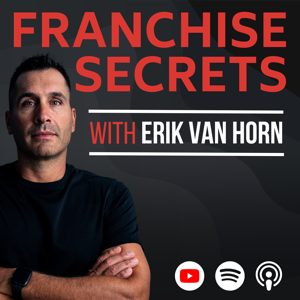
A franchise discovery day can be daunting to someone just diving into the industry. So what is it all about? What should you expect? What does the process look like leading into discovery day? If you’re trying to prepare and don’t know where to turn, I answer some of your burning questions in this episode of Franchise Secrets.
Jori Hayes turns the tables and asks me some of the need-to-know questions when prepping for discovery day. Jori is a multi-unit franchisee and co-owner of STUSS consulting. She has extensive experience in helping launch franchises and improving sales and operations, and I’m excited to have her as co-host of this episode.
Outline of This EpisodeI believe you should attend discovery day when you are deep into the process of learning about a particular franchise. You should have already conducted extensive research and done your due diligence. Two things need to have taken place before traveling to a discovery day:
Plus, you should have done 4-6 weeks of in-depth research and communication with the franchise and franchisees. By your 3rd call or webinar with the franchisor, it’s time to find out when the next discovery day is and make plans to go.
Jori and I both recommend keeping your plans close to your vest. If you are too forthright with current franchisees about your interest, they could scoop up a territory out from under you.
What should the purpose of discovery day be?You should know the answers to 90% of the questions you could ask by the time you go to discovery day. Instead of seeking out the CEO, CFO or other top players to pick their brain, focus on forming relationships with your potential peers. Do you fit in with the culture? Are they friendly and approachable?
Buying into a franchise means you’re becoming a member of an existing family.
It’s imperative that you’re a good fit for each other. You might go into discovery day and learn no more than what you already know. But you have taken the opportunity to validate what you’ve learned and that is invaluable. Jori and I cover some details you could inquire about, so keep listening!
Discovery day or decision day?Franchisors are looking at you as much as you’re looking at them. Your behavior, attitude, experience and more are taken into account during the process. They’ll watch you to see how you fit in with their current franchisees. If they like what they see, they’ll approve you to become a franchisee within days of discovery day.
At this point, you need to be able to quickly and precisely say yes, or no.
You’ll know in your gut if you want to say yes and move forward. You’ll also know if you have to pass up the opportunity. Franchisors are looking for decisiveness. If you waffle with the decision, they can just as easily retract their offer. So it is important to be prepared to answer before you even go into discovery day—and it let it push in one direction or the other.
Making the decision starts from day oneBefore you start down the road of validation and discovery day, you need to have clarity on what you’re looking for and why you’re taking this route. What energizes you? What part of the process would you excel at? Do you have people in play who can compensate for your weaknesses?
It’s not going to be easy.
When you learn something new you will make mistakes—it’s just part of life. There will be pain points and challenges to overcome. Both Jori and I recommend working with a consultant or at least speaking with a mentor. They can help guide you towards something that will be a great fit for your talents. So when it comes down to making the final decision, you know in your gut that you’re ready for the challenge.
Resources & People MentionedFinancing a franchise is one of the things you need to consider early on in the purchasing process. Finding sufficient funds is daunting and complicated—unless you have the right people guiding you through the process. This is where something like FranFund comes into play. Geoff Seiber from FranFund is here to walk us through the options available in this episode of Franchise Secrets.
Geoff Seiber has worked in franchising his entire life. He started from the ground up, working his way from delivery driver to a franchisee with Dominoes. He also helped build the Great Clips Empire. Geoff co-founded FranChoice with Jeff Elgin twenty years ago and is now the CEO of FranFund. Listen as Geoff and I take a deep-dive into the world of lending.
Outline of This EpisodeWhen elections come around, the banking industry tends to feel some anxiety. Every time a new person with a new platform is elected to office, it could mean significant change—positive or negative. The Obama administration was headed towards more stringent regulations with the Small Business Administration (SBA).
The Trump administration has eased off on some of those regulations that fell under the “excess paperwork” realm. Geoff believes they are holding banks to higher standards and keeping them accountable. If you aren’t immersed in the world of banking and financing you’re not necessarily going to be aware of the impact electing Democrats or Republicans have on the process.
If you’re not familiar with the SBA, they’re a sort of “insurance policy” for banks. If a bank takes on a loan, follows all of the rules and guidelines, but the loan defaults: the SBA will cover up to 75% of that loss.
What falls into the category of high-risk lending?There are a lot of factors that can throw you into the “high-risk” category for lending. Some of the things taken into account:
Is it their first franchise?
Is there prior experience in franchising?
What business are they buying?
What is the age of the franchisor?
What does the competition look like in the industry?
If you’re brand new to franchising, have very little experience, and are young you are automatically branded as high-risk. It’s how the game works. As entrepreneurs, we are used to betting on ourselves and taking a risk. But a lender has to evaluate the risk differently, and choose whether or not they think you will be successful. Keep listening as Geoff and I dissect other factors and risk associated.
FranFund Financing vs. a traditional bankSo what makes FranFund different? Geoff points out that you can secure an SBA loan through many banks, but you need to find one that has experience with high-risk lending. Many aren’t necessarily willing to take on that risk—or say they will to obtain your business, but the end result is wasted time and no loan.
On the flip-side, if you work with FranFund they understand the nature of the industry. Banks are fickle. Some won’t work with start-ups. Others only work with certain franchise industries or will turn you down to keep their portfolio balance. FranFund helps you find the right bank, is familiar with their portfolios and works to help the lender gain a balanced portfolio, by working with you.
Geoff wants you to know that you are bankable. Don’t give up. To hear how else FranFund can help entrepreneurs, keep listening for details!
A loan approval doesn’t equal a done dealDid you know that a loan approval doesn’t mean everything is a done deal? You need a signed lease and proof that the collateral is assigned properly to access the SBA funds. The franchise fee you pay can go towards the money you put down for the SBA loan.
The more money you put in, the more you lower the risk curve.
Geoff notes that a good rule of thumb is a 30% equity injection—but the more you can put down the better. In order to use any of that capital in the business, your lease has to be executed. They need to know where their money is going, after all.
Geoff and I cover using a 401K to fund your business and he leaves some final words of wisdom. Be sure to listen to the whole episode if you’re ready to finance your franchise!
Resources & People MentionedIn this episode, I cover some of the things you’ll need to think about if you’re considering selling your franchise. I’ll talk about pinpointing a realistic value, reasons why you and others may consider selling, as well as alternatives to selling your franchise. There is always a solution—listen to find out what that could be!
Outline of This EpisodeThis is one of the best reasons to sell a franchise. If you’re able to take a struggling franchise, turn it around, then sell it for a profit—it’s a win. If you currently own a business and are ready to let it go for another opportunity, it's the best-case scenario.
I’ll let you in on my #1 strategy when you’re selling a business: sell your business to start a new one. Take the profit and invest it towards purchasing your next franchise. I try and do this every year to help mitigate the tax burden associated with making a profit.
It takes strategy and learning how to listen to your gut. Listen as I talk in-depth about this strategy.
Why do seller’s sell?If you’re in the market to buy, this is the burning question in the back of your mind. You have to do your own research, but here are some of the biggest reasons:
They’re trying to mitigate risk and are ready to slow down and/or downsize.
A life-changing negative event happens (death, illness, lifestyle change, etc.)
Their focus or priorities have shifted.
They’re ready to move on to a different brand.
Industries shift and laws change and profitability is different.
Whatever the reason, make sure it works for you and what you’re looking to accomplish. If you’re looking to grow your portfolio be open to unusual opportunities. Always keep your ears open.
Is your heart still in it?I’m an advocate for sticking it out and not quitting when the going gets tough. But on the flip-side, you need to know when it’s time to quit. Is your life worse running a business? Do you enjoy being an entrepreneur? Or would you rather go back to a 9 to 5? If your heart's not in it, you can’t expect to run a profitable business.
So in that case, choose a path forward that brings you happiness—make the decision that is best for you and your family. But be honest with yourself. You need to let go of your franchise for a reasonable price. If it’s hemorrhaging money because you’re holding out for a higher price, you’ll end up losing far more. It’s all a learning process, right?
What to do if there is no buyer for your franchiseDon’t panic. If there isn’t interest in your market, you do have some options available to you. I recommend hiring an operational manager. Find someone eager to learn and looking for a mentor who can relieve you of some of the day-to-day stress. You may have to give up a small amount of equity—but it’s a win-win for both of you.
Before you even make a purchase, if you plan on being a semi-absentee owner, it’s smart to consider investing in a franchise with partners. The role for everyone would still be to “manage the managers” but it mitigates the role you play. Working in your business as an owner devalues it, so hire a dream-team of decision-makers.
To hear more on the topic and the rest of my tips regarding selling a franchise, listen to the whole episode now!
Resources & People MentionedWhat does the next generation of franchising look like? What new and innovative ways of doing things are being introduced? If you’re a young franchisee looking for ways to connect with others in the industry it can be tough. Finding mentorship opportunities and connections isn’t always easy. In this episode of Franchise Secrets, I chat with Zack Fishman of Fishman PR all about being a young entrepreneur in the industry.
Zack holds a Bachelor’s of Business Administration from the George Washington University with an emphasis in marketing. He was a consultant and director of operations with FranFunnel. He’s now the co-host of the Modrn Business Podcast and most recently the director of Innovation at Fishman PR. Zack knows young entrepreneurs can and are making an impact in the industry. Listen as we discuss what the next generation of franchising will look like.
Outline of This EpisodeZack grew up immersed in the franchise world. His parents are the founders of Fishman PR and he interned there at a young age. While having connections in the industry can give you a leg up, he’s worked hard for what he’s earned. He doesn’t want to simply rely on his family name—so he learned the industry inside and out.
He’s also had the opportunity to be mentored by some of the biggest names in the industry.
One such mentor is Shelly Sun—CEO of BrightStar Franchising and a pioneer in the industry. He’s also been mentored by Catherine Monson (CEO of FASTSIGNS International) and Steven Greenbaum (CEO of Best Life Brands). His parents are also amazing—and incredibly well-known—mentors.
Keep listening as we chat about his mentors and how you can find opportunities like these without connections in the industry.
The Modrn Business Podcast Tour: Franchisors.com Summer Franchise TourRyan Hicks (the VP of Business Development for Rallio and close friend) invited Ryan out for drinks and asked Zack to hear him out—he had this crazy idea. What if they took the Modrn Business Podcast on the road? They’d get a bus and travel the country interviewing icons in the franchising world. While initially voicing there was no way it would happen, Zack said he’d think about it.
‘Thinking about it’ turned into agreeing to one week on the road.
Which turned into 6 weeks on the road.
Zack and Ryan covered 26 states, had 14 different sponsors, and produced 112 pieces of content for the Podcast. All while advertising their upcoming YoungConference as well as Springboard and the Unconference. To hear everyone they got to interview, what they learned, and what the experience was like—keep listening for some amazing name drops.
Franchise YoungConference: The NextGen Franchise conferenceThough you won’t get carded at the door, the YoungConference is geared towards the “under-45” up-and-comers in the industry. It will be all about navigating the ever-changing digital realm and making sure your franchise is prepared for the next generation of franchising.
The conference is for innovators, creators, and out-of-the-box thinkers.
There are many conferences geared towards those experienced in the industry and even emerging brands. YoungConference is one of the only being offered to help the younger crowd connect with other successful young entrepreneurs. If you want to hear some of the big names who will be speaking, keep listening as Zack and I chat about the conference schedule.
What does the next generation of franchising look like?There are innovative things happening in franchising, and a “changing of the guard” is taking place. This generation is more connected than ever before. Even simply putting ourselves out there and producing podcasts are a great way to be heard and a great way to build brand awareness.
We are moving away from “cookie-cutter” ads and becoming edgier and innovative.
The concept of ‘Gamification’ is being integrated to raise customer engagement.
Influencer marketing is becoming a measurable and quantifiable means of marketing.
The end result of everything that you do needs to be engagement. Getting new followers and “likes'' on social media is meaningless without active engagement from your consumer. Listen to the rest of this episode as Zack and I discuss in detail the future of franchising.
Resources & People MentionedFranchise management needs to be on point when you’re scaling a business quickly. No one understands that more than Bill Noble—who owns 60 Pearle Vision units. You can listen to our previous episode featuring Bill and learn how he financed his empire. In this episode of Franchise Secrets we’ll talk all about how he manages his locations and doing so in seasons of rapid growth.
Bill graduated from West Point with a degree in Engineering Management and went on to get his MBA in Management from Harvard. He took his extensive background in leadership and business and pitched to a group of investors. A few short years later, he now owns 60 Pearle Vision Franchise locations around the country.
Outline of This EpisodeWhen Bill acquired his first 10 Pearle Vision locations he handpicked every single store manager. He wanted to build a management team of driven entrepreneurs who were competent and trustworthy. In the beginning, accounting and HR were outsourced. It was just Bill and his 10 managers.
But he knew this wasn’t a long-term solution—especially when he acquired 18 locations in Michigan and 4 in Indiana.
He hired a regional director to help manage the additional 22 locations. He sought out a CFO. He hired someone to head up HR as his team grew from 30 employees to over 100. Each of them is a critical and integral piece of the puzzle. Keep listening as we dive into incentivizing your chief hires, what a phantom equity plan is, and more.
Get systems and processes in place as soon as possibleWhen you’re forced to scale rapidly, you just have to take things one step at a time and prioritize. Pearle Vision didn’t have a system in place that they could utilize, so they had to begin to develop processes themselves. They didn’t have the need at the time to build out comprehensive reporting.
But Bill certainly needed a system in place. They needed a way to track their Key Performance Indicators (KPI).
They worked for months to develop a means of reporting that they could export as an Excel document. After all—you’re only as good as the data you input. The process needed to be simple and strategic and track all the intricacies unique to their industry.
How to handle the ‘dogs’When Bill acquired 22 Corporate locations from Pearle Vision he didn’t get to pick and choose—it was all or nothing. You know you’re going to end up with some high performers, some middle-of-the-road locations, and then some real dogs.
So what do you do with the bottom-of-the-barrel underwhelming locations?
Assess why they’re underperforming. For approximately 8 of the locations Bill acquired, the issue was a poor location. So the plan was to batten down the hatches and ride out the lease, then close the location and move on.
Two locations had poor leadership. Poor management will run off good employees, so he replaced the management.
The other locations were operating without doctors on-site, one hadn’t had a Doctor in-house for over two years. So he made it his #1 priority to hire a Doctor. Once he did, the location became profitable and no longer a money-pit.
It’s all about strategically fixing the issues, even if they’re temporary solutions.
Franchise management is about the million-dollar decisionsYou cannot be so immersed in the details of your business that you forget to look at the big picture. You need to hire a superstar team to handle the nitty-gritty while you focus on the million-dollar decisions. You always need to be taking a step back and looking at what you may be missing.
Sometimes, you’ll get punched in the mouth. You will find things you missed, and there will be problems to fix. But how you take a step back and regain objectivity is what matters. Bill and I chat about networking and building relationships with key players in the franchising organization and he delivers some “pearles” of wisdom. Don’t miss this engaging conversation with a high-level operator!
Resources & People MentionedAre you interested in the process of raising capital to buy a franchise? Do you know how to properly structure the arrangement? When you’re not able to completely fund the purchase yourself this can be a viable option—if you know where to start. Brian Noble of West Point Optical Group is here to lend his expertise in this episode of Franchise Secrets.
Bill graduated from West Point with a degree in Engineering Management and went on to get his MBA in Management from Harvard. He took his extensive background in leadership and business and pitched to a group of investors. A few short years later, he now owns 60 Pearle Vision Franchise locations around the country.
Outline of This EpisodeBill grew up in a family of entrepreneurs. His Dad owned a flower shop and a Jazz Club and his Mom owned two daycare centers. As he worked through college and business school his goal was to get a C-Suite level position—he thought this was his path. He carefully chose the schools he attended and the positions he accepted to position himself for a job in a Fortune 500 Company.
He didn’t want to be an entrepreneur, but it was in his blood.
He was working at LensCrafters in operations and fell in love with Retail Optical. He knew of the competitors in the space and heard of an opportunity with Pearle Vision. When he got passed up for a promotion with his current company, he knew it was time to move in a different direction. Listen as we talk about his transition from corporate America into franchise ownership.
The decision to begin raising capitalWhen Bill and his wife decided for him to dive-in headfirst, he immediately started formulating a business plan. This wasn’t a quick overnight ‘let’s throw something together’ business plan. He took weeks to hammer it out. He ran it by close friends for a sounding board.
His biggest hurdle was getting the potential investors to understand the optical retail space.
Many of them had some sort of brand-awareness but didn’t know the space, so it was his job to educate them while pitching. Originally, he was asking for an investment to purchase 10-25 stores in a three to five year time period. His original investment group raised 2.1 million dollars.
Don’t know what an accredited investor is? The SEC defines it in Rule 501 of Regulation D. Listen to the full episode as we discuss what that means and why it’s important!
Accredited Investors are betting on you—not the franchiseWhen you’re looking for funding, the easiest place to start is trusted family or friends. If you don’t have people in your life with that kind of capital (or unwilling to bet on you) then you can turn to accredited investors.
Bill recommends creating a tier system for who you reach out to for investment opportunity.
Bill structured his operating agreement so your dollar amount was your ownership amount. Everyone needed to be equally vested. He was also sure to have it written in that his position as CEO was protected. The only way he can be removed or replaced as CEO is if he commits a crime.
The agreement was also structured to protect the equity investment of every partner. In his first capital call, everyone invested proportionately. However, on his second capital call, 2 investors fell short or didn’t have the means to match. The other investors were all given the opportunity to invest equal amounts towards the shortfall so their equity wasn't diluted.
Bill and I continue to talk about his original strategy and how it evolved, putting the proper systems in place, and taking risks—so listen to the very end!
Resources & People MentionedDo you know how to properly look at valuation when selling a franchise? Do you know how to properly calculate what your business is worth? If you want to sell your franchise someday, you must know what its value is—and continue to increase it. I divulge some of my best advice in this episode of Franchise Secrets. Check it out!
Outline of This EpisodeI think both of these things can be important, but to grow, diversify, and scale your business there is one thing that is more important. Keep listening to find out.
The easiest way to increase what your business is worthRemove yourself from the day-to-day operations of your business. It’s that simple.
It may be a little harder to carry out, but if you’re even remotely thinking you’d like to sell your business someday, you have to think about it. An investor looking to purchase a business does not want to buy into something that requires them to work 40+ hour weeks. They want a high-level business that is run by high-level management that allows them to be strategists and investors.
Hire the right people that you can empowerThe first step in buying back your time? Hire an executive assistant. Someone to take day-to-day tasks off your plate. Decide what your time is worth, and invest your time into things that only you can do. Parse other tasks out to people you trust to carry out the work.
The goal is to build a team that you trust to run your business without you present. You need to know if you’re sick and in the hospital that your business will continue to thrive. You want to be able to take a 3-week vacation and be comfortable with what you come back to.
Hire people who are capable of operating as owners and have the ability to make tough decisions. Hire a team of people full of integrity. Invest your time in them, give them avenues for growth, and be available to them. But the end goal should be that they are efficient and independent of you.
Listen to the full episode for more details and tips and how to increase your valuation!
Resources & People MentionedIf you have a passion for swimming then you’re in the same lane as the founder of the Big Blue Swim School franchise! He knew there had to be a better solution than renting pool time for swim lessons. His business was born out of a desire to offer better customer experience and a better learning environment for his students.
Chris DeJong grew up in the world of competitive swimming. After barely missing qualifying for the Olympics in 2004 and 2008, he knew it was time to move forward. So he took his passion for swimming and turned it into a thriving business. Listen to the full episode of Franchise Secrets for his story and how he believes you should properly operate a franchise.
Outline of This EpisodeGrowing up, Chris spent his days between the beach or a pool. As he began swimming competitively, he’d spend 4+ hours a day swimming plus a land-based workout. He was the captain of the University of Michigan swim team and competed on the US National team for 9 years. He narrowly missed making the Olympics multiple times.
The lowest point in his life was when he made one of the best decisions of his life. He started teaching.
Starting his business was the passion that grew out of his disappointment. A saying that he loves is “It’s okay to give up 1,000 times as long as your feet never stop moving”. Take a step back, recover and gain perspective, and forge ahead. So he and his wife rented out pool time and began offering lessons. They built their weekly lesson base to over 600 kids a week—taking whatever pool time “scraps” they could get. Yet they were still gaining traction. After a lot of meetings with investors and hard work, they opened their own facility—jumping to 2200 students in the space of a week.
What sets Big Blue apart from the competition?Chris wanted to build a business that served his students. A comfortable place to learn and grow that was family friendly. When you rent time at a pool you have no control over variables such as pool temperature, chemicals used, and the schedule available. He wanted to create a model where he got to control the variables.
Chris knew that understanding his customers was the key to repeat customers.
So they built out their facilities. They keep their pools at 91 degrees, offering comfortable water for kids to swim in. They take families into account and have an air-conditioned viewing room for parents. With individual showers and changing rooms, they are setting the bar high for the competition. Keep listening to find out what else makes them truly unique.
How Chris supports and encourages his franchiseesChris decided to become a franchisor because he wanted to partner with people just as passionate about swimming as he is. He’s been fortunate enough to pull in franchisees with experience working in Orange Theory and Planet Fitness. They truly understand that space that he’s in. He loves that he gets to benefit from the expertise of everyone that becomes part of the team.
None of us is smarter than all of us, right?
His goal as a franchisor is to build mutually beneficial relationships with his franchisees. His franchise wants to anticipate problems and help overcome them. They’re part of the site selection, construction, marketing and so much more from day one. He believes you’re failing as a franchisor if you’re letting your brand new franchisees fend for themselves.
Partnering with Level 5 Capital PartnersBig Blue began working with Level 5 Capital Partners to begin building out their franchise model. It’s been a decision that has significantly impacted them for the better on a day-to-day level. They are data-driven and have their system down to a science. The sales and operation experience they bring to the table has helped Big Blue Swim School explode.
The swim school has now sold 45 franchise locations.
With the expertise of Level 5 Capital Partners, Chris is confident in the direction they’re taking. He’s also confident in his product—the ability to swim is something that cannot be replaced. It is valuable across the country and is recession-resistant. Chris took a healthy economic model and paired it with expertise and passion—and now the sky's the limit.
Looking for more details and advice? Listen to the whole episode with Chris DeJong now!
Resources & People MentionedAre you trying to develop organizational efficiency in your business? Are you trying to find a way to take a step back and become an owner and strategist—NOT an operator? Effective leadership as a business owner begins with some tactical decision making. Mike Michalowicz, a renowned entrepreneur and author, is my guest today. Listen if you want to learn more about building an organization that can function independently of you.
Mike has been an entrepreneur for over 25 years and thought he knew it all. After running successful businesses—and making a lot of money—he ran an angel investing firm. After investing in businesses that drained his bank account, Mike had to declare bankruptcy. His story is all about overcoming his pride, and rebuilding his life and business from zero to the entrepreneurial success he is today. Mike’s goal as he’s writing his books is to eradicate entrepreneurial poverty. Don’t miss this episode of Franchise Secrets!
Outline of This EpisodeAccording to Mike, 83% of entrepreneurs are struggling to survive check-to-check. Sometimes we can’t face the truth that we’re struggling. We tell ourselves “I’ve been doing this for years, I know what I’m doing” as our business circles the drain. The truth is, you need to admit that you have a problem.
Don’t wait until your business is failing to have your “aha” moment.
Mike recommends taking a good hard look at your patterns of the past. Dig deep into your repeating patterns—are they helping or hurting your business? Return to the basics of fundamental business health and focus on what you can change so it has a future.
Organizational Efficiency begins with designing the business to run itselfThe topic of Mike’s latest book is designing your business to be able to run itself. Every entrepreneur seems to believe they have to grind and hustle and work harder longer. That doesn’t need to be your baseline. He argues that for your business to be successful at all, you need to learn how to separate yourself from the business. Why?
It will have zero resale value if the business cannot operate with you.
So how do you know if you’ve built your business to the point it can survive without you? Take a 4-week vacation. If your business can run without you and is still succeeding, you’ve successfully shifted from operator to owner. Mike offers a solution—which he outlines in his book—where you can fully transition out of your business in only 2 years. Keep listening for details!
Fulfill the promise you make to your customersThere are only two things you need to focus your attention on for your business to run successfully:
Do not compromise your #1 promise to your customer. You need to identify this and focus all of your attention on that. Then, hire the right person to handle that promise. Choreograph the resources around you. Position your team—by taking advantage of their individual talents—in a way that they complement each other.
It is powerful when your entire team is moving towards that collective goal.
Delegation is not assigning tasks—it is assigning outcomesYou need to make a mindset shift as you’re transitioning out of the everyday operation of your business. Make a cognitive decision—you are either the linchpin that will handle this piece, or you will delegate it out. The majority of people don’t handle it correctly. When you delegate a task to someone, you delegate whatever outcome may come.
You have to approve and accept all of the decisions made by your employees.
If they’re constantly coming back to you to ask questions or receive approval, you’re still the one making decisions. That isn’t delegation. So hire people who are free-thinking problem-solvers. Without a doubt, mistakes will be made—but they will learn from it in a way they couldn’t if you were hovering. Mike and I talk about hiring the key players to run your business—so listen to the rest of the episode!
Resources & People MentionedToday I’m going to give you insight into my deal matrix— how I choose what franchise to purchase. Over the years working as a franchisee, area developer, and serial entrepreneur I’ve developed a method for choosing franchises that will work for me. If you’re interested in owning a franchise and aren’t sure about working with a consultant, listen to this episode now! I’ll talk all about costs to consider, what industry to choose, and the franchise structure in place.
Outline of This EpisodeCost is probably the #1 thing on the forefront of your mind when researching franchise opportunities. The cost can be prohibitive and you’ll often find yourself having to decline a good opportunity. Starting costs can be high. So how do you make the leap? Are there ways to overcome the ‘no’ and make a purchase?
If you have an investor willing to partner with you and cover some of the starting costs it can make a huge impact. Family, friends, or fellow entrepreneurs who know your work ethic and trust you to be successful are an asset. There’s always one thing I ask—that they are willing to be involved in the process from the very beginning.
My deal matrix: 4 things to look for when choosing an industryAnother important topic you need to consider is what industry to get involved in. As an owner, there are 4 things I always look for:
The industries I choose to be involved in allow for all of these conditions. Listen on as I’ll explain the ‘why’ behind my reasoning.
What characteristics do you look for in a franchisor?I’ve worked with 6 different brands and know what to look for. Keep in mind, there is no perfect franchise and they all require a time investment on your part. But there are some things that you can pinpoint that will make the process easier for everyone involved. So what’s this highly important factor?
Make sure the franchisor has the necessary experience to lead the franchise to success.
The franchisor (or someone on their leadership team) needs experience in franchising—it’s hard to trust and lean on someone if they have zero knowledge of the industry. Secondly, they need to be experienced in the industry their franchise is in. To find out red flags to watch out for, keep listening.
Finding the right franchise consultantFranchise consultants tend to get a bad rap. Unfortunately, for many, it’s a sales job. So how do you know you’ve got the right person to help you through the process? Learn to know when you’re being sold to. If they’re pushy about a particular brand that doesn’t fit the qualifications you’re looking for, it’s time to move on.
You also want to choose someone who has experience. If a consultant hasn’t been a franchisee themselves, do they really know what they’re talking about? I strive to be real and tell it like it is. I will tell you if the cost is too high, if the industry isn’t a good fit, and will make sure you’re ready for the franchise you’re taking on.
This episode is full of my best advice for choosing a franchise and a franchise consultant. If you’re ready to dive in and choose a franchise to invest in, tune in for the full episode!
Connect With ErikFrom the publisher's feed

1,580 Listeners
2,199 Listeners
13,958 Listeners
578 Listeners
4,462 Listeners
2,298 Listeners

8,554 Listeners

822 Listeners
18 Listeners
36 Listeners

29,197 Listeners

77 Listeners

956 Listeners

932 Listeners

2 Listeners