
Sign up to save your podcasts
Or

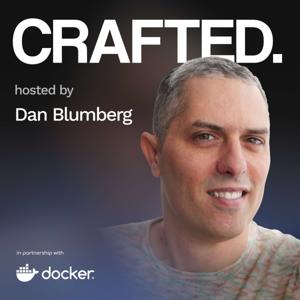


Jay Dixit helps writers improve their writing with AI. He doesn't recommend that AI write for you — he hates that — but he says it can be a great partner to pull ideas out and to be there for you when you get stuck and just wanna doom Scroll. Jay headed Open AI's Writing Community and is the founder of Socratic AI.
He's a writer and a journalist, and we sat down at South by Southwest to future around and find out. Jay says "We need to be using AI to unlock our humanity — to do the things that we're scared to do."
Chapters
---
Music by Jonathan Zalben
The Trump administration suddenly wants to review AI models before they ship. Anthropic just inked a massive compute deal with Elon Musk, who then posted that he "reserves the right" to pull the plug if he decides their AI is "harming humanity” (he’s one to know!).
On the latest FAFO Friday, Kwaku and I get into why the Trump administration appears to be about to reintroduce the same (weak) AI oversight that Biden implemented. Is this really about safety or a way to gain leverage over Big AI?
Plus, robots! The founder of Roomba is back with a new, fuzzy, home companion robot and his approach (not humanoid! build robots with EQ!) is very aligned with this week's interview with roboticist/dancer Catie Cuan.
Links
Support Future Around & Find Out
Catie Cuan's dad was in the hospital, surrounded by machines that were supposed to help him. Instead they made him feel alienated and afraid. Catie, a dancer-turned-roboticist, realized it's not enough for a machine to do its job — it has to be relatable, too. Today she's the founder and CEO of ART Lab, focused on what she calls the "interaction gap" between what a robot can do and how it makes us feel.
Catie danced at the Metropolitan Opera Ballet and ran her own dance company before getting her PhD at Stanford and becoming an artist-in-residence at Google X, where she worked on the Everyday Robots moonshot — including teaching office robots that it's rude to cut between two people having a conversation. Now ART Lab is building a home robot that won't look anything like a robot, plus a new kind of AI model that conditions success on how the human in the room responds, not just whether the task got done.
Listen for the case against humanoids, why the future of AI shouldn't live inside your phone, and a sneak peek at what our life with robots might look like.
Chapters:
I don't think we pause enough to marvel at how freakin' weird AI is. Here's an actual instruction from OpenAI to its latest model: "Never talk about goblins, gremlins, raccoons, trolls, ogres, pigeons, or other animals or creatures unless it is absolutely and unambiguously relevant."
Apparently goblins and mythical creatures crept in when OpenAI released its "nerdy" personality a few models back and the mythical creatures have just proliferated ever since. It's a bizarre example AI bias and, as it's relatively adorable, one that OpenAI was happy to write about. But what else is lurking?
That's the jumping off point for Kwaku Aning and me (Dan Blumberg) on this latest FAFO Friday edition, which plays off of Tuesday's interview with responsible AI expert Rumman Chowdhury. Along the way, we discuss AI personalities, TV commercials, and brand strategies, how AI thinks you should shoot a three-pointer, what gets lost when humans no longer write the code, and why we need (?) whimsical garbage cans.
Plus, we tie a few stories together: why a reckoning is coming for the all-you-can-eat-AI-token-buffet, as the "millennial lifestyle subsidy" for AI is ending, tokenmaxxing, the growing (and bipartisan!) data center backlash, and why Earth's (AI-powering) solar panels may soon run 24/7 thanks to light redirected from outer space.
Links:
Support Future Around & Find Out
Rumman Chowdhury wants to remind you that “AI isn't doing anything.” We do things. AI is not to blame for layoffs or if you’re denied medical coverage. People are.
Eight years ago, Rumman coined the term “moral outsourcing” to describe this excuse where we blame tech for decisions that people make. Why do the semantics matter? Because, Rumman says:
In world one where, “AI did X,” it's very scary. It's like, “oh my gosh, this thing that is bigger and smarter than me has come and descended and now it's gonna wipe out every job. “ [But if we center on people, then we have agency and accountability and we can say] “no, you built a thing that was broken and flawed.”Rumman is the founder and CEO of Human Intelligence PBC, which is building evaluation infrastructure to make Gen AI systems safe, trustworthy, and compliant. She also served as the U.S. Science Envoy for Artificial Intelligence under the Biden administration, led AI ethics teams at Twitter and Accenture, and is a Responsible AI Fellow at Harvard.
In this conversation:
Chapters:
We won the Webby Award for best tech podcast of 2026!!!
I’m stunned! But Kwaku doesn’t like it when I say stuff like that, because as he reminds me in this “FAFO Friday” edition, “sometimes good things happen to good people.” OK, I'll take it. We won! And now I need to prepare a five word speech to give. "FAFO Fridays Are My Favorite" comes to mind...
But really, who could’ve predicted this? And also, are all predictions bunk? Kwaku just returned from a week at “Big TED” and he reports back that the talk everyone is talking about is “Beware the power of prediction” from philosopher and AI ethicist Carissa Véliz.
What do the story of Oedipus and your insurance premiums have in common? They are both driven by self-fulfilling prophecies, according to Véliz and she warns us, on stage and in her new book, that we should we wary of false prophets — and of relying on AI-driven predictions. Some predictions are useful she says, e.g. weather forecasts are great because the weather doesn’t care what you predict, but others become self-fulfilling prophecies: if an AI says someone is uninsurable and then you deny them insurance then yes, they are uninsurable, but were they before you (or your algorithm) said so?
It all speaks to a powerlessness many of us feel. Speaking of which… Meta just rolled out employee surveillance that tracks keystrokes, mouse clicks, and periodic screenshots — to train AI on their employees' own jobs…. Someone threw a Molotov cocktail at Sam Altman's house… The anti-data-center backlash is getting physical. And (sorry) here’s a prediction, if people don’t start feeling like they have some agency, we’re going to see more of this (especially in an election year). But as Kwaku puts it, we are the fuel. AI does nothing without us, so let’s reclaim our agency, because…
The Future Needs a Word.
That’s one of the five-word speech options we consider. I’m drawn to it, but not sold on it, so please share your own suggestions…
---
FutureAround.com is the home for Future Around & Find Out. Go there to subscribe to the newsletter and to contribute to the show. And, as always, please tell a friend about the show. That's how podcasts grow.
So what even is “real” software anyway?
Someone builds an app over the weekend. It works. It looks good. And then the search begins — for the asterisk. Security? Design quality? Can it go to production? Paul Ford says we’re in a new era: "I can't believe it's not software!"
Paul is the co-founder of Aboard, where he helps organizations build custom software quickly, using AI tools. He's also one of my favorite tech writers. You may know him from "What Is Code," the opus he wrote for Bloomberg Businessweek a decade ago or from his writing in the New York Times, including his recent opinion piece, The A.I. Disruption We’ve Been Waiting for Has Arrived. Or perhaps you’re hip to Ftrain, where he’s been writing for longer than we’ve had the word “blog.”
In this conversation, recorded at Aboard’s podcast studio (Paul and his cofounder also host a great show), we dig into the strange new world where roles are colliding, software* gets built quickly, and no one is quite sure what to teach their kids.
We get into:
Chapters:
Sponsor the show?
Hey everyone... so, in case you haven't heard... this show, Future Around & Find Out, has been nominated for a Webby for best tech podcast!
*** VOTE HERE: https://vote.webbyawards.com/PublicVoting#/2026/podcasts/shows/technology ***
I was kind of being chill about this. I am, admittedly, not my own best hype man, but then I got riled up when I heard the hosts of The Vergecast, one of the other nominees and last year's winner, complain that they weren't winning by enough votes and that they wanted to win by such a large margin that it -- quote -- hurts everyone's feelings.
Well, those are my feelings Nilay Patel was talking about!
Look, I like the Verge -- and I definitely didn't have them on my list of people I might feud with this years -- but f* those guys! Let's win this thing!
So could you please vote? Today, April 16th is the last day to do so and we're currently just behind, in second place. The link to vote is in the show notes. You can also find it on the show's website at Future Around dot com
And what is it you're voting for? Well, if you've been listening then you already know what this show is all about, but I also thought for newbies and even for long time listeners, it might be fun for you to hear exactly what the Webby judges listened to when they voted for FAFO to be a best tech podcast nominee. They ask for ten minutes of audio, so I made a highlight reel — and here it is.
*** VOTE HERE: https://vote.webbyawards.com/PublicVoting#/2026/podcasts/shows/technology ***
We live in a world where every crisis lands in your pocket the moment it happens. The result? We're more informed than ever — and somehow less capable of doing anything about it.
Inventor and investor Pablos Holman has a diagnosis: we're spreading ourselves across every problem, which means we're solving none of them. His prescription is uncomfortable — pick one thing, go all in, and cut the noise.
***
QUICK PLUG: Future Around & Find Out is nominated for a Webby for best tech podcast! Voting is open now for the People's Choice Award. Please vote before April 16th! https://vote.webbyawards.com/PublicVoting#/2026/podcasts/shows/technology
***
Pablos is the co-founder of Deep Futures, where he hunts for inventors tackling world-scale problems: energy, water, food, waste, transportation. Not apps. Atoms. And thanks to advances in AI and software, these "impossible" problems are more solvable than ever — if the right people show up to back them.
In this conversation, recorded at the fabulous PopTech conference, he makes the case that inventors are the most important creative class on earth — and the most invisible. They're undersupported, uncelebrated, and working alone in garages. Some of them are probably going to blow themselves up. Those are exactly the people he's looking for.
We get into:
Chapters:
Support Future Around & Find Out
Sponsor the show?
---
Pablos's first appearance on the show covers his work at Blue Origin and Intellectual Ventures. Scroll in your podcast app to July 2025 to find that fun conversation. (Can listen before or after this one; not a prerequisite.)
Hey, great news! We’ve been nominated by the Webby Awards for best tech podcast! Voting is open now and we’re in second place for the popular choice prize. Just behind The Verge. They really don’t need this win, but it would really help this show grow. Would you please (ask a friend to) vote for Future Around & Find Out?
*** VOTE FOR FAFO ***
OK, here’s this week’s FAFO Friday… (we record on Fridays and the show has Friday/weekend vibes, so just go with it no matter what day of the week it is :)
This week, Kwaku and I…
*** VOTE FOR FAFO ***
From the publisher's feed

1,288 Listeners

541 Listeners

1,094 Listeners
608 Listeners

3,982 Listeners

212 Listeners

2,642 Listeners
1,277 Listeners

10,107 Listeners

514 Listeners
209 Listeners

351 Listeners
210 Listeners

476 Listeners

140 Listeners