Future Around & Find Out

Future Around & Find Out

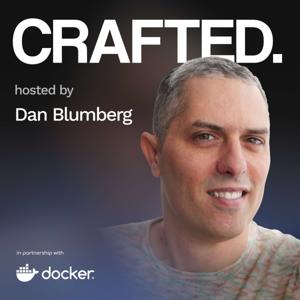
By Dan BlumbergBusinessTechnology
Download on the App Store

Future Around & Find Out episodes

  • AI, Deepfakes, and How Technologists Can Help Us Trust What We See and Hear | Sam Gregory (Exec. Dir. of WITNESS)

    Deepfakes are getting easier and easier to make. So, how will we be able to believe that what we see and what we hear is real? And what can software makers do to help?

    Sam Gregory is an expert on deepfakes, AI, and trust. He advises governments and tech companies on how they can protect human rights and how we can preserve our shared reality. 

    Sam is the executive director of WITNESS, an organization that helps citizens use video to foster social change. WITNESS has trained and supported citizen-journalists since the days of the camcorder through the smartphone era and now into the world of AI. 

    We discuss:

    • How deepfakes are being used to spread disinformation and erode trust in media.
    • How to detect that a piece of media was manipulated and to what degree
    • Why audio deepfakes are so pernicious
    • How deepfakes mostly did not affect the 2024 US Presidential Election, while cheapfakes were very common
    • The surprising ways AI is both helping and harming human rights defenders and journalists
    • Why “Prepare, Don’t Panic” is WITNESS’s mantra for addressing AI threats.
    • Practical steps software makers can take to design tools that prioritize transparency and ethical use, such as including transparency features in AI-generated content, red teaming to simulate misuse scenarios, thinking beyond Western contexts, and more…

    Chapters:

    • (00:55) - Deepfakes and the threat they pose human rights and journalism
  • (03:16) - The 2024 US election and how deepfakes, cheapfakes, and audio clones were used
  • (07:35) - Why WITNESS. says “Prepare, Don’t Panic” about AI
  • (11:16) - Recommendation for software builders to prevent — and detect — misuse
  • (13:45) - How to identify that a piece of media was manipulated by AI
  • (17:31) - Red Teaming: The scary questions builders should ask as they deploy new products
  • (22:20) - WITNESS.’s work beyond AI
  • (26:00) - Good news: we’ve preparing for AI and deepfakes for a long time and governments and technologists are working together

  • —

    Links:

    • Learn more about WITNESS: witness.org
    • Visit WITNESS’s resources on generative AI: gen-ai.witness.org
    • Learn more about deepfakes and AI detection: C2PA Coalition


    —

    Support CRAFTED.:

    • Subscribe to CRAFTED. on your favorite podcast platform
    • Share this episode with a friend or colleague.
    • Sign up for the CRAFTED. newsletter: crafted.fm
    29 min
  • Crafting Puzzle, Challenging QuickBooks, and Helping Startups Grok Their Financial Health | Sasha Orloff (Co-founder & CEO of Puzzle)

    Accounting may not be the sexiest part of running a business, but according to Sasha Orloff, it’s the key to understanding your company’s financial health—and ultimately, its success. At his previous two startups, Sasha was frustrated that he didn’t have a real-time view into his company’s financial health. And he realized the problem wasn’t accounting – but accounting software. So, Sasha founded Puzzle, because “it's hard to set yourself up for success if you don't know when you're about to run out of money.”

    Sasha is on a mission to make accounting intuitive, real-time, and accessible for founders and finance teams alike.

    In this episode of CRAFTED., we explore how Sasha is crafting Puzzle, how AI makes this the right moment to challenge QuickBooks, and why he was so confident that the market needed Puzzle that he was undaunted by the five years he estimated it would take to build an MVP.

    "We’re not just rethinking accounting software—we’re rethinking how founders and CEOs can make data-driven decisions to build enduring companies." 

    Sasha shares:

    • How the frustration he felt at his previous startups led him to Puzzle 
    • Why “accounting gets a bad rap”, but it crucial for founders: it’s your financial health
    • Why second-time founders are ideal customers
    • Why it took five years to build an MVP – and why he wasn’t daunted by this expectation
    • Why the problem was never accounting, but accounting software and the distorted realities it’s built to create
    • Why AI and modern API’s made now the right time to build Puzzle
    • Why Puzzle is “poking the bear” and putting highway billboards up near QuickBooks HQ

    • (01:04) - Sasha’s finance frustrations at previous startups
  • (02:15) - Traditional accounting software isn’t made for founders
  • (02:15) - The problem with traditional accounting software
  • (05:01) - What Puzzle does differently: Real-time financial health
  • (07:52) - AI’s role in revolutionizing accounting
  • (10:22) - Why second-time founders are Puzzle’s ideal users
  • (12:48) - Building a five-year MVP: Challenges and conviction
  • (16:41) - Tackling QuickBooks: Bold marketing moves and billboards
  • (19:15) - Understanding edge cases and complexity in accounting
  • (23:07) - The future of Puzzle: Helping startups thrive
  • (27:01) - Hosting the Turpentine Finance podcast

  • Links:
    • Learn more about Puzzle: Puzzle.io
    • Follow Sasha Orloff on LinkedIn: Sasha Orloff
    • Turpentine Finance Podcast: Turpentine Finance

    CRAFTED. is produced by Modern Product Minds, where CRAFTED. host Dan Blumberg and team can help you take a new product from zero to one... and beyond. We specialize in early stage product discovery, growth, and experimentation. Learn more at modernproductminds.com

    Subscribe to CRAFTED., follow the show, and sign up for the newsletter 👉 crafted.fm

    29 min
  • Design for Emotion. Leverage AI. Be Curious. | Design Better’s Co-founders on Building Great Products

    AI democratizes things. It's enabling designers to be developers, and developers to be designers… And in this episode, Aaron Walter and Eli Woolery explain how AI “changes the game” for designers. 


    As co-founders of Design Better, Aaron and Eli advise companies on how to incorporate AI into their design process. We’ll explore how AI can help designers explore a problem more thoroughly, as well as some pitfalls to watch out for. (Hint: speed is not always a good thing.)


    Aaron and Eli are also hosts of the popular Design Better podcast, where they’ve interviewed some of the world’s most creative people. Featuring software designers, as well as famous musicians, artists, architects, and more, the duo explore the creative process. And there are some striking similarities across disciplines.


    For more on Aaron and Eli and to subscribe to the Design Better podcast and newsletter, see DesignBetterPodcast.com

    ***
    CRAFTED. is produced by Modern Product Minds, where CRAFTED. host Dan Blumberg can help you take a new product from zero to one... and beyond. We specialize in early stage product discovery, growth, and experimentation. Learn more at modernproductminds.com 


    Subscribe to CRAFTED., follow the show, and sign up for the newsletter 👉 crafted.fm

    31 min
  • Vote! for CRAFTED. and for country (not in that order)

    Vote! A quick plea for you to vote today. Both for President (if you're in the US) and for the change you'd like to see on CRAFTED. Please take a few minutes to take the short survey at crafted.fm

    CRAFTED. is two years old! And I want to make this year the best yet.

    Back next week with a brand new episode!

    Please go to crafted.fm to take that short survey -- some lucky respondents will win prizes!

    1 min
  • Personalized Learning Is the Future. Here's How Outschool Is Building It | Amir Nathoo (Founder & CEO)

    Amir Nathoo is reimagining the future of education by building products that put students at the center of their learning experience. As the Founder and CEO of Outschool, Amir has created a marketplace for remote, personalized, interest-based learning that’s challenging traditional K-12. 

    In this episode of CRAFTED., we explore how Amir founded and grew Outschool, including the 15x spike in usage during the pandemic. 

    Post-pandemic, alternative education and homeschooling continues to rise. As Amir says: “The idea that a single institution could fulfill all of your kids' needs or all of all kids' needs is completely unrealistic…. Mass personalization is needed.” And he sees Outschool as the integration layer for all those teachers, students, and institutions. 

    You will learn a ton from Amir’s approach to product development and disruption. 

    Key takeaways for product builders: 

    1. Start with a Niche Audience, Then Expand

    Amir and Outschool began by targeting a specific group—secular homeschoolers—who had unmet needs in education. By serving this niche well, they achieved product-market fit before scaling to a broader audience.

    2. Co-Creation, FTW
    Outschool's initial product was shaped through customer co-creation and iterative development, testing small features before scaling them.

    3. Solve Real Problems, But Keep Early Stakes Low
    While Outschool addressed a critical need (supplemental education), they started with interest-based, "low-stakes" classes. This allowed them to test and refine their offering without the pressure that would’ve come with offering “core” classes.

    4. Build a Two-Sided Marketplace with Balance
    Creating a thriving marketplace like Outschool required balancing teacher supply with student demand. Amir emphasized solving the “chicken and egg” problem by manually curating both sides early on.

    5. Pay Attention to the Market and Adapt Quickly
    When the COVID-19 pandemic hit, Outschool responded quickly by offering free training sessions for schools who needed to understand remote learning, scaling their platform, and adding free classes to serve families in need.

    ***
    Never miss an episode! Subscribe to CRAFTED. in your favorite podcast app and sign up for the newsletter at crafted.fm

    CRAFTED. is produced by Modern Product Minds, where CRAFTED. host Dan Blumberg and team can help you take a new product from zero to one... and beyond. We specialize in early stage product discovery, growth, and experimentation. Learn more at modernproductminds.com 

    36 min
  • AI, Creativity, and Soul: How Hilary Mason Chooses Her Own Adventure (Co-Founder & CEO of Hidden Door)

    Hilary Mason is a world-builder. She’s a serial entrepreneur, machine learning expert, and now, as the founder and CEO of Hidden Door, she’s creating immersive experiences where fans can interact with their favorite characters from books and movies. 


    The choose-your-own-adventures style games are an amazing blend of AI and human creativity — and Hilary is passionate about both: 

    “If I write a manifesto, this is what it'll be: I don't think the power of generative AI is to create the next amazing novel. I don't think it's gonna create the next amazing movie. I think it is not opinionated, but people are opinionated and people will create those things using these tools.”


    On this episode of CRAFTED., we discuss what AI is good at and how to create a great marriage of human and machine. And Hilary is not holding back… 


    “Doing data work without a soul or without philosophy is, at best, meaningless and, at worst, harmful.”


    “I think prompts are gonna go away. We're in a moment of industry-wide product design, chaos…”


    Listen for a masterclass on building with AI and building with creativity and soul.


    • (02:00) - – This moment in AI: figuring out the right use cases and design patterns
  • (05:00) - – Founding Hidden Door
  • (09:00) - – Why “controllability” is so important
  • (11:00) - – Enabling fans want to play with their favorite characters
  • (13:00) - – Why text-based games are so great
  • (15:00) - – Behind the scenes of how Hidden Door builds for fun
  • (19:00) - – AI has caused a moment of “industry-wide product design chaos”
  • (23:00) - – Industries and use cases where AI will be really good; where it won’t
  • (25:00) - – Effective ways to get beyond AI mediocrity
  • (28:00) - – Why Hilary thinks prompts will soon go away
  • (31:00) - – Hilary’s liberal arts background: English + Computer Science
  • (33:00) - – Why we need philosophy and soul along with the data

  • Where to find Hidden Door:

    • https://www.hiddendoor.co/

    Where to find Hilary Mason:

    • LinkedIn: https://www.linkedin.com/in/hilarymason/
    • X: https://x.com/hmason 

    Where to find Dan Blumberg:

    • Website & newsletter: https://www.crafted.fm 
    • LinkedIn: https://www.linkedin.com/in/dblums/
    • X: https://x.com/dblums

    CRAFTED. is produced by Modern Product Minds, where CRAFTED. host Dan Blumberg and team can help you take a new product from zero to one... and beyond. We specialize in early stage product discovery, growth, and experimentation. Learn more at modernproductminds.com 


    36 min
  • AI: Is Bigger Better? The Environmental and Social Cost of Large Models | Karen Hao (AI Journalist)


    As AI models grow larger and more powerful, they promise incredible capabilities — but at what cost? 

    Karen Hao is a journalist and former engineer who writes about the impact of artificial intelligence on society for The Atlantic and other top publications. 


    On this episode of CRAFTED., we discuss whether the largest AI models are worth their hefty footprint: They consume massive amounts of electricity and water and Karen argues that smaller models better balance cost vs. benefit. 


    Karen will also provide a view of AI from outside — far outside — Silicon Valley. She’s reported on AI from across the Global South and we’ll hear about the fight over data centers in Chile, how New Zealand’s Maori people are using AI to preserve their indigenous language, and why it’s a problem that AI can speak any language, but can only really be policed in a few.

    Key Moments:

    • (01:51) - - The view of AI from the Global South
  • (04:08) - - Data centers are thirsty and their benefit is unclear to locals in Chile (and elsewhere)
  • (09:16) - - GenAI is English-first: Why it’s not as safe in other languages
  • (12:12) - - Why some activists call AI a new form of “colonialism”
  • (14:50) - - Indigenous communities innovating with AI
  • (17:46) - - The case for smaller AI models
  • (19:40) - - Why open source AI is so important
  • (25:09) - - AI and the environmental impact: Karen’s reporting on Microsoft’s “hypocrisy”
  • (28:40) - - Are big AI models worth the cost?
  • (34:56) - - How Karen trains journalists to cover AI

  • Where to find Karen:
    • Website: https://karendhao.com/
    • X: https://x.com/_KarenHao
    • LinkedIn: https://www.linkedin.com/in/karendhao/
    • Threads: https://www.threads.net/@_karenhao

    Articles Mentioned:

    • Microsoft’s Hypocrisy on AI (The Atlantic) 
    • A new vision of artificial intelligence for the people (MIT Technology Review)
    • AI Is Taking Water From the Desert (The Atlantic)


    Where to find Dan Blumberg:

    • Website & newsletter: https://www.crafted.fm 
    • LinkedIn: https://www.linkedin.com/in/dblums/
    • X: https://x.com/dblums

    CRAFTED. is produced by Modern Product Minds, where CRAFTED. host Dan Blumberg and team can help you take a new product from zero to one... and beyond. We specialize in early stage product discovery, growth, and experimentation. Learn more at modernproductminds.com 


    Subscribe to CRAFTED., follow the show, and sign up for the newsletter 👉 crafted.fm

    36 min
  • How to 3x your output with AI by building a "GPTeam" (From Beyond the Prompt)

    Russ Somers has tripled his productivity by building a “GPTeam” of AI “employees.” In this episode, from Beyond the Prompt, the head of marketing for Quantified reveals how he’s done it, and how you can build your own virtual team to be more productive and creative. 


    Russ’s virtual team helps with tasks ranging from webinar content creation to specialized knowledge acquisition. Through personal anecdotes and exploratory conversations, the episode delves into the process of building AI team members, the importance of play in learning and innovation, and strategies for incorporating AI into personal and professional growth. 


    Highlights include building AI with specific skill sets like 'Wendy Webinar' and 'Roger RevOps,' and the philosophical implications of personifying AI for better engagement and output. And Russ's personal journey from a layoff to pioneering AI productivity tools opens a discussion on the transformative power of AI in the modern workplace.


    Subscribe to Beyond the Prompt on Spotify, Apple, or your favorite podcast app. 


    And follow hosts Henrik Werdelin and Jeremy Utley on LinkedIn. 


    Key Moments:

    • (00:48) - Meet Russ Summers: The One-Man Marketing Powerhouse
  • (02:30) - Introducing Wendy Webinar: A GPT Team Member Revolutionizing Content Creation
  • (04:30) - Leveling Up with GPT: Beyond Basic Task Automation
  • (06:00) - Roger RevOps: A Custom GPT for Niche Expertise
  • (08:55) - Exploring the Next Frontier: Collaborative and Mentorship GPTs
  • (15:13) - The Art of Building and Utilizing GPT Staff: Tips and Tricks
  • (23:15) - Expanding the Team: Integrating GPTs into Human Workflows
  • (24:30) - Exploring Organizational Progress and Tool Adoption
  • (26:13) - The Importance of Measuring Effort and Encouraging Experimentation
  • (27:38) - Fostering Creativity and Psychological Safety in the Workplace
  • (29:54) - Personifying Bots for Better Engagement and Output
  • (32:30) - Reimagining Brand Communication in a Conversational World
  • (35:46) - The Transformative Power of Play and Exploration
  • (39:31) - Strategies for Personal and Professional Growth with GPT
  • (48:42) - Concluding Thoughts on Innovation and the Future of Work
  • 49 min
  • AI and the Future of Medicine | Kira Radinsky (CEO of Diagnostic Robotics and Co-founder of Mana.bio)

    Kira Radinsky is the CEO of Diagnostic Robotics, which uses AI to make predictions that help patients get better healthcare. She’s also the co-founder of Mana.bio which is using AI to automate drug discovery. 


    On this episode of CRAFTED., Kira will share more on why she believes that, of all the industries that AI will change, it’s those involving chemistry and biology that will change the most. Plus, why she says: “I just want AI to replace me as a scientist.” 


    Kira shares:

    • How Mana.bio is using AI to build new “rocketships” that can deliver drugs to the right planets (cells) — and how they’ve done things in three months that used to take 20 years
    • How AI is accelerating drug discovery by creating feedback loops that speed up learning
    • How Diagnostic Robotics makes predictions on patient outcomes that help doctors and care teams provide better care
    • Why she loves making predictions — Kira is famous for them. Over a decade ago, while getting her PhD and working with Microsoft, she built systems that successfully predicted cholera outbreaks and riots.
    • How to incentivize bots to make bolder predictions. i.e. It’s easy to predict that there will not be an earthquake today; it’s harder to say today there will be one. 
    • Why predictions are only valuable if there’s something you can do to prevent bad outcomes — and why this makes healthcare an ideal field
    • How advances in software have enabled her to follow her dream and be a scientist. (Kira doesn’t have the great hands you need to be a lab chemist.)

    Key Moments 

    • (02:29) - Why predictions have been so important to Kira from an early age, and her dream to be a scientist
  • (05:46) - How Kira predicts the future and how she became famous for predicting the first cholera outbreak to hit Cuba in more than 100 years
  • (09:49) - How Diagnostic Robotics makes predictions that improve healthcare outcomes
  • (14:22) - Big unlocks to make better predictions — and explain them to doctors
  • (16:42) - What’s “easy” to predict and what’s hard; how to incentivize bots to make bold predictions (e.g. an earthquake)
  • (18:49) - Founding Mana.bio and how AI can improve drug discovery
  • (23:37) - AI will have a huge impact on the administrative aspects of patient care
  • (28:07) - How Mana.bio creates rapid learning feedback loops
  • (29:54) - Tips for building with GenAI and why more attention should be paid to causal inference
  • (32:52) - Where GenAI will be really transformative in the future
  • (34:35) - Outro

  • CRAFTED. is brought to you in partnership with Docker, which helps developers build, share, run and verify applications anywhere – without environment confirmation or management. More than 20 million developers worldwide use Docker's suite of development tools, services and automations to accelerate the delivery of secure applications. 


    CRAFTED. is produced by Modern Product Minds, where CRAFTED. host Dan Blumberg and team can help you take a new product from zero to one... and beyond. We specialize in early stage product discovery, growth, and experimentation. Learn more at modernproductminds.com 

    Subscribe to CRAFTED., follow the show, and sign up for the newsletter 👉 crafted.fm

    36 min
  • Lending + AI: How Branch Lends to People Banks Won’t Touch | Matt Flannery (Founder and CEO of Branch; Founder of Kiva)

    Matt Flannery and Branch have done something the banks have not: learned how to profitably lend to people who have little to no credit history. Matt is the founder and CEO of Branch, which issues small loans to millions of people in India, Nigeria, Kenya, and Tanzania. 


    He's also the founder of Kiva, a microfinance pioneer that skyrocketed from a small project into a worldwide nonprofit that Oprah and President Clinton loved talking about. 


    On this episode of CRAFTED., we learn how Branch uses data from people's phones to confidently make loans to people who don't have traditional credit scores. Plus, how they prevent fraud and avoid bias. 


    We'll also explore the wild ways that Branch is experimenting with Generative AI, including how they are creating “future synthetic data” that they believe will predict how users will save and spend in the future. 


    Takeaways:

    • Branch uses AI to confidently lend to people without traditional credit scores
    • Branch was built on traditional machine learning models – the name “Branch” derives in part from the “random forest” approach – and now is adding Generative AI approaches to the mix
    • Branch is using GenAI to create “future synthetic data” that predicts how people will spend and save in the years to come. As Matt says, “it’s kind of a wild idea” and it’ll take a few years to see how predictive the approach is
    • To avoid bias, lend to lots of people no matter what the data says. It will teach you what the “natural loss rate” is and prevent you from training your model on customers you’ve already selected as creditworthy.
    • Preventing fraud is the biggest challenge. And you can go from zero fraud to massive fraud over a weekend if fraudsters discover a vulnerability.
    • Branch is hugely successful in India, because of the approach it developed in Africa: lend very small amounts to lots of people and, as people repay, offer them larger loans. 
    • Branch failed in Mexico, because the user experience of repaying the loan (visiting a local shop) was too difficult; meanwhile another reason for success in India is the country’s recent rollout of a nationwide mobile payments system (UPI). Plus, willingness to repay in India is naturally very high. 

    Key Moments:

    • (02:33) - Founding Kiva and its rise from a side project to a worldwide non-profit
  • (06:31) - Founding Branch and the impact of lending to people that banks won’t
  • (10:03) - Scaling Branch, and why it can grow better as a for-profit than Kiva could as a non-profit
  • (14:28) - Why fraud is the biggest challenge to Branch and how they prevent it
  • (16:17) - How Branch got really good at making quick lending decisions and why it’s critical to approve lots of people
  • (18:41) - Why Branch failed in Mexico, and how those lessons led to their outsize success in India
  • (21:34) - How Branch uses AI to make lending decisions and how it’s experimenting with GenAI to create “future synthetic data”
  • (25:40) - How to prevent bias – and why Branch automatically approves lots of people for loans no matter what the data says about them
  • (29:04) - What’s next for branch
  • (29:57) - How being in a rock band helped Matt gain confidence — and how that served him when he’d later appear on Oprah
  • (30:59) - Outro

  • CRAFTED. is brought to you in partnership with Docker, which helps developers build, share, run and verify applications anywhere – without environment confirmation or management. More than 20 million developers worldwide use Docker's suite of development tools, services and automations to accelerate the delivery of secure applications. 


    CRAFTED. is produced by Modern Product Minds, where CRAFTED. host Dan Blumberg and team can help you take a new product from zero to one... and beyond. We specialize in early stage product discovery, growth, and experimentation. Learn more at modernproductminds.com 

    Subscribe to CRAFTED., follow the show, and sign up for the newsletter 👉 crafted.fm

    33 min

About Future Around & Find Out

From the publisher's feed

* Winner of the 2026 Webby Award for Best Technology Podcast *

More shows like Future Around & Find Out

This Week in Startups by Jason Calacanis

This Week in Startups

1,288 Listeners

The Twenty Minute VC (20VC): Venture Capital | Startup Funding | The Pitch by Harry Stebbings

The Twenty Minute VC (20VC): Venture Capital | Startup Funding | The Pitch

541 Listeners

The a16z Show by Andreessen Horowitz

The a16z Show

1,094 Listeners

Azeem Azhar's Exponential View by Azeem Azhar

Azeem Azhar's Exponential View

608 Listeners

Masters of Scale by WaitWhat

Masters of Scale

3,982 Listeners

Practical AI by Daniel Whitenack and Chris Benson

Practical AI

212 Listeners

My First Million by Hubspot Media

My First Million

2,642 Listeners

The Next Big Idea by Next Big Idea Club

The Next Big Idea

1,277 Listeners

All-In with Chamath, Jason, Sacks & Friedberg by All-In Podcast, LLC

All-In with Chamath, Jason, Sacks & Friedberg

10,107 Listeners

Big Technology Podcast by Alex Kantrowitz

Big Technology Podcast

514 Listeners

The Artificial Intelligence Show by Paul Roetzer and Mike Kaput

The Artificial Intelligence Show

209 Listeners

Business Breakdowns by Colossus | Investing & Business Podcasts

Business Breakdowns

351 Listeners

The Startup Ideas Podcast by Greg Isenberg

The Startup Ideas Podcast

210 Listeners

BG2Pod with Brad Gerstner and Bill Gurley by BG2Pod

BG2Pod with Brad Gerstner and Bill Gurley

476 Listeners

TBPN by John Coogan & Jordi Hays

TBPN

140 Listeners