
Sign up to save your podcasts
Or



Send us Fan Mail
A few weeks ago, I realized something.
I spend a lot of time thinking about women in midlife. I write content for them, coach them, record podcasts for them, and build programs for them. But I was starting to feel disconnected from the actual humans behind the screen.
So I decided to stop guessing and start listening.
For two weeks, I jumped on Zoom calls with dozens of women from my community. Smart women. Successful women. Funny women. Women who know more about nutrition and fitness than most people ever will. And yet so many of them were stuck.
Not because they didn't know what to do.
Because life is life.
They were juggling aging parents, changing careers, grief, empty nests, injuries, stress, hormones, exhaustion, and the constant feeling that they were always starting over.
What struck me wasn't how different their stories were. It was how similar they were.
The same three themes came up again and again.
First, consistency. Almost everyone told me some version of, "I know what to do, I just can't seem to keep doing it." And what became crystal clear is that motivation isn't the problem. Motivation is a mood. What actually matters is having a system that can survive real life.
Second, midlife body changes. So many women felt betrayed by bodies that weren't responding the way they used to. We talked about what is actually happening during this phase of life, why your metabolism probably isn't broken, and why random workouts and extreme diets are no longer the answer.
And third, overwhelm. The internet has turned fitness into a full-time research project. Women are drowning in conflicting advice, saved Instagram posts, meal plans, and fitness programs. The truth? Most of us don't need more information. We need less noise and more trust in ourselves.
The biggest lesson from all these conversations was simple: fitness is not a project you complete. It's a skill you build.
The goal isn't perfection.
The goal is becoming the kind of woman who knows how to recover when life inevitably throws a wrench into the plan.
That's where real confidence comes from.
And honestly? That's what fitness mastery looks like.
What’s Inside:
If there's one thing these conversations reminded me, it's that you don't need to be more disciplined. You need to be kinder to yourself when life gets messy and better at getting back on track. DM me on Instagram and tell me: which of these three themes do you see most in your own life right now?
Mentioned in This Episode:
Masters of Fitness Awesomeness Program
Apply for Fitness Coaching
Oonagh Duncan on Instagram
Fit Feels Good
Leave me a voice note on Speak Pipe!
Send us Fan Mail
Have you ever looked around at your life and thought, "Nothing is technically wrong... so why do I feel so disconnected from it?"
That is exactly what we're diving into this week with speaker, coach, and author Iona Holloway.
Iona's new book, Do the Brave Thing, starts with a question that hit me right between the eyes: What happens when you've done everything right, collected all the gold stars, built the life that looks impressive on paper... and still feel dead inside?
In this conversation, Iona shares the rock bottom moment that forced her to confront a life built on perfectionism, achievement, and invisible suffering. We talk about the pressure so many women carry to be strong, capable, and endlessly high-functioning, and why those qualities can sometimes become the very thing keeping us stuck.
One of my favorite parts of our conversation was Iona's distinction between being strong and being brave. Strength can look like gritting your teeth and carrying more than you should. Bravery asks something different. It asks you to listen to yourself, tell the truth about what you want, and tolerate the discomfort that comes with change.
We also explored how fear disguises itself as practicality, perfectionism, procrastination, and even the stories we tell ourselves about why we're the exception. The woman who can't. The one for whom it's harder. The one who should wait until she's ready.
Spoiler alert: ready is not coming.
Iona shared her powerful "5 and 95 Rule," the idea that a brave life is one that makes five-year-old you happy and ninety-five-year-old you proud. It is simple, memorable, and honestly one of those ideas that lingers long after the conversation ends.
If you've been quietly wondering whether there's more available to you than simply being impressive, this episode is your reminder that feeling alive matters too.
What’s Inside:
The thing I keep coming back to from this conversation is that bravery rarely looks cool. Most of the time it looks awkward, uncertain, and wildly uncomfortable. What's one brave thing you've been avoiding lately? DM me on Instagram…I'd genuinely love to hear your answer.
Mentioned in This Episode:
Brave Thing
Do the Brave Thing Book
Iona Holloway on Instagram
Iona Holloway on LinkedIn
Get Healthy AF Book Free
Oonagh Duncan on Instagram
Fit Feels Good
Leave me a voice note on Speak Pipe!
Send us Fan Mail
For years, I've loved Michael Pollan's famous advice: Eat real food, not too much, mostly plants.
It felt grounded. Sensible. Refreshingly free from diet culture nonsense.
But what if one of the most trusted pieces of nutrition advice of the last two decades isn't quite as simple as it sounds?
In this episode, I sit down with food systems researchers Jan Dutkiewicz and Gabriel N. Rosenberg, co-authors of Feed the People. Their book challenges a lot of the assumptions many of us have about food, health, and what it means to be a "good eater."
We dig into the controversy around ultra-processed foods and why that label may not tell us nearly as much as we've been led to believe. We talk about protein powders, plant-based meats, frozen vegetables, sliced bread, and why some foods that get demonized online might actually be perfectly healthy additions to a balanced diet.
We also explore a much bigger question: what happens when we put all the responsibility for fixing our food system on individual consumers?
Jan and Gabriel make a compelling case that nutrition isn't just about personal choices. It's also about policy, affordability, accessibility, labor, agriculture, and the systems that determine what ends up on our plates in the first place.
Some of their arguments challenged my own beliefs. A few made my jaw hit the floor. Like the idea that a Walmart can improve community nutrition more effectively than a farmers' market. Or that obsessing over every ingredient label may be doing more harm than good.
Whether you agree with everything in this conversation or not, I think you'll walk away questioning some of the nutrition "truths" we've all absorbed over the years. And honestly, that's what makes this episode so interesting.
What’s Inside:
This conversation reminded me that nutrition is rarely as black and white as social media makes it seem. Sometimes the most useful thing we can do is trade certainty for curiosity. Tell me: what's one food belief you've changed your mind about recently? DM me on Instagram and let me know!
Mentioned in This Episode:
Feed the People: Why Industrial Food Is Good And How To Make It Even Better
Get Healthy AF Book Free
Oonagh Duncan on Instagram
Fit Feels Good
Leave me a voice note on Speak Pipe!
Send us Fan Mail
What if I told you that your protein bar, your “clean” skincare, your microbiome test, and half the wellness advice clogging your feed are built on marketing first and evidence second?
Yeah. This episode got spicy.
I sat down with Timothy Caulfield, bestselling author and expert on health misinformation, to talk about why science is simultaneously one of our best tools and one of the easiest things to manipulate. We got into everything from predatory scientific journals to why putting the word “protein” on a candy bar suddenly makes us think it’s health food. We talked about microbiome mania, gluten-free panic, hormone obsession, supplements, clean beauty, and why marketers love complicated science words that most of us don’t fully understand.
Tim explains how “scienceploitation” works. Basically, researchers hype findings because academia rewards attention, media rewards sensationalism, and companies swoop in to sell us products wrapped in scientific language. The result? We’re all walking around terrified of toxins, buying personalized wellness plans, and wondering if we need a stem cell smoothie or a sleep tracker to survive adulthood.
We also talked about why this stuff feels so personal. Once we build an identity around a health belief, questioning it can feel like a personal attack. And honestly? I saw myself in that conversation more than once.
One of my favorite parts was Tim’s reminder that health is mostly boring. It’s movement, sleep, relationships, whole foods, not smoking, not drinking too much, and doing things you actually enjoy. No magic peptide. No expensive optimization stack. No wellness guru whispering secrets from a cold plunge.
This conversation made me think a lot about fear, certainty, and how badly we all want a shortcut. And honestly, it reminded me that being informed is important, but being obsessed is exhausting.
What’s Inside:
If this episode taught me anything, it’s that critical thinking is a form of self-care. You do not need to optimize every molecule in your body to be healthy. So, tell me, what wellness trend have you totally fallen for at some point? DM me on Instagram…I’d love to know!
Mentioned in This Episode:
The Certainty Illusion by Timothy Caulfield
Tim Caulfield on Instagram
Oonagh Duncan on Instagram
Fit Feels Good
Leave me a voice note on Speak Pipe!
Send us Fan Mail
We hear a lot about the “loneliness epidemic,” but what if the real problem isn’t that we feel lonelier? What if it’s that we’re spending more and more of our lives alone… and slowly forgetting how to connect in the first place?
This conversation with political theorist and writer Sarah Stein Lubrano absolutely blew my mind. We got into the neuroscience of what happens when we spend too much time isolated, including how our brains literally start pruning away the social skills we’re not using. Which honestly explains why texting someone back can suddenly feel like preparing for battle.
Sarah shares why social interaction is a little bit like exercise. Most of us don’t feel like doing it beforehand, but we almost always feel better afterward. We talk about the surprising research on talking to strangers, why introverts probably still need more connection than they think, and how our increasingly individualistic lives might be affecting everything from happiness to democracy itself.
We also got into the hidden risk that keeps people isolated. It’s not laziness. It’s fear. Fear of awkwardness, rejection, inconvenience, vulnerability, or just feeling weird for knocking on someone’s door. The less we practice connection, the riskier connection starts to feel.
And honestly, this episode changed me a little. Since recording it, I joined a French conversation group, a women’s finance group, and started going to karaoke at the Legion here on Salt Spring. And guess what? Every single time I leave my cozy little house and force myself into the world, something good happens.
Turns out humans might actually need other humans after all.
What’s Inside:
This episode made me realize that connection isn’t something that magically happens. It’s something we practice, maintain, and sometimes awkwardly fight for. DM me on Instagram and tell me: what’s one small social risk you want to start taking again?
Mentioned in This Episode:
Sarah Stein Lubrano
Sarah Stein Lubrano on Instagram
Oonagh Duncan on Instagram
Fit Feels Good
Leave me a voice note on Speak Pipe!
Send us Fan Mail
Okay, hear me out before you accuse me of trying to turn into your grandmother’s motivational fridge magnet.
This episode is not about pretending everything is amazing while your life is on fire. I’m not asking you to slap on a fake smile, repeat “I am a wealth magnet” seventeen times, and spiritually bypass your way through reality. In fact, I talk about why that kind of toxic positivity can actually make you feel worse.
But dude… I also think a lot of us have swung way too far in the other direction.
We are marinating in negativity right now. Doom scrolling. Catastrophizing. Convincing ourselves that menopause is an apocalypse, the world is collapsing, and one missed workout means we’re physically declining in real time. And honestly? I think we need to positive the f*ck up a little.
In this episode, I unpack the difference between old-school affirmation culture and evidence-based mindset work like CBT. We talk about why all-or-nothing thinking keeps people stuck in fitness, weight loss, and life in general. I share stories from clients who think they’re either “being good” or completely blowing it, and why that mindset backfires every single time.
I also go on a bit of a rant about menopause marketing because apparently women in their 30s are now being called “peri-preppers,” which honestly makes me want to launch myself into the sea.
Mostly, this episode is about choosing a more balanced reality. Not fake positivity. Not denial. Just refusing to feed your brain a constant diet of helplessness and doom.
Because yes, hard things exist. Negative emotions are part of being human. But so are hope, progress, resilience, strength, joy, and possibility.
And if the quality of your life is the quality of the emotions you feel most often… then maybe it’s worth asking yourself what emotional climate you’re living in every day.
What’s Inside:
Look, I’m not saying you need to fake positivity or pretend life isn’t hard.
I’m saying your brain is constantly collecting evidence for whatever story you feed it most often. And a lot of us are feeding ourselves a nonstop stream of doom, decline, and helplessness.
You can acknowledge hard things without making them your entire identity.
So here’s my question for you:Where in your life do you need to positive the f*ck up a little?
Let me know on Instagram.
Mentioned in This Episode:
Lolalomusic
Althea Crimmins
Oonagh Duncan on Instagram
Fit Feels Good
Leave me a voice note on Speak Pipe!
Send us Fan Mail
Okay, this episode genuinely changed how I think about my health.
Because somewhere along the way, women got taught that if we stayed thin enough, worked hard enough, and maybe survived on coffee and cortisol, we’d somehow be “healthy.” Meanwhile, our brains were over there quietly begging for vegetables and sleep.
Today I’m talking with cognition dietitian Barbie Boules, and this conversation blew my mind in the best possible way. We dig into the real connection between midlife, metabolic health, hormones, sleep, stress, and cognitive decline. We talk about why women are twice as likely to develop Alzheimer’s disease, what’s actually happening during perimenopause brain fog, and how to tell the difference between normal forgetfulness and something more serious.
And before you spiral because you forgot why you walked into a room, Barbie explains why that’s probably not dementia. It might just be that you’re exhausted, overstimulated, under-slept, stressed out, and trying to keep twelve tabs open in your brain at all times. Relatable.
We also talk about the internet’s favorite pastime: terrifying women into thinking their brains are “eating themselves” during menopause. Barbie clears up what the science actually says, what’s overhyped, and why the basics still matter more than all the trendy supplements and panic-inducing wellness content.
One of my favorite parts of this conversation was Barbie’s take on health becoming less about shrinking ourselves and more about protecting the thing that literally runs our entire lives: our brains. It was hopeful, practical, empowering, and honestly kind of a relief.
Also, she gave some of the best weight loss advice I’ve heard in years. No shame. No unrealistic timelines. No punishment. Just sustainable, sane behavior change.
And yes, we also talk about the one food category that research shows can make your brain function like it’s ELEVEN YEARS younger.
Turns out your grandmother was onto something with the leafy greens.
What’s Inside:
This episode reminded me that health is so much bigger than how we look.
Your brain is your personality, your memories, your creativity, your relationships, your ability to experience joy. And for so many of us in midlife, this is the first time we’re realizing that maybe the goal isn’t just to be smaller or “good” anymore. Maybe the goal is to stay sharp, strong, energized, connected, and fully alive for as long as possible.
And honestly? I found that incredibly motivating.
So I’d love to know: what’s one small thing you could start doing now to support your future brain health?
DM me on Instagram. I genuinely want to hear it.
Mentioned in This Episode:
Barbie Boules
Barbie Boules on Instagram
Oonagh Duncan on Instagram
Fit Feels Good
Leave me a voice note on Speak Pipe!
Send us Fan Mail
What if your anxiety isn’t just something happening to you… but something you’ve gotten really, really good at?
That’s the uncomfortable and surprisingly empowering idea I explore in this conversation with therapist and author Owen O’Kane. His book Addicted to Anxiety stopped me in my tracks, and this episode takes that conversation even deeper. We dig into why anxiety isn’t something to eliminate, but something to understand and work with.
Owen shares how, after decades in clinical practice, he started noticing a pattern: people don’t just experience anxiety, they form a relationship with it. And sometimes, that relationship looks a lot like dependence. Anxiety promises safety. It keeps us alert. It makes us feel like we’re in control. So of course letting it go feels terrifying.
We talk about why trying to “fix” or eliminate anxiety often backfires, and how learning to relate to it differently can completely shift your experience. Instead of treating anxiety like an enemy, Owen invites us to see it as a scared part of ourselves that needs guidance, not rejection.
We also get into perfectionism, overthinking, and why so many of us confuse vigilance with responsibility. And one of my favorite moments was when Owen shared how he still feels anxiety before speaking on stage… and how he works with it instead of fighting it.
This conversation is honest, human, and deeply reassuring. Because the goal isn’t to become someone who never feels anxious. It’s to become someone who knows what to do when you do.
What’s Inside:
Here’s what I keep coming back to after this conversation: anxiety isn’t the problem. Our relationship with it is.
When we treat anxiety like an enemy, we fight ourselves. But when we learn to recognize it as a scared part trying to protect us, something softens. We get to respond instead of react.
So here’s your question:
What if your anxiety isn’t something to get rid of… but something to get curious about?
DM me on Instagram. I’d love to hear what this conversation brought up for you.
Mentioned in This Episode:
Owen O’Kane
Owen O’Kane on Instagram
Addicted to Anxiety Book
Oonagh Duncan on Instagram
Fit Feels Good
Leave me a voice note on Speak Pipe!
Send us Fan Mail
Okay, I’m coming in hot for the kickoff of season three with a classic loving bitch slap. Because lately, I’ve been having way too many “hmm” moments when it comes to the wellness industry, and I cannot keep my mouth shut anymore.
We’re talking about the stuff that sounds smart, looks science-y, and somehow still manages to completely miss the point. Like my friend who ditched his program but decided hitting 160 grams of protein was the hill to die on. Or the idea that women shouldn’t run after 50 because… cortisol? Or my personal favourite, the vague, fear-based promise that you need to “eat for your hormones” or everything will fall apart.
So I break it all down. What actually matters for fat loss. Why protein is not your magic bullet. Why movement you enjoy beats whatever the internet is currently shaming women for doing. And most importantly, how this whole cycle works.
Because once you see it, you can’t unsee it.
Step one, catch women at a vulnerable moment. Step two, tell them they’re doing it wrong. Step three, throw in some science-y words. Step four, sell them a complicated solution.
That’s the scam.
And the truth is way less sexy. It’s boring. It’s simple. And it works.
Move your body. Eat like an adult. Sleep. Manage your stress. Repeat.
I know. No supplement code. No detox tea. Sorry.
What’s Inside:
Here’s what I want you to take away from this. If something makes you feel anxious, behind, or like you’re doing everything wrong, and then conveniently offers a solution… your bullshit detector should be going off.
Because the fundamentals? They’re free. And they work.
So here’s my question for you. What’s one piece of wellness advice you’ve believed that now makes you go “hmm”?
DM me on Instagram and tell me. I genuinely want to know what you’re unlearning.
Mentioned in This Episode:
Oonagh Duncan on Instagram
Fit Feels Good
Leave me a voice note on Speak Pipe!
Send us Fan Mail
This episode is dropping during my birthday week, which is usually my Super Bowl. I love my birthday. I plan it. I talk about it. I’m a dork about it. But this year, instead of full party mode, I found myself getting weirdly reflective.
Maybe it’s because this is my last year in my 40s. Maybe it’s because I’ve started asking myself some bigger questions about what I want my life to look like before I hit 50. Or maybe it’s because I finally slowed down long enough to look at the actual data of my life instead of just vibing on feelings and good intentions.
And hoo boy. The data had thoughts.
In this episode, I talk about the one ratio that you absolutely have to get right if you want to feel satisfied instead of secretly resentful. Your effort-to-results ratio. When this ratio is off, you can be working your ass off and still feel unhappy, frustrated, and vaguely annoyed at everything, without fully understanding why.
I tell the story of my friend Beth to show how easy it is to chase results that require an unsustainable level of effort and how cruel we can be to ourselves when we inevitably can’t maintain something that was never realistic in the first place. This exact dynamic shows up in fitness, money, relationships, careers, and honestly, just being a human.
I also walk you through the super simple process I just used that exposed some pretty big mismatches in my own life, including how I’ve been running this podcast. Yes, changes are coming. Not because I’m burnt out or dramatic, but because the data made it impossible to ignore.
If you’ve been trying harder and harder and wondering why it still doesn’t feel good, this episode is probably going to hit a nerve. In a good way.
What’s Inside:
If you’re exhausted, frustrated, or low-key pissed off despite doing all the “right” things, this is your reminder to stop grinding and start evaluating. Look at how much effort you’re giving. Look at what you’re actually getting back. And ask yourself if those two things make sense together.
You don’t need more discipline. You don’t need to push harder. You need clarity and the permission to change what isn’t working.
After you listen, DM me on Instagram and tell me where hard hard isn’t working in your life anymore. I read every message, and your honesty genuinely shapes this show.
Mentioned in This Episode:
FitFeelsGood.com/strongaf
Oonagh Duncan on Instagram
Fit Feels Good
Leave me a voice note on Speak Pipe!
From the publisher's feed
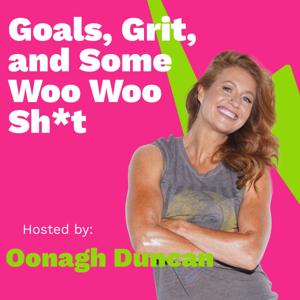
"BREAKING NEWS: Your dream life (and your dream bod) isn’t just going to happen because you made a vision board. Join Oonagh Duncan (fitness expert and bestselling author of Healthy As F*ck/Ditch…

2,589 Listeners

12,852 Listeners
613 Listeners

3,326 Listeners

12,681 Listeners
1,638 Listeners

3,611 Listeners
3,140 Listeners

27,936 Listeners

622 Listeners

738 Listeners

4,531 Listeners

41,372 Listeners

18,949 Listeners
126 Listeners