
Sign up to save your podcasts
Or

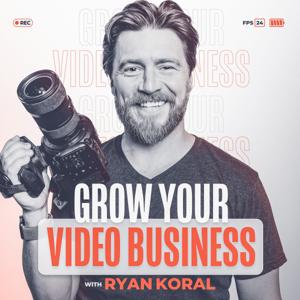


Isaac Haines is a composer in rural Alberta who sells his whole catalog straight to filmmakers with a one-time, pay-what-you-can lifetime license. Recording from his truck mid-elk hunt, Isaac shares how a tough year led him to launch the idea with paid ads, and how it's grown his audience and changed his family's life. He and Ryan also dig into pricing, value, and the role good music can play in making or breaking a video.
Key TakeawaysIsaac Haines is a singer, songwriter, and composer from rural Alberta, Canada, creating raw, cinematic music shaped by solitude and the outdoors.
In This EpisodeFollow Isaac Haines on IG
LinksFind out more about the Studio Sherpas Mastermind
Join the Grow Your Video Business Facebook Group
Follow Ryan Koral on Instagram
Follow Grow Your Video Business on Instagram
Join the Studio Sherpas newsletter
Blue Melnick accidentally started a video business in 2008 when filming one event for a friend turned into five clients. Today he owns and operates Sage Event Management with his wife, Barry Baumgartner, running virtual events for Zoom audiences topping 250,000. Blue shares how they pivoted when COVID erased in-person events and why partnerships beat competing on your day rate.
Key TakeawaysBlue Melnick runs SAGE Event Management with his wife and business partner, Bari Baumgardner. For sixteen years they produced the in-person events behind Russell Brunson, Jeff Walker, Tony Robbins and Amy Porterfield. Then 2020 ended live events. They rebuilt their model from in-person to virtual in three weeks, then helped the rest of the industry do the same. Clients have done over $1 billion in sales since. AI is an even bigger shift, the warning shots have already been fired, and most people are ignoring them (or don't know what to do).
In This EpisodeGuest Links
Find out more about the Studio Sherpas Mastermind
Join the Grow Your Video Business Facebook Group
Follow Ryan Koral on Instagram
Follow Grow Your Video Business on Instagram
Join the Studio Sherpas newsletter
John Meese has spent a decade helping experts get paid for their advice instead of their effort — and this conversation is a direct challenge to how most video business owners price and position their work. He breaks down the difference between running a professional business and an authority business, then walks through how one burnt-out nonprofit filmmaker built an offer that earned $20,000 before a single frame was shot. Along the way he builds an offer for Tell Studios live on the call, which was equal parts humbling and inspiring.
Key TakeawaysJohn Meese is on a mission to steward wisdom; to collect, protect, and multiply knowledge and experience—which is why he's so focused on helping you sell your smarts without losing your soul (or your Saturdays).
In This Episode"I sell my life in one hour increments for five dollars. And I gradually raised the price of how much my life costs." — John Meese
"We live in a world where we have an abundance of knowledge, but a shortage of wisdom." — John Meese
"It's so easy to create a safe offer that nobody wants. Vanilla is a safe flavor, but there's also twenty different companies that sell vanilla. And when I'm buying vanilla ice cream, I'm looking at the price." — John Meese
"Today, no one pays for my effort. They only pay for my advice. My whole business is built off of that." — John Meese
"I think a lot of times people skip this human step of talking to humans about their products." — John Meese
"The tragedy is not your bank account. That can't be the answer." — John Meese
Guest Links
Find out more about the Studio Sherpas Mastermind
Join the Grow Your Video Business Facebook Group
Follow Ryan Koral on Instagram
Follow Grow Your Video Business on Instagram
Join us on Onward Summit
Join the Studio Sherpas newsletter
Beth Nydick spent her career behind the camera — the Tonight Show, national TV, producing other people's stories — before realizing she'd stopped creating for herself. In this conversation, she makes the case that podcast guesting is a six-figure sales system, and that getting booked is the easy part nobody should be bragging about. We also get into the thing most video business owners won't admit: we'll build a gorgeous brand story for any client who pays us, and then never make one for ourselves.
Key TakeawaysBeth Nydick Media exists for the founders and industry leaders who already have momentum but are leaving serious opportunity on the table because attention without architecture is just noise with good lighting. Beth spent two decades inside national television before she built this company around one truth nobody in the digital brand world wants to say out loud: visibility doesn't create authority. What you do with it does.
In This Episode"Podcast guesting is a six-figure sales system. You are borrowing somebody's audience." — Beth Nydick
"Getting on the podcast is the easy part. That's not the hard part. The hard part is actually having an interview that people listen to and take action on." — Beth Nydick
"My brand story creates my origin, creates my authority, and creates the transformational story that everyone needs to hear." — Beth Nydick
"Ninety-eight percent of those businesses do not have their own brand story." — Ryan Koral
"Nobody's gonna save your business. You create your possibility of success, and showing up is always the first step." — Beth Nydick
"Everyone talks about it. Be the kind of person that actually does it." — Beth Nydick
Guest LinksFollow Beth Nydick on IG - DM the word "Ryan" for her podcast listener gift
LinksFind out more about the Studio Sherpas Mastermind
Join the Grow Your Video Business Facebook Group
Follow Ryan Koral on Instagram
Follow Grow Your Video Business on Instagram
Join us on Onward Summit
Join the Studio Sherpas newsletter
David Hoyt spent nineteen years working alongside John Maxwell before landing at The Table Group, Patrick Lencioni's consulting firm, where he now helps leaders master the disciplines of organizational health. In this conversation he breaks down why politics, confusion, and misalignment show up in every organization whether you invite them or not — and what small-team owners can actually do about it. We also get into hiring for behavior instead of skill, why your first leadership move is admitting you've been getting it wrong, and the question David asked me that I couldn't answer about my own team.
Key TakeawaysDavid Hoyt brings over 25 years of experience in leading people and organizations. He is driven to see organizations create healthy cultures and teams where individuals can thrive. Prior to partnering with The Table Group, David had the privilege of serving as an executive leader with John Maxwell for 19 years. As part of Maxwell's inner circle, he ran a significant portion of John's business interests and served as President of The John
Maxwell Company. David works with CEOs and executive teams to help them master the disciplines of Organizational Health to consistently and effectively apply the concepts captured in all of Patrick Lencioni's books.
In This EpisodeQuotes
"We naturally assume people want what we want. And until we slow down and ask them what they actually want, we'll lead them that way." — David Hoyt
"Politics, confusion, misalignment. Those happen naturally. So as a leader, big or small team doesn't matter, a big part of the job is going to battle against those things." — David Hoyt
"Everybody wants to interview for the smart side, like the editing skills. What too many people don't interview for is the behavioral piece." — David Hoyt
"I don't get very high or very low anymore. It all comes down to discipline." — David Hoyt
"I need to block some time to think differently than I'm able to think day in and day out in the rat race of running your business." — David Hoyt
Guest LinksCheck out The Table Group Consulting: tablegroupconsulting.com Contact David Hoyt at [email protected]
LinksFind out more about the Studio Sherpas Mastermind
Join the Grow Your Video Business Facebook Group
Follow Ryan Koral on Instagram
Follow Grow Your Video Business on Instagram
Join us on Onward Summit
Join the Studio Sherpas newsletter
Andrew Cardy spent nine years building a video company with his wife, sold it to a marketing agency in 2023, and walked away in 2025 to figure out what he actually wanted to build next. Now he's got a video business, a nonprofit collective, and a personal brand, and no idea how to talk about any of it online without diluting the others. So we turned this into a coaching session about the thing most of us get wrong: waiting until the mess is cleaned up before we let anyone see it.
Key TakeawaysYou don't need three brands. You need one front door. A personal site can be the home base that points people to whatever project fits them, no more choose-the-right-business-card panic.
Your mission matters more than your mug. The logo, the website, the lighting, the camera, none of that is what's stopping you. Showing up as yourself is the cheapest, most underused marketing you own.
Talk about it before it's finished. Building in public invites collaborators, donors, and clients you'd never have found by launching in secret.
One weekly piece of content can feed everything. Ryan's newsletter becomes a blog, a 7–10 minute YouTube video, and a couple of shorts, one sitting, five assets.
About Andrew CardyAndrew Cardy has been a creative professional for over 20 years. His favorite part of this work has always been helping people learn the value and power of their unique stories. He has worked as a solopreneur, at a nonprofit, a church, a VP in a marketing agency, and in a little company he started with his wife. He's thankful to have worked with brands and businesses of all shapes and sizes, both nationally and internationally. Now, he's excited to be building some new collaborative brands with fellow filmmakers, growing a collective of creative professionals serving global missionaries, and being amazed at his daughter's shot composition skills.
In This Episode"Your mission is more important than your mug." — Ryan Koral
"Nobody cares about the things that we're thinking about over and over and over in our heads. So let's just share where we're at, talk through the mess, let people come along for the journey." — Ryan Koral
"I love making spaces where people thrive. I build the sandbox, I'll put some sand in there, and then you bring the toys." — Andrew Cardy
"There's no other Andrew Cardy in the world. Your story is the strategy." — Ryan Koral
"Anavah is a Hebrew word that means rightly filling the place God has made you to fill." — Andrew Cardy
Guest LinksCheck out Andrew Cardy's websiteFollow Andrew Cardy on LinkedIn
Links
Find out more about the Studio Sherpas Mastermind
Join the Grow Your Video Business Facebook Group
Follow Ryan Koral on Instagram
Follow Grow Your Video Business on Instagram
Join us on Onward Summit
Join the Studio Sherpas newsletter
Lindsey Weigle has spent twelve years helping business owners navigate transition, and she recently took her own advice by narrowing Blue Water Advisory down to one thing instead of trying to be everything to everybody. In this conversation she shares the monthly reflection practice she's run for four years, why our brains sabotage big goals before we even start, and the zero-based approach she now uses for her business and her calendar. We also get into what happens when you outsource your thinking to a machine and why she's not in a hurry to do it.
Key TakeawaysLindsey Weigle is an executive coach and co-founder of Blue Water Advisory, a leadership development and succession consulting firm. With a focus on training, executive coaching, and organizational growth, Lindsey helps business owners and leaders stop managing the life they have and start creating the life they want. She has a gift for asking the right questions — helping clients uncover the problems they can't yet see and find the clarity to move forward with confidence.
In This Episode"Am I creating the life that I want, or am I managing the life that I've got?" — Lindsey Weigle
"Oftentimes we're just rearranging furniture on our back patio. I don't like it over here, I don't like it over here, as opposed to taking a step back and saying, do I like my patio furniture?" — Lindsey Weigle
"We never say I'm going to drink more water, we say I'm going to lose ten pounds. We never say I'm going to start journaling every day, we say I'm going to write a book." — Lindsey Weigle
"If what I was doing was going to get me there, it would have by now." — Lindsey Weigle
"We need to ensure we are not outsourcing our critical thinking to machines." — Lindsey Weigle
"You create the destiny you lean towards." — Lindsey Weigle
Guest LinksFollow Lindsey Weigle on LinkedIn
LinksFind out more about the Studio Sherpas Mastermind
Join the Grow Your Video Business Facebook Group
Follow Ryan Koral on Instagram
Follow Grow Your Video Business on Instagram
Join us on Onward Summit
Join the Studio Sherpas newsletter
Ricky Norris spent a decade shooting documentaries overseas before trading the airports for a San Diego studio, a wife, and three daughters. Now he's running Kilometer Zero and wrestling with the thing nobody warns you about in film school — that you're not just a filmmaker, you're a business of one, and nobody handed you the manual. In this conversation we dig into why a wide net catches the wrong clients, who to hire first when you're finally ready to stop being an island, and how to structure a week so the work stops following you to the dinner table.
Key TakeawaysQuotes
"Everybody thinks their problems are unique to them — in work, in marriage, in family and life. And when you pop that bubble, everything decompresses." — Ricky Norris
"It's a really big net, and none of the right fish are going in, because it's too wide." — Ricky Norris
"There's no HR company. You are your HR company." — Ricky Norris
"If I'm starting to hire my first employee, it's not going to be a shooter or an editor. It's going to be somebody that's going to help me on the administrative side." — Ryan Koral
"Don't let the next three hours be dictated by what comes into your email." — Ryan Koral
Guest LinksCheck out Ricky's website
LinksFind out more about the Studio Sherpas Mastermind
Join the Grow Your Video Business Facebook Group
Follow Ryan Koral on Instagram
Follow Grow Your Video Business on Instagram
Join us on Onward Summit
Join the Studio Sherpas newsletter
Mark Ostach is back on the show, and this one wanders in the best way. We get into why our attention spans are measurably shrinking, why he's "pro-presence" instead of anti-tech, and how showing up as your actual, unpolished self does more for your business than another funnel ever will. Then Mark makes a case for treating events and in-person rooms as a real line item in your marketing budget — with a couple of examples that'll make you rethink where your ad dollars are going.
Key Takeaways"I'm not anti-tech. I love my phone, I use it often, probably sometimes too much. But I'm pro-presence." — Mark Ostach
"We've made the funnels and all of the things so much harder for people to buy from us, because we're not showing up as our real selves." — Ryan Koral
"Be where your people are, get in the room with the people you aspire to be like, and that'll pay dividends for years to come." — Mark Ostach
"How much would I pay for a $17,000 client? I'd spend a thousand dollars every day of the week." — Ryan Koral
"You need to believe in your work as much as she did — not because you want the picture, but because you believe someone needs what you have." — Mark Ostach (recounting speaker coach Bill Hampton)
In this episodeCheck out Mark Ostach's website
LinksFind out more about the Studio Sherpas Mastermind
Join the Grow Your Video Business Facebook Group
Follow Ryan Koral on Instagram
Follow Grow Your Video Business on Instagram
Join us on Onward Summit
Join the Studio Sherpas newsletter
Books MentionedMark Ostach's Book is now available for pre-order on Amazon The Gift of Connection: Reclaiming Presence In the Age of Distraction
Tara Turkington has spent a decade building a photography business, and now she's eyeing the jump into video — but she's stuck on the same things that trip up almost everyone: no portfolio, no contracts, and a recent client who walked off with her ideas. So I coached her live on the show.
We get into pricing your expertise instead of giving it away, what a discovery call should actually accomplish, and why the portfolio problem is way smaller than it feels.
Key TakeawaysFree ideas don't get valued. If you're brainstorming concepts before a contract exists, you're doing unpaid consulting — and clients treat it that way.
Charge for the thinking. A paid discovery workshop reframes you from vendor to strategic partner before a single frame gets shot.
Contracts aren't just for paid work. Free projects and trade deals need them more, not less, because that's where expectations get fuzzy fast.
Your first portfolio piece is hiding in your current client list. You're already on their sets. Ask for access, sign an agreement, make the thing.
About Tara TurkingtonTara is a born-and-raised Michigander, based in Détroit, Michigan. Her photography journey started unexpectedly in 2016 while she was finishing her first year of law school and raising her, now, eleven year old daughter. After a spontaneous trip to Colombia, Tara shared photos online that caught the attention of an established photographer, who invited her to shoot behind-the-scenes content for ABC's The Bachelor's, contestants.
Once those images hit social media, opportunities started rolling in—from brands and businesses to municipalities and individuals. Somewhere along the way, Tara realized photography was what truly lit her up, so she took a leap of faith, left law school, and never looked back.
Now Tara spends her days meeting incredible people, capturing meaningful moments, and helping clients bring their ideas to life. No two days are the same—and she loves it that way.
In This Episode"People who pay, pay attention." — Ryan Koral
"As soon as I put a $2,500 price tag on the workshop, now it's like, okay, we believe Ryan — they really want it to work because they've already invested money." — Ryan Koral
"So I think where I went wrong is I basically gave a workshop for free." — Tara Turkington
"I don't think you need three projects. You do one that's kind of good, then the next one is going to be kind of gooder." — Ryan Koral
"I'm still thinking with 2016 mind, and it's like — you have a literal decade of experience." — Tara Turkington
Guest LinksCheck out Tara's portfolio at taraturkingtonllc.com
Follow Tara on IG
LinksFind out more about the Studio Sherpas Mastermind
Join the Grow Your Video Business Facebook Group
Follow Ryan Koral on Instagram
Follow Grow Your Video Business on Instagram
Join us on Onward Summit
Join the Studio Sherpas newsletter
From the publisher's feed

30,203 Listeners

16,847 Listeners
425 Listeners

82,330 Listeners
1,935 Listeners

4,451 Listeners

8,328 Listeners
10 Listeners
856 Listeners

46,044 Listeners
807 Listeners

210 Listeners
2,018 Listeners

93 Listeners
3 Listeners