
Sign up to save your podcasts
Or

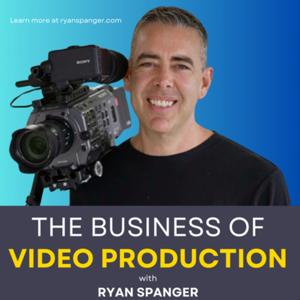


I’ve been working in video production for 27 years, and I’ve never seen this much change happen so quickly.
Recently, I watched AI open Premiere, move into After Effects and make a client’s changes. It even opened Illustrator to create something it needed. I just sat there watching.
In this episode of The Business of Video Production Podcast, I share how I’m using AI to run my production company, what’s still frustrating, and the things I’ve decided to keep doing myself.
I also talk about how I’m helping my coaching clients put these tools to work, including people who don’t consider themselves particularly confident with technology.
Some of the things I cover:
Using an AI assistant to keep track of commitments, sales conversations and projects.
Creating landing pages, and why following a professional design process makes such a difference.
Turning client meetings, emails and briefs into proposals, call sheets, shot lists and storyboards.
Building repeatable workflows for tasks you do regularly.
Creating interview paper edits and rough cuts in Premiere.
Improving the tone of emails while keeping your own voice.
Why I’m still writing my own social media posts.
The mix of excitement, uncertainty and loss that can come with such a big change.
One rule guides how I use AI: the result needs to be better than what we would have created without it. That means staying involved, asking questions, giving feedback and using your judgement.
If you run a video production company, this episode will give you practical ideas to explore and a starting point for deciding where AI fits into your business.
If you’d like help putting these workflows into practice, get in touch to find out about coaching.
Most of your video production work comes from word of mouth. In some ways that's good. But do you know where the next job is coming from?
When I talk to video business owners, referrals are often their biggest source of work. Happy clients recommend them, new projects come in, and things tick along. Until they don’t.
In this episode, I explore how to make referrals a little more predictable, and how to ask for an introduction without making it feel awkward or transactional.
I cover:
What makes clients want to recommend you, beyond the quality of your videos.
Why asking for an “introduction” can feel more natural than asking for a “referral”.
The words you can use to ask a happy client who else you should meet.
Finding opportunities with other teams inside an organisation you already work with.
Why offering a commission can sometimes get in the way.
Who to approach, and why the best time to ask is often when you don’t need the work.
If you’ve been doing good work and hoping people will spread the word, this episode will help you take a more deliberate approach. Start with the relationships you already have, make a list, and have a few honest conversations.
Should Your Video Business Specialise or Offer More Services?
Are you building the video business you actually want, or just taking whatever comes your way?
Saying yes to everything can help you get started. But at some point, you need to decide what you want to be known for, who you want to work with and what you’re prepared to turn down.
In this episode of the Business of Video Production Podcast, I explore how to make those decisions, drawing on my own journey from taking any video work I could find to building a more focused production company.
We look at:
Why starting broad can help you discover the work you’re best suited to.
How to specialise around a type of client or problem, rather than one type of video.
The difference between adding a complementary service and starting a separate business.
What to consider before bringing a new service in-house or contracting it out.
A useful question to ask before expanding: would your ideal client naturally expect you to be good at it?
There’s no single formula that suits every production company. This episode will help you think through what belongs in your business, what doesn’t, and how to keep refining those decisions as your clients’ needs and your own priorities change.
Busy with client work, but never getting around to improving your own business? In this episode, I share how a month of focused work helped me tackle the changes I’d been putting off, and how you could make time for yours.
After a short break from the podcast, I’m back to talk about going into “monk mode”: setting aside a defined period to cut distractions and give important projects your full attention.
Over the past month, I’ve made substantial changes to my production and marketing systems, addressed weaknesses in my business and completed work that had been sitting on my list for too long. With the help of AI, I feel like I’ve done a year’s worth of work in a month.
I talk through:
• How I balance small, consistent daily actions with occasional focused sprints.
• How I make room for uninterrupted work around the demands of running a production company.
• What travelling through Laos taught me about the rhythm of work.
• How AI helped me tackle projects that previously felt too complex or time-consuming.
• How to identify the changes that would make the biggest difference in your business.
If there’s something you know your business needs, whether it’s a better website, updated proposals or a more consistent way to bring in work, this episode will help you think about how to give it the attention it deserves.
Join me for Monk Mode:
I’m supporting video business owners through a month of focused work on their businesses. We start with a one-to-one call to identify your priorities, which I turn into a written action plan. You then work through it with weekly group calls and support from me through Slack between sessions. Ask for all the details at ryanspanger.com/contact.
Your personal brand is essentially what you stand for as an individual, and the value that you bring. It’s basically the public identity that you create for yourself. It’s a way of showing that you’re trustworthy and credible.
In my opinion, it’s something that’s often neglected by video production owners. Who often prefer to invest more time and energy in crafting a company brand. One that’s often painted as being unrealistically larger than it actually is. And missing out on the benefits that building their personal brand could bring. So this is an opportunity to check in with yourself and see where you’re at with personal branding.
If you'd like to learn more about me and what I do, check out my website.
Whether you realise it or not, you're always being coached—by someone else or by yourself. Coaching is the key to unlocking higher performance, overcoming blind spots, and pushing beyond your limits. But what if you don’t have a coach? How do you guide yourself to success, stay accountable, and consistently improve?
In this episode of The Business of Video Production Podcast, we break down the art of self-coaching. You’ll learn:
✔ How to remove negative judgment and build a strong inner dialogue
✔ How to tap into ambition, motivation, and even "dark side" energy to push forward
✔ The difference between setting goals vs. making non-negotiable commitments
✔ How to implement relentlessly and reflect like a seasoned coach
Whether you’re navigating your business alone or looking to strengthen your self-discipline, this episode will give you the tools to lead yourself to success.
Your challenge: By the end of this episode, set one clear, non-negotiable goal for this week.
If you’re interested in how I help video production business owners grow and scale, visit ryanspanger.com
Do you have the production company that you want yet, and if not, do you know what's standing in the way of you getting it? What are the things that you need to work on to help you get the results that you need?
I've worked with many production companies over the years, and what I've found is that there's often a few very particular things standing in their way. So as you're listening to the podcast, I wonder if these six things resonate with you and are helpful for you to work on, or at least think about on this episode of the Business of Video Production podcast.
Your business could be spending money unnecessarily, while overlooking opportunities to invest those funds more effectively.
In this episode from the archives, I explain how to audit your business expenses using the process I follow in my own video production company. You’ll learn how to identify unnecessary costs and redirect that money into areas that can support growth and generate a stronger return.
If you don’t review your expenses regularly, you may be surprised by how much you can save and how much better that money could be working for your business.
Let’s talk about optimising your company’s expenses on The Business of Video Production Podcast.
Visit Ryan Spanger
Some contractors leave you feeling exhausted before the job has even started. Others make you want to hire them within minutes.
The difference isn’t necessarily skill or experience. It’s how they make the problem feel.
In this episode, I share two very different experiences I had while hiring contractors, and what they revealed about the quality clients value most. I also explain how one video business owner changed his approach to a major opportunity, stepped into a leadership role and won the biggest project he had ever quoted.
Clients don’t just want expertise. They want to feel that you understand the problem, know what to do and can make it go away.
Find out more about my video business coaching at https://ryanspanger.com
Does managing sales in your video production business feel scattered or overwhelming? Enquiries get buried in your inbox, follow-ups are forgotten and promising opportunities slip through the cracks. All while you are juggling shoots, edits, invoices and everything else the business demands.
In this episode, I explore how a simple CRM can help you feel more organised, confident and in control of your sales process. You'll learn how to capture enquiries, qualify leads, track proposals and follow up consistently without adding unnecessary complexity to your day.
I also cover:
How to create a clear, practical sales pipeline
Which CRM features are genuinely useful for a video business
How templates and integrations can reduce repetitive admin
Why personal follow-ups often outperform excessive automation
Which sales metrics are worth tracking
How to avoid feature bloat, AI distractions and the temptation to build your own CRM
The software you choose matters less than finding something intuitive and using it consistently. With the right habits, a CRM can help you stop feeling reactive and start approaching sales like a confident, professional video production business owner.
If you would like support creating a more organised and effective video business, learn more about my coaching at ryanspanger.com/coaching.
From the publisher's feed
28,914 Listeners

152,845 Listeners
1,446 Listeners
146 Listeners

257 Listeners

4,451 Listeners
83 Listeners

8,328 Listeners
606 Listeners

856 Listeners

5,361 Listeners

2,264 Listeners

257 Listeners

93 Listeners
0 Listeners