
Sign up to save your podcasts
Or

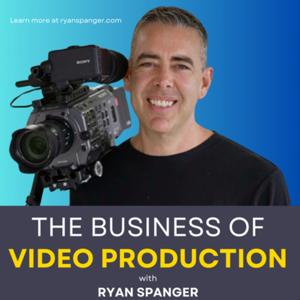


Most video producers know they should be posting more on LinkedIn. They’ve got great work, smart ideas, and interesting stories from the field, but for some reason, they hold back. Maybe it feels awkward. Maybe they don’t know what to say. Or maybe they’ve posted before and nothing happened.
In this episode of The Business of Video Production Podcast, Ryan Spanger breaks down how to build a content strategy for LinkedIn that feels natural, human, and effective.
He shares five simple types of posts that video producers can rotate through, and explains how to make each one engaging and real. You’ll learn how to stay top-of-mind with clients, build authority, and show up consistently without overthinking it.
Ryan also talks about how to think about LinkedIn as part of your business infrastructure, why your personal page matters more than your company page, and how the rise of AI has made authentic human voice more valuable than ever.
If you’ve been overthinking what to post, or worrying about sounding “salesy” or fake, this episode will help you find your rhythm.
You’ll learn how to:
Post with confidence, without over-polishing
Build awareness instead of chasing likes
Use the “five content buckets” to create variety
Stay consistent so clients remember you when it matters
To see examples of Ryan’s behind-the-scenes content or learn more about his coaching for video production business owners, visit ryanspanger.com/coaching. Or connect on LinkedIn.
Are you working harder than ever, but still not getting the results you want?
You’re editing, quoting, filming, following up... replying to client emails at 10pm. You’re grinding. But it still feels like something’s off.
In this episode, I want to show you a different way of thinking. One that’s helped me, and many of my coaching clients, escape the cycle of overwork and under-earning.
It’s called the 80/20 Rule.
We’ll unpack the surprising origin of the Pareto Principle, why most video producers stay stuck in the 80%, and what it actually means to be in the 20: the group of businesses that earn more, stress less, and operate with clarity and calm.
You’ll learn how to:
Focus on the right clients, and drop the ones draining your energy
Offer services that are profitable and easy to deliver
Cut through the noise in your marketing
And reclaim your time for the work that really moves the needle
This isn’t about working more. It’s about working better.
So if you’re ready to stop chasing and start building, hit play.
For coaching and support to build a calm, profitable video business, visit ryanspanger.com
If you're not a natural salesperson, if you dislike high-pressure sales tactics, and if the idea of "closing the deal" makes you uncomfortable, this episode is for you.
In this episode of The Business of Video Production Podcast, I break down how videographers and video producers can sell authentically: without tricks, hacks, or pushy techniques. I share my journey from struggling with sales to developing a natural, effective approach that feels right. You'll learn:
Why being a "non-salesy" person can actually be an advantage.
How to attract the right clients so sales conversations flow naturally.
The key to positioning yourself so clients are already half-convinced before you even speak.
Why traditional sales tactics are becoming less effective, and what to do instead.
If you’ve ever felt like sales isn’t your strength, this episode will help you build confidence and sell in a way that’s true to you.
Visit my website: https://www.ryanspanger.com/blog/sales-for-video-producers
A year ago, I released the Iron Man Model as a six-part series.
I’ve been thinking about that series again recently and decided to bring the whole model back together in one place as a single episode.
Partly because it was originally broken up, and it’s much easier to take it in as a complete framework. But also because, over the past year, it has become more relevant.
There’s more uncertainty in the market. Clients are expecting more while keeping a closer eye on budgets. And AI has moved from something people were curious about to something that is actively shaping how work gets done.
This episode is the full version, start to finish. If you heard it the first time around, it gives you a chance to revisit it with a bit more experience behind you. And if you’re new to it, this will give you the full framework in one go.
At its core, the Iron Man Model is about running a video production company in a way that is lean, efficient, and able to adapt to what’s actually happening in the market.
Inside this episode, I walk through the five pillars that make up the model:
Why AI can be your thinking partner, not just a tool for automation
How smart delegation helps you stay focused on high-value work
Setting up marketing systems that work while you are busy with clients
Innovating your workflow, services, and offers to stay ahead of the curve
And the most important part of all: your own personal transformation
A big theme that runs through all of it is the idea of travelling light. There’s a natural tendency in this industry to keep adding more over time. More gear, more people, more layers of complexity. But the businesses that will succeed best now and into the future are the ones that have simplified and become more focused.
If you’ve been following along for a while, you’ll recognise a lot of this, but you might hear it differently now. And if you’re coming to it fresh, this will give you the full picture in one place.
If you want help applying this to your own business, you can find more about my coaching at ryanspanger.com/coaching.
You know the job isn’t right.
The budget feels off. The scope is messy. It’s going to pull you back into doing more than you want. But it fills the week. It brings money in. It solves the immediate problem.
So you take it.
This episode is about that moment.
We get into the idea of playing the long game in a video production business.
• The gap between effort and reward, and why most people struggle to stay in it
• What the Stanford marshmallow experiment actually tells us (and what it doesn’t)
• The tension between needing money now and building something better over time
• Why “not leaving money on the table” can sometimes work against you
• How strong client relationships actually start and grow
• A real story from my own business that shows the cost of short-term thinking
If you want help building a business where you’re not constantly reacting to whatever comes in, that’s exactly what I work on with production company owners.
You can find more at:
ryanspanger.com/coaching
This episode comes from a listener question sent in by Liston in the Bahamas… and it opens up something a lot of video production businesses struggle with.
How do you create an offer that actually makes it easier for a client to say yes?
We get into what’s really going on in a client’s head before they make a decision… the tension between what they want and what they’re worried about… and how most production companies unknowingly make that tension worse.
From there, we unpack practical ways to reduce risk, build trust, and structure your offer so that it feels easier to move forward.
This includes:
• Why most video production offers sound the same
• How risk actually sits with the client (even when you think it doesn’t)
• A real example of risk reversal that led to a long-term client
• Where “grand slam offers” work… and where they don’t
• How your offer should change depending on the stage of your business
• Simple ways to make your offer more compelling without lowering your price
If you’ve got a question you’d like me to cover on the podcast, send it through.
And if you’ve been getting value from these episodes, a follow or review helps more people find the show.
Have you ever sent an invoice, felt good about the work… and then the client pushes back?
It’s a tough moment. You feel defensive. Like you need to justify yourself.
But how you handle it matters. It can strengthen the relationship, or damage it.
In this episode, I break down how to respond without getting emotional, how to explain your value clearly, and how to hold your ground while still protecting the relationship.
In this episode:
Why client objections aren’t always a bad thing
Where these situations usually come from
A simple 4-step way to handle the conversation
When to stand firm and when to be flexible
A better way to think about value and pricing
Coaching:
If you want help handling situations like this in your business, head to:
ryanspanger.com/coaching
If you’ve been listening to this podcast for a while, you probably have a sense of how I think about running a video production business. The strategies, the systems, the way I approach clients and pricing.
And if you're new, it will help fill in some gaps and provide context.
But what I don’t talk about very often is where all of that actually comes from.
In this episode, I take a step back and share the story behind the podcast. Why I started it, what was going on in my life at the time, and how it connects to the way I run my business today.
In this episode, you’ll hear:
Why I committed to showing up every week, even when no one was listening
The role this industry has played in my life over the last 25 years
The point where I started questioning what I was building and why
How I moved from holding everything close to sharing it openly
What this podcast is really about beyond tactics and strategies
If you’re in a moment where you’re questioning your direction, or thinking about what the next step looks like, this episode should give you something to think about.
And if nothing else, it will give you a clearer sense of where these ideas come from and how you might apply them in your own way.
In this episode, Ryan walks through the practical steps behind building recurring video packages that actually work in a production business.
You’ll learn how to think about retainers from the client’s perspective, how to structure the offer, and how to avoid the common mistakes that turn recurring work into a production treadmill.
Ryan also explains:
• The types of clients who are most likely to commit to ongoing video work
• Why niching makes recurring packages dramatically easier to sell
• How to reduce the perceived risk for clients when introducing a monthly agreement
• The role systems and processes play in delivering recurring work profitably
• How to define scope clearly so retainers don’t spiral out of control
• Why many successful production companies treat retainer clients as a different category of customer
If you’ve ever thought about introducing recurring packages into your video business, this episode breaks down how to approach it in a thoughtful and sustainable way.
Listen in to learn the practical thinking behind selling, structuring, and delivering recurring video work.
Many videographers start their careers filming weddings. It can be a great training ground and, for a time, a reliable source of income. But for many people, there eventually comes a moment where they begin to wonder if it’s time to move on.
In this episode, I share my own experience moving from wedding videos into corporate video production. I talk about the early years of filming weddings, the skills it helped me develop, and the moments that made me realise it was time to step away and build something different.
Wedding videos gave me hundreds of hours of practical experience behind the camera. They taught me how to work under pressure, capture moments as they unfold, and deal with unpredictable environments. At the same time, they also came with long days, intense pressure, and the challenge of balancing work with family life.
This episode explores both sides of that journey.
I also talk about the practical and psychological side of making the transition into corporate work, including how to use the experience you already have and how to start building a portfolio that attracts the kind of clients you want to work with.
If you currently film weddings, are thinking about it, or are starting to feel ready for something different, this episode should give you a useful perspective on the path forward.
In this episode:
• The advantages of starting your career in wedding videography
• What wedding videos taught me about shooting and storytelling
• The realities of long wedding days and high-pressure shooting
• The moment when good work can start to feel draining
• Why it can be difficult to walk away from something that still works financially
• Practical steps to transition from wedding work to corporate clients
• The importance of building a portfolio and proof of capability
• Knowing when it’s time to move on to the next chapter
If you run or are building a video production business and would like help attracting better clients and building a more sustainable company, you can learn more about my coaching here:
ryanspanger.com/coaching
From the publisher's feed
29,002 Listeners

152,932 Listeners
1,447 Listeners
146 Listeners

260 Listeners

4,465 Listeners
83 Listeners

8,560 Listeners
608 Listeners

858 Listeners

5,391 Listeners

2,266 Listeners

244 Listeners

93 Listeners

0 Listeners