
Sign up to save your podcasts
Or

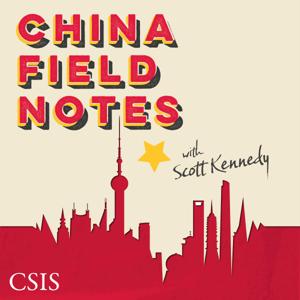

In this episode of China Field Notes, Scott Kennedy speaks with historian Michael Szonyi about why fieldwork matters to social historians and trends in U.S.-China relations. Szonyi unpacks the concept of “history from below” and how doing fieldwork in localities helps social historians understand history from the perspective of everyday people, their practices, and community dynamics that are less visible when looking through the lens of the country’s leaders or international politics. Drawing on years of research in places such as Quemoy and Yongtai (Fujian), he describes how local records, such as land deeds and genealogies, complicate familiar national narratives and reveal how ordinary communities experienced major political and geopolitical shifts. Kennedy and Szonyi conclude by discussing the role of historians as public intellectuals, the risks of scholarly decoupling, and why first-hand knowledge of China remains essential for navigating the future of U.S.-China relations.
Michael Szonyi is Frank Wen-hsiung Wu Professor of Chinese History and former Director of the Fairbank Center for Chinese Studies at Harvard University. A social historian of late imperial and modern China, his books include The Art of Being Governed: Everyday Politics in Late Imperial China (2017) and Cold War Island: Quemoy on the Front Line (2008). His most recent works are The China Questions 2: Critical Insights into US-China Relations (co-edited with Adele Carrai and Jennifer Rudolph, 2022) and Making Meritocracy: Lessons from China and India, from Antiquity to the Present (co-edited with Tarun Khanna, 2022). He received his B.A. from the University of Toronto and his D.Phil. from Oxford, where he was a Rhodes Scholar. He has also studied at National Taiwan University and Xiamen University. He is currently writing a modern history of rural China and a study of a remarkable trove of local documents found in Yongtai County, China. In 2024, he was made an “Honorary Villager of Yongtai.”
 View all episodes
 By Center for Strategic and International Studies
5
66 ratings
In this episode of China Field Notes, Scott Kennedy speaks with historian Michael Szonyi about why fieldwork matters to social historians and trends in U.S.-China relations. Szonyi unpacks the concept of “history from below” and how doing fieldwork in localities helps social historians understand history from the perspective of everyday people, their practices, and community dynamics that are less visible when looking through the lens of the country’s leaders or international politics. Drawing on years of research in places such as Quemoy and Yongtai (Fujian), he describes how local records, such as land deeds and genealogies, complicate familiar national narratives and reveal how ordinary communities experienced major political and geopolitical shifts. Kennedy and Szonyi conclude by discussing the role of historians as public intellectuals, the risks of scholarly decoupling, and why first-hand knowledge of China remains essential for navigating the future of U.S.-China relations.
Michael Szonyi is Frank Wen-hsiung Wu Professor of Chinese History and former Director of the Fairbank Center for Chinese Studies at Harvard University. A social historian of late imperial and modern China, his books include The Art of Being Governed: Everyday Politics in Late Imperial China (2017) and Cold War Island: Quemoy on the Front Line (2008). His most recent works are The China Questions 2: Critical Insights into US-China Relations (co-edited with Adele Carrai and Jennifer Rudolph, 2022) and Making Meritocracy: Lessons from China and India, from Antiquity to the Present (co-edited with Tarun Khanna, 2022). He received his B.A. from the University of Toronto and his D.Phil. from Oxford, where he was a Rhodes Scholar. He has also studied at National Taiwan University and Xiamen University. He is currently writing a modern history of rural China and a study of a remarkable trove of local documents found in Yongtai County, China. In 2024, he was made an “Honorary Villager of Yongtai.”
251 Listeners

609 Listeners
210 Listeners
150 Listeners
608 Listeners
211 Listeners

717 Listeners
2 Listeners
289 Listeners
147 Listeners
6 Listeners
85 Listeners

17 Listeners
1 Listeners
143 Listeners
25 Listeners
4 Listeners
445 Listeners
2 Listeners
114 Listeners

5 Listeners
42 Listeners
165 Listeners
24 Listeners
148 Listeners

0 Listeners
14 Listeners
2 Listeners
11 Listeners
9 Listeners
0 Listeners

0 Listeners