
Sign up to save your podcasts
Or

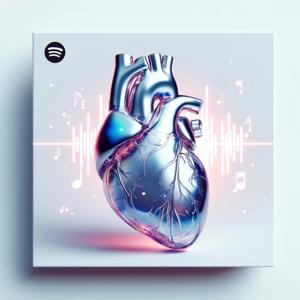


In this episode, we review highlights of cardiovascular considerations in pregnancy. How does pregnancy affect blood volume, systemic vascular resistance, pulmonary vascular resistance, heart rate, and cardiac output? What routine physical exam findings in pregnancy that can mimic heart disease, and what physical exam findings are abnormal in pregnancy? How do LV mass, chamber size, and LV outflow tract velocity time integral (VTI) change in pregnancy? What is the effect of labor and delivery on cardiac output, blood volume, and venous return? What conditions comprise WHO risk class IV pregnancy patients? If a patient with peripartum cardiomyopathy has recovery of LV ejection fraction to >=50%, which WHO pregnancy class does that place them in? Are aspirin, clopidogrel, and heparin safe in pregnancy? What is the difference between gestational hypertension, pre-eclampsia, and eclampsia? What severe features comprise the diagnosis of pre-eclampsia with severe features? What is the target blood pressure in pregnancy? Tune in for answers to these questions.
Difficulty Level: Intermediate
You are listening to Hu Said: Cardiology Board Review Series (2024-2025 Season)
Please subscribe, rate, and support the channel! Ads help keep materials free for everyone.
More MedEd resources available at www.rueyhu.com
Updates at Twitter/X: @Ruey_Hu
In this episode, we review cardiac masses, including primary benign, primary malignant, and secondary (metastatic) cardiac tumors. Are malignant tumors much more likely to occur in the ventricles or the atria? If you see a myxoma in any cardiac chamber other than the left atrium, what syndromic complex should you suspect? What echocardiographic features distinguish benign and malignant cardiac masses? Which type of sarcoma is the most common primary cardiac tumor? What are the most common sources of metastatic cancer to the heart? Which cardiac chamber or junction would you find the moderator band, eustachian valve, crista terminalis, and Chiari network, which may be mistaken as cardiac masses? In what situation is resection of a papillary fibroelastoma indicated? How can you differentiate between Lambl's excrescences, fenestrated aortic valve, and nonbacterial thrombotic endocarditis? Tune in for answers to these questions.
Difficulty Level: Intermediate
You are listening to Hu Said: Cardiology Board Review Series (2024-2025 Season)
Please subscribe, rate, and support the channel! Ads help keep materials free for everyone.
More MedEd resources available at www.rueyhu.com
Updates at Twitter/X: @Ruey_Hu
In this episode, we review orthostatic hypotension (OH). What criteria define OH? What is a simple way to distinguish neurogenic OH from volume depletion-related OH? What criteria define postural orthostatic tachycardia syndrome (POTS)? What non-pharmacologic measures should be undertaken as first-line measures for OH? How do fludrocortisone, midodrine, droxidopa, and atomoxetine work, and what are their side effects? How is supine hypertension managed? Tune in for answers to these questions.
Difficulty Level: Easy
You are listening to Hu Said: Cardiology Board Review Series (2024-2025 Season)
Please subscribe, rate, and support the channel! Ads help keep materials free for everyone.
More MedEd resources available at www.rueyhu.com
Updates at Twitter/X: @Ruey_Hu
In this episode, we explore the diagnosis and management of three important causes of secondary hypertension: renovascular hypertension, primary aldosteronism, and pheochromocytoma. Which segments of the renal artery are preferentially affected by atherosclerotic renovascular hypertension versus fibromuscular dysplasia, and which is more likely to be accompanied by disease in other arterial beds? What characteristics suggest that a patient may benefit from renal artery revascularization? What next steps do you pursue if a plasma aldosterone to renin ratio exceeds 20? How do you differentiate between unilateral adenoma and bilateral adrenal hyperplasia? When would you pursue a MIBG scan in pheochromocytoma? Tune in for answers to these questions.
Difficulty Level: Easy
You are listening to Hu Said: Cardiology Board Review Series (2024-2025 Season)
Please subscribe, rate, and support the channel! Ads help keep materials free for everyone.
More MedEd resources available at www.rueyhu.com
Updates at Twitter/X: @Ruey_Hu
In this episode, we review hypertensive urgency and emergency. What counts as "end-organ" damage in hypertensive emergency? What neurological signs are consistent with hypertensive encephalopathy? Which acute conditions require bringing systolic blood pressure (SBP) down to ≤160 mmHg in the first hour, and which require bringing SBP down to ≤140 mmHg in the first hour? Which acute conditions require bringing SBP down to ≤120 mmHg in the first 5 minutes? How does the BP threshold change in acute ischemic stroke depending on whether you plan to give tissue plasminogen activator (tPA) or not? What is permitted hypertension? Tune in for answers to these questions.
Difficulty Level: Intermediate
You are listening to Hu Said: Cardiology Board Review Series (2024-2025 Season)
Please subscribe, rate, and support the channel! Ads help keep materials free for everyone.
More MedEd resources available at www.rueyhu.com
Updates at Twitter/X: @Ruey_Hu
In this episode, we review chronic hypertension. How did the the definitions of stage 1 and stage 2 hypertension change in the most recent AHA/ACC/ASH guidelines? What happened to "prehypertension"? Which chronic condition needs control of systolic blood pressure (SBP) to <120/80; which conditions need control of SBP to <130/80? What is the natural variation in BP with sleep and with age? What are the most common causes of secondary hypertension? Which outpatient antihypertensives cause reflex tachycardia, and which cause salt and water retention? Tune in for answers to these questions.
Difficulty Level: Easy
You are listening to Hu Said: Cardiology Board Review Series (2024-2025 Season)
Please subscribe, rate, and support the channel! Ads help keep materials free for everyone.
More MedEd resources available at www.rueyhu.com
Updates at Twitter/X: @Ruey_Hu
In this episode, we review the large vessel vasculitides, medium-vessel vasculitides, ANCA-associated small-vessel vasculitides, and immune complex associated small-vessel vasculitides. What is the difference in the population of patients affected by Takayasu's arteritis of the aorta and its branches versus giant cell arteritis of the temporal artery? What about subcranial giant cell arteritis, which affects the aorta instead of the temporal artery? Which disease is characterized by corkscrewing, inflammation, and thrombosis of vessels of the upper and lower limbs, leading to reduced pulses and gangrenous ulcers, which cannot resolve without smoking cessation? What are the criteria for diagnosing Kawasaki disease? What percent of Kawasaki disease patients will go on to develop coronary artery aneurysms? Tune in for answers to these questions.
Difficulty Level: Easy
You are listening to Hu Said: Cardiology Board Review Series (2024-2025 Season)
Please subscribe, rate, and support the channel! Ads help keep materials free for everyone.
More MedEd resources available at www.rueyhu.com
Updates at Twitter/X: @Ruey_Hu
In this episode, we review carotid artery stenosis (CAS), including its presentation, diagnosis, medical management, and intervention. Do dizziness, presyncope, or syncope count as symptomatic CAS? What is the definition of nondisabling stroke and transient cerebral ischemic symptoms? What risk factors permit ordering a carotid duplex ultrasound before coronary artery bypass graft surgery? What peak systolic velocity on ultrasound correspond to >=50% and >=70% stenosis of a carotid artery? What antiplatelet regimen is recommended for CAS? In patients with symptomatic CAS, in what time window after the non-disabling stroke or TIA should you perform revascularization? Is there any role for revascularization of severe CAS that is asymptomatic? Tune in for answers to these questions.
Difficulty Level: Easy
You are listening to Hu Said: Cardiology Board Review Series (2024-2025 Season)
Please subscribe, rate, and support the channel! Ads help keep materials free for everyone.
More MedEd resources available at www.rueyhu.com
Updates at Twitter/X: @Ruey_Hu
In this episode, we review limb peripheral artery disease (PAD). What is the difference in management of a marginally threatened limb vs immediately threatened limb? In whom can you order ankle brachial index (ABI) testing on? When do you reach for toe brachial index (TBI) or exercise ABI? Is there a role for cilostazol or pentoxifylline? Who should be given low-dose rivaroxaban therapy? Tune in for answers to these questions.
Difficulty Level: Easy
You are listening to Hu Said: Cardiology Board Review Series (2024-2025 Season)
Please subscribe, rate, and support the channel! Ads help keep materials free for everyone.
More MedEd resources available at www.rueyhu.com
Updates at Twitter/X: @Ruey_Hu
In this episode, we review aortic intramural hematoma (IMH), penetrating aortic ulcer (PAU), infectious aortitis and aortic atheroemboli. What condition is characterized by a crescentic aortic wall thickening and echolucency within the aortic wall with no intimal flap on transesophageal echocardiogram? What percent of IMH progresses to aortic dissection?What imaging findings distinguish IMH from dissection on non-contrast CT, contrast CT, and TEE? What are the criteria for complicated IMH, and when is emergent surgical repair recommended? How does the management of type A IMH differ from that of type B IMH? How are grades 1, 2, 3, 4, and 5 aortic plaques defined? What features on imaging of PAU designate PAU as high-risk? When should PAU be repaired? Which organisms are responsible for infectious aortitis? Tune in for answers to these questions.
Difficulty Level: Easy
You are listening to Hu Said: Cardiology Board Review Series (2024-2025 Season)
Please subscribe, rate, and support the channel! Ads help keep materials free for everyone.
More MedEd resources available at www.rueyhu.com
Updates at Twitter/X: @Ruey_Hu
From the publisher's feed

7,626 Listeners
891 Listeners
3,344 Listeners

111,779 Listeners

136 Listeners

1,159 Listeners

63 Listeners
373 Listeners
431 Listeners
33 Listeners