
Sign up to save your podcasts
Or



Based on Podcast App listening data
It seems like everyone is talking about stress. How to manage it. How to get rid of it. How to avoid it at all costs.
But maybe in our journey to eradicate stress from our lives, we’re losing something far more valuable.
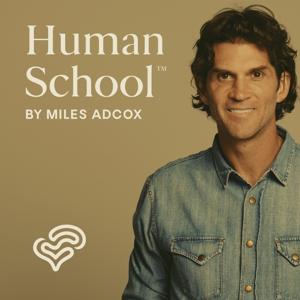
In this solo conversation, Miles Adcox reframes our entire relationship with stress. Instead of treating stress like an opponent to beat, what if we treated it like a system trying to protect us?
Join Miles as he shares the importance of building capacity over elimination, why meaningful living requires being stretched, and how to become a trusted partner to your own nervous system.
In this episode, we explore:
Looking to go deeper into your personal growth journey? The conversations on Human School are shaped by the work happening at Onsite Workshops. If you're looking to slow down, break patterns, and do the inner work, visit experienceonsite.com
Episode chapters:
00:00 Intro: Is stress really the enemy?
00:40 The room that changed how I view trauma vs. stress
01:45 How burnout and emotional exhaustion actually begin
02:35 Why modern wellness tools miss the mark
03:15 Stress is an adaptation system, not a design flaw
04:15 Every meaningful thing in life asks something stressful of you
05:10 Increasing capacity vs. eliminating stress
05:55 Everyday pressure vs. profound adversity
06:45 Stress is an experience, not an identity
07:20 Why modern nervous systems are carrying more than ever before
07:50 Swap shame for curiosity: Becoming a student of your nervous system
08:35 Stop playing tug-of-war with your body
Follow Human School on Instagram: https://hubs.la/Q04tfRwT0
What do you do when you go from singing at local bars to millions of video views, playing at Madison Square Garden with Morgan Wallen, and hearing 20,000 people sing your lyrics back to you? If you’re Larry Fleet, you still shop at Ace Hardware.
Larry Fleet writes the kind of country songs that feel like your own memories — jumping railroad tracks in a truck bed, learning how to tell stories in a barbershop chair, the sound of truck tires in the gravel. In this conversation, Larry opens up about the “simple” mistakes we’re making in modern storytelling, what fatherhood has changed in his songwriting, and how he's managed to tour and write with Willie Nelson, Morgan Wallen, and other heroes of the genre without losing the guy from White Bluff, Tennessee.
The conversations we have on Human School are shaped by the work happening every day at Onsite. If you feel stuck in the same patterns, Onsite's Living Centered Program helps you slow down, go deeper, and do the inner work that changes things. If you’d like to learn more about Onsite, visit us –– experienceonsite.com
In this conversation:
Why “clutter” might be the enemy of great storytelling
The $5-a-head night Larry still keeps close, and why he never lets himself forget it
Why he built his newest record with zero radio in mind — and what happened when it hit anyway
The ways fatherhood has changed him, including teaching him new ways to communicate with others
The surprising place his storytelling voice actually comes from
What it actually takes to stay a person instead of becoming a product once people start paying attention
How to build a songwriting career one bad song (then a hundred more) at a time
How to stay "a normal dude" while touring arenas with Willie Nelson and Morgan Wallen
Why simple, honest storytelling can reach people that polished products can't
Episode timestamps:
00:00:00 — Welcome to Human School
00:06:30 — Small-town origins
00:25:30 — Another Year Older — the new record
01:01:30 — The true story behind "5:25"
01:04:00 — Why Larry stopped writing for the radio
01:07:30 — What We Can Learn from Kids
01:15:00 — $5 a head in North Georgia
01:19:30 — The Radio Said "No" to "Where I Find God"
01:20:30 — The call from Morgan Wallen, and Madison Square Garden
01:38:30 — What it means to stay human when you're a "product"
01:47:00 — The barbershop that taught him how to tell a story
01:51:30 — What "Where I Find God" means to the people who needed it
01:59:00 — Scotland, and the tears neither of them expected
02:07:30 — Larry on prison ministry and San Quentin
Follow Human School
YouTube: @humanschoolofficial
Instagram: @humanschoolofficial
TikTok: @humanschoolofficial
Why does being right feel so much better than being curious? And is our obsession with certainty the cause of our greatest divides?
This episode breaks down the psychology behind certainty — why our brains default to it, what it costs us in our relationships, and why curiosity might be the more reliable path to actually feeling connected to other people.
What you'll learn
Building your curiosity muscles? Onsite offers a range of experiences to do life-changing work around your story and what your body might be holding onto. Learn more here.
Timestamps
Stay connected with Human School:
YouTube - https://hubs.la/Q04rLNLl0
Instagram - https://hubs.la/Q04rLNVX0
Threads - https://hubs.la/Q04rLP6D0
TikTok - https://hubs.la/Q04rLPfY0
Have you ever gotten a clean bill of health and still felt like something was wrong? What if the anxiety, the brain fog, the thing you can't explain isn't in your head, but a story your body inherited?
Dr. Chris Motley is a functional medicine practitioner and acupuncturist based in Nashville, and the host of the Ancient Health Podcast. For over 22 years, he's blended Chinese medicine, kinesiology, and biofeedback with Western diagnostics to find what standard testing misses — the chronic weaknesses that don't show up on a bloodwork panel but show up in how we sleep, how we digest, and how we carry stress in our bodies.
In this episode, Dr. Motley and Miles talk about how inflammation from food can weaken the blood-brain barrier and surface in surprising ways — and why the weakest organ in your body often maps straight back to how your parents and grandparents lived. Today, you'll learn how to read your body's own signals, why curiosity heals faster than fear, and what it actually looks like to get to the root of a problem instead of managing its symptoms.
In this conversation, you'll learn:
If this stirred something in you, Onsite offers a range of experiences to do life-changing work around your story and stored trauma that your body is asking for. Learn more at experienceonsite.com
Follow Human School:
YouTube - Human School Podcast
Instagram - @humanschoolofficial
Threads - @humanschoolofficial
TikTok - @humanschoolofficial
What We Discuss:
00:00:00 – Meet Dr. Chris Motley
00:02:41 – Why He Left a Growing Practice
00:08:19 – The Danger of Expertise Without Curiosity
00:12:04 – Meeting Overwhelmed Patients with Optimism
00:13:50 – How Motley Found His Interest in Medicine
00:17:51 – Motley’s Story Through His Gallbladder
00:23:30 – Where He Starts with Every New Patient
00:28:00 – Are Emotions Hiding Inside Our Organs?
00:33:54 – The Benefits of Integrated Medicine: Treating Mind & Body
00:42:36 – The Anxious Patient
00:47:51 – "What You Eat Is What You Think"
00:52:44 – The Health Goal Every Day
00:55:06 – Your Gut is Your Second Brain: Explaining Gut-Brain Axis
01:01:06 – Drivers of the Mental Health Crisis Happening Now
01:05:54 – Why Do We Have So Many Food Allergies?
01:06:45 – People, Food, & the ADD and ADHD Rise
01:08:51 – The Habit Change to Reset Your System
01:11:58 – Motley’s “Basic” Steps Towards Physical Wellness
01:14:01 – Miles’s Steps Toward Emotional Wellness
01:16:47 – What is behind Chronic Constipation?
01:17:54 – Getting Back into Your Body
01:25:22 – What Your Face Reveals About Your Story
01:27:50 – Ancient Practices over Modern Technology
01:33:06 – Motley Outside of Medicine
01:35:41 – The Lesson Weaving Throughout 22 Years Practicing
This episode is a conversation between practitioners sharing personal experience and professional perspective — it is not medical advice. Please consult your own physician or healthcare provider before making any changes to your health, diet, or treatment plan.
Have you ever believed you're only worthy of attention when you're performing and perfect?
What if the thing you fear your kid will inherit is the exact thing you've never worked through yourself?
Tori Kelly, a Grammy-winning vocalist who's been sharing her voice with the world since she was a kid, sits down with Miles for a conversation about identity, motherhood, and what happens when the performance stops.
Tori opens up about growing up in a mixed-race householdwhere she often felt othered, getting signed at 12 and "shelved" before she'd lived enough life to have something to say, and the lie she quietly believed for years: that she wasn't worthy of attention unless she was singing. She talks about touring stadiums with Ed Sheeran while pregnant, writing her new album, God Must Really Love Me, in two weeks while holding her newborn son, and why his first cry made the record.
Tori and Miles go deep into the perfectionism she traces back to her earliest days on stage, the phone cleanses she uses to fight comparison, and why motherhood has made her want her son to see her mess up, say sorry, and be human. Miles shares a mentor's metaphor about gratitude that reframes how you see whatever you're circling right now, and Tori tells the story of the drive where the phrase "God must really love me" came out of her mouth before it became an album title.
Ever notice the pattern you're trying to protect your kids from is usually the one you haven't fully worked through yourself? Onsite's Living Centered Program for parents and adults ready to finally do their own work, not just manage everyone else's. It's not about becoming a perfect parent; It's about becoming an honest one. Learn more at experienceonsite.com
In this conversation, you'll learn:
Follow Human School:
YouTube - Human School Podcast
Instagram - @humanschoolofficial
Threads - @humanschoolofficial
TikTok - @humanschoolofficial
What We Discuss:
00:00:00 – Meet Tori Kelly
00:01:51 – Her Grand Ole Opry Debut, One Night Before ThisConversation
00:05:34 – Genre-less on Purpose
00:08:41 – The Vocalist Everyone Expects, the Storyteller She's Becoming
00:10:51 – The Soundtrack of Her Childhood
00:12:43 – Signed at 12 & Promised the World
00:23:05 – A Career Built on Slow Builds, Not Big Breaks
00:28:24 – How Becoming a Mom Rewired Her as an Artist
00:29:24 – Touring Stadiums With Ed Sheeran While Pregnant
00:31:13 – What Motherhood Cracked Open
00:36:29 – She Doesn't Want Her Son Thinking He Has to BePerfect
00:38:46 – Tracing Her Perfectionism Back to the Root
00:40:59 – How Approval Got Tangled Up With Her Voice
00:47:31 – The Phone Cleanse That Gave Her Mind Back
00:56:06 – The Story Behind "God Must Really Love Me"
01:01:46 – The Vulture Metaphor: Reframing Gratitude
01:04:41 – Congruence, Not Perfection
01:09:25 – Her Husband and Life on Tour
01:13:34 – Ending on the Only Line That Fits
How do you help an anxious child build real confidence instead of just managing their fear?
What if the very thing keeping your kid unsafe is how hard you're working to protect them?
Sissy Goff and David Thomas are two of the most trusted voices in child and adolescent mental health today, counselors at Daystar Counseling Ministries and hosts of the popular Raising Boys and Girls podcast. With more than three decades combined sitting across from kids and their families, they've become go-to resources for parents navigating anxiety, emotional development, and resilience in childhood. Their new New York Times Bestselling book, Capable, just carried them through a national press tour, including a stop on the Today Show, and for good reason: it takes on one of the most urgent questions facing parents right now.
In this conversation, Sissy, David, and Miles unpack why so many kids today aren't just anxious; they're increasingly unwilling to try, and what parents can actually do to build resilience instead of just managing symptoms. They talk through the difference between attunement and over-protection, why "trust your gut" might be the most important piece of parenting advice out there, and how to set healthy boundaries around technology and social media without shutting your kids out of the world they're growing up in. It's a grounded, hopeful conversation about childhood anxiety, parenting under pressure, and what it actually takes to raise capable, confident kids in an overwhelmed world.
Your kids are watching you more closely than they're listening to you. Onsite's Living Centered Program is a place for parents ready to do their own work, so the patterns they pass down are worth passing on. Learn more at experienceonsite.com.
Follow Human School:
YouTube - Human School Podcast
Instagram - @humanschoolofficial
Threads - @humanschoolofficial
TikTok - @humanschoolofficial
For more resources and tools from Sissy Goff & David Thomas, visit raisingboysandgirls.com or follow along on Instagram @raisingboysandgirls.
In this conversation, you'll learn:
What We Discuss:
00:00:00 – Meet Sissy Goff and David Thomas
00:04:21 – Over-Correction: the Field's New Blind Spot
00:05:35 – Catching Up & Life After the Capable Press Tour
00:08:31 – The Soap Opera Character & Camp Job that Shaped Careers
00:14:02 – A Working 32-Year Partnership
00:17:09 – Sissy’s Dog Who Came to Work & Comforted Teen's Tears
00:20:20 – Sammy, Onsite’s Beagle Who Escorted Every New Guest
00:30:15 – Backstage at the Today Show
00:36:58 – What This Work Taught Them About Being Human
00:41:55 – A National State of Emergency Hiding in Plain Sight
00:49:32 – Escape and Avoidance Feel Like Good Parenting
00:53:29 – What Attunement Actually Looks Like
00:59:25 – “Go in the Strength You Already Have”
01:03:22 – What's Really Underneath a Lack of Confidence
01:10:56 – Trust the Process, Even in Their Hardest Stretch
01:18:25 – Is my child ready for technology?
01:26:18 – Doing Your Own Work Is the Greatest Gift to Your Kids
01:27:16 – A Look Inside Daystar Counseling Ministries
What's the real difference between showing up for someone and rescuing them?
Can a single pair of socks undo years of not letting yourself feel anything?
Bobby Bones went from a campus radio station in Arkansas to the National Radio Hall of Fame, two #1 New York Times bestsellers, and a syndicated morning show heard by millions, turning his own story into a reason other people feel less alone in theirs. He sits down with Miles Adcox eight weeks into fatherhood, in a season that's forced him to slow down after two decades of never having to.
Bobby opens up about being raised by a 16-year-old motherwho struggled with addiction his whole childhood, the trailer he bought her the first time he made real money, and the hard lesson in what enabling actually looks like when you love someone who's sick. He reveals the moment a stranger's kindness at a therapy intensive at Onsite finally broke him open, and shares the four-letter word his mother never said but it’s the one his grandmother said so consistently it became the only safety he knew. Miles and Bobby go deep into being triggered by both praise and criticism, why Bobby only checks hiscomments on Tuesdays, and the grief of having a daughter who'll never meet the grandmother who shaped him most.
In this conversation, you'll learn:
Feeling stuck in patterns you can't quite name? Onsite'sLiving Centered Program is built for people ready to slow down and do the deeper work that creates real change. Learn more at experienceonsite.com.
Follow Human School:
YouTube - Human School Podcast
Instagram - @humanschoolofficial
Threads - @humanschoolofficial
TikTok - @humanschoolofficial
What We Discuss:
00:00:00 – Meet Bobby Bones
00:03:47 – Why every performer is secretly insecure
00:05:09 – The secret to connecting with people in interviews
00:15:47 – Finding the line between public and private life
00:17:56 – Getting rejected to 2 Bestsellers
00:22:32 – Bobby’s Mom: 16 years old, no support, and anaddiction that never let go
00:31:57 – What to say to someone who is supporting an addict
00:38:06 – "I wish our baby could meet my mom"
00:39:33 – The four-letter word his grandma never stoppedsaying
00:47:11 – Why compliments feel like threats to him
00:50:29 – The boundaries that keep him from spiraling online
00:53:35 – Property and therapy: the two best investments he'smade
00:58:27 – His Onsite story he's never told quite like this
01:07:03 – The TEDx talk that flopped & the one that gothim back on stage
01:11:06 – What watching his wife become a mom taught himabout love
01:13:43 – His message to his daughter, twenty years from now
Have you ever lived a dream so fully that you felt the quiettug to walk away? Not because it failed you, but because something new was calling.
What does it look like to anchor your identity in somethingthat can never be taken from you, even when everything you've built your life around closes a chapter?
Reece Weaver spent her entire third season as a Dallas Cowboys Cheerleader (DCC) carrying a decision nobody outside her closest circle knew about yet. The preacher's granddaughter from Jacksonville, Florida who started dancing at three, earned a scholarship to the University of Alabama —where she also met her husband Will — and felt something shift in her chest the moment she walked into AT&T Stadium as a sophomore. In the years to follow she has become the most-followed DCC in the franchise's history, a breakout presence on Netflix's America's Sweethearts: Dallas Cowboys Cheerleaders,and then spent a year in therapy, prayer, and conversation with people she trusts, processing a feeling of “what’s next?” she couldn't explain and couldn't ignore.
In this conversation, Miles Adcox and Reece gets to the story underneath her retirement announcement. Reece opens up about the mental and emotional toll that the spotlight created long before the headlines caught up. She talks about the comparison trap that quietly became perfectionism, not being able to ignore people’s opinions and critiques on social media, her mom's reminder that "if that crown ever gets too tight, we can easily take it off," and why the word "retirement" still doesn't sit right with her. Miles and Reece also get to explore the joy of this next season and what is to come: a book, new hometown, being a cheerleader to her friends, and open hands for more opportunities.
In this conversation, you'll learn:
The conversations we have on Human School are shaped by thework happening every day at Onsite. Stuck in the same emotional patterns? Onsite's Living Centered Program helps you slow down, go deeper, and do the inner work that changes things. Learn more at experienceonsite.com.
Follow Human School:
YouTube - Human School Podcast
Instagram - @humanschoolofficial
Threads - @humanschoolofficial
TikTok - @humanschoolofficial
What We Discuss:
00:00:00 – Meet Reece Weaver
00:04:10 – Jacksonville, Florida & the Preacher's Granddaughter
00:09:39 – "I Was a Sponge" — How It All Started at Three
00:22:33 – Dance as an Expressive Therapy
00:24:34 – When Dance Becomes Your Whole Identity
00:27:44 – Who defines your identity?
00:32:42 – What Belonging Really Means
00:33:46 – One Song, Two Auditions, & Dreams She Didn't Know Yet
00:37:22 – Running Out on Bryant-Denny for the First Time
00:39:32 – Learning to Fail Well
00:42:21 – Where Perfectionism Really Comes From
00:50:18 – How Cutthroat Is It Inside the Dallas Cowboy Cheerleaders?
00:55:37 – Reminder from Mom: "If That Crown Ever Gets Too Tight"
00:59:17 – What to Tell a Young Girl in the Comparison Trap
01:02:18 – America’s Team: The Dallas Cowboys
01:06:52 – The Cotton Bowl Moment That Changed Everything
01:09:47 – The Mental Weight Nobody Talks About
01:17:05 – What’s next for Reece?
01:19:59 – Moving Onto the Next Phase of Life – Goodbye DCC
01:23:17 – Why She Refuses the Word "Retirement"
01:26:47 – What the Tears are Saying
Have you ever fought the hardest battle of your life and then not known what to do once it was over?
What if the story you thought defined you was actually the prologue to something even bigger?
Clea Shearer is co-founder of The Home Edit — the brand, the Netflix show, the New York Times bestselling books. But the Clea in this conversation has spent four years navigating a cancer journey her own doctors call a medical anomaly. From her diagnosis to a double mastectomy, followed by many emergency surgeries, she has faced complications most people never encounter. And she's done it all publicly, because she made a promise in Paris the day after her diagnosis: she was going to make her cancer purposeful.
Miles and Clea go into all sides of facing a cancer treatment, especially the ones no one mentions. She opens up about the depression that hit after ringing the bell, being medically induced into menopause, losing her breast for the third time, and the first real fight she and her husband, John, had in 21 years. But she also shares how making her suffering public became the thing that saved her, why she considers cancer one of the great honors of her life, and what she's learned about building community and finding purpose on the other side.
In this conversation, you'll learn:
Whether you're navigating grief, burnout, or a quiet sensethat something feels off, Onsite’s Living Centered experience gives you the tools, the community, and the space to change. Learn more at experienceonsite.com.
Follow Human School:
YouTube - Human School Podcast
Instagram - @humanschoolofficial
Threads - @humanschoolofficial
TikTok - @humanschoolofficial
What We Discuss:
00:00:00 – Meet Clea Shearer
00:03:31 – Hot Flashes & Getting Drop-Kicked Into Menopause
00:06:23 – Diagnosis Day: March 8, 2022
00:07:45 – What Happens After Active Treatment Ends
00:13:35 – The Medical Anomaly Nobody Wants to Be
00:17:52 – The Dark Month No One Saw Coming
00:21:05 – Eight Surgeries and a Year of Reconstruction
00:26:47 – Losing Her Breast for the Third Time
00:29:28 – The Undertow Nobody Else Could See
00:34:25 – The First Real Fight in 21 Years of Marriage
00:38:28 – 2026: The Year of the Fire Horse
00:42:48 – Presence Over Words: Horse Therapy
00:49:30 – The Two Things the Human Brain Fears Most
00:50:06 – Champagne, a Kindle, and Unconventional Coping
00:52:02 – Why She's Never Really Done Therapy
00:54:02 – Inner-Circle Friendship: Sitting Like a Chicken on an Egg
00:56:14 – Community Is the Most Powerful Antidote
01:00:30 – The Moment in Paris That Changed Everything
01:04:46 – Why Cancer Became the Honor of Her Lifetime
01:06:04 – A taste of what they didn’t get to
What does it actually look like to rebuild from the insideout — before the world even knows you needed to?
What happens to a person when tragedy arrives not as a slowunraveling, but all at once — and the only thing left standing is who you actually are?
What does it look like to grieve something you can't talkabout, for a family you can't reach, while the world keeps watching?
Country singer-songwriter Conner Smith landed his firstpublishing deal on Music Row at 16 years old. By 21, he was opening for his heroes. By 24, he'd gone independent, walked away from a label, and released a raw 10-song acoustic record, not because anyone told him to, but because it wasthe first music he ever actually believed in.
In this conversation, Conner opens up to Miles about themoment he stopped writing songs for approval and started writing them for himself, why going independent felt less like a career risk and more like self-respect, and the story of June 8th — the night he was involved in a fatal accident. He shares how grief, silence, and the community that showed up becamethe foundation for the most important growth of his life, what it was like to sit with the family of the woman who died, and why honoring her legacy is now woven into who he's becoming.
The conversations we have on Human School are shaped by the work happening every day at Onsite. For more than 45 years, Onsite has helped people slow down, get honest about their stories, and experience meaningful change through world-class therapeutic experiences. Learn more at experienceonsite.com.
In this conversation, you'll learn:
Follow Human School:
YouTube - Human School Podcast
Instagram - @humanschoolofficial
Threads - @humanschoolofficial
TikTok - @humanschoolofficial
What We Discuss:
00:00:00 – Meet Conner Smith
00:04:49 – Growing Up Inside the Dream Before You're Ready
00:08:20 – What Thomas Rhett Taught Him About Priorities
00:10:23 – The Story behind Milestones
00:13:50 – When He Stopped Writing for Himself
00:16:06 – Songwriting & Why He Put the Record Out Anyway
00:21:41 – The First Time He Believed the Compliments
00:28:17 – Redefining Success Without Losing the Dream
00:31:34 – Stewardship vs. Striving
00:34:16 – "Industry Plant": The Song That Got Him in Trouble
00:39:22 – What Happens Before You Find Who You Are
00:41:26 – What He Told a 14-Year-Old About to Sign a Deal
00:47:20 – June 8th: The Night Everything Stopped
00:50:33 – The Weight No One Could Prepare Him For
00:54:46 – Getting Help Early Helped
01:01:48 – Forgiveness Around a Table with Miss Dot's Family
01:03:03 – Miss Dot & Why Her Legacy Matters
01:05:34 – How Tragedy Changed Him
01:14:00 – The 18-Year-Old Who Shared His Story
01:15:32 – Friends Who Showed Up Without Asking
01:18:09 – Transactional vs. Transformational Relationships
01:27:11 – Closing Blessing for Listeners
From the publisher's feed
Ranked by our users in the last 21 days
2,329 Listeners
2,442 Listeners
10,454 Listeners

3,197 Listeners
1,915 Listeners

13,223 Listeners
6,599 Listeners
1,386 Listeners

904 Listeners
2,113 Listeners

3,907 Listeners
2,439 Listeners
2,617 Listeners
771 Listeners
386 Listeners