
Sign up to save your podcasts
Or



Based on Podcast App listening data
Can the mind be captured with math? Modern AI seems to have burst out of the gate recently, but is it actually the latest chapter in a 300-year project to turn thought into something we can model? Why does current AI need petabytes of data, but a child can learn from just a few examples? Why does AI have 'jagged' intelligence – meaning it looks brilliant in one moment and then does something that seems nonsensical? In physics we have various laws (gravity, motion, etc), and today we’re joined by cognitive scientist Tom Griffiths to ask whether we're moving towards laws of thought.
When do you view another person like an object? This is what neuroscientists mean when they talk about de-humanization: your brain doesn't crank up its social circuitry to understand the other person as having a mind like you do. Is dehumanization a cause of violence, or the fuel that keeps it burning? Do people who view themselves as highly empathetic dehumanize more than others? And on the flip side, why do we sometimes think chatbots or robots are people with interior minds? Will kids raised with AI grow up to fight for AI rights? Today we dive deep into how your brain sees others with social neuroscientist Lasana Harris.
Do algorithms shape our lives? What did clickbait look like before the internet? Why do journalists start writing differently when metrics are introduced? What does any of this have to do with cooking pasta in the bathtub, the actress Sarah Bernhardt, or Oxford English Dictionary’s word of the year? Join Eagleman with sociologist Angele Cristin to learn how algorithms invisibly sculpt our behavior.
What is a 10,000 year clock? What is the Y10k bug? What allows some organizations to last a millennium? What do ancient ceramics have to do with ball bearings in satellites? What does any of this have to do with bristlecone pine trees, cymbals, or an extant hotel that launched in the sixth century? Join today for thinking about ourselves on a 10,000 year timescale with guest Alexander Rose.
What makes things last, and what do very different lasting things have in common? Why might a space alien not be able to understand music? Why do windows in medieval cathedrals look thicker at the bottom, and what does this reveal about the world’s religions? What was the most important weapon in ancient history, and how did it disappear? Join today for the story of persistence, from sharks to schizophrenia to Roman concrete to DNA.
Why do revolutionary ideas so often come from outsiders? Do good scientists sometimes crowd out great ones? Do we still have room for scientific cowboys? And what is the relationship between national security and modern science? Are scientists participants in a larger game they barely see? What if the most important ideas are the ones you’re not allowed to hear about? From Crick and Watson to nuclear bombs and AI, today we’ll cover it all with physicist, mathematician, and iconoclast Eric Weinstein.
Does brain science need a new grand plan? Is the brain less like an assembly line and more like a weather system? What does this mean for what counts as explanatory, and how might AI help us in the near future? What does any of this have to do with how the drug Ritalin got its name? Today we’ll speak with neuroscientist Nicole Rust, author of Elusive Cures.
Why do we believe what we believe? Why is changing our opinions so difficult, and why does a challenged belief so often feel like a personal attack? What if beliefs didn’t evolve to be true, but to be socially useful? Today we speak with Sam Harris about the topic of our beliefs: how we see the world and what we take to be true about it.
Is intelligence a property of individual brains, or is it something that emerges from many brains trying to align with one another? How can we build AI agents to improve our understanding of the world and to mediate between rivaling humans? For this and much more, we speak today with Danielle Perszyk, a cognitive scientist who leads the human-computer interaction team at Amazon’s AGI Lab.
What if your confidence in your political beliefs does not correlate with their accuracy? Why does a pundit's outrage often feel so convincing and nuance so unsatisfying? Are conspiracy theories a predictable feature of human brains? Is there any way to stop ourselves from mistaking our feelings for conclusions? How can we come to be clearer thinkers? Today we speak with political commentator Kaizen Asiedu about how we arrive at our hot takes on the world.
From the publisher's feed
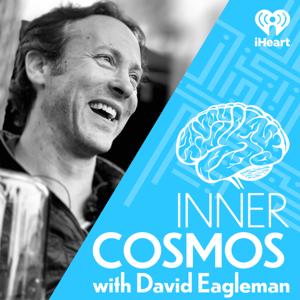
Neuroscientist and author David Eagleman discusses how our brain interprets the world and what that means for us. Through storytelling, research, interviews, and experiments, David Eagleman tackles…
Ranked by our users in the last 21 days

21,780 Listeners

78,291 Listeners

31,916 Listeners

43,352 Listeners

14,356 Listeners
5,658 Listeners

26,240 Listeners

939 Listeners

6,429 Listeners

4,659 Listeners
924 Listeners

11,943 Listeners

244 Listeners

4,172 Listeners

2,360 Listeners
8 Listeners

8 Listeners

352 Listeners

63 Listeners

250 Listeners

2,011 Listeners

142 Listeners

237 Listeners

1,551 Listeners

839 Listeners

63 Listeners

277 Listeners

159 Listeners

1,036 Listeners

18 Listeners

192 Listeners

1,622 Listeners

59 Listeners

34 Listeners

26 Listeners