
Sign up to save your podcasts
Or

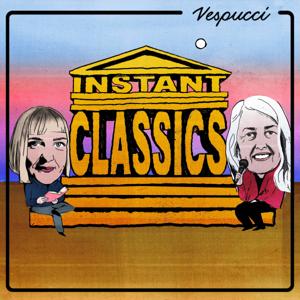
By Vespucci


4.9
153153 ratings


The podcast currently has 66 episodes available.
The most played episodes among Podcast App listeners.
Of all the Roman Emperors, Augustus has the reputation of being the most… well… august. That is to say, competent, level-headed and judicious. Not to mention one of the few who died of natural causes. But, according to Mary and Charlotte, the main reason Augustus got anything done is because he had a secret weapon in the form of Marcus Agrippa. We don’t know much about Marcus Agrippa’s early life, because he didn’t come from the aristocracy, but by the time he was thirty Augustus couldn’t do much without him. There is evidence that Agrippa managed the battles for which Augustus is famous, including the Battle of Actium, while Augustus pulled another sickie. When not defeating Rome’s enemies, Agrippa put a great deal of energy into building works. He constructed baths, temples (including the original Pantheon) and aqueducts. There are even stories of him getting onto a boat and rowing amidst the faeces of the Cloaca Maxima - Rome’s sewage system - to oversee improvements. While Agrippa did not come from the upper classes, he ended up there. He is buried with the imperial family in the mausoleum of Augustus (which you can still visit) and his great-grandson Nero became emperor. Perhaps, when we call some great figure ‘august’, we should call them ‘agrippan’ instead! Further reading: Lindsay Powell, Marcus Agrippa: Right-hand man of Caesar Augustus (Pen and Sword, pb, 2023) is the fullest recent biography of Agrippa (otherwise, in English, you have to go back to the 1930s) For the archaeology, the Pantheon in Rome remains Agrippa’s greatest and most visible monument, with his name prominently displayed (albeit rebuilt by the emperor Hadrian, probably to a new plan). The probable residence of Agrippa and Julia in Rome lies underneath the later, Renaissance, Villa Farnesina near the Tiber bank. Both were exquisitely decorated. You can still see Raphael's designs in the later villa. Most of the major ancient paintings from Agrippa’s property have been removed to the Palazzo Massimo museum. The archaeology is briefly discussed here: https://www.digitalaugustanrome.org/records/villa-farnesina/ Paintings from another villa owned by Agrippa, at Boscotrecase outside Pompeii, can be seen in the Met Museum in New York. @instaclassicpod for Insta, TikTok and YouTube @insta_classics for X email: [email protected] Instant Classics handmade by Vespucci Producer: Jonty Claypole Video Editor: Jak Ford Theme music: Casey Gibson Learn more about your ad choices. Visit podcastchoices.com/adchoices

Mary and Charlotte talk to best-selling author Robert Harris about his new novel ‘Agrippa’. Robert Harris has published 16 novels, of which nine have been made into films, including The Ghost Writer, Enigma and the Oscar-winning papal thriller Conclave. Five of Robert’s novels are set in Ancient Rome: the Cicero Trilogy, Pompeii and Agrippa. Robert discovered Agrippa while researching the Cicero Trilogy and became increasingly interested in this decisive, but largely forgotten figure, whose legacy is everywhere in Ancient Rome. He describes what interested him in the story: the friendship between the aristocratic Augustus and his plebeian sidekick, and the tension that inevitably developed between the two. He compares Augustus and Agrippa to Tony Blair and Gordon Brown, only with higher stakes. Further reading: We covered the history of this period in the last episode, with further reading in the shownotes. If you haven’t read Robert’s other Roman novels, they are all available in paperback: Pompeii (Arrow pb, 2009) (A younger Mary Beard “fact-checked for the hard-back version of this – though didn’t find many mistakes!) The Cicero Trilogy, Imperium, Lustrum and Dictator (Arrow pb, 2009, 2010, 2016) Aprippa is published in hardback by Hutchinson Heinemann, 27 August, 2026 @instaclassicpod for Insta, TikTok and YouTube@insta_classics for Xemail: [email protected] Instant Classics handmade by Vespucci Producer: Jonty Claypole Video Editor: Jak Ford Theme music: Casey Gibson Learn more about your ad choices. Visit podcastchoices.com/adchoices
A few months back we spoke to Emily Wilson on our subscriber series Exploring the Odyssey. Emily has been in the news recently, partly because her acclaimed 2017 translation of The Odyssey inspired Christopher Nolan, and partly because her criticisms of Nolan’s film have sparked debate. So we thought we would share the episode here on Instant Classics. In the episode, Emily tells Mary and Charlotte why translating from Ancient Greek to modern English is so difficult, the choices she had to make from the outset and the challenges she encountered once underway. In a surprise revelation, Emily confesses that she enjoyed the process so much she has decided to do it all over again and will ultimately publish a SECOND translation of The Odyssey - which is the equivalent of Odysseus spending ten years getting home only to decide he enjoyed the experience so much he’s going to repeat the whole trip. Further reading: One of Mary’s favourite ancient “reflections” on the story of Odysseus (inc the Laestrygonians) is the so-called “Odyssey landscapes” found in Rome, an ancient depiction of this part of the Odyssey story. If you are interested in digging down into different translations, Patrick Reardon has a useful online essay, which compares passages of Emily’s translation with Daniel Mendelsohn’s and Richmond Lattimore’s. The Odyssey, translated by Emily Wilson, is published in paperback by Norton Her volume of essays, Crossing the Wine-dark Sea, is published by Profile Books. Instant Classics handmade by Vespucci Producer: Jonty Claypole Video Editor: Jak Ford Theme music: Casey Gibson Learn more about your ad choices. Visit podcastchoices.com/adchoices
With the world gripped by Odyssey fever, Mary and Charlotte keep being asked the same question: which translation should I read? So here is a quick bonus episode to help you decide. Mary and Charlotte cover the waterfront of the modern translations (Emily Wilson and Daniel Mendelsohn), but also celebrate some past classics, like E.V. Rieu’s. In the end, the simple answer is don’t worry - work with what you’ve got most easily at hand. Any translation that has been printed by a major publisher has its merits. Further reading: The two recent translations we discuss at the start are: Emily Wilson (translator), The Odyssey (W. W. Norton and co) Daniel Mendelsohn (translator), The Odyssey (Chicago UP and Penguin Classics) Both are available in paperback. Earlier translations which you might enjoy, and trust, include:: Richmond Lattimore (Harper Perennial Modern Classics) Robert Fagles (Penguin Classics) Robert Fitzgerald (Farrar, Straus & Giroux) Peter Green (University of California Press) E. V. Rieu (Penguin Classics) Charlotte referred to Matthew Arnold’s lectures from the 1860s, “On Translating Homer” @instaclassicpod for Insta, TikTok and YouTube @insta_classics for X email: [email protected] Instant Classics handmade by Vespucci Producer: Jonty Claypole DOP - Ben Warburton Video Editor: Tom Green Theme music: Casey Gibson Learn more about your ad choices. Visit podcastchoices.com/adchoices
Last week, Mary and Charlotte gave their instant verdict on Christopher Nolan’s Odyssey only hours after emerging from the premiere, dazzled somewhat by the proximity of so much A-list talent. A week later… they unleash their inner nerds to quibble with some of the decisions and omissions Nolan made in adapting Homer. Their biggest gripe is the treatment of the female characters. Nausicaa and the ghost of Odysseus’ mother didn’t make the edit. Helen of Troy is robbed of agency and becomes a victim. The Gods are mostly cut and there’s even the implication that some of the more magical elements of the story might simply be a figment of the imagination resulting from too much lotus eating. Odysseus himself has become a bit of a goody two-shoes, only lying when he really has to and wracked by guilt of all the things he did at Troy, unlike Homer’s Odysseus who doesn’t think twice about ransacking innocent people. It’s not all moan moan moan though. Who can disapprove of the enhanced role that Odysseus’ loyal dog Argus is given, complete with his own backstory, and the power of the canine performance? Give that dog an Oscar. Or better yet, a nice meaty bone. Mary and Charlotte recommend: No more reading than we suggested last week (except to urge people back to Homer itself). BUT if you haven't seen the film, you can see Argus the dog here: https://www.youtube.com/shorts/sxgHV-BmNrI @instaclassicpod for Insta, TikTok and YouTube@insta_classics for Xemail: [email protected] Instant Classics handmade by Vespucci Producer: Jonty Claypole Video Editor: Jak Ford Theme music: Casey Gibson Learn more about your ad choices. Visit podcastchoices.com/adchoices
The podcast currently has 66 episodes available.

5,525 Listeners

3,213 Listeners

492 Listeners

386 Listeners

4,765 Listeners

1,434 Listeners
3,228 Listeners

137 Listeners
3,384 Listeners
16,153 Listeners
1,899 Listeners
2,055 Listeners

3,005 Listeners

1,108 Listeners

185 Listeners