
Sign up to save your podcasts
Or



Based on Podcast App listening data
Matt Toms on Tourette Syndrome, Autism, ADHD and the Exhaustion of Masking
What happens when your disability is invisible, your capacity changes from one day to the next, and the people around you assume you’re simply being rude, lazy or difficult?
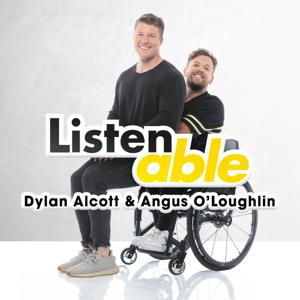
Matt Toms joins Dylan Alcott and Angus O’Loughlin on ListenABLE for an open conversation about living with Tourette syndrome, autism and ADHD, and what it has taken for him to finally stop hiding his disability.
For most of Matt’s life, masking helped him fit in. He learnt to suppress his Tourette’s tics and hide what was happening internally so he could socialise, work, compete in surf lifesaving and appear as though everything was fine.
But masking came at a cost.
Matt explains how suppressing his tics could leave him exhausted, overwhelmed and experiencing more explosive episodes once he returned to the safety of home. He describes the difficult reality of having an invisible disability where, on one day, he might be capable of physical work or competing in sport, while on another he can struggle to get himself a glass of water.
From surf lifesaving and neurodivergence to employment, support workers, dating, family and learning to unmask, this episode is a reminder that disability doesn’t always look the way people expect it to.
Follow & Connect
Matt Toms – Guest
Matt joins ListenABLE to share his lived experience with Tourette syndrome, autism and ADHD, including masking, employment, relationships, support and learning to embrace his disability.
Matt’s social link to be added once confirmed.
Dylan Alcott – Host
Instagram: @dylanalcott
Angus O’Loughlin – Host
Instagram: @angus_oloughlin
ListenABLE Podcast
Instagram: @listenable_podcast
Listen on Apple Podcasts: ListenABLE on Apple Podcasts
ListenABLE is recorded and produced in partnership with SESSION in PROGRESS, Melbourne’s video podcast studio and production team.
Website: SESSION in PROGRESS
Instagram: @session.in.progress
Production
In this episode
• Living with Tourette syndrome, autism and ADHD
• What Tourette’s tics can actually look like
• Why tics can sometimes be mistaken for rude or inappropriate behaviour
• Autism and Tourette syndrome masking
• The physical and emotional exhaustion caused by suppressing tics
• Invisible disability and fluctuating capacity
• Spoon theory and managing limited energy
• Disability, burnout and independence
• Accessing support workers and the NDIS
• The impact of disability on partners and family
• Autism and sensory overload in construction and trades
• Disability inclusion in the workplace
• Dating and relationships with Tourette syndrome
• Learning to disclose an invisible disability
• Becoming comfortable and proud identifying as disabled
• Why disability awareness and representation matter
Tourette syndrome, Tourette’s syndrome, Tourette’s tics, autism, autism in adults, ADHD, autism and ADHD, autism and Tourette syndrome, neurodivergence, neurodivergent adults, invisible disability, hidden disability, disability masking, autistic masking, suppressing tics, disability burnout, autistic burnout, sensory overload, spoon theory, fluctuating capacity, NDIS, disability support workers, disability employment, autism in the workplace, disability in construction, dating with disability, relationships and disability, disability acceptance, disability advocacy.
Content warning
At 16, Matt Caruana attempted to take his own life. He survived, acquiring a complete spinal cord injury and becoming a wheelchair user.
While recovering in hospital, Matt was consumed by the same belief that had followed him for years: that he was worthless. Then, during a train ride with his mum, a complete stranger asked him a confronting question:
“What are you going to do about it now?”
That moment did not instantly remove Matt’s depression, but it changed the direction of his life. Instead of asking “Why me?”, he began asking “What now?”
In this deeply honest conversation with Angus O’Loughlin, Matt shares the reality of surviving a suicide attempt, adjusting to life with a spinal cord injury and slowly rebuilding his identity. He explains why meaningful connection matters, what parents can do when a young person is struggling and how opening up helped transform his relationships with his family and friends.
Matt also discusses finding purpose through sharing his story, breaking a Guinness World Record and becoming a competitive para climber. For Matt, strength is no longer about appearance or external validation. It is about contributing to other people and making hope visible.
This episode explores suicide prevention, men’s mental health, disability, resilience, spinal cord injury, wheelchair life, para climbing and the power of choosing to move forward one day at a time.
This episode contains detailed discussion of suicide, suicidal thoughts and mental ill-health. Please take care while listening.
If you or someone you know needs support, call Lifeline on 13 11 14, text 0477 13 11 14, or access its 24/7 online chat. If life is in immediate danger, call 000. Lifeline crisis support
You can also contact Beyond Blue on 1300 22 4636 or speak with a counsellor online. Beyond Blue support
Follow Matt on Instagram: @MattShares.
What would your life look like if you had brushed your teeth for just ten seconds longer?
In January 2020, 27-year-old paramedic Emma Mickle made a last-minute decision to join her friends on a hike through New Zealand.
On the final day, just ten kilometres from the finish, Emma sat down to remove her wet-weather gear. At that exact moment, a three-metre tree branch fell from approximately 20 metres above and landed directly on her.
In this remarkably honest episode of ListenABLE, Emma speaks about learning to live with incomplete paraplegia, chronic nerve pain, impaired bowel and bladder function, invisible disability and the loss of her career as an operational paramedic.
Emma’s story is about terrible luck, extraordinary recovery and what she describes as “forced resilience”.
Emma discusses:
00:00 A one-in-20-million accident
01:27 The New Zealand hiking trip
03:12 Emma’s spinal cord and nerve injuries
04:39 Being told to prepare for life in a wheelchair
05:42 A hospital proposal Emma cannot remember
08:16 Feeling both incredibly unlucky and incredibly lucky
09:22 Why Emma cannot remember the accident
10:44 How her friends kept her alive
14:06 Arriving at spinal rehabilitation
15:13 The moment Emma discovered she could not stand
17:22 Would Emma undo the accident?
18:33 Bowel, bladder and chronic pain
21:20 Recovery as a professional athlete
22:09 Completing an Ironman after her injury
24:17 Why cycling makes Emma feel normal
25:42 Road racing and time trials
26:11 The dream of LA 2028
26:46 Losing her career as a paramedic
29:45 Living with an invisible disability
31:47 How to handle an unexpected handshake
33:11 The reality of “forced resilience”
34:27 How the accident changed Emma’s perspective
35:19 Living with daily pain
36:35 The Bowl of Uncomfortable
38:24 Vulnerability and a changed perception of risk
40:49 The perfect handshake
Emma Mickle, Emma Mickle cyclist, Australian para-cyclist, para-cycling Australia, spinal cord injury recovery, incomplete paraplegia, incomplete spinal cord injury, brachial plexus injury, chronic nerve pain, invisible disability, disability awareness, adaptive sport, rehabilitation through sport, Ironman after spinal cord injury, Australian Paralympic cycling, LA 2028 Paralympics, disability podcast Australia, ListenABLE podcast, Dylan Alcott, Angus O’Loughlin.
This episode includes discussions of traumatic injury, spinal cord injury, bowel and bladder function, chronic pain, sexual health and personal safety.
#ListenABLE #EmmaMickle #ParaCycling #SpinalCordInjury #InvisibleDisability #AdaptiveSport #Paralympics #LA2028 #DisabilityPodcast #ChronicPain
Three buses passed Santiago “Santi” Velasquez because he could not see when to hail them. Instead of accepting that public transport was not designed for him, the blind electrical engineer decided to build a better system.
In this episode of ListenABLE, Dylan Alcott and Angus O’Loughlin sit down with Santi to discuss the experience that inspired Halo, an accessibility-first public transport app that alerts drivers when a passenger needs assistance, where they are boarding and where they need to get off.
Santi explains how he became one of the relatively few blind electrical engineers in the world, why his parents taught him that “the only thing you cannot do is see”, and how he learned advanced mathematics, coding and engineering through Braille, audio technology and problem-solving.
The conversation also explores the risks and opportunities of artificial intelligence for people with disability. Santi argues that AI can be incredibly useful, but only when people with lived experience are included in the data, design and decision-making process.
From accessible public transport and guide dog discrimination to Braille literacy, rideshare accountability and the danger of treating people with disability as charity cases, this is a powerful conversation about independence, expectations and designing a world that works better for everyone.
As Santi says:
“We’re not just charity cases. We have to have high expectations of ourselves because otherwise, who else is going to have them?”
In this episode
00:00 “I’ll be damned if I’m going to be a second-class citizen”
01:00 Welcome to ListenABLE
02:05 Meet Santiago “Santi” Velasquez
03:24 Growing up blind in Colombia
06:14 Becoming a blind electrical engineer
09:12 Learning mathematics, coding and engineering through Braille
10:28 The tactile display that lets people feel a screen
15:22 Is artificial intelligence actually accessible?
20:58 Why blind children still need to learn Braille
24:07 High expectations instead of charity
25:58 The three buses that inspired Halo
28:44 Why disability-led inventions benefit everyone
30:20 How passengers with disability become invisible to transport systems
31:55 Santi’s global ambition for Halo
34:39 How the Halo public transport app works
36:25 Who should pay for accessible transport technology?
38:14 Creating accountability across transport and rideshare services
42:36 Why sharing lived experience matters
44:04 The Bowl of Uncomfortable
46:10 What people need to know about guide dogs
48:07 Santi’s final message
Learn more about Santi and Hailo
Request Hailo in your city:
Download and use Halo if you are travelling on participating services in Victoria.
Follow the ListenABLE hosts
Dylan Alcott:
https://www.instagram.com/dylanalcott/
Angus O’Loughlin:
https://www.instagram.com/angus_oloughlin/
ListenABLE:
https://www.instagram.com/listenable_podcast/
Production
ListenABLE is recorded and produced in partnership with SESSION in PROGRESS, Melbourne’s video podcast studio and production team.
SESSION in PROGRESS:
https://sessioninprogress.com.au/
Instagram:
https://www.instagram.com/session.in.progress/
Subscribe to ListenABLE for honest, funny and educational conversations about disability, accessibility and the experiences that connect us.
#Disability #Accessibility #PublicTransport
In 1988, Mark Dorrity went for a run on a 35-degree day in regional New South Wales. He was leading the race when severe heat stroke caused his body to shut down.
Mark spent 70 days unconscious in intensive care. He lost most of the muscle in his body, underwent a high-level leg amputation and was given little certainty about what life after hospital could look like.
But this is not simply a story about survival.
In this episode of ListenABLE, Mark joins Dylan Alcott and Angus O’Loughlin to share how he rebuilt his life from the ground up. From learning to stand again, returning to full-time work and confronting inaccessible public spaces, to retraining his brain through Toastmasters decades later, Mark’s story is a powerful lesson in resilience, neuroplasticity and choosing to keep moving forward.
Mark also reflects on how far disability access and inclusion have come in Australia since the late 1980s, why accessible parking matters far more than people realise, and why he refuses to live with regret.
What happened when Mark collapsed from severe heat stroke during an eight-kilometre race
Waking up in intensive care 70 days later
The moment Mark learned his leg had been amputated
Rebuilding strength after losing most of his muscle mass
Returning to work after a life-changing injury
Living with a high-level amputation and why a prosthesis was not sustainable for Mark
How disability access and inclusion have changed since the late 1980s
The reality behind accessible parking and public spaces
Neuroplasticity, Toastmasters and retraining the brain later in life
Why resilience is not about avoiding difficulty, but choosing to keep showing up
00:00 The moment Mark’s life changed
01:31 A race, extreme heat and collapsing near the finish line
04:35 Waking up 70 days later in intensive care
07:14 The decision to amputate or let Mark die
09:48 Accepting a new reality immediately
11:10 Learning how to live again after intensive care
13:06 Seeing his story on the front page of the newspaper
14:55 Why a wheelchair was not practical for Mark
16:39 The first time using a walking frame in public
18:11 Where Mark’s resilience came from
19:02 What disability access was like in Australia in the late 1980s
21:42 How Mark views disability today
24:59 Prosthetics, pain and adapting to life without one
27:05 Returning to full-time work
27:46 Cognitive recovery, speech and Toastmasters
30:20 Neuroplasticity and retraining the brain
32:08 Seeing his body after amputation
33:25 Would Mark warn himself before the race?
34:50 Mark’s message on risk, resilience and living fully
Mark Dorrity, heat stroke survivor, amputation recovery, high-level amputation, disability podcast Australia, disability inclusion, accessibility Australia, neuroplasticity, resilience story, life after amputation, Dylan Alcott podcast, ListenABLE podcast, disability advocacy, rehabilitation journey, Toastmasters recovery
Spencer West returns to ListenABLE for an honest and powerful conversation about disability, accessibility and what it really means to be seen.Four years after his first appearance on the podcast, Spencer joins Angus O’Loughlin in person to talk about Melbourne’s accessibility, able-bodied assumptions, language around disability, social media advocacy and the moments from his life that people often romanticise from the outside.Spencer opens up about growing up without legs, rejecting prosthetics, climbing Mount Kilimanjaro, feeling excluded from inaccessible queer spaces and learning that he does not always have to share his story just because someone asks.Guest Links: Spencer Westhttps://linktr.ee/spencer2thewesthttps://www.spencer2thewest.com/https://www.instagram.com/spencer2thewest/https://www.tiktok.com/@spencer2thewesthttps://www.youtube.com/user/Spencer2TheWest00:00 Spencer West returns to ListenABLE02:04 Melbourne accessibility and public transport03:28 When accessibility is gatekept04:42 Should people get praise for accessible spaces?05:52 Spencer explains his disability07:43 The assumption about disability people need to drop09:04 Disability language and using the word disabled11:32 Learning to advocate for his own body13:49 The truth about climbing Kilimanjaro16:21 Social media, responsibility and disability advocacy17:17 Feeling more visible than misunderstood17:47 Using humour to educate
Australia’s winter Paralympic star Ben Tudhope joins ListenABLE for one of the most honest and emotionally grounded conversations of the series.
From becoming Australia’s youngest ever Winter Paralympian at just 14 years old, to returning home from the 2026 Winter Paralympics with two medals, Ben opens up about pressure, identity, confidence, loneliness, disability, and the mindset that helped him compete on the world stage.
In this episode, Ben shares what it actually feels like to perform under Paralympic expectation, why he refuses to let medals define him, and how growing up with cerebral palsy shaped his resilience, humour, and outlook on life.
He also speaks candidly about loneliness as an elite athlete, travelling the world away from family, learning to enjoy his own company, and why being “inspiring” is often misunderstood when it comes to disability and Paralymic sport.
Whether you love elite sport, mindset conversations, disability advocacy, or simply hearing incredible human stories, this episode is packed with perspective, vulnerability and moments that will stay with you long after listening.
Follow Ben: https://www.instagram.com/bentudhope/
Follow Us: https://www.instagram.com/listenable_podcast/
In This Episode
- Ben Tudhope’s journey to becoming a Paralympic snowboard medalist
- Competing at four Winter Paralympic Games
- The pressure of backing up success after Beijing
- Why Ben doesn’t define himself by medals
- Growing up with cerebral palsy
- The role Ben’s parents played in his confidence
- Snowboarding, identity and elite athlete mindset
- Loneliness and sacrifice in elite sport
- The overuse of the word “inspirational”
- What people misunderstand about Paralympians
- Learning to control the controllables
- Confidence, humour and living with disability
- Ben’s reflections on success, pressure and happiness
About ListenABLE
ListenABLE is hosted by Dylan Alcott and Angus O’Loughlin, sharing raw, funny, vulnerable and powerful conversations with people living with disability and the people reshaping how Australia thinks about disability, identity and inclusion.
Follow & SubscribeFollow ListenABLE on Spotify, Apple Podcasts and YouTube for new episodes every week.
#Paralympics #BenTudhope #ListenABLE #Disability #CerebralPalsy #Snowboarding #WinterParalympics #Mindset #MentalHealth #AustralianPodcast #AdaptiveSport #DisabilityAdvocacy #DylanAlcott
What happens when two best mates decide not to let disability stop them from seeing the world?
In this episode of ListenABLE, Dylan Alcott and Angus O’Loughlin sit down with Fletcher and Lachie, the duo behind the viral social account “Two Mates One Chair”.
After a mountain biking accident left Fletch paraplegic, the pair turned friendship, humour and pure determination into a global adventure that’s inspiring millions online.
From piggybacking up 270 slippery stairs in Hong Kong, to navigating inaccessible train stations in Europe, ATV mishaps in Brazil, and discovering the kindness of strangers around the world, this conversation is equal parts hilarious, emotional and eye-opening.
The boys open up about:
This is one of the funniest and most uplifting ListenABLE episodes yet, while also delivering an important conversation around accessibility, inclusion and the power of friendship.
Follow Two Mates One Chair
https://www.instagram.com/twomates1chair/
Follow us:
https://www.instagram.com/listenable_podcast/
00:00 Ability Fest & Dylan Alcott Foundation
02:40 Meet “Two Mates One Chair”
05:50 The first viral video
07:14 Accessibility around the world
16:14 Fletcher’s mountain bike accident
20:40 Learning the art of the piggyback
27:00 What happens after the trip ends?
29:00 Advice for young people with disability
32:00 “My life is 10 times better now”
35:50 How people treat disability overseas
38:00 Dating, nightlife & travelling together
39:40 What’s next for the boys?
disability travel stories ,paraplegic travel, wheelchair backpacking ,accessible tourism, spinal cord injury recovery, wheelchair travel vlog, disability awareness podcast, ListenABLE podcast, inclusive travel, viral travel story, Australian travel creators, adaptive lifestyle
What happens when someone refuses to accept the limits placed on them?
This week on ListenABLE, Angus O’Loughlin and Dylan Alcott sit down with Brodie Taylor, the first person in Australia to become a qualified wheelchair netball umpire.
Diagnosed with transverse myelitis at just seven months old, Brodie has spent his life navigating disability, accessibility and assumptions. But instead of accepting barriers, he found a way to create history in Australian sport.
Brodie shares how netball unexpectedly found him, how officiating gave him a new purpose, and why confidence is often the biggest difference-maker for people with disability.He also opens up on wanting a future career in politics, where he hopes to help drive accessibility and meaningful change across Australia.
Topics Covered
- Becoming Australia’s first wheelchair netball umpire
- Living with transverse myelitis
- Disability and sport misconceptions
- Confidence and self-belief
- Why representation matters
- Netball strategy and officiating
- Accessibility in Australia
- Future ambitions in politics
Best Quotes
“Disability doesn’t mean inability.”
“It’s you against the world. If you want it, go get it.”
“Once you have confidence in yourself, no one can stop you.”
“We can’t change everything overnight, but we can start.”
Chapters
00:00 Meet Brodie Taylor
02:01 Making Australian netball history
03:23 Diagnosed at seven months old
06:58 Finding netball and purpose
10:16 Becoming an umpire
13:21 Breaking bias in sport
18:10 Why politics is next
21:43 Confidence and disability
24:49 Advice for the next generation
27:14 Bowl of Uncomfortable
Brodie Taylor, wheelchair netball umpire, ListenABLE podcast, Dylan Alcott podcast, disability sport Australia, accessible sport, netball Australia, transverse myelitis, disability advocate Australia
What happens when a single moment changes your life forever?
In this powerful episode of ListenABLE, Larissa Camp shares the harrowing story of surviving a domestic violence attack that left her with a partial hand amputation and a completely different path in life.
At just 23 years old, Larissa’s relationship turned violent when her partner pulled a shotgun on her during an argument. What followed was a life-threatening fight for survival that changed everything.
But this episode is not just about trauma. It’s about identity, healing, motherhood, disability, and discovering purpose after unimaginable adversity.
Larissa joins Dylan Alcott and Angus O’Loughlin to speak openly about what it’s like to rebuild a life after violence, how disability reshaped her self-worth, and how she eventually found confidence, independence and a career she never expected.
This conversation is raw, honest, and deeply moving.
• Larissa Camp’s incredible survival story after a domestic violence shooting
• What it’s like waking up to discover a life-changing amputation
• The emotional reality of navigating identity after acquiring a disability
• Why people with disabilities are more vulnerable to domestic violence
• How motherhood helped Larissa rediscover purpose and strength
• The journey from trauma to becoming a successful hairstylisT
• How forgiveness and resilience can coexist after extreme trauma
• What to do if you suspect someone you know is experiencing domestic violence
After surviving the shooting, Larissa spent weeks in hospital recovering from severe injuries, including a partial hand amputation she didn’t even realise had happened until days after surgery.
The emotional recovery was even harder.
She struggled with depression, identity loss, and uncertainty about whether she would ever work again.
But years later, a simple moment changed everything.
While caring for her young son, Larissa realised she could still braid hair. That small discovery became the foundation for a new career as a hairstylist and helped her rebuild her confidence.
Today, Larissa shares her story to help others recognise the warning signs of domestic violence and to remind people living with disability that they still have purpose.
Follow Larissa: https://www.instagram.com/ann_ri3/
https://www.linkedin.com/in/larissacamp/
If you or someone you know is experiencing domestic violence, support services are available.
In Australia:1800RESPECT – National Domestic Violence Support Line
International listeners can search for local domestic violence hotlines or crisis support services in their country.
Listenable is a podcast about normalising disability through honest conversations and lived experiences.
Hosted by Dylan Alcott and Angus O’Loughlin, the show explores disability, identity, relationships, and the everyday moments that shape how we understand the world.
domestic violence survivor story, disability podcast. acquired disability, amputation survivor, domestic violence awareness, disability identity ,trauma recovery stories, Larissa Camp story, Dylan Alcott podcast, Listenable podcast
From the publisher's feed
Ranked by our users in the last 21 days
585 Listeners
779 Listeners
547 Listeners
234 Listeners
170 Listeners
310 Listeners
88 Listeners
296 Listeners
376 Listeners
77 Listeners
87 Listeners
13 Listeners
45 Listeners
0 Listeners
46 Listeners
61 Listeners
0 Listeners
0 Listeners
2 Listeners

0 Listeners
2 Listeners
0 Listeners
67 Listeners