
Sign up to save your podcasts
Or



Based on Podcast App listening data
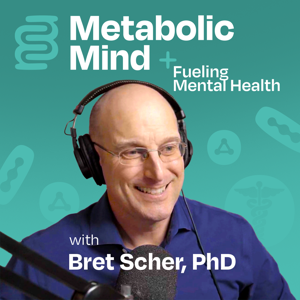
Research indicates that following a keto diet can be an effective form of metabolic treatment for depression, particularly atypical and treatment-resistant forms. Dr. Erin Bellamy has seen ketogenic therapy’s success through her online program Integrative Ketogenic Research and Therapies (ikrt.org), which helps patients implement a keto diet for mental health conditions and effectively coordinate with their prescriber and health care team for the best treatment outcomes.
Metabolic dysfunction is the root cause of most noncommunicable diseases, including cancer, heart disease, type 2 diabetes, neurodegenerative diseases, like Alzheimer’s and Parkinson’s, and mental health conditions. Luckily, simple, practical strategies can improve insulin sensitivity and overall metabolic health, including controlling carbs, eating whole foods rich in protein and fat, and doing resistance training to strengthen muscles.
DescreiptionIndividuals with bipolar disorder are at an increased risk for heart attack, stroke, diabetes, and obesity, often resulting in a decreased lifespan. Clinicians must address this critical issue. There is a complicated, interconnected set of factors driving this correlation, including: medications that increase cardiometabolic burden, symptoms of the illness itself, as well genetic factors that confer risk for both bipolar disorder and metabolic complications. Dr. Mark Frye has more than twenty-five years of experience as a clinician, researcher and advocate. He is the former chair of the psychiatry department at Mayo Clinic, where he is now a professor of psychiatry. He is also the director of the scientific advisory board for the Depression and Bipolar Support Alliance (DBSA).
Dr. Uma Naidoo founded and directs the first US hospital-based nutritional psychiatry at Massachusetts General Hospital. Dr. Naidoo’s work focuses on empowering individuals with dietary strategies that improve overall mental health and conditions like ADHD, anxiety, depression and OCD. She is a leading nutritional psychiatrist on the faculty at Harvard Medical School– she also brings unique flair as a professionally trained chef. She feels hopeful about the burgeoning fields of nutritional & metabolic psychiatry that are building a more robust evidence base for dietary and lifestyle strategies to treat mental health conditions.
GLP 1 medications, like Wegovy and Ozempic, might serve a purpose as a bridge treatment that enables patients to make positive lifestyle changes, such as implementing a ketogenic diet. This video is the last in our series exploring the potential use of GLP1 medications in psychiatry. While clinical evidence shows benefits for some patients using these medications, helping with both metabolic disease and relief from mental symptoms, they also come with some adverse side effects.
The Stanford Twin Study has made headlines suggesting that vegan diets are healthier than omnivore diets, and we would likely all benefit from a more plant-based diet. The problem is that the conclusions are misleading, and the study doesn't actually show that. The true conclusion from this study is that among high carb diets, after eight weeks, those on a vegan diet ate fewer calories, lost more weight and lowered LDL and insulin more than those following a high carb omnivore diet. The Stanford Twin Study highlights how easy it is to misinterpret and misrepresent the findings from nutrition research.
Do we all have to worry that LDL causes heart disease, or could certain people, like low-carb "lean mass hyper responders" have less concern about LDL and heart risk? A new study from Dave Feldman and Dr. Matt Budoff suggests markedly elevated LDL in the setting of metabolic health and ketosis may not contribute to cardiac plaque and heart disease. While these data are not conclusive, they are highly suggestive and set the stage for future studies in this critically important area. Will this line of research eventually change everything we know about LDL? That's to be determined, but at least we're asking the question.
At Metabolic Mind, we often focus on ketogenic therapy as a treatment for severe mental illnesses like bipolar, schizophrenia, and depression. But it’s important to realize that a keto diet can also be a powerful preventative medicine to protect and optimize brain function. Dr. Susan Masino, a professor of neuroscience and psychology at Trinity College and the Charles Bullard Fellow in forest research at Harvard Medical School, discusses the therapeutic properties of ketogenic diets and the interconnection between brain health and ecological lifelines.
Is the key to optimizing physical and mental health eating so-called superfoods like dark chocolate, red wine and blueberries? Dr. Georgia Ede, a Harvard-trained psychiatrist and metabolic psychiatry pioneer, shares counter-evidence to mainstream views on the optimal human diet. In this interview, she discusses nourishing the brain by eating the right foods, protecting it by staying away from the wrong foods, and energizing it by cultivating a healthy metabolism. Ede argues that the key to healing, protecting, and enhancing brain function is keeping blood sugar (glucose) and insulin within a healthy range.
Dr. Megan Kirk Chang, Senior Researcher of Medical Science at the University of Oxford, discusses her upcoming trials looking at nutritional interventions: one focuses on ketosis for treatment-resistant depression, and the other will investigate whether the keto diet is as effective as the Mediterranean diet for individuals at risk for developing Alzheimer’s. She has a background in cognitive behavioral therapeutics (CBT), including experience coaching patients through interventions like mindfulness-based stress reduction, exercise, and yoga.
From the publisher's feed
Ranked by our users in the last 21 days
1,565 Listeners

9,286 Listeners
873 Listeners
1,103 Listeners
1,139 Listeners

464 Listeners

453 Listeners
223 Listeners
193 Listeners
581 Listeners
182 Listeners
164 Listeners

1,215 Listeners
110 Listeners
241 Listeners