
Sign up to save your podcasts
Or



Based on Podcast App listening data
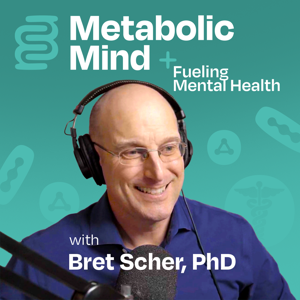
Blanket statements like "carbs are good" or "carbs are bad" are misleading. In this video, Dr. Bret Scher delves into the question: Are carbs bad for your mental health? Join Dr. Scher as he explores the complex relationship between carbohydrates and mental health, particularly focusing on the potential benefits of ketogenic therapy for serious mental illnesses such as bipolar disorder, schizophrenia, and major depression.
Meet Dr. Timur Liwinski, a clinician-scientist specializing in internal medicine, metabolic health, and the gut microbiome. Currently completing his psychiatry residency, Dr. Liwinski shares groundbreaking insights on ketogenic therapy for depression in this exclusive interview with Dr. Bret Scher. Discover the impact of the ketogenic diet and microbiome on mental health, as Dr. Liwinski examines the intricate connections between dietary practices, the gut-brain axis, and mental well-being.
In this interview, Mary Newport, MD, discusses her groundbreaking approach to treating dementia using coconut oil and MCT oil, highlighting the role of ketones, and exploring the stories of almost 300 families who have benefited. Dr. Newport delves into the science behind coconut and MCT oils, explaining how they generate ketones, provide an alternative energy source for the brain, and offer other potential benefits for those affected by dementia and Alzheimer's disease.
In this interview, Maria Edwards shares how her lived-experience putting bipolar 2 disorder into remission inspired her to become a researcher in the field of metabolic therapies. Maria completed a Master’s in Clinical Nutrition and her thesis was a feasibility study that examined ketogenic therapy for patients recovering from brain injuries. She also worked on the very first study on ketogenic therapy for Post-traumatic Stress Disorder (PTSD) that is currently in the peer-review process.
In this episode, Dr. Bret Scher addresses common misconceptions and concerns surrounding the long-term safety and nutritional adequacy of ketogenic diets. Dr. Scher emphasizes the importance of weighing potential risks against known benefits. For instance, psychotropic medications, despite often worsening overall physical and metabolic health, are considered beneficial because they can alleviate symptoms of serious mental illnesses. In contrast, many patients experience incredible benefits from ketogenic therapy without harmful side effects. In numerous cases, a medical keto diet can even put psychiatric conditions like bipolar disorder, schizophrenia, and major depression into complete remission.
Discover groundbreaking insights from Dr. Lori Calabrese, a Connecticut-based psychiatrist, who recently published a case series demonstrating the complete remission of depression and anxiety in three patients through ketogenic interventions. Dr. Calabrese's case studies offer a "slice of real life," highlighting patients with multiple comorbidities, which is more common than not. She explains how ketogenic therapy can lead to full remission of depression and anxiety, enabling patients to become their best selves, which is rarely achieved with standard-of-care treatments.
In this interview, Julie Milder, PhD, the director of neuroscience at Baszucki Group, discusses the groundbreaking research being done at the intersection of metabolism and mental health, including 13 clinical trials across eight institutions for ketogenic therapy for serious mental illness.
There is an escalating crisis of metabolic dysfunction in our youth, with growing rates of obesity, diabetes, and mental illness. Is it safe to use ketogenic therapy in children and teens for better management or reversal of these conditions? Dr. Matthew Calkins, an early career physician board certified in family and obesity medicine, argues it is. A 2023 paper published in the American Academy of Pediatrics (AAP) exaggerates risks associated with a ketogenic diet in pediatric patients. It also conflates a keto diet for epilepsy with a well-formulated keto diet that can be used to treat obesity, diabetes, and mental health conditions. Dr. Calkins co-authored a rebuttal paper in the Journal of Metabolic Health.
At Metabolic Mind, we emphasize that ketogenic therapy for psychiatric disorders like bipolar disorder, schizophrenia, and major depression should be done with oversight from a clinician trained in metabolic therapies. Sometimes patients and their families voice frustration because it can be challenging to access metabolic psychiatry care. While ideally, every patient would have help from a clinician trained in medical keto for mental health, we know that this is not currently possible for many people.
Ketosis is a therapeutic physiologic state induced by eating a keto (reduced-carb) diet that can treat, and often reverse, a wide range of illnesses from type 2 diabetes, to psychiatric conditions like bipolar disorder, depression and schizophrenia. A medical keto diet can be a very powerful intervention, but, sometimes, people are told that their other health conditions, such as gout or high LDL cholesterol, would make following a keto diet unsafe. In most cases, even with other health conditions, ketogenic therapy can be highly beneficial.
From the publisher's feed
Ranked by our users in the last 21 days

1,565 Listeners

9,286 Listeners
873 Listeners
1,103 Listeners
1,139 Listeners

464 Listeners

453 Listeners
223 Listeners

193 Listeners
581 Listeners

182 Listeners
164 Listeners

1,215 Listeners
110 Listeners

241 Listeners