
Sign up to save your podcasts
Or



Based on Podcast App listening data
The Chancellor’s spending review this week has thrown up competing moral visions for Britain’s place in a post-Covid, post-Brexit world. On the one hand, there will be a boost in defence spending on drones and cyberwarfare; on the other, speculation about the UK’s foreign aid commitment has prompted ex-prime ministers, charities and religious leaders to speak out against any proposed cuts to the aid budget. Symbolically, if not practically, defence spending and overseas aid are seen to be in competition since they are both projections of global Britain. If so, how can we assess their competing moral worth? Is using taxpayers’ money for defence any morally better or worse than for foreign aid? One worldview contends that prioritising investment in defence is jingoistic and problematic, while funding international development is benign and benevolent. Others, meanwhile, consider there to be a greater moral obligation towards those closer to home in response to changing threats from malicious regimes, and question whether the distribution of public funds in the form of overseas aid is incorruptible. Or are the two sectors inextricably linked? Some see international development almost as a branch of national security, exercising soft power and helping to shore up unstable states, while others point out the role of the armed forces in peacekeeping, delivering humanitarian aid and combatting the drugs trade. Both military personnel and aid charities are guided by a moral code and, in both cases, include individuals who have fallen short of that code. When it comes to the daily motivations of human beings on the ground, is the ethos of the armed forces any different to the ethos of international aid workers? With Dr Sabina Alkire, Ian Birrell, Prof Michael Clarke and Dr Sam Perlo-Freeman.
Producer: Dan Tierney.
Donald Trump is refusing to concede the US election, making unsubstantiated claims of electoral fraud and planning rallies across the country to build support for the legal fights ahead. The ‘leader of the free world’ is having a wobble and it is a testing time for democracy. President-elect Joe Biden has pledged to unify a country that has become so polarised that even the choice about whether or not to wear a mask during a pandemic is seen as political. What do the deep divisions, and even the denial of the outcome of the vote, mean for the democratic legitimacy of the office of the president? Many of Mr Biden’s followers believe there is now a moral imperative for all Americans, regardless of their politics, to support him in his attempt to unite the states of America. Many Trump voters, however, say they feel not just forgotten, but despised by the opposition, and see the appeal to unity as another way of telling large swathes of the electorate to ‘get with the programme’ or to ‘see the error of their ways’. Democratic legitimacy can be a slippery concept. Many have argued that there is no such thing as the ‘will of the people’, or even, depending on voter turnout, the will of most people. As Brexit trade talks resume this week, there are still those who refuse to accept the legitimacy of the referendum and believe the concerns voiced in the last four years about the social, political and economic impact of leaving the EU change the democratic, and moral, equation. Their opponents denounce them as democracy deniers. How long after a democratic decision is made are we compelled to be loyal to it? While we can all be pious about democratic legitimacy, can we also be guilty of playing fast and loose with it when it suits us? With Prof Matthew Goodwin, Dr Jan Halper-Hayes, Prof Allan Lichtman and Prof Bo Rothstein.
Producer: Dan Tierney.
The Prime Minister said the second lockdown in England was necessary to avoid the "medical and moral disaster" of the NHS being overwhelmed. In starker terms: many people will die if nothing is done, and not just of Covid-19. Depending on one’s perspective, the government’s strategy has either been too concerned, or not concerned enough, with the avoidance of death above all else. What has the crisis revealed about our attitude to our own mortality and how we value human life? Some are accused of being too blasé about the fact that many who died in the first wave of the pandemic either had ‘underlying conditions’ or, more bluntly, would have died soon anyway. Others, who believe the second lockdown should have been sooner and more severe, are accused of giving in to fear – as one lady quipped in a TV vox pop: “I’m 83 and I don’t give a sod”. Nevertheless, the coronavirus has made many people face death far earlier than they were expecting. People have died alone and their loved ones have grieved for them in isolation. For some, the pandemic has highlighted how inadequate we are at confronting death more generally. Medical progress has given us longer and healthier lives yet there are many who believe that we have focused too much on prolonging life rather than making the time we have left meaningful. We also live in an age when some think the prospect of ‘defeating death’ is in touching distance. Is death the ultimate taboo in our culture? If we can’t medicalise our way out of it, how can we live – and die – well? With Prof Michael Hauskeller, Kathryn Mannix, Revd Dr Brendan McCarthy and Prof Ellen Townsend.
Producer: Dan Tierney.
Marcus Rashford’s campaign for free meals for vulnerable children during school holidays has received widespread support from both the public and the media, with some describing Rashford as rising from sportsman to statesman, the noble quest of a celebrity footballer taking on the might of the Government. Whether he succeeds remains to be seen but it demonstrates the growing power of the celebrity. Advertisers and charities alike have long understood the power of associating celebrities with a product or a cause. They can guarantee visibility and familiarity and their likeability, attractiveness and success are known to influence the way many think and act regardless of whether the celebrities themselves know much about the cause they are championing. But when it comes to public policy should politicians be held to ransom by the power and influence of celebrities? Shouldn’t it be up to Government how it spends its money not the celebrities who are not accountable for their actions? Yet the relationship between politics and celebrities are becoming increasingly blurred. Celebrities are often asked to endorse political campaigns. In America, the history of politics is populated by celebrities themselves achieving political success from Arnold Schwarzenegger to Ronald Reagan and now Donald Trump to name but a few. Some would argue this has reduced political success to whether you like or dislike a politician not on well-rehearsed political arguments or ideologies. Others would argue that it degrades the moral status of government and is a danger to democracy. So who has the moral authority – the politician or the celebrity? With Paul Cullen, Dr Mark Harvey, Prof Natasha Lindstaedt and Brendan O’Neill.
Producer: Amanda Hancox
By November, 1 million young people in the UK will be unemployed, according to a report out this week from the newly-launched Alliance for Full Employment. It has the backing of the former Prime Minister and Chancellor Gordon Brown, who warned of a “lost Covid generation” of young people with no prospects and nothing to do. The cost, he says, is more than just a financial one: “It destroys self-worth; it hurts family life; it shatters communities”. So what should our moral obligation be to this generation? A parallel has been drawn with the post-war period which saw the birth of the Welfare State. While there is widespread support for short-term financial help, there are those who caution against what they see as writing off an entire generation as ‘lost’, or institutionalising state dependency; they believe that the pandemic has merely accelerated inevitable economic change from which a brighter future can emerge. There are many young people who don’t share that optimism, and point to how the Covid crisis has exposed pre-existing health and wealth inequalities, which, for them, raises bigger questions about the morality of global capitalism. This is the moment, they argue, to change capitalism so that it focuses on what humans really want and need, and to actively promote the things we value beyond financial success and economic usefulness. Capitalism’s supporters, however, see our quality of life as being intrinsically bound up with markets and economic growth. For them the moral response to Covid is to kick start the consumer boom and allow people the freedom to make money unconstrained. Is it time for a radical challenge to unbridled capitalism for sake of the young, or is the ‘invisible hand’ still the best way to get a leg up? With Grace Blakeley, Ian Goldin, Daniel Pryor and Jamie Whyte.
Producer: Dan Tierney.
A damning report by the Independent Inquiry into Child Sexual Abuse describes a culture of deference in the Church of England which meant that perpetrators were allowed to hide and, when exposed, were often given more support than their victims. This was a scandal in which the “moral authority of clergy was widely perceived as beyond reproach”. This pattern of behaviour and cover-up is shocking but depressingly familiar. Following decades of such revelations, there is a growing belief that Britain’s churches have lost all moral credibility as a result of their repeated inability to practice what they preach and get their house in order. Others point out that, while reparations are needed, all institutions – whether religious or secular – are made up of human beings who are capable of terrible crimes, and that the good done by organised religion in tackling poverty, comforting the bereaved and showing strong leadership on some of the key moral issues of the day, should not be overlooked. Whether or not such institutions still command moral authority, formal religious affiliation is nevertheless in decline. Is this to be welcomed or lamented? For many people, rules-based religion has had its day. They see the churches as being out of step on many progressive issues like gender equality and same-sex marriage; they look elsewhere for sources of morality, or they see morality, faith and spirituality as subjective and personal. Others, meanwhile, still see religious institutions as the bedrock of a cohesive society; an inherited, shared source or moral and spiritual guidance, spanning centuries. They caution against the jettisoning of absolute moral rules and view the belief that we all have our own ‘truths’ and ways of knowing as deeply unhealthy. With Dr Ed Condon, Rt Rev Philip North, Prof Francesca Stavrokopoulou and Rev Stephen Trott.
Producer: Dan Tierney.
Donald Trump claims to have a better understanding of coronavirus following his own diagnosis and treatment. In a video message he said, "I learned it by really going to school. This is the real school. This isn't the let's read the books school. I get it and I understand it.” There are those who believe that directly experiencing a social issue makes for better, more empathic, political decision-making. Critics of the President’s handling of the crisis, however, would argue that it should not have taken a threat to his own health for him to “get it”, and that empathy is something you’ve either got or you haven’t. This has wider implications; “lived experience” is a central tenet of social justice. It has become an established part of the way we interact, debate and reason in the public square. Is there something irreplaceable about experiencing what others merely intellectualise about? Should lived experience play a greater role in policy-making? It is often argued that someone’s opinion lacks legitimacy if they have not been directly affected by the issue at hand – whether poverty, racism or disability – and that it is often through emotional human stories that these issues can be truly tackled. Others believe that while subjective experience can illuminate a problem, it can also cloud moral judgment and should not be presented at the expense of objective evidence. Moreover, the idea that only certain people are allowed to opine about particular subjects, some say, is potentially divisive and dangerous. To what extent should the lived experience of a person give them moral authority? With Alan Johnson, Prof. Jonathan Portes, Ash Sarkar and Prof. Sharon Wright.
Producer: Dan Tierney.
The past five months have turned our lives upside down. In the early days of the lockdown, idealists saw the pandemic as an opportunity for moral improvement; they thought it would reinforce our shared values and confirm our common humanity. As it has turned out, Covid-19 has not been the great leveller they were hoping for. You could argue that, on the contrary, it has taken our social inequalities and made them worse, adding a greater danger of death to the burden already borne by the most disadvantaged. It has escalated the culture wars and eroded our collective trust in authority and in each other. Optimists still see opportunities for a better world, as long as we draw the right lessons from this unsettling experience. It may have things to teach us about the right balance between social responsibility and individual freedom, between amateurism and expertise, between community rootedness and global collaboration, or between the nation’s wellbeing and the health of its economy. In this 30th birthday edition of the Moral Maze, each of our four panellists will propose one moral principle, relevant to the crisis, that they believe would serve us well in a post-Covid world. With Lord Andrew Adonis, Professor Linda Bauld, Ross Clark and Geoff Norcott.
Producer: Dan Tierney.
Our normally bustling cities have been eerily quiet for months. It’s reminiscent of the post-apocalyptic horror film, ‘28 Days Later’. The lockdown is proving costly; Westminster Abbey has lost more than £12 million in revenue this year and is set to lay off one in five of its staff. Theatre bosses say they must reopen without social distancing in time for Christmas or face oblivion. Restrictions are beginning to ease but for many cafes, pubs, shops, clubs and restaurants, the pandemic could be terminal. Museums, galleries, churches and office developments will struggle to justify their continued existence; should they be bailed out by the taxpayer? Perhaps each of us has a moral duty to head uptown on a shopping spree, take in a show and dine out? Yet this is about more than jobs and tourism; it raises bigger questions about the value we put on cities. If a ghost town is sad, a dead city is surely a tragedy. Since ancient Athens, cities, for many, have been the cultural jewels in civilisation’s crown, creative cauldrons of multicultural mingling and springboards to success. Others cite London, for example, as a social, cultural and economic drain on the life of our country. They believe that declining big cities give us an opportunity to revive towns, to end the suburban commuter crawl, beef up provincial culture, restore lost industries, embrace home-working and cut carbon emissions. Are big cities an unquestionable moral good, worth preserving in their current state? Or, in the new post-Covid world, is there a better way of organising the way we live? With Richard Burge, Paul Chatterton, Tom Cheesewright and Dr Jonathan Rowson.
Producer: Dan Tierney.
Campaigners are calling for an 'empire-neutral' public honour to reward front-line coronavirus workers in the Queen’s birthday honours list this autumn. It’s thought that some nominees will refuse to accept the traditional Order of the British Empire (OBE). The Black Lives Matter protests have sharpened the debate about our colonial past. Oxford professor Nigel Biggar has suggested that academics now put their careers at risk if they say anything positive about the British Empire. It’s an important moment for education, but the issue has become toxic. There’s general agreement that most British citizens have for too long been ignorant of the dark and shameful parts of their history. But was the Empire, as many passionately contest, predominantly a system of racism, slavery and exploitation? Other historians - while not disputing the violence and cruelty that disfigured the imperial project - point to the advances in health, education, the rule of law and economic prosperity that it brought to many parts of the world. How should we weigh up the transgressions and the triumphs of the past? Is it helpful to mark the Empire on a moral balance sheet with ‘shame’ and ‘pride’ columns? Does the obsession with viewing Britain’s history as either glorious or heinous stoke present-day hostility between identity groups? Or, since many British citizens are children of empire and their ancestry is woven into our collective tapestry, should we all focus instead on learning more about our shared past, warts and all? With Professor Nigel Biggar, Dr Nadine El-Enany, Janan Ganesh and Professor Alan Lester.
Producer: Dan Tierney.
From the publisher's feed
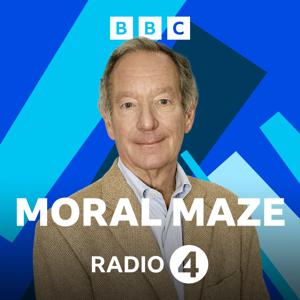
Combative, provocative and engaging live debate examining the moral issues behind one of the week's news stories. #moralmaze
Ranked by our users in the last 21 days

7,626 Listeners
874 Listeners

1,046 Listeners
157 Listeners

5,482 Listeners

1,798 Listeners

1,808 Listeners

1,031 Listeners
2,108 Listeners
1,904 Listeners
28 Listeners
35 Listeners

369 Listeners
161 Listeners
41 Listeners
59 Listeners
107 Listeners
693 Listeners

3,221 Listeners
725 Listeners
1,004 Listeners
3,021 Listeners

1,114 Listeners
773 Listeners
30 Listeners