
Sign up to save your podcasts
Or



Based on Podcast App listening data
Celebrity chef Jamie Oliver has pulled his new children's book from the shelves after complaints that it stereotyped Indigenous Australians. Some First Nations leaders have called the book "offensive". Oliver says it was not his “intention".
This case raises philosophical questions about the role of intent in the way we act and in the way we judge the actions of others. If harm is measured by the impact of an action rather than the intention behind it, how much does the intention matter at all? The fact that the law distinguishes between murder and manslaughter suggests that intent is indispensable in assessing moral culpability. On the other hand, being tired or incompetent at the wheel of a car may result in a more deadly outcome than knowingly driving recklessly. In our everyday relationships, we all make excuses for our behaviour when we mess up, but what makes a good excuse – a work-deadline, a wailing infant, ignorance? More complicated still, how can we discern someone’s intent not to cause harm or offense, particularly if we don’t inhabit the same social or cultural reality?
Does intent matter? After all, you know what they say about the road to hell…
Chair: Michael Buerk
Panellists:
Witnesses:
Producer: Dan Tierney
The tax increases on private schools, though long trailed, were among the most emotive measures in last week’s blockbuster budget, because they’re widely seen to be as much a moral issue as a question of politics or economics. It was a former Conservative education secretary, Michael Gove, who asked: why should the state support the already wealthy to buy advantage for their children? Others see it as an attack on aspiration and excellence, ”a vindictive piece of class warfare on parents who scrimp and save to pay fees”, according to Mr Gove’s former colleague David Davies.
Overcrowded, understaffed and in disrepair, Britain’s prisons are in crisis. One of the first acts of the Labour government was to announce that thousands of prisoners would be let out early to make room for the next wave of inmates. The Scottish government has a similar scheme. Press photographs taken at prison gates show chortling convicts cheering the Prime Minister before climbing into luxury cars and heading off to celebrate.
Arguments rage between those who say we send too many offenders to prison (more, as a proportion of the population, than any other country in Europe) and those who say we don’t catch and punish enough criminals, so we need tougher policing and more jails.
Perhaps the prison crisis is a blessing in disguise, because it is stimulating new ideas. Initiatives are already under way that may develop into long-term solutions. Reformers want more sentences of community service, more curfews enforced by electronic tagging, more flexible parole used as a reward for good behaviour. They point out that the nations with most prisoners are also, by and large, the countries with most crime; in Britain, they say, lawbreaking flourishes in the absence of both deterrence and rehabilitation.
Our sentencing tariffs, criminologists insist, are incoherent and morally dubious; we are too hard on some offenders and too soft on others; we should rewrite the guidelines to distinguish more clearly between wicked criminals and hapless inadequates; most offenders need support, guidance and incentives to address their problems, not incarceration.
But that’s not what the voters tend to think, so it’s not what MPs have tended to support. The majority view has always been that prisons should be used to protect the public. What’s more, they should be unpleasant places, to express society’s disapproval of criminality, and sentences should be longer, because there has to be punishment as well as rehabilitation.
Lock ‘em up or let ‘em out?
The panel: Sonia Sodha, Giles Fraser, Inaya Folarin Iman, Matthew Taylor.
“Dawn... and as the sun breaks through the piercing chill of night on the plain outside Korem, it lights up a biblical famine, now, in the 20th century...” Those words, spoken by Michael Buerk 40 years ago, pricked the world’s conscience, triggered an unprecedented humanitarian effort, led to Live Aid and spawned institutions like Comic Relief. Since then, more than a billion people around the world have climbed out of extreme poverty, although around 700 million people still live on less than $2.15 a day, according to the World Bank.
Times have changed. Not only is the media landscape vastly different, making competing demands on our attention, but also our attitudes to helping the poor around the world are different. The question is not simply whether we have a moral duty to help people in other countries, but HOW we should help them.
In a post-pandemic world, there are those who advance ever stronger arguments for ending poverty through debt cancellation, robust institutions and international co-operation. Critics of development aid, however, see it as wasteful, ineffective and enabling corruption: ‘poor people in rich countries subsidising rich people in poor countries’. Others view the sector as a legacy of European colonialism, citing Band Aid’s portrayal of Africa as emblematic of the ‘White saviourism’ ingrained in the system. Others, meanwhile, believe the best way to help people is to bypass institutions altogether, and give cash directly to individuals to make their own decisions about how to spend it.
40 years on from Michael Buerk’s landmark report from Ethiopia, how should we help the global poor?
Chair: Michael Buerk
Panellists:
In recent weeks tens of thousands of protesters have taken to the streets in Spain’s most popular tourist destinations. From Málaga to Mallorca, Gran Canaria to Granada, locals are revolting against what they see as the hollowing out of their communities with the buying up of properties to turn them into short-stay holiday lets for people they argue don’t respect their locality, culture or language. UNESCO has described the situation as "totally out of balance".
On one level this is an argument about economics, but the implications are profoundly moral. People shouldn’t feel like second-class citizens in their own towns, but we also recognise the freedom to move, rest and discover. The affordability of travel makes mass tourism possible, but it’s lamented by those who see it as selfish, narcissistic and damaging to native cultures and the environment. And yet travel supposedly broadens the mind and the soul – a cultural exchange that can be a catalyst for self-improvement, make us more empathetic, and provide a livelihood for host communities.
Should foreign tourism be discouraged? Or if it’s mass tourism we’re worried about, what can we do about it without holidays becoming an elitist pursuit?
Producer: Dan Tierney
Panel:
Witnesses:
The past week of brutish, hate-filled riots has been a disturbing time for Britian’s minority communities. What started as a protest against the murder of three little girls in Southport has swept the country for days, fuelled by the spread of mis-information on social media.
The cause of the anger is starkly contested. For some, they are racist far-right agitators and opportunist thugs, whipped up by populist politicians and commentators. For others they represent a deeper unease about successive immigration and social policies which have left people feeling ignored, marginalised, even despised by politicians and mainstream media. The ideological divide is between those who see ‘diversity as strength’ and those who think unlimited tolerance breeds its own intolerance.
For all the images of burning cars, racist graffiti and violent looting, there is another side to the story: those who help in the clear up, who show solidarity with their Muslim neighbours, and who make clear their opposition to racist hatred.
What should we make of the riots? And, if there is more that unites us than divides us, what should we be doing to improve relations between communities?
Producer: Dan Tierney
Chair:
Panel:
Witnesses:
One moment in the Olympics opening ceremony in Paris clearly touched a nerve: the tableau of mostly drag queens believed to be parodying Da Vinci’s ‘Last Supper’. Organisers have since denied this was the intention and apologised for the offense caused. Many commentators, including non-believers, declared it “blasphemous”, and “a denigration of Western culture”. While others, Christians among them, considered that response to be an over-reaction.
Producer: Dan Tierney
Panel:
Witnesses:
The Modern Olympics were founded in 1896 by a Parisian with serious moral principles . Pierre De Coubertin even made up a word for it: Olympism: ‘a way of life based on the joy of effort ..and respect for universal fundamental ethical principles. He thought that sports at an international level could foster respect and peace between nations. This week as the Games get underway in De Coubertin’s city, athletes have been meeting to do just that, talk about the role that sport plays in building bridges. But how much does the modern games live up to these highminded ideals? For detractors, it’s a bloated megagames, always billions over overbudget that displaces communities and marginalises the excluded.
The attempted assassination of former US president Donald Trump was a dark day for American politics. We don’t know whether the gunman was induced to kill - as some commentators have suggested - by the current political climate. Nevertheless, it appears that the line between passionate criticism and incitement to violence is becoming increasingly blurred. Words matter, but calls to curb speech beyond current laws are immediately met with opposition by those who see freedom of speech as essential to democracy.
And yet, the abuse and intimidation of politicians also threatens democracy. In the UK the government’s adviser on political violence, Lord Walney, has written to the Home Secretary saying there has been a "concerted campaign by extremists to create a hostile atmosphere for MPs within their constituencies to compel them to cave into political demands".
All parties seek to control the narrative through forceful language, hyperbolic rhetoric, and attacks on opponents, but when do words become dangerous? Politics is tribal, but when does tribalism become toxic?
If democracy is a system in which citizens – and tribes – can disagree without resorting to violence, what can be done to strengthen democracy? Is it possible to turn down the political heat without losing the passion?
PANEL:
WITNESSES:
Producer: Dan Tierney
The idea of when to step down is front and centre in American politics as 81 year old Joe Biden continues in the Presidential race despite concerns about his mental agility. His performance in a recent TV debate has sown doubt among supporters with polls suggesting some are losing faith in his abilities. ‘Pass the torch Joe’ said one placard as he declared his intention to keep going.
Are the elderly blcoking the young if they cling on to powerful and influence ? Does it skew society even more in favour of older people who seem to have had it better when it comes to pensions, homeownership and the opportunity to save money? Gerontologists say that society is ageist, that most people are not like Biden and will hit barriers to staying in work once they get older. That these barriers have to be cleared because as the population gets older we all need to stay in the workforce for longer.
Wisdom is said to come with age but if you have a fulfilling job, how do you check that you are still capable of continuing? Will those around you tell you the truth ? Is it pride that keeps elderly people in powerful positions, a sense that they are irreplacable, an unwillingness to give up something that defines them and take on another role. What's the morality of stepping down?
Witnesses:
Panel:
Presenter: Michael Buerk
From the publisher's feed
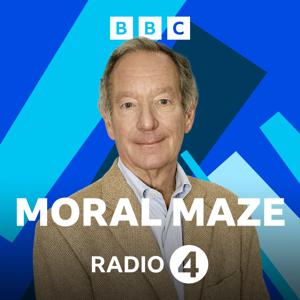
Combative, provocative and engaging live debate examining the moral issues behind one of the week's news stories. #moralmaze
Ranked by our users in the last 21 days

7,626 Listeners
874 Listeners
1,046 Listeners
157 Listeners

5,482 Listeners
1,798 Listeners
1,808 Listeners
1,031 Listeners
2,108 Listeners

1,904 Listeners
28 Listeners
35 Listeners

369 Listeners
161 Listeners
41 Listeners
59 Listeners
107 Listeners
693 Listeners
3,221 Listeners
725 Listeners
1,004 Listeners
3,021 Listeners

1,114 Listeners
773 Listeners
30 Listeners