
Sign up to save your podcasts
Or



Based on Podcast App listening data
It’s now nearly two years since Russia began its full scale invasion of Ukraine. Hopes that Ukraine might seize back its territory have been dashed, in a conflict that’s become deadlocked. At first it felt clear – the invasion is wrong, Putin must fail and be seen to fail, Ukraine’s defiance and bravery must be supported with everything its allies can provide. But as the death, destruction and bloodshed continues, with little sign of progress on either side, questions have been raised about how the war might ever be brought to an end.
How realistic is it for Ukraine to aspire to recapture all of its land, even Crimea? This year’s US presidential election has sharpened the focus: A Trump victory could threaten Ukraine’s future supply of arms. Some believe Russia would settle for the land it has already captured. If so, for Ukraine the bitter pill of ceding some 20% of its territory would at least bring the war to an end. But what’s the moral case for this? What’s the real value of peace – bought at the cost of justice? If western powers are seen to allow aggression to win the day in Ukraine, what message would that send to Vladimir Putin and other tyrants around the world? In Ukraine, what’s the moral case for ceding land for peace?
Presenter: Michael Buerk
Nearly a decade since MPs in Westminster voted against allowing terminally ill people to end their own life, assisted dying is climbing back up the political agenda. The Health and Social Care Committee is due to publish the first report of its kind on the subject after a year-long inquiry. Meanwhile, the Labour Leader Sir Keir Starmer has said there are "grounds for changing the law”, UK medical bodies continue to drop their opposition to the idea, and polls suggest around two-thirds of the public are in favour.
Those who describe constant physical pain and a loss of bodily autonomy say that isn’t living at all. Should we be guided principally by compassion in these situations? Or does the good intention of irradicating suffering risk a chilling effect in which people are pressured into re-appraising whether their lives are worth living?
Is it time to allow assisted dying?
Panel: Mona Siddiqui, Inaya Folarin Iman, Matthew Taylor, Giles Fraser
Witnesses: Rabbi Dr Jonathan Romain, Professor Kevin Yuill, Zoe Hyatt Marley, Dr Miro Griffiths
Producer: Dan Tierney.
Is it moral to attach identity labels to ourselves and others? We often label people by nationality, gender, sexuality, ethnicity, religion, disability and many more categories. Is this a good and helpful or something that should be avoided?
The King has said that he wants the UK to be ‘a community of communities’, whereas some commentators have said that this is a call for permanent racial division in our society. Have the use of labels increased or diminished racism and other forms of prejudice society?
Labels can identify an individual as a member of a collective. Others want the unique identity of each of us to be respected for its differences from everyone else. If our loyalty should be to a group, should that group be defined by the colour of its skin, its politics or its passports?
Panellists: Giles Fraser, Sonia Sodha, Tim Stanley & Ash Sarkar
Should politicians respect, despise, accommodate or ignore public opinion?
Rishi Sunak is looking for a policy he can pop into place between now and the general election that will avoid a Labour landslide. He is being advised that abolishing inheritance tax will tickle the tummies of the Tory not-so-faithful. Meanwhile, Sir Keir Starmer wants government planners to “bulldoze” local objections when deciding where to put new housing developments. Can a government get away with ignoring public opinion? Well, it can in constituencies it’s never going to win.
Politics nowadays is not merely ‘guided’ by polls, surveys, databases and focus groups… it is controlled by them. But is that good for the country? Is the advice they generate either wise or moral? Are the public obsessed with issues that don’t matter, while they ignore the ones that do? There is a case to be made against taking any notice of what the public thinks about anything. We know that the public thinks short-term, and that its opinions on political issues are ill-informed. Public opinion is inconsistent, incoherent and volatile.
And yet democracy is built on the principle that the majority must get its way. And it’s not just politicians (and Simon Cowell) who flatter the electorate with talk of the ‘wisdom’ of the Great British Public. Lots of people seem to think that majority opinion will usually be wise, kind and helpful. But then, many also believe the moon landing was staged.
Panellists: Anne McElvoy, Melanie Philips, Mona Siddiqui & Matthew Taylor
Presenter: Michael Buerk
The Met police has warned of a "growing" risk of violence and disorder this Remembrance weekend. The Prime Minister has described a planned pro-Palestinian protest in London on Armistice Day as “provocative and disrespectful” to those who wish to remember the war dead “in peace and dignity”. The Chief Rabbi Ephraim Mirvis said it was "a stain on our common humanity" that so many seem to have "lost sight of the moral distance between Hamas and Israel". Others, however, strongly refute the description of the demonstrations as “hate marches”, believing that the protesters should be allowed to campaign for a ceasefire and an end to the killing; and to show solidarity with Palestinians without undermining either the remembrance events or the humanity of Israelis.
The polarising nature of the Israel-Hamas war and its repercussions in the UK has resulted in both sides accusing the other of ‘weaponising’ remembrance. Public attitudes to commemoration have changed over the last century and notions of a country honouring the ultimate sacrifice of its soldiers can be hard to disentangle politically from conflicts of the day.
What are we really doing on Remembrance Day? While for some it is a deep expression of sorrow for the dead and a formal commitment to peace, others believe it risks celebrating past acts of killing, which translates into justifying present militarism and violence. If rising conflicts around the world suggest humanity has not learned from the mistakes of the past – what is the moral purpose of remembrance? How should we remember the dead as well as those who are living through conflict today?
Producer: Dan Tierney.
The UK’s prisons are full, their corridors are understaffed and their Victorian buildings are crumbling. The answer, at least at the moment, is to lock up fewer criminals. The justice secretary has announced plans this week to phase out short sentences – anything less than 12 months - because they produce “hardened criminals rather than rehabilitated offenders.”
Prison reformers have long argued that short sentences don’t work anyway, citing a reoffending rate of over 50%. Others believe that the justice system is already too soft. Community sentences, they insist, send out the wrong message to criminals and open the door to further lawbreaking. Who should and who shouldn’t go to prison?
There’s a wider question; are prisons upholding or undermining justice? Reform campaigners say that prisons are failing both society and the prisoners themselves. The best outcome for everyone is the rehabilitation of criminals, and if that isn’t possible inside prison, it should be explored outside. Others see the redemption of criminals as secondary to justice for their victims and protection for their communities.
Depending on how people see it, prisons are either too harsh or too lax. How should the justice system decide whether to wield the carrot or the stick? Can punishment itself be a necessary step towards rehabilitation? Or is prison too often a futile expression of collective vengeance?
Are prisons doing more harm than good?
Producer: Dan Tierney.
The surprise attack by Hamas was devastating, leaving hundreds of Israeli civilians dead, injured or taken hostage. Israel’s response was swift, with airstrikes on Gaza killing hundreds of Palestinians, including children.
The scale of the attack was unprecedented, but the cycle of violence and escalation is all too familiar in this land that has been contested for more than a century. Now another generation sees the bloodshed at first hand.
Hamas is dedicated to the destruction of Israel, so for many Jews this is about survival. At the same time, many Palestinians have come to see Israel as a brutal oppressor. Each side sees the other as an existential threat. Even those who refuse to define their neighbours across the Gaza border as ‘the enemy’ may find themselves defined in those terms against their will – and threatened with death.
How should we understand conventional rules of morality in such intractable circumstances? What is a proportionate response to an act of aggression? And what conditions are necessary for a realistic peace process to take hold?
Perhaps the most radical statement in all of human history is “love your enemies”. Those who are pessimistic about peace in the Middle East might dismiss that as naïve. But there are some who can give us real-life examples of the human capacity to rise above anger and grief for a greater good.
How should we think about our enemies?
With Rabbi Yehoshua Pfeffer, Atef Alshaer, Gabrielle Rifkind, Rami Elhanan and Bassam Aramin.
Producer: Dan Tierney.
The BBC has published new guidance on how its big name presenters can use social media. Those working in news and current affairs are still bound by strict rules on impartiality, which the BBC sees as being fundamental to its reputation, values and the trust of its audiences. But the presenters of other programmes are free to express their political views, as long as they don’t “endorse or attack a political party."
While impartiality means not favouring one side over another, news broadcasters are subject to a subtler version of it: “due impartiality”. That means different perspectives don’t necessarily have to be given equal weight. But which perspectives and how much weight? That’s a matter of judgment.
The changing media landscape has brought new challenges to the principle of impartiality. The media regulator Ofcom has recently investigated GB News. Among their alleged breaches of impartiality was an item in which the Conservative Chancellor was interviewed by two other Conservative MPs.
The spiritual heirs of Lord Reith believe that media impartiality is a moral good and a central pillar of democracy in an age of populism and polarisation. Sceptics suggest that the pursuit of impartiality can create problems of its own, putting ignorance and expertise on an equal footing.
Beyond broadcasting, how much should we as individuals strive for impartiality? Is it possible to look at historical events through an objective lens? While psychology tells us we all have cognitive biases, psychologists disagree about how much they can be corrected. Is it possible to be truly impartial about ourselves and others?
Producer: Dan Tierney
Michael Buerk chairs a special Moral Maze debate recorded at 'HowTheLightGetsIn' festival of philosophy and music.
The language of freedom permeates our political debate. In the US, it may be a decisive battleground in the 2024 presidential election. The problem is that people mean very different things by it. Is it freedom from government regulation or freedom to have an abortion? Freedom of speech or freedom from discrimination? Freedom to own a gun or freedom for communities to ban them?
A distinction is often made between positive and negative freedom. Negative freedom is the absence of constraints (‘freedom from’) – while positive freedom is the possibility of acting in such a way as to take control of one’s life (‘freedom to’). Libertarians often see individual freedom - the private enjoyment of one’s life and goods, free from interference – as the most fundamental value that any society should pursue and protect. This view is challenged by those who believe wealth, health and educational inequalities inevitably mean some people are more free than others, and seek instead to promote the collective freedom of society as a whole.
If a society in which there is a complete absence of restraint is as dystopian as one in which our every action is controlled, how should we navigate the trade-offs between individual freedom and other goods, like security and collective wellbeing? Is the language of freedom helpful or harmful in negotiating our political differences? Deeper question: what does it mean for a human being to be free?
With guests: Konstantin Kisin, Sophie Howe and James Orr.
Producer: Dan Tierney.
Labour has confirmed that it plans to allow 16 and 17 year-olds to vote in elections, in line with Scotland and Wales. The idea, they say, is to empower younger people by engaging them in the democratic process. Some older members of the electorate might raise the question of whether people under 18 have the maturity to vote. It would be no surprise to hear that argument, we were all children once and we know that adults think they’re superior.
It’s nearly fifty years since the concept of “childism” was first coined by psychiatrists, to describe the automatic assumption of superiority of any adult over any child. Now, perhaps, childism is the last permissible prejudice. Discrimination that would seem shocking if applied to any other group is exercised against children and regarded as quite appropriate. Children’s freedom is constantly restricted and their views are generally dismissed. They’re told what to do, what to eat, what to wear, even what to say. Is this just responsible parenting or does it verge on oppression?
Children’s minds aren’t fully developed, and they’re less well equipped to make smart decisions. They also need limits and it’s surely the job of adults to impose them, but where should the line be drawn? We should keep children safe, of course, but after that… is it better to be strict or to allow them maximum autonomy? What’s the moral basis on which we make that judgement?
Attitudes have changed over the decades. We’ve moved on from the axiom that “children should be seen and not heard.” A survey out last week suggested that parents in Britain place less importance on instilling obedience in children than parents in most other countries. But maybe a little obedience would be no bad thing?
What’s the moral case for exercising power over children and young people?
Presenter: Michael Buerk
From the publisher's feed
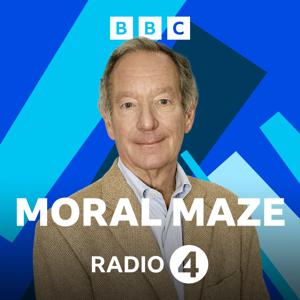
Combative, provocative and engaging live debate examining the moral issues behind one of the week's news stories. #moralmaze
Ranked by our users in the last 21 days

7,626 Listeners
874 Listeners
1,046 Listeners
157 Listeners

5,482 Listeners

1,798 Listeners
1,808 Listeners
1,031 Listeners
2,108 Listeners

1,904 Listeners
28 Listeners
35 Listeners

369 Listeners
161 Listeners
41 Listeners
59 Listeners
107 Listeners
693 Listeners
3,221 Listeners
725 Listeners
1,004 Listeners

3,021 Listeners

1,114 Listeners
773 Listeners
30 Listeners