
Sign up to save your podcasts
Or



Based on Podcast App listening data
Who’s afraid of Virginia Woolf? Well, Camden Council for a start, who’ve put a QR code on her statue in Bloomsbury explaining that some of views and actions of the prototype feminist, widely regarded as one of the leading modernist writers of the 20th century, are now considered “offensive” and “unacceptable”.
Witnesses:
Panellists:
Presenter: Michael Buerk
Producers: Catherine Murray & Peter Everett
Taylor Swift fever has swept the UK week. She’s back in August and fans have been paying hundreds sometimes thousands to get their hands on seats through resale sites. It’s led us to think about the price and value of art and culture. St Thomas Aquinas came up with the ‘just price’ theory, that it is wrong to sell something for more than it is worth and charging more based on the need of the buyer is exploitative and sinful. Is that what is going on when punters are asked to stump up for a once in a lifetime experience?
Presenter: Michael Buerk
Witnesses:
Christopher Snowdon, Head of Lifestyle Economics at the IEA
Presenter: Michael Buerk
The way we grieve is changing and that is seen most starkly by the rise of the direct cremation and the no fuss funeral. I in 5 people of people opted for a direct cremation last year, a startling figure that’s risen 3 fold in 5 years. At it’s most basic the direct cremation means the final journey is purely functional. Body taken unaccompanied to an unknown crematorium. You can even get the ashes posted back through the letterbox. It's cheaper and you can mark the last hurrah with a party or memorial service or perhaps even nothing at all. What does this changing trend say about our respect for human dignity as a society or is this just another step
Only a quarter of people in the UK now want a religious funeral. The rise of direct cremation could also be a sign that mourners are throwing off the shackles of inherited tradition and religious belief to decide how they want to grieve. Direct cremations and DIY celebrations cut out the reality of death and if there’s no grieving at the graveside or standing in a crematorium what do we lose? There's another aspect to consider. The digital afterlife is one where someone never leaves. Grieftech can keep us in touch with AI loved ones . Instead of the finality of a funeral we could be conversing forever with the deceased. Do we need a final farewell?
Presenter: William Crawley
It will soon be time to vote in the General Election. A moment for us all to play our part in democracy. The theory is that politicians do their best to get elected, and then do all the right things so they are re-elected next time round. But in practice it can be difficult for governments to do what really needs to be done and still stay in power. A good example is climate change: There is a broad consensus that very urgent action is needed, and yet as the election nears, there's little from the major parties promising radical, decisive action, because they fear that voters don't really want it.
If liberal democracy can’t solve our problems, can it at least unite us around the principle that everyone’s point of view is worth hearing? Well no, not any more. For every listener to good old Radio 4 there are many more who get their news from social media and their opinions from their silo of friends. Is it too cynical to suggest that voters are short-sighted, selfish and stubbornly wrong-headed? And what about the quality of our leaders? Does anyone think our political system is serving up the nation's finest?
Some say our democracy isn’t democratic enough. They fear excessive influence by lawyers, quangos, peers, and press barons. Others applaud activists for challenging the worst excesses of a corrupt Commons. Three cheers, they say, for the unelected European Court of Human Rights and the judges who go easy on civil disobedience while thwarting the Home Office over asylum policy.
Do we still believe that our democracy is morally the least-worst system, when it seems incapable of producing long-term solutions to the most urgent problems? Can we learn anything at all from authoritarian states that seem better at simply getting things done? In this special edition of the Moral Maze, recorded at the Hay Festival, we ask - what is the moral basis for claiming that our version of democracy is superior?
Presenter: Michael Buerk
The Legacy Act in Northern Ireland provides a conditional amnesty for people who committed crimes during the Troubles, as part of a broader process of reconciliation. It’s an attempt to draw a line under events of the past, but it’s generated anger among the families of some victims, who feel they’ll be denied justice.
Presenter: Michael Buerk
Many people seem to be going off the idea of work. In the UK there are more than nine million people who are "economically inactive". Some are unemployed, some are students, others are not actively looking for a job or available to start work. There’s no shortage of jobs, but people are choosing not to take them. Many people decided not to return to work after the Covid lockdowns. They reduced their working hours or took early retirement, choosing the golf course over the office. For some, it’s a moral failure that so many are economically inactive. But why do we ascribe such virtue to the idea of work?
Politicians endlessly refer to "hard working families", perhaps inducing a sense of entitlement among workers, but in the process stoking resentment against those who don't work. Of course the economy relies on work - the wheels only turn when enough people are employed and paying tax.
Some believe the benefits system is to blame - if it's too comfortable not to work - then why bother? But there’s also the broader societal shift where people choose to work less, or not at all and live a more modest but perhaps less stressful life. Is this a laudable position, where people prioritise wellbeing over wealth and status, or a selfish one that denies the collective responsibility we all bear to contribute to society, through labour and taxes? The personal value of work might feel clearer if your job is rewarding and well paid, but less so if you’re on a low income. What is the moral value of work?
Presenter: Michael Buerk
This week it emerged that Abdul Ezedi, hunted by police after an attack on a woman and her daughters with a corrosive liquid, was granted asylum after being convicted of sexual assault. He'd converted to Christianity, which could have put him at risk in his native Afghanistan. It’s just the latest story stirring debate about one of the most divisive issues of our times - immigration.
Presenter: Michael Buerk
It’s Valentine’s Day, when we celebrate romantic love, and is there anything more romantic than getting married? It’s the way all those old films end, after all the “will they, won’t they”, the couple finally tie the knot, the titles roll and we all enjoy the warm certainty that they’re sorted for life. What’s not to love about marriage? A lifelong commitment to care for each other... a solemn promise rooted in love… perhaps the foundation for starting a family. But for many, marriage is losing its gloss. The latest government figures suggest that the proportion of adults in England and Wales who are married has, for the first time, fallen below 50%.
Presenter: Michael Buerk
It emerged this week that scientists in South Korea have created a new kind of “meaty” rice, with high levels of protein. The grains are packed with beef muscle and fat cells – all grown in a lab. It’s just the latest of many meat-alternatives that are helping people to eat less meat. Supermarkets are responding to public demand by offering an ever wider choice of plant-based foods. But while we might not need to eat meat, most of us really enjoy it.
The goal posts are shifting in the age old debate about the morality of meat. Whatever you think about the industrial breeding of animals, to be slaughtered and served up for our pleasure, there’s now another compelling argument for us to stop, or at least cut back – meat production significantly contributes to climate change.
In the last decade, the number of vegans in the UK has increased steeply, but it’s still small. Estimates vary between about 2% and 3% of the population. Many more are vegetarian, who avoid meat and fish, but eat dairy. There are also flexitarians, who mainly choose a plant-based diet, but do occasionally eat meat.
A moral argument that was once focused on whether humans have the right to exploit animals has become a broader debate that includes protecting the planet for future generations. Some say it’s natural for humans to eat meat, indeed we have evolved to do so. Others think it’s barbaric and the effects of the meat and dairy industry on the climate have made the argument for veganism overwhelming. What’s the moral case for veganism?
Presenter: Michael Buerk
The last week saw two contrasting examples of how societies treat killers. Valdo Calocane, who killed three people in Nottingham and tried to kill three more, avoided jail and was instead sent to a secure hospital for life because of his mental illness. One of the victim’s relatives protested that he “got away with murder”. Meanwhile in America, convicted murderer Kenneth Smith became the first person in the US to be executed using nitrogen gas.
Calocane’s charge was reduced to manslaughter on the grounds of diminished responsibility because of his paranoid schizophrenia. The mother of one of his victims objected and complained that the families were not consulted. The Attorney General will be reviewing the sentence. It’s raised questions about what punishment is for: Is it for criminals – to provide the suffering they deserve, or reform them or deter future offenders? Or is it for victims – providing retribution and a sense of fairness to them? Victims are uniquely placed to appreciate the true impact of crime, so shouldn't their perspective have a greater weight in the judicial process? Would a bigger role for victims improve or hinder justice? What’s the purpose of punishment and can it ever provide justice for the most serious offenders, and their victims?
Presenter: Michael Buerk
From the publisher's feed
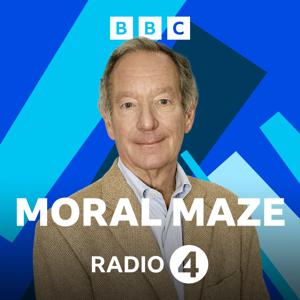
Combative, provocative and engaging live debate examining the moral issues behind one of the week's news stories. #moralmaze
Ranked by our users in the last 21 days

7,626 Listeners
874 Listeners

1,046 Listeners
157 Listeners

5,482 Listeners

1,798 Listeners

1,808 Listeners

1,031 Listeners
2,108 Listeners

1,904 Listeners
28 Listeners
35 Listeners

369 Listeners
161 Listeners
41 Listeners
59 Listeners
107 Listeners
693 Listeners

3,221 Listeners
725 Listeners
1,004 Listeners
3,021 Listeners

1,114 Listeners
773 Listeners
30 Listeners