
Sign up to save your podcasts
Or



Based on Podcast App listening data
Many of us were not taught about the economics of OT in occupational therapy school. And, part of that reason is that the research base on the economic value of our work is just emerging.
In this episode we will look at an article on the economic effects of OT in the acute and subacute setting.
The good news in this article is that there is a growing amount of research about the economic value of OT—and the initial research is promising.
The problem is that the existing research is widely varied and there simply is not enough of it. This means we have to be carefully measuring our outcomes at the individual level.
To talk about what this means for our individual practices, I’m excited to welcome to the podcast Jeffrey Kou, OTR/L. Having worked in acute rehabilitation, Jeff is passionate about helping fellow OTs provide high value care in these areas.
In order to earn credit for this course, you must take the test within the OT Potential Club.
You can find more details on this course here:
https://otpotential.com/ceu-podcast-courses/economics-acute-care-ot
Here's the primary research we are discussing:
Wales, K., Lang, D., Rahja, M., Somerville, L., Laver, K., &; Lannin, N. A. (2022). Economic effects of occupational therapy services for adults in acute and Subacute Care Settings: A systematic review. The American Journal of Occupational Therapy, 76(1).
Support the show
The research we are reviewing in this course showcases how far we’ve come in the prevention, early detection, and treatment of cerebral palsy (CP) in children. The authors also explore the strength of the evidence behind 182 interventions for CP, organizing them into an “evidence traffic light.”
This is an important paper for all OTs to read—not just because CP is one of the most common physical disabilities we see on our caseloads, but because the paper is so well written. The authors do a fantastic job of highlighting the general trends behind what works, what doesn’t work, and the progress that still needs to be made.
After reviewing the articleI am thrilled to welcome Dr. Iona Novak, OT, PhD., one of the article’s authors. Her and I will discuss the implications for your occupational therapy practice.
In order to earn credit for this course, you must take the test within the OT Potential Club.
You can find more details on this course here:
https://otpotential.com/ceu-podcast-courses/cerebral-palsy-and-ot
Here's the primary research we are discussing:
Novak, I., Morgan, C., Fahey, M., Finch-Edmondson, M., Galea, C., Hines, A., Langdon, K., Namara, M. M., Paton, M. C., Popat, H., Shore, B., Khamis, A., Stanton, E., Finemore, O. P., Tricks, A., Te Velde, A., Dark, L., Morton, N., & Badawi, N. (2020). State of the Evidence Traffic Lights 2019: Systematic Review of Interventions for Preventing and Treating Children with Cerebral Palsy. Current neurology and neuroscience reports, 20(2), 3.
Support the show
The term cultural competence can feel too soft and narrow to really push our profession towards equity and justice.
But, the article we are reviewing today from the top 100 OT-related articles, brings up several essential points for discussion.
The mention of OT in the article is grim. The article highlights “culturally blind” attitudes of OTs that failed to change after cultural competence training.
This is a stark reminder of the need for change—and the multi-layered work needed to make change happen. Ultimately, the article attempts to put forth an understanding of cultural competence that is both expansive and dynamic, but also able to be operationalized into practice.
After we review the article, we are honored to welcome Khalilah R. Johnson, PHD, MS, OTR/L to discuss what this research means for your OT practice and for our profession.
In order to earn credit for this course, you must take the test within the OT Potential Club.
You can find more details on this course here:
https://otpotential.com/ceu-podcast-courses/cultural-competence-ot
Here's the primary research we are discussing:
Henderson, S., Horne, M., Hills, R., & Kendall, E. (2018). Cultural competence in healthcare in the community: A concept analysis. Health & social care in the community, 26(4), 590–603.
Support the show
Acceptance and Commitment Therapy (ACT) weaves together multiple concepts that OTs are already familiar with and often use in practice. On a personal level, it provides helpful tools we can utilize as we navigate complex situations in our work.
But, not only is it personally helpful, the research we’re looking at today shows us why we need to be aware of it as a therapy professional:
Research supports the use of ACT in addressing chronic pain.
In the research study we’ll explore in this podcast episode, you’ll find that OTs were part of an interdisciplinary team that provided intensive pain management treatment built around ACT. (And, that the program led to positive functional outcomes.)
To help us unpack how this information can be integrated into your practice, it is our honor to bring on Linda Crawford, OTR/L, CDWF. Linda has been an occupational therapist for over 30 years and has specialized in working with people with complex pain conditions for the last eight years. She is a contributing author to the newly updated AOTA position paper on the role of occupational therapy in pain management.
In order to earn credit for this course, you must take the test within the OT Potential Club.
You can find more details on this course here:
https://otpotential.com/ceu-podcast-courses/acceptance-commitment-therapy-ot
Here's the primary research we are discussing:
Yu, L., Norton, S., & McCracken, L. M. (2017). Change in “Self-as-Context” (“Perspective-Taking”) Occurs in Acceptance and Commitment Therapy for People With Chronic Pain and Is Associated With Improved Functioning. The journal of pain, 18(6), 664–672.
Support the show
This prestigious guideline on Parkinson’s Disease (PD) treatment, that we’ll be covering in this podcast episode, recommends that rehab therapies are started at the time of diagnosis and continued throughout the disease course.
This article will update you on key information about the PD disease process, the pervasiveness of non-motor symptoms, and the effectiveness of different treatments.
The knowledge we are gaining about PD should definitely be impacting your sessions. (Hint: please be talking about exercise!) It should also be pushing us to consider new care models for our patients with chronic conditions. To discuss what this looks like in practice, it’s our honor to welcome back to the podcast Brandy Archie, OTD, OTR/L, CLIPP, CLVT. Brandy is an OT entrepreneur who serves older adults including PD clients.
In order to earn credit for this course, you must take the test within the OT Potential Club.
You can find more details on this course here:
https://otpotential.com/ceu-podcast-courses/parkinsons-ot-evidence-review
Here's the primary research we are discussing:
Armstrong, M. J., &; Okun, M. S. (2020). Diagnosis and treatment of parkinson disease. JAMA, 323(6), 548.
Support the show
How we understand our role as occupational therapy practitioners makes a huge difference in how we show up for our clients.
But, unfortunately, some theories of OT practice fail to aid us in practical clinical reasoning that focuses on occupation.
Luckily, the theories of OT practice that are emerging are getting closer to capturing the care we aspire to deliver—and provide more useful frameworks to guide our clinical reasoning.
Today we will dive into the CORE Approach. The approach is a mechanism for OTs to understand their practice from an inclusive, occupation-centric lens. It encourages OTs to ask reflexive questions related to the “core” areas of OT: capabilities, opportunities, resources and environments After reviewing an article on the CORE Approach, I am excited to explore this approach more fully, with Brock Cook—an OT from Australia, where this approach was born! Brock is a lecturer at James Cook University will help us understand how the approach can make a tangible difference in your OT practice.
In order to earn credit for this course, you must take the test within the OT Potential Club.
You can find more details on this course here:
https://otpotential.com/ceu-podcast-courses/core-approach-inclusive-ot
Here's the primary research we are discussing:
Pereira, R. B., Whiteford, G., Hyett, N., Weekes, G., Di Tommaso, A., &; Naismith, J. (2020). Capabilities, opportunities, resources and environments (CORE): Using the core approach for inclusive, occupation‐centered practice. Australian Occupational Therapy Journal, 67(2), 162–171.
Support the show
Our spinal cord injury clients stay in our hearts and minds. After all, we help them and their families navigate tremendous life changes.
This week’s article gives us a solid big-picture review of what we know (and don’t know) about spinal cord injury rehab. You’ll learn about commonly used assessments, as well as which treatments are gaining traction (and which ones aren’t.)
And, most importantly, this article serves as a good reminder that there are simply no magical, straightforward answers in this area of rehab. Instead, these patients benefit most from your occupational therapy lens and your commitment to staying on top of evidence-based care.
To help guide us through this article, and pull out actionable takeaways for your practice, we are excited to welcome Simon Carson, OT/L, MBA. Simon serves as the chief of occupational therapy at the University of Rochester Medical Center.
In order to earn credit for this course, you must take the test within the OT Potential Club.
You can find more details on this course here:
https://otpotential.com/ceu-podcast-courses/ot-spinal-cord-injury
Here's the primary research we are discussing:
Burns, A. S., Marino, R. J., Kalsi-Ryan, S., Middleton, J. W., Tetreault, L. A., Dettori, J. R., Mihalovich, K. E., &; Fehlings, M. G. (2017). Type and timing of rehabilitation following acute and Subacute Spinal Cord Injury: A systematic review. Global Spine Journal, 7(3_suppl).
Support the show
In this 1 hour course, we will be diving into an incredibly helpful journal article that summarizes the evidence behind pediatric OT interventions.
The authors take 52 pediatric OT interventions for children with disabilities and rate the evidence behind them.
They organize the evidence into a traffic light infographic—where green means “the evidence supports this intervention.”
This alone makes the evidence ratings super easy to scan and more accessible for therapists (and families and policy makers)! Then, they even go so far as to draw out common principles between green light interventions.
To discuss how this research applies to your occupational therapy practice, we are excited to welcome to the podcast, Michelle DeJesus, MS OTR/L. Michelle is a pediatric occupational therapist working specifically in pediatric outpatient rehabilitation and early intervention. Her and I will talk through what it looks like for busy therapists on the ground to leverage this evidence to improve their care.
In order to earn credit for this course, you must take the test within the OT Potential Club.
You can find more details on this course here:
https://otpotential.com/ceu-podcast-courses/pediatric-ot-evidence-review
Here's the primary research we are discussing:
Novak, I., &; Honan, I. (2019). Effectiveness of paediatric occupational therapy for children with disabilities: A systematic review. Australian Occupational Therapy Journal, 66(3), 258–273.
Support the show
Spending time in research can deliver the humbling, but needed, reminder that not all therapy leads to clear value for our clients.
For example, in the United States, we can now see that in the 2010s therapy was being delivered in skilled nursing facilities (SNFs)—beyond what was helpful for clients.
Part of the problem was the fee-for-service payment model that incentivized skilled nursing facilities to deliver high quantities of therapy minutes to as many patients as possible. (More therapy equaled more money.)
The research article that we will explore in this one hour course, shows us the humbling data behind this problem. And, it reminds us of why the transition to value-based care continues to happen. The authors specifically look at data around post-acute hip fracture rehab, and compare fee-for-service Medicare versus Medicare Advantage (which is a value-based care program.)
To help us make sense of the changing therapy landscape, we are thrilled to welcome Clarice Grote, MS, OTR/L, is an innovative advocate for occupational therapy and an expert on Medicare post-acute care policy. Clarice will help us understand how this research applies to your individual practice.
In order to earn credit for this course, you must take the test within the OT Potential Club.
You can find more details on this course here:
https://otpotential.com/ceu-podcast-courses/payment-models-in-post-acute-ot
Here's the primary research we are discussing:
Kumar, A., Rahman, M., Trivedi, A. N., Resnik, L., Gozalo, P., &; Mor, V. (2018). Comparing post-acute rehabilitation use, length of stay, and outcomes experienced by Medicare fee-for-service and Medicare advantage beneficiaries with hip fracture in the United States: A secondary analysis of administrative data. PLOS Medicine, 15(6).
Support the show
It can feel like everyone is discussing the benefits of mindfulness.
Yet, with all this fanfare, we must ask: does the evidence justify incorporating mindfulness into occupational therapy?
The systematic review we will look at in this one hour course says, “YES!” (At least for specific chronic pain conditions.)
The authors provide a great overview of the problem of pain—and they also discuss various mindfulness-based interventions for chronic pain, including the research behind them.
After we review the article, it is our pleasure to welcome Patricia Motus, OTR/L, RYT-200 to join us on the OT Potential Podcast. Patricia uses yoga, meditation, grounding, and life & health coaching to help clients navigate life transitions. She and I will discuss this article, including some ways you can incorporate mindfulness into your traditional OT practice.
In order to earn credit for this course, you must take the test within the OT Potential Club.
You can find more details on this course here:
https://otpotential.com/ceu-podcast-courses/mindfulness-chronic-pain-ot
Here's the primary research we are discussing:
Majeed, M. H., Ali, A. A., & Sudak, D. M. (2018). Mindfulness-based interventions for chronic pain: Evidence and applications. Asian journal of psychiatry, 32, 79–83.
Support the show
From the publisher's feed
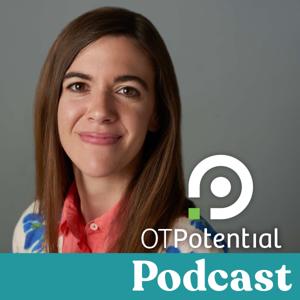
Earn your OT CEUs by listening to our episodes for free, then logging into the OT Potential Club to take a short quiz and download your certificate. Each week (with breaks for major holidays), we…
Our expert guests help you pull out actionable insights you can apply immediately in practice. Designed for both occupational therapists, occupational therapy assistants, and OT students the OT Potential Podcast is your go-to source for AOTA-approved, evidence-driven occupational therapy continuing education.
2,332 Listeners

6,692 Listeners

4,865 Listeners

9,156 Listeners

3,139 Listeners
440 Listeners

13,239 Listeners

4,837 Listeners

2,212 Listeners

27,962 Listeners
236 Listeners

29,171 Listeners

6,443 Listeners

19,071 Listeners
2 Listeners