
Sign up to save your podcasts
Or

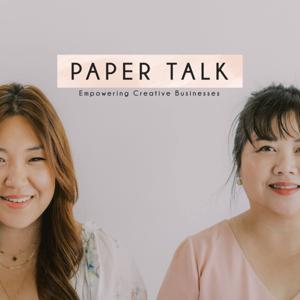


Kristen Kong joins us to share how she launched her YouTube paper flower tutorial channel, and how she creates weekly content to engage followers.
Videos are uniquely suited to paper flower tutorials. But they can feel daunting to produce!
Where do you start? How do you get views on a platform like YouTube? How do you avoid failing spectacularly?!?
In our latest episode we talked with Kristen Kong of Campbell Workshop. In under a year she opened a shop and started a YouTube channel with a gruelling one-tutorial-a-week schedule. How does she do it? She shared all the details with us on the podcast, giving you an insider’s look at what it takes to produce regular and beautiful video content.
Listen now to learn how she does it, but in the meantime, here’s a look at three things we discussed that will put you on the path to success when it comes to building a YouTube channel.
Here’s what you’ll learn when you listen to our conversation:
► How Kristen started her paper flower journey.
► Her process and schedule for creating weekly tutorials.
► How she makes her tutorials accessible for everyone.
► Which equipment she uses to produce her videos.
► What she offers on Patreon to her fans.
Focus on Your Strengths
Part of our discussion delved into how unique each of us are as artists and creators. There isn’t a one-size fits all path when it comes to paper flowers.
Kristin explained her love of making tutorials like this: “Making paper flowers constantly could be boring for me, because I just keep repeating the same process, making the same flowers… It’s less challenging for me. I just love making new things and keep creating things… It just depends on the person, really.”
“I found teaching quite fascinating, because very time people really appreciate it, how you teach to them and they actually achieve it as well, everybody is really happy afterwards. So it’s like an amazing thing to share my skills.”
Cranking out a tutorial every week might not be for you. If you don’t love doing that kind of work, you will burn out quickly. If you are interested in creating more videos, think about what kind of content you would be happy to put your heart into. That might mean that you post different videos than other paper florists, or that you post less often. That’s okay! Figure out what works for you and focus on that.
Know Your Target Audience
As you make YouTube videos, keep in mind who will be watching them. Do you want to capture experienced paper florists? Crafters who are dabbling in crepe? People who just want to watch something pretty be made?
The better you understand who your target audience is, the better content you can create to engage with them.
Kristen talked more about this on the episode, but in short, she keeps all of her tutorials accessible to as wide an audience as possible. How? By using tools and items that almost anyone would have around the house. She knows the level of commitment her audience is comfortable with.
Let Yourself Be Less Than Perfect
Kristen shared her tutorial creation schedule on the podcast, which will give you a great peek at what it takes to create as much content as she does. One thing that stuck out to us is that she doesn’t let the fear of not being perfect hold her back.
She didn’t have the best equipment when she started filming, and still doesn’t. She doesn’t get caught up on perfecting the details of each tutorial. She does her best in the time she has, and then she posts the video and moves on to the next.
“Everything doesn’t have to be perfect. Even in the flower world, like the real flower world, they don’t really have the perfect ones, because some of them have a little bit of burn or like a bit of tear or something like that. So there’s no perfect flowers in the real world.”
Being consistent with producing content is more important than being absolutely perfect. The truth is that you can spend months polishing a video, and it will still not be perfect. The minute you publish, someone will point out a flaw.
Kristen’s advice about paper flowers applies here as well: “Everything doesn’t have to be perfect. Even in the flower world, like the real flower world, they don’t really have the perfect ones, because some of them have a little bit of burn or like a bit of tear or something like that. So there’s no perfect flowers in the real world.”
If beautiful flowers don’t have to be perfect, you don’t have to either.
Join our Facebook group where you can share, connect, and grow with us. Please also consider supporting us on Patreon for even more great content like this.
Learn how to time a sale, what to offer at a special rate, why newsletter lists are so powerful, and how to promote a sale like Black Friday or other holiday promotions.
With a slew of holidays around the corner, we’ve got sales on our minds.
People are primed to shop right now. As creative small business owners, days like Black Friday are a fantastic opportunity to promote your products and get a boost in profits before the end of the year.
That said, special sales take planning. In our latest episode of Paper Talk, we discussed the ins and outs of running a Black Friday Sale or any other promotion. You have to think about timing, be careful not to devalue your art, market your sale successfully, and deal with the current delays in obtaining supplies and shipping items.
There’s a lot to cover on this topic, and you can hear all the details about running a successful sales campaign on the episode. Part of our conversation centered around how powerful email newsletters can be compared to social media posts. Here’s a little peek at what you can learn from the podcast with three things you can do to improve your sales emails.
Here’s what you’ll learn when you listen to our conversation:
► How to time holiday sales to best reach your audience.
► Which products are better suited for special discounts.
► What it takes to market a successful sale.
► How to create graphics to promote holiday sales.
►Why you should cultivate and utilize your newsletter subscribers.
Plan Ahead for Marketing Emails
Some people aren’t great at checking their emails every day, especially the email or folder that receives marketing emails from businesses. You shouldn’t be emailing your newsletter list just once about your sale, the night before it happens. Tease it for a bit. Build some excitement. Get it on people’s radars. That means you need to make a plan early on.
“You’ll be surprised at who reads your newsletters because people don’t reply, you don’t know. You’ll be surprised at who does and who cares. Don’t forget about them.” - Jessie
With holidays like Black Friday, people are also slammed with a ton of messages promoting sales. If one of your fans signed up for your newsletter, they want to hear from you, but you also have to help them see your sale in a sea of emails. As we discussed in the episode, there are ways to stand out from the crowd. Your sale can happen earlier than most for that holiday. It’s not uncommon for Black Friday Sales to happen at the beginning of November now.
Whether you choose to start your sale early or stick to a more traditional approach, you need to plan ahead to get emails out on time. Listen to the podcast to hear more about how we time these messages before a sale.
Understand Your Target Audience
Sometimes it’s difficult to know who is reading the emails you send out. Many email services offer insights into how many emails are opened or how many people click on links from your emails, but it can still be difficult to gauge which demographics are interacting more with your messages.
One way to understand who is engaging more is to add something at the end of your email that asks people to reply. Maybe you ask a question or offer to give advice on something you brought up in that message. As Jessie said, “You’ll be surprised at who reads your newsletters because people don’t reply, you don’t know. You’ll be surprised at who does and who cares. Don’t forget about them.”
If you can get a better idea of who is actually reading your emails, you can better tailor your sales for those customers. It’s no use to have a promotion on items that customers aren’t interested in!
Edit Your Emails
You should be double-checking all of your copy that goes out to customers, but we know that it’s sometimes difficult to get things out on a tight schedule. If you want to engage people who are on your newsletter list, though, putting in the time to produce a well-thought out email can make a huge difference in getting potential customers to consistently read your emails and click through to make a purchase when you have something like a special sale.
“Find a really wonderful, quiet, happy moment in your day and write [your newsletter]. Don’t do it when you’re distracted or busy, it’s going to make a not very good newsletter. And also let it sit and then look at it the next day. Reread it...and polish it up.” - Quynh
Here’s what Quynh recommended on the podcast: “Find a really wonderful, quiet, happy moment in your day and write [your newsletter]. Don’t do it when you’re distracted or busy, it’s going to make a not very good newsletter. And also let it sit and then look at it the next day. Reread it...and polish it up.”
Give yourself enough time to plan out your emails for a sale, then take the time to make them personal and polished. You can hear more tips for how to add that personal touch to your emails by listening to the episode.
Join our Facebook group where you can share, connect, and grow with us. Please also consider supporting us on Patreon for even more great content like this.
Arlene Rust shares her journey from paper florist to running a brick and mortar shop, plus the benefits and challenges of owning a physical store.
Have you ever dreamed of owning a brick and mortar shop?
We’ve heard many paper florists express interest in opening up a physical store, but fear of the unknown holds them back. It’s a big leap! Luckily, in our latest episode of Paper Talk we chatted with Arlene Rest of Arlo Arts in the UK. Arlene made the jump from working in the corporate world, to becoming a paper florist, and eventually to owning a brick and mortar store. She shared why a physical store has so many benefits for increasing sales and building community, but she also told us about the many challenges that come along with shop ownership.
Arlo Arts has built up a big fan base and a great reputation. How did Arlene do it? There are too many helpful details from the episode to share here, but here’s a quick look at three things Arlene suggests paper florists should think about before taking the plunge into opening up a physical location.
Be Prepared to Diversify
If you have interest in opening up a shop, it’s probably because you love paper flowers and want to share that with your community, whether through workshops or offering supplies or selling made flowers. The reality, however, is that you most likely can’t keep a store running on that alone.
The good news is that our artform overlaps and runs alongside many other crafts. As Arlene said, “Generally try and make sure you’ve got enough interest in the store, so it’s maybe not just paper flowers, maybe you’ve got complementary things in there.”
Listen to the podcast to hear how Arlene has diversified her store and how she chooses which items will sell instead of just buying things she likes.
Here’s what you’ll learn when you listen to our conversation:
► Arlene’s journey from paper florist to brick and mortar business owner.
► The positives of owning a physical store.
► What it takes to run a brick and mortar shop.
► The biggest challenge Arlene faces running Arlo Arts.
► How she runs workshops and rents out her space.
Understand the Upfront Costs
Many paper florists are already running online businesses. You might have encountered some surprise costs along the way. With a brick and mortar store, there are even more costs, and you have to pay many of them upfront. That means that you need capital and you need a solid plan to start making money as soon as possible.
The first step is to fully understand what you will have to pay for upfront. Arlene shared so much in the episode that will get you started, and there are many other resources out there for people opening up physical small businesses. Do your homework. Get your finances in order. Know what you’re getting into.
Have Enough Time
Running a physical store is not a side gig. Arlene is the only worker at Arlo Arts, and she has to do it all. As she shared on the podcast, her life circumstances are such that she can dedicate herself full-time to running her shop.
“One of the things great about brick and mortar premises, people can come in, they can see the flowers, they can discuss custom orders, and it’s almost like you get a bit of added credibility by having a shop. But also people are inspired by what they see. So they see things and go, ‘Oh, I didn’t realize you could do that.’ I think I get a lot more orders because of that.”
Take a look at your life. Be honest with yourself. Do you really have the bandwidth to get a store up and running? Even if you hire someone to help, the buck still stops with you. And like Arlene said, the time she spends on running her shop isn’t just during the store’s open hours. Be ready to pour lots of time and effort into a new business.
You can hear what Arlene’s typical day at Arlo Arts is like by listening to the episode. You’ll get a good idea of what her time commitments look like.
Join our weekly meeting on Clubhouse on Thursdays at 7pm PST/10pm EST, and join our Facebook group where you can share, connect, and grow with us. Please also consider supporting us on Patreon for even more great content like this.
Jessie and Quynh discuss how to create and promote digital evergreen content that will bring in a steady stream of passive income.
Imagine this: you create a paper flower template, you put it up for sale online, and without any further work from you, it brings in a steady stream of income.
You can do exactly this with digital evergreen products.
On our latest episode of Paper Talk we chatted about how you can make passive income from your digital content. Now, you can’t just post a template and expect the sales to roll in. As we discussed on the podcast, there is work that has to be done to cultivate your business and your online presence in order to leverage evergreen content. But with some planning, your paper flower business can bring in steady money from products that you’re not actively promoting.
Listen to the episode to get inspired and start producing successful evergreen content. If you can’t listen right away, here are three reasons why you should expand your horizons and start producing evergreen digital content.
Here’s what you’ll learn when you listen to our conversation:
► Ideas for creating evergreen content.
► Which digital products you should invest time cultivating.
► How to leverage social media for evergreen content.
► Repackaging content in different ways to promote sales with less work.
Spend Less Time Making Products
The beauty of digital content is that you don’t have to invest time in making products over and over again. With physical items, each paper flower you create needs to be handmade by you. Evergreen digital content doesn’t require you to put in a big chunk of time for every single sale you make.
“You’ll find that as you grow your following, and people subscribe to your newsletters and they know more and more about your products, they’ll buy one. And then they’ll buy two. I call it a reliable source of income because I know that every month X amount of money will come from my online courses.” - Jessie
For example, an online course takes time to plan, film, edit, and promote, but then you’re done. You may spend a bit of time advertising here and there, but nothing compared to creating something from scratch. And as Jessie in the episode, “You only have so many hours in the day. As we get older, it’s harder to make things over and over again.”
Listen to the podcast to learn which digital products you should put that upfront investment of time into.
Tie-Up Less Money
An evergreen product is something that doesn’t need continual input from you. That includes monetary input. Instead of buying materials upfront for each order, you only have to invest once—and even then, there are evergreen products that require very little upfront investment.
In this episode, we discussed how to broaden your product offerings with things like print-on-demand items, and we also talked about creating new content from old. As Quynh said, “If you’ve been in business for a couple of years now, you’ve got a lot of content. Look back on your history.” You’ll want to listen to our discussion for all of the details on how to leverage that content.
For now, know that good evergreen content will bring in more money over time than you put into it upfront.
Save Inventory Space
Digital content lives on the internet instead of taking up space in your closet or on your kitchen table—we know how a big paper flower project takes over the house! When you can bring in a steady stream of passive income from digital items, you can focus on the physical projects you really care about.
“If you’ve been in business for a couple years now, you’ve got a lot of content. Look back on your history.” - Quynh
We’re not trying to convince anyone to give up making paper flowers. We certainly haven’t! But we do want to encourage paper florists to look for other revenue streams that won’t take up time, money, or space in their already crowded lives.
Join our Facebook group where you can share, connect, and grow with us. Please also consider supporting us on Patreon for even more great content like this.
We chat with Sue Mcleary about finding your artistic voice, sharing freely as a teacher, and being a late bloomer to the floral industry.
How do you find your artistic voice? Will you ever get to the point that you can tell clients that you know what’s best for their floral arrangements—and they trust you?
In our latest episode, we talked with fresh florist Sue Mcleary, also known as Passionflower Sue. She has a unique and strong style. She stays true to her artistic voice, and her clients are all the happier for it. But Sue didn’t magically arrive on the fresh flower scene knowing who she was as a florist. It took time and experience. She told us all about how she found her way, and the principles all apply to our paper flower journeys as well.
Listen now to hear how Sue took back her artistic vision and has built a floral career that brings her joy and fulfillment as a result.
Here’s a sneak peek at three things we discussed in the episode that can help you get started on your artistic journey.
Here’s what you’ll learn when you listen to our conversation:
► Why taking back the artistic vision will actually make for happier clients.
► How to stop worrying about sharing what makes you special as a teacher.
► Why being a late bloomer in your industry can be a great perk.
► How she runs forums and offers online classes in different formats.
► What you’ll learn from Sue’s two fantastic books.
Find What You’re Passionate About
Sue didn’t expect to fall in love with floral arranging. She took on a wedding as a favor to a friend, and as she said:
“When I was designing flowers [for the first time], I really had this moment where everything kind of stopped, and I got chills, and I thought to myself, ‘This feels so right and so good. I think this is what I’m supposed to do’”
Even after she figured out that she wanted to be a florist, she still took time to find her niche. After several years, she discovered that she loved teaching. You need to do the same. Maybe you love creating large installations, but you don’t know it yet. As we discussed in more depth the episode, give yourself room to breathe sometimes so that you can watch for that moment of clarity that Sue had.
Give Yourself Time
Many of us, like Sue, are late bloomers to our industries. That can actually be a great benefit! Before Sue found flowers, she made jewelry. That shows in her work today. She is very well known for how she uses her floral art on the body in stunning ways.
You need time to gain experience and to learn. You need time to find what you are truly passionate about. That’s okay. This isn’t a race. This is a journey to find what will bring you joy as a paper florist.
Try Different Artistic Styles
Those who are new to paper flowers or any artistic industry need to try different things out. They need to learn, and that usually means trying on different styles that closely follow more experienced artists. We had a fantastic discussion on the podcast about mimicking others and making ideas your own, both from the perspective of newbies and more experienced artists/teachers.
“You teach because you want people to be better than you. Because you enjoy the idea that you can participate in elevating your industry. That’s why you teach.”
On the one end, teachers need to help newer artists find their style. Sue told us about a formative experience that taught her what kind of teacher she wanted to be. You can hear the interesting details in the episode, but in short, it made her very passionate about sharing as much information with her students as possible. As she said, “You teach because you want people to be better than you. Because you enjoy the idea that you can participate in elevating your industry.”
Our thoughtful discussion went much deeper into both teaching as an experienced creator and learning by mimicking. If you’ve felt unsure about either of those issues, make sure to listen.
Join our Facebook group where you can share, connect, and grow with us. Please also consider supporting us on Patreon for even more great content like this.
From the publisher's feed
38,717 Listeners

36,175 Listeners
2,510 Listeners
438 Listeners
346 Listeners

1,251 Listeners

1,088 Listeners