
Sign up to save your podcasts
Or

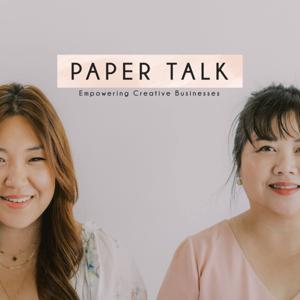


Yang Liu and Anna Chedid join us to talk about branching out with their paper flower art to new venues, audiences, and outlets.
Finding new outlets for your paper flowers is thrilling and scary, rewarding and difficult. How can you successfully branch out with your art?
In our latest episode of Paper Talk we spoke with Yang Liu of Shanghai 1984 and Anna Chedid of Flores da Annita. If you’ve seen Yang’s work before, you know she has a beautiful minimalistic and sleek style. She’s brought this style to her new digital magazine, Doublette. Anna also has something new on the horizon, as she has a paper flower book due out this fall, and we can’t wait to see her bold play with color on a printed page.
They both spoke with us about the journey into something new—taking their paper flower art and finding new venues, audiences, and outlets for it. Listen to the episode to hear all about how they’ve successfully transitioned into these new ventures.
For now, here’s a sneak peek at three things that have helped Yang and Anna branch out.
Listen to our conversation to hear:
► How Yang created her beautiful layouts for Doublette.
► What is happening in the art world digitally, and how you can join in.
► How to overcome creative blocks.
► A behind the scenes look at what it takes to write a paper flower book.
► More about the making and future of Doublette.
Play to Your Strengths
As Doublette took shape, Yang wanted to print it. We are paper artists, it makes sense! But as she dove into the making of her digital magazine, she realized that she would need to invest a lot more time learning and using programs that are compatible with magazine publishers.
Yang had to make a choice: spend a lot of time doing something she isn’t passionate about or adjust her plans to play to her strengths. She chose the latter, and so her magazine went digital instead. Someday she may print Doublette, but as she said on the podcast, she’ll probably pay someone to help her.
When you’re branching out with your paper flower business, focus on your strengths. You don’t have to do things the way other people do them, and your creativity tackling a problem might actually be a good thing. Yang has been surprised by how many people around the world purchased the first issue of Doublette. A print only magazine wouldn’t have the same reach.
“I meant Doublette to be almost a travel journey as well. The first issue I started in Shanghai, the place of my birth. And for me, I want Doublette to visit different cities and bring in both florals and food from those locations.”
Let Things Go
When you’re wading into unfamiliar waters, you sometimes need to channel your inner Elsa and let things go. As Anna said about her book writing process,
“I’m learning to let some things go, to let other people control some things that I’m not able to.”
We paper florists are creative, small business owners. We’re used to wearing all the hats. But it’s okay if you can’t or don’t want to do everything! You can get help, like Anna did with her book, and your project will only be stronger because of it.
You can hear more about Anna’s book writing journey and what exactly she’s letting go of by listening to the episode.
Prioritize Your Creativity
Yang quit her corporate finance job during the pandemic. There were multiple reasons for this, which you can hear more about in the episode, but one reason was that Yang loves paper flowers. She loves running her own business that she’s passionate about.
As Yang pointed out,
“The pandemic forces you to think about your priorities really quickly.”
The past year has given lots of us time to think about what we really want from life. Take this opportunity to prioritize your creativity. You can let yourself take chances. You can try something new. Being surrounded by such uncertainty has brought into sharp focus just how important it is to do things that make us happy and bring fulfillment.
Join our weekly meeting on Clubhouse on Thursdays at 7pm PST/10pm EST, and join our Facebook group where you can share, connect, and grow with us. Please also consider supporting us on Patreon for even more great content like this.
Welcome to Season 4!
We’ve been busy this summer with lining up guests and planning our yearlong Awesome Blossom! workshop series.
You know that our goal at Paper Talk has always been to share, connect, and grow the paper flower community. Awesome Blossom! is all about helping more people fall in love with paper flowers.
You can listen to our latest episode of Paper Talk to hear about each individual flower we’ll be teaching and the techniques we’ll focus on for each one. In the meantime, here are three reasons why you should join us:
Meet your paper flower community
One week before each class, Krista of Petal & Finch will host an online cutting party. Not only will you get some guidance for cutting and coloring your petals, but you’ll also be able to ask questions and chat with other paper florists.
Is there anything better than gathering together with people who love the same thing you do, to spend time doing and gushing over that thing you love? If there is, we haven’t found it.
Listen to our conversation to hear:
► Which flowers and foliages you’ll learn in Awesome Blossom!
► The techniques we’ll be focusing on in our workshops.
► How Awesome Blossom! works for beginner and advanced paper florists.
Learn basic and advanced techniques
Our live workshops will walk you through each step of making the flower or foliage. You’ll end the class with a finished bloom. Beginners will feel perfectly at home in our workshop, and we’ll even have a little extra help available if you need it.
We’ll also provide advanced techniques that you can try out after class has ended. Sometimes this will be an entire video, or it might be suggestions for various materials to try. For example, we’ll provide two different recipes for the final floral arranging class: light and airy, or dark and moody. You can experiment with the colors we suggest and really make it your own.
With all of the techniques we’re teaching, the goal is to help you learn a skill that you can apply to later projects. We won’t just show you how to make a beautiful bomb peony, we’ll teach you how Jessie originally broke the flower down into manageable sections and figured out how to put it all together.
Have fun!
As Jessie said,
“Making paper flowers should be fun.”
Period. In case you haven’t noticed, we LOVE making paper flowers. They bring us so much joy. We want everyone to find that same fun that we have.
Awesome Blossom! isn’t about learning to make a copy of a particular flower. It’s about learning skills, employing creativity, and most importantly having a ball of a time while doing it. Listen to the podcast to hear even more about why Awesome Blossom! is for everyone.
“It’s pretty much a basic paper flower overview. Jessie and I have been working on this for months, trying to figure out what’s the best way to expose more people to paper flowers, and more importantly make them fall in love with paper flowers.”
Join our weekly meeting on Clubhouse on Thursdays at 7pm PST/10pm EST, and join our Facebook group where you can share, connect, and grow with us. Please also consider supporting us on Patreon for even more great content like this.
We’re wrapping up season three of our podcast, and we’re sharing what’s made it possible to reach 100 episodes.
We made it to ONE HUNDRED episodes of Paper Talk!
Cue the celebration! 🎉
Season 3 of our podcast is drawing to a close, and in our 100th episode we chatted about how we’ve gotten this far and what’s next for Paper Talk. We’re so grateful to have spent so much time sharing, connecting, and growing with you and our paper flower community as a whole.
Listen to our very special celebratory episode to hear more details about where the podcast is headed, plus some special shoutouts for people who have made this all possible.
If you want to know how we’ve gotten this far, these three special ingredients were crucial to reaching one hundred episodes.
Listeners
First of all, thank you to all of our listeners! Without you, we would just be a couple of paper florists chatting to each other each week. It takes an audience who is engaged to really build up a community around a podcast.
Your wonderful listeners have contributed in a variety of ways, from connecting us with guests to suggesting topics to leaving heartfelt reviews. That last one means the world to us. As Jessie shared in the episode,
“We love reading the reviews, because it reminds us of why we’re doing this. Thank you so much for leaving reviews.”
Listen to the podcast to hear some of our favorite reviews of Paper Talk, and see if you’ve been featured. And if you haven’t left us a review, please do!
Listen to our conversation to hear:
► Who has made this podcast possible.
► How our podcast has grown over time.
► What’s next for Paper Talk and when we’ll return for Season 4.
► A hint about our huge surprise in July. (Sign up for the newsletter so you don’t miss out!)
Patrons
Creating a polished podcast has real costs. We had an entire episode about the hard and soft costs of creating Paper Talk, which we highly recommend to get an idea of what podcast production really takes.
Our love of paper flowers and community can’t pay those bills, so we are incredibly grateful to our Patrons on Patreon who contribute generously to keep our podcast running. Beyond being generous enough with your time to listen to us, you’ve been generous with your money.
We know not everyone can contribute financially, but as a thanks to those who can, you can access special behind the scenes content by becoming a Patron.
Guests
Finally, we have to thank our guests. While the occasional episode of Jessie and Quynh chatting together is great fun, we know that our knowledge has limits. Without our wide variety of guests, we wouldn’t have been able to cover the amazing breadth of topics that our three seasons have traversed.
We’ve been dedicated from the very beginning to bring our community the sort of valuable content that will help them grow as artists and small business owners. Our guests both in and out of our community have done just that. They’ve shared with us about branding, the tools of our trade, pricing, finding your creative muse, bookkeeping, and every topic in between.
We’re already lining up guests for Season 4, and we can’t wait to share what they have to say about our special focus: passive income. Listen to the episode to hear more about that and how you can contribute to Paper Talk.
Join our weekly meeting on Clubhouse on Thursdays at 7pm PST/10pm EST, and join our Facebook group where you can share, connect, and grow with us. Please also consider supporting us on Patreon for even more great content like this.
Bookkeeper Allena Steele shares her best tips for creative entrepreneurs to organize their finances and stay on the path of financial success.
You probably didn’t get into paper flowers for the money.
We certainly didn’t. But unfortunately, you can’t pay bills with creative spirit alone. So how can you set up your small business to make money?
It starts with smart bookkeeping.
In our latest episode of Paper Talk we chatted with Allena Steele of Steele Bookkeeping. She helps a wide range of entrepreneurs organize their finances and stay on the path of financial success.
We talked about the struggle of creative business owners to do just that. As Allena said: “So many people love what they do, which is the first ingredient to successful business, that they don’t really think about the money or organization part until they’re into it.”
Whether you’re beginning your paper flower journey, or if you’ve been making money as a paper florist for years, you’ll benefit from Allena’s advice on navigating taxes and bank fees, which software to use, and much more.
To get you started, here are three basic things she recommended on the podcast that all small business owners should be doing.
Listen to our conversation to hear:
► How to prepare before seeing a bookkeeper.
► The difference between a CPA and a bookkeeper.
► How to navigate fees for business bank accounts.
► Which bookkeeping software Allena uses and how to save on fees.
► How often to meet with a bookkeeper.
► The pros and cons of writing off business expenses.
Open a business bank account
Your business funds should be separate from your personal money. This was Allena’s number one recommendation. No matter how little money you’re making, it will make bookkeeping and taxes easier in the long run.
Ideally, you should do this from the very beginning, but better late than never if you haven’t. Gather your business licenses and documents, and head to your bank as soon as possible.
Now, we know that when you’re starting out, every little fee matters a great deal. We asked Allena about how to navigate bank fees for business accounts, and you’ll want to listen to our entire discussion about the best options for you.
Use a tax savings account
Even if you don’t pull in a lot of income, you will still have to deal with taxes. Sales tax, filing taxes—as Allena put it,
“Taxes are always going to come. They’re not going anywhere. So being prepared for that is amazing.”
The best way to stay on top of taxes is to open an account where you can park that money until it’s time to send it to the government. A bookkeeper can help you better understand how much to set aside if you’re unsure. The goal here is to avoid any surprise tax bills. You’ll always have the money ready to pay.
Now taxes can get tricky. In the episode, Allena explained the difference between a bookkeeper and a CPA, and when you should use which—in particular, when it comes to taxes and regulations. You can also hear more about tax write-offs for business expenses and the pros and cons of claiming those.
Organize your financial information
While Allena has a preferred software system, she said,
“As long as you’re keeping track of stuff, any bookkeeper...can help you out.”
When your business is new and not very complicated, you might not want to invest in a bookkeeping software with monthly fees. That’s completely understandable! At a certain point, those systems are going to make your life easier, but the most important thing is that you are organizing your finances. Every financial transaction should be documented and stored in a central place.
You can hear more on the podcast about how to save on monthly software fees, as well as which system Allena prefers and when you should start investing in bookkeeping software.
Join our weekly meeting on Clubhouse on Thursdays at 7pm PST/10pm EST, and join our Facebook group where you can share, connect, and grow with us. Please also consider supporting us on Patreon for even more great content like this.
Learn how to reframe your mindset about your creative business to help it thrive artistically and financially.
Paper flowers are not a need.
Yes, they create a great amount of joy, but at the end of the day, no one needs to buy them. That’s why you have to entice clients to want them.
In our latest episode of Paper Talk we chatted with Sean Low of The Business of Being Creative. He specializes in helping creative businesses thrive by recognizing that an artistic business has very different needs and circumstances than other services, like an accounting firm.
Here’s how Sean put it:
“When somebody wants to hire you…they want to feel something about themselves. That’s why they’re coming to you. Whether they want to give it as a gift or they want to do it for themselves, they want that feeling.”
So how do you make them want your work—something they could live without? Sean had so much great advice in the episode about reframing your mindset around your creative business to do just that. You’ll want to listen to all of it to glean information that will definitely help your business.
In the meantime, here are three ideas we discussed on the podcast that will help you build your client’s desire for your art.
Listen to our conversation to hear:
► What makes creative businesses unique.
► How to help clients want your art and ultimately invest in you.
► How to draw boundaries with clients.
► If you should consider selling wholesale.
► How to best educate clients to prevent problems.
Embrace Scarcity
On the podcast, Quynh shared about a business that embroiders portraits of pets—but only ten a year. This artist lets people know the day she’ll take orders, and once those ten spots are gone, that’s it. And they fill up immediately!
As Sean pointed out, if that artist offered one hundred spots, the desirability of her work would most likely diminish. You can create the same demand by making your work more scarce.
Now, you’re probably worried about limiting your work. You’ve got bills to pay. Sean also explained his philosophy on pricing, including planning how much work to take on in advance. Listen to the episode to hear his in-depth explanation, as it beautifully encompasses his views on art and business, as well.
“Creative business is about creating something that hasn’t existed before. Even if you’ve done something similar over and over and over again—it’s the thousandth time of you doing paper flowers for a client—for that client it’s brand new.”
Show Your Process
We’ve talked about the importance of client education a lot on this podcast. There’s a good reason why. In order for potential customers to want your work, they have to understand the value of what you do.
Sharing a behind-the-scenes look at your paper flower process is a fantastic way to do this. Give your followers a peek at the many steps you take to create something. Show how you plan for a project and include how many hours that alone took. Let them see the piles of petals you had to cut for a big installation. Share what’s inspiring you right now.
As Sean put it on the podcast,
“People spend their money on what they care about. You’re showing them what they ought to care about when you’re showing them how you do your work.”
Explain Your Why
With a creative business, there has to be a why. Art isn’t something we do solely to make money. There’s a soul to your business, and your clients need to connect to it. Once they make that emotional connection, they’ll want your work more because it will give them that feeling that Sean mentioned earlier.
This means that you need to understand your why. “I like making paper flowers” isn’t a powerful why. But as Sean shared, your why also doesn’t have to be “I want to change the world with paper flowers!” Listen to the episode to hear his helpful guidance on how to find your authentic why—it can be difficult to articulate!
Once you know your why, share it. This doesn’t have to be anything huge. Short snippets here and there are enough to make that connection with potential customers.
“Art is not a need, it’s a want. You’re the artist tasked with creating something magical, and you’re entitled to get what you need to do that.”
Join our weekly meeting on Clubhouse on Thursdays at 7pm PST/10pm EST, and join our Facebook group where you can share, connect, and grow with us. Please also consider supporting us on Patreon for even more great content like this.
From the publisher's feed

38,717 Listeners

36,175 Listeners

2,510 Listeners

438 Listeners
346 Listeners

1,251 Listeners

1,088 Listeners