
Sign up to save your podcasts
Or

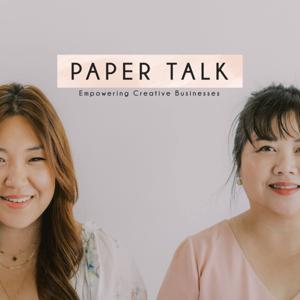


Learn from our guest Poy T. Granati and how she has made the most of her time while building her paper flower business.
Building a small business means wearing many different hats. How do you find time to advertise, bookkeep, communicate, network, and create?
With time management.
This isn’t just a catchphrase. We’re all busy. We have to make the most of the time that we do have so that our businesses can thrive. But we know that it’s easier said than done.
In our latest episode of Paper Talk, we talked with Poy T. Granati of Summer Space Studio about how she has built up her paper flower business in a relatively short period of time. When starting out, she was working a full-time job while teaching workshops and creating flowers at night. How did she manage it all? By making the most of her time.
Our conversation covered a wide array of topics, ranging from how she uses her advertising background to appeal to customers, to how she goes about partnering with shops to promote her work. You’ll want to listen to everything she had to say, but here’s some of the tips we discussed about managing time that will help you get more done for your paper flower business.
Break Tasks Down
Have you ever felt overwhelmed by something you had to do? Maybe it was a series of blog posts, or a tutorial that needed to be written. Maybe you just don’t know how you’ll ever figure out that new flower for a commission.
Break it down!
Poy’s educational background in design has helped her learn how to break down processes and take things one step at a time, but you can do it, too!
Work out what steps you need to take to complete your task, then do just the first part. Write that first blog post. Jot down just the supplies needed for that tutorial. Look up pictures of that new flower. Don’t worry about what comes next. Complete the first step before you think about the next, and before you know it, you’ll be halfway through.
Block Off Time
In order to get things done, you need to block off time. Dedicate time just for paper flowers, and make it a realistic period of time that you can repeat every day.
Poy told us about a course in her graduate program that encouraged students to dedicate a small amount of time to work on one skill for one hundred days. The idea was that we can’t always block out eight hours to work on something new, but by giving yourself a little bit of time each day, you are continually practicing and growing. By the end, you’ve got a habit.
That class was actually the beginning of Poy’s paper flower journey, which you can hear more about in the episode. The details about the class and how it changed Poy’s life are very interesting, and you won’t want to miss them.
Give Yourself Deadlines
Without a deadline, you can push off tasks and goals for ages. No judgement here—we all do it. But in order to grow as a business, you do need to buckle down and get your work done at some point. Nothing motivates more than a deadline.
Currently, Poy is giving herself a six month deadline for focusing solely on her paper flower business. She has milestones to reach, goals to achieve, and an end date to keep in mind so that she doesn’t lose sight of what she should be doing.
Of course, simply setting a deadline doesn’t matter if you don’t stick to it. If you’ve done commission work, you’ve probably noticed that you will stick to other people’s deadlines more than your own personally imposed deadlines. It’s hard to self-motivate! In the episode you can hear more about ways that we keep ourselves on track and hold ourselves to the deadlines we set.
Here’s what you’ll hear when you listen to our conversation:
More ways you can make the most of your time.
How Poy first started making paper flowers.
Why you should let go of perfectionism to become a better artist.
How to choose collaborators, like stores that will host workshops or feature your work.
How to target your ideal customer.
Listen to our latest episode of Paper Talk to learn all of this and more. Remember to join our Facebook group, and please consider supporting us on Patreon for even more great content like this!
Learn about the many sources of imposter syndrome and how you can overcome it as a paper florist. Includes special guest Margie Keates.
Can I raise my prices or try something new? What if I fail? What if people don’t like it? Do I even deserve to be called an artist?
If these doubts sound familiar, you’ve met our old friend imposter syndrome.
Can we let you in on a secret? We’ve all dealt with feeling like our art wasn’t good enough. We’ve all carried hurtful comments with us for years. Every paper florist, no matter how put together they seem, has to deal with these feelings on a regular basis.
The amazing Margie Keates of The Lovely Ave joined us in our latest episode of Paper Talk to cover this very topic. All three of us have extensive experience with imposter syndrome, and our conversation delved into the many places these feelings come from and how we handle those doubts.
You should listen to the entire episode to glean all sorts of useful insights about how you can understand and tame your imposter syndrome. If you can’t listen right away, we’ve got three tips for tackling one of the sources of imposter syndrome: a lack of support from others.
Mute Unhelpful Voices
Starting a business takes a leap of faith. Many of us left successful careers in other fields to start our paper flower businesses. That’s scary enough as it is, but it’s even worse when someone close to us doesn’t believe in our decision.
You probably have a memory of someone you respect or love not taking your art seriously. A disbelieving look, a series of questions about our sanity—you get the picture. In the episode, we revisited some of our past hurts and how they’re still with us years later. Seriously, they’re persistent.
It’s okay for you to avoid those Negative Nancies. We’re trained to be polite and not step on other people’s toes, but if someone is hurting you, you don’t have to stay friends with them. Sure, be polite with your words—don’t keep subjecting yourself to someone who is unhelpful. You don’t need more doubts piling up and sticking around for ages.
This goes for online, as well. If following a certain paper florist makes your imposter syndrome flare up, then hit that mute button. Unfollow, if you have to. It’s okay.
Find a Supportive Community
Sometimes you can altogether avoid interacting with negative voices, but what do you do when you can’t? What if your dad just doesn’t understand how you could go all in on paper flowers, and he seems to bring it up at every family dinner?
You need an avalanche of support to drown out those unhelpful voices that you can’t avoid. Our best suggestion is our Facebook group. Yes, we talk about it a lot, but only because it is seriously amazing.
Our community encompasses paper florists from around the world who gather to share tips, ask questions, and cheer each other on. It’s overflowing with the positivity you need to bolster yourself against those unhelpful comments in your life.
In some ways, it’s also easier to share your difficulties and successes with people who live halfway across the globe. You don’t have to sit across from them at the next family dinner and fear that they’ll comment on your latest venture—and if our community was there, we guarantee they would only ever give positive feedback.
Ask a Mentor
The paper flower industry is fairly new—practically a baby compared to many other crafts. All of us started our businesses from scratch and often without much guidance. We’ve dealt with imposter syndrome at every step of the way: from first starting out, to gaining our footing, to becoming established and respected voices in the community.
Who better to ask for help along the way than those who have been through it? Our entire episode of Paper Talk is basically a mini mentoring session dedicated to helping people like you learn from our experience with imposter syndrome. We want to help. We love it!
That’s why we’re so excited to offer another opportunity to be mentored by us. On Saturday, February 20 we’re hosting another Paper X Talk. Margie will join us to delve into imposter syndrome even more. You will walk away with tools on how to deal with imposter syndrome, how to find your voice, and how you can learn to be an elastic artist who tries new things. Tickets are only $10 in advance, and you’ll have access to the recording afterwards so that you can reference it later.
Even better, after the main conversation and Q&A you will have the opportunity to add on a breakout mentoring session for $5 with one of the three of us. We’ll each take on a different topic and will only offer five spots for each room so that we can have an interactive discussion. This is a fantastic opportunity to ask us questions and start conversations about what you most need help with.
As Margie said,
“I wish I would have had this when I first started, even year three of my journey.”
Hear more about this lecture and our entire discussion about imposter syndrome by listening to our latest episode of Paper Talk.
Here’s what you’ll hear when you listen to our conversation:
The many sources of imposter syndrome and how we deal with them.
Our early struggles establishing ourselves as artists.
How to walk that line between imitation and inspiration.
Why you should stretch yourself as an artist and try new things.
Overcoming that polite urge not to disregard people’s opinions, even if they’re holding us back.
Remember to join our Facebook group, and please consider supporting us on Patreon for even more great content like this.
Learn which scissors Devin Head recommends for paper flower making and how you can best care for them so that they live a long and sharp life.
Could you make a paper flower without scissors?
For paper florists like us, the thought is quite terrifying. Imagine a peony without the distinctively shaped petal edges, or making flower centers without fringe. Our craft requires precise cuts, and that means our scissors need to be top notch to do the job correctly. We cut out thousands of petals and leaves. Our tools should be up to the task.
That’s why our latest episode of Paper Talk was all about scissors! Some of our favorite scissors in the world come from a Japanese company called Kai. They are super sharp, easy to grip, and last ages. We chatted with Devin Head, Kai’s Regional Sales Manager located in Washington state, about which scissors he recommends for paper florists and how to best care for them.
If you don’t have specialized scissors for various jobs, you are making your art so much more difficult than it needs to be. As Devin said,
“That’s the conversation we have…when I’m at a street show talking to a husband and he’s like, ‘How many scissors do you need?’ Well, there’s a job for each one.
You don’t have make-do any longer.
Here’s our definitive guide of Kai Scissors for paper florists:
Essential Scissors for Any Job
These three scissors will cover almost any job you come across as a paper florist. Quynh uses and loves these three, and even included them in her Holiday Posey Boxes and Starter Box, plus you can get her favorite set in her store. Put these on your crafting table, and you’ll be set to tackle almost any paper flower.
The Kai 5210 is 8 inches and perfect for most general cutting. They’ll cut through any crepe, and since they’re a bit longer, they’ll do it quickly.
The Kai 5135 is 5 ½ inches long and great for detailed work. Use these for fringe, the edges of petals, and any cuts that are close together.
The Kai 5100 is 4 inches and has a sharp, small tip for extremely detailed work and difficult to reach places. You won’t use this one as often as the other two, but when you need it, you really need it.
Curved Scissors for Tight Spots
As the name implies, these scissors are curved to help you reach tight spots without damaging your work. Here’s what Quynh had to say about using them:
“They’re really great for getting into those small details when you’re creating those petals with the ruffled edge… What I do is I take those curved scissors and I make little swoops inside the petals and then you can ruffle them even more, and you get into those really tiny little corners.”
The Kai 5100c is 4 inches long like its similarly named cousin above. However, the 5100c has a slight curve at its tip. Because our work is three-dimensional, we sometimes have to cut around and between curves. You can imagine how a scissor that works with that instead of against it is so ingenious.
The Kai 5130 is 5 inches and adds even more curve to the equation. Both the tip and the handle are curved, giving this pair of scissors even more maneuverability for getting into tough to reach spaces.
Multi-Purpose Scissors
Because our craft involves wires so often, we asked Devin if Kai manufactured wire cutters, and we were pleasantly surprised to find out that they do have a multi-purpose scissor with a cutout for wire cutting.
The Kai 5160 is 6 inches long and has a serrated edge. For paper florists, the little notch that helps cut small wires quickly is a fantastic bonus.
We chatted even more about Kai’s history, its lineup of scissors, and very importantly, how to care for scissors so that they have a long and sharp life. Listen to our latest episode of Paper Talk to hear all of Devin’s great advice.
Here’s what you’ll hear when you listen to our conversation:
How Kai Scissors are made.
When and how you should sharpen your scissors.
How to best store your scissors.
How to contact Devin if you have suggestions for paper scissors.
Remember to join our Facebook group, and please consider supporting us on Patreon for even more great content like this.
Learn three ways that Inga Peterson keeps her fans happy and increases customer engagement with her paper flower business, and how you can help your supporters become patrons.
Have you ever had someone in your life who cheers you on, no matter what? That person who is so excited to see what you do next and want to support your artist journey?
That person is a patron.
We all need people to support us, and not just in our personal lives. You need fans who will encourage you along your paper flower journey and help you build your small business. That’s one of the reasons we started Paper Talk—to build a place where we can share, connect, and grow together!
Of course, when it comes to your business, you need more than just peers to cheer you on. You also need customers (we’ve all got bills to pay!). Helping your customers become patrons of your work means that they are more likely to buy from you again and to recommend your work to others.
In our latest episode of Paper Talk, we chatted with Inga Peterson about how she engages her supporters and harnesses their love of her art in order to build up her paper flower business. We love her work as a paper florist and educator. Count us as some of her most ardent supporters cheering her on!
The great news is that you can easily employ these same strategies to boost your customer engagement. Below is an outline of three big takeaways from our conversation with Inga, but be sure to listen to the episode for even more great insights about building your business and improving your artistry.
Create Understandable Tutorials
Many paper florists move into the education realm at some point. While you may have mastered paper flowers, you need to also master techniques that will make you the best possible teacher. In order to cultivate loyal patrons, you need to have a fantastic product that they can love.
For Inga, that means not rushing things and breaking everything down to be readily understandable. As she said,
“It’s really my goal for someone who’s doing a tutorial of mine to not only be able to make that flower, but also to understand my process of decision making along the way of making that flower so they can transfer that to another project that they’re working on.”
When making tutorials, always keep in mind the student’s perspective. Try to think back to when you were new to paper flowers. You didn’t understand every term. You didn’t know how to do certain techniques. Make sure your tutorials are accessible for everyone, no matter their level of expertise.
If you need to, go back and revise your old tutorials to make them readily accessible to all of your customers. By making your tutorials easy to use, your customers will have greater success, love the end results, recommend you to others, follow your social media—you see where this is going. In short, they’ll be more likely to become an ardent follower.
Inga shared even more fantastic advice about writing and using tutorials in our episode, as well as which tutorials she used when first starting out.
“If you’re a brand new paper flower maker, just know that making all these flowers…if you feel like they’re not quite there yet, that is part of the process. You will get there.” - Inga
Get Supported on Patreon
To keep your paper flower business afloat, you need money. In our line of work, income can fluctuate from month to month. One way to keep a steady stream of income is to use Patreon.
If you’re unfamiliar with Patreon, it’s a way for your supporters to pledge a recurring amount to you, such as $5 a month. One of the great things about Patreon is that there are no upfront costs. You only pay a percentage of what a Patron gives you.
In return for their support, you can provide your Patrons with exclusive rewards and content. You can set up levels of rewards based on how much Patrons pledge, and there’s lots of flexibility in how you can set up your system or change it later.
That means you can ask your supporters to pledge a very small amount, even as little as $1 a month. Many people who are casual fans are willing to give something like that if you ask. Then, they receive those awesome rewards and content that no one else is getting, thus boosting their engagement with your brand, helping them love your work more—you get the picture.
You can hear all about the kinds of rewards Inga offers and some of our tips for using Patreon by listening to the episode. You can also check out our Patreon page to see how we’ve set things up.
Ask for Reviews
If your fans can’t become a Patron for whatever reason, they can still support you without spending money. One easy way is by writing a review about your work. We all love reading reviews before buying, and your paper flowers are no different.
Of course, that means that your clients and supporters need to know how and where to leave a review.
As Jessie shared in our episode, she reached out to some customers and asked for reviews. Some of them already had something written, but were waiting for various reasons to post them. That little nudge from her and a little bit of info on what would best help her, led to positive reviews being posted for everyone to read. Those supporters got a little bit of help to become superfans.
It might feel uncomfortable at first to ask for reviews. That’s normal! We’ve all felt that way. But your customers love your work for a reason. They want to share about it. Help them do it!
We chatted about much more with Inga, including more about how she has built her business and how her fine arts background has informed her work. You can hear all of this and more by listening to our latest episode of Paper Talk.
On her fine arts background: “A lot of it comes down to learning how to take an idea from just a concept into reality. It’s that whole art and design process of, ‘Hey I’ve got this idea, how do I get this from my head into the physical realm?’” - Inga
Here’s what you’ll hear when you listen to our conversation:
How to create accessible and admired tutorials.
Tips for best using tutorials.
How to use Patreon as a creator.
Fine art principles that will help you make paper flowers.
How Inga runs her Zoom workshops successfully.
For even more help in building your paper flower business, join our Facebook group, and please consider supporting us on Patreon for even more great content like this.
Here are the podcasts that Inga mentions in this episode:
Cultivating Place: https://www.cultivatingplace.com/
The Jealous Curator: https://www.thejealouscurator.com/blog/art-for-your-ear-podcast/
Ologies: https://www.alieward.com/ologies
Guest Gerry Rosales talks about building up his paper flower brand in the Philippines and shifting customer perceptions of paper crafts.
Anyone can make a paper flower.
There’s something beautifully hopeful in that statement, but it can also create problems when that idea prevents consumers from buying your products. How can you help them value your skills, time, and art?
We chatted all about this in our latest episode of Paper Talk with Gerry Rosales. Gerry is the artist behind ThePaperblooms, and he has worked hard to change consumer perceptions of paper flowers. You know that we here at Paper Talk are all about building up our industry as a whole, and perceptions of paper florists are a big part of making that happen.
Our conversation touched on many things that you can do to change perceptions of your products and brand. You won’t want to miss out on a minute of it. If you can’t listen right away, read on to learn some of the helpful takeaways we discussed. They’ll help you feel ready to shift perceptions and build up an enthusiastic customer base.
Educate Consumers
Gerry lives in the Philippines and has had to overcome the preconception that paper crafts aren’t worth paying for. As we chatted about in the episode, paper flowers in Southeast Asia have long been associated with not being able to afford fresh florals for things like weddings. They often have a cheap, DIY stigma attached.
This attitude is something paper florists, including us, have encountered around the world to varying degrees. How do you convince potential customers that your product is valuable?
“I tried to challenge the fresh flower industry by saying ThePaperblooms are ‘More than fresh.’” - Gerry
We delved into this question with Gerry on the podcast, but one of the big answers was education. He shared how he educated potential customers at bridal fairs. The payoff wasn’t immediate, but with some patience and hard work, his labor paid off. Listen to the episode to hear even more about how Gerry did this and how long it took him to see results.
Even if you don’t see the benefits right away, take the time to educate people about paper flowers. Many consumers still don’t know that paper is an option or can be a high-end, artistic product. You may have to talk to a hundred people before you find a customer, but you might not have found that person if you hadn’t tried. Plus, some of those other people might come back much later thanks to your hard work.
Build a Premium Brand
When educating potential customers, one thing that has helped us sell paper flowers as a valuable product is by making our brands feel premium. Even if your paper flowers are high-end and gorgeous, people might not notice—especially online—if your branding is cheap or sloppy.
Think about everything consumers encounter when interacting with your business: name, website, logo, social media, quality of photos, packaging, and on and on. Gerry used his background as a graphic artist and photographer to build up a business that looked and felt as beautiful as his flowers.
In the episode, Gerry shared several other ways that he built up his brand as premium—and they are things that you can do! You can’t build a high-end brand overnight, but following our advice on the podcast will give you a headstart.
Value Your Skills
Of course, if you’re going to market yourself as a premium brand, you have to believe it yourself.
Like Gerry, many of us started making paper flowers for our own weddings. The appeal is fairly obvious: you can control the end result and save money. That’s why many of us became paper florists in the beginning.
So how do you get past that DIY hobby mentality? Here’s what Gerry had to say:
“Paper craft, anyone can do, but not anyone has time to do it or not anyone has the skill to do it. It’s more than the paper flowers that they are buying or they’re paying for. It’s the skill. It’s the time of the maker.”
Paper flowers are a skilled art. We are skilled artists. Look in the mirror and tell yourself that you are an artist. We know it can be difficult to do, because we’ve had our own doubts about our worth as well. Just remember: if you believe in your work, customers will too.
For even more great advice on changing perceptions, listen to our latest episode of Paper Talk. Here’s what you’ll hear when you listen to our conversation:
More about how to build up paper flowers as a premium product.
Why skill matters more than materials.
How Gerry chose his business name and tagline.
Ideas to involve kids safely in paper flower making.
How Covid-19 is affecting the industry in the Philippines.
Gerry is an admin of our Facebook group where he shares wonderful tips for paper florists every Friday. Join to share, connect, and grow with us. And please consider supporting us on Patreon for even more great content like this.
“In whatever industry—I’ve been into photography, I’m a graphic artist, I’m a wedding planner—and I will always say this: do the most with what you have...Yes, materials will make the outcome better, but it’s still your hands, your skills, your level of artistry that will speak more than just the materials.” - Gerry
From the publisher's feed

38,717 Listeners

36,175 Listeners

2,510 Listeners

438 Listeners

346 Listeners

1,251 Listeners

1,088 Listeners