
Sign up to save your podcasts
Or

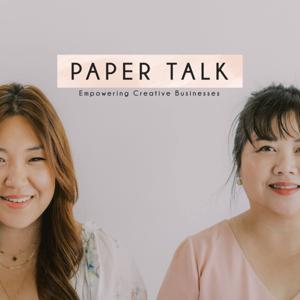


Two professional paper florists share their artistic and business goals for 2021 and give insight into how you can improve yourself this coming new year.
The last year threw us all for a loop. Like us, you probably had to cancel plans and restructure your goals for your paper flower business.
So what will 2021 bring?
We have hope that things on the Covid front will improve enough to gain back some semblance of normality, but one of the biggest lessons we learned from 2020 is to be flexible. With that in mind, in our latest episode of Paper Talk we chatted about what we want to achieve this coming year and how we plan to do it among such uncertainty.
This post will help you feel ready for this year because you’ll be inspired by goals that will help any paper florist improve their artistry and business.
Learn to Say No
When you’re building a small business, it’s difficult to turn down work. We don’t all have the luxury to do so, either. But if you’re in the lucky position of being able to be choosy about your projects, say no to paper flower jobs you’re not passionate about.
Jessie said this about saying no to commissioned work:
"This year, what I’m hoping for is to have my deadlines under my own control. So I’m hoping to be able to make art for myself and make a collection of some sort where I can really express myself. As much as I love commissions, it’s not really about expressing you. Part of it is, but there’s certain requirements, and you don’t really get to go free for all in terms of exactly what you want." - Jessie
You need your paper flower business to make money, but don’t lose sight of the artistry that drove you to become a paper florist in the first place.
We all have obligations outside of paper flowers. Make the most of your limited time to focus on what will bring you the most joy.
Give Yourself Time and Grace
If you know Quynh, you know that she works a lot. A LOT, a lot. When her husband took two weeks off in December, she was still planning on getting work done. She has plans to revamp The Posey Box, and there were certain things she wanted to complete before the new year.
She didn’t get everything done—and that’s okay.
Author Nora Roberts touched on this subject once. When asked about balancing time between writing and family, she compared it to juggling. The key to success? Knowing which balls are plastic and which are glass. If you drop a glass ball, it will shatter. A plastic one will simply bounce, and you can pick it up later.
As paper florists and entrepreneurs, we have to figure out what absolutely needs to be focused on right now (the glass balls), and which ones can wait (the plastic). In December, Quynh dropped some of the plastic Posey Box balls, but that’s okay. They’ll be waiting for her when she’s ready to pick them up.
Be forgiving of yourself when you need more time and don’t worry if you can’t get it all done at once. No one can.
Serve the Paper Flower Community
If you’ve spent any time at all with Paper Talk, you probably already know why we started our Facebook group, our podcast, workshops, online courses, and more. We are passionate about helping the paper flower community share, connect, and grow together.
That continues to be one of our biggest goals for 2021, and it should be one of yours, as well. When we build each other up, all of us become better artists and more successful entrepreneurs.
"The business side is always the hard part for creatives, because our brains are not there… There are so many hats you have to wear, from being a marketing person, a bookkeeper, the customer rep for your business. There are so many pieces you have to think about. And we’re hoping Paper to Profit gives you a checklist of things you need to go through and think about." - Quynh
This year still has some uncertainty thanks to Covid, but we will definitely be opening back up our Paper to Profits online course sometime soon. We also hope to start meeting up in person again! If all goes well, we plan to host a retreat at Holly Chapple’s flower farm in Virginia. It will be the perfect opportunity for us to gather, share knowledge, and build friendships as paper florists.
To hear even more about our plans for the coming year, listen to our latest episode of Paper Talk. Here’s what you’ll hear when you listen to our conversation:
More of what you should be focusing on in 2021.
The rest of our artistic and business goals for the new year.
Why we chose our goals and how we plan to achieve them.
What will be added to Paper to Profits this year.
What we’re watching to stay sane right now.
Remember to join our Facebook group and support us on Patreon for even more great content that will help your paper flower business thrive.
Learn the costs of creating a podcast and how you can create something polished that people will want to listen to.
If you’ve ever scrolled through podcasts on your favorite listening platform, you know there are countless shows out there. It must be easy to produce one if so many people are creating them, right? Just hit record on your computer and talk.
Not quite.
The truth is that a podcast is much more than a recorded conversation. One of the most important aspects of a podcast is the audience. If no one listens to your podcast, it doesn’t matter how much great information you’re sharing. You need to reach people, and that comes with costs.
Over our two seasons of producing Paper Talk, we’ve learned all about those costs. In our latest episode, we discussed what it takes to create a podcast and why we continue to do so.
This post covers some of the most important points we chatted about. After reading this you’ll feel prepared to create a podcast of your own because you’ll understand the costs upfront, and you’ll be able to produce a polished podcast right from the start.
Hard Costs of Running a Podcast
So how much money will it take you to run a podcast? It obviously depends on your situation, but there are some set costs that you will have to tackle.
At the very least, you will need to host your podcast somewhere online. There are some free options out there, but keep in mind that those come with non-financial costs and won’t provide you with the many tools available elsewhere. We host Paper Talk on Simplecast for $25 a month. There are other options out there, but when we priced things out, we found Simplecast to be the best value for our money. We also love that it is very easy to use.
We also recommend editing your audio. Some podcasts don’t, but it makes a huge difference in the end (we’ll explain more about why this matters in a bit). We use Adobe Suite, which costs around $50 a month.
If you want to produce a more polished podcast and reach a wider audience, you’ll also want to look into a website (we use Squarespace for $20), recording equipment (including video conferencing like Zoom for $12 a month), an email provider (Kajabi for $150), and a graphics creator (we highly recommend Canva at $30 a month). We also employ a copywriter who saves us lots of time and brainspace and costs around $45 an episode or around $200 a month.
You can decide what your podcast needs, but we’ve found that all of these costs really help us create a more polished and accessible end product.
On a whole, Paper Talk costs us around $500 a month to produce, which is why we decided to ask for your help to keep it going! You can support us on Patreon and sponsor an episode.
Soft Costs of Running a Podcast
Now that you’ve seen the numbers, let’s talk about time. It’s easy to discount how much time you are spending on something like a small business or podcast. But your time is valuable! You only have so much of it.
Some of the things we pay for help save us time, like our copywriter. But simply buying something like Canva won’t make graphics magically appear, ready to use. Canva has great templates and makes creating beautiful graphics really easy and quick, but it’s still time out of your day. Same with editing your audio, researching guests, sending newsletters, updating your website, and on and on.
For us as paper florists and small business owners, time spent on the podcast really means using time that we could have been utilizing to produce paid work. We love sharing information with our community and connecting with guests on our podcast, but it is largely a labor of love. As Quynh said, “We do these things [like teaching online courses] to pay for the things we’re passionate about. The podcast, we are so passionate about it.”
Realize that you will need to pour time into your podcast and that it won’t pay you back immediately. Many podcasts like ours ask for listeners to donate on Patreon for this very reason. To produce a quality podcast, you need to be willing to spend your time on it.
Creating a Polished Podcast
Now, you know what it takes to make a podcast. Here’s our pitch for why you should go the extra mile to create something polished.
Listeners want to listen to more polished podcasts, even if they don’t realize it. Taking the time to edit out fifty “ums” from every episode is tedious, but it will make a big difference in the end. As Quynh said in our episode,
I know with Jessie and myself, we like the polished look, the polished sound...I make an extra effort to make sure that the podcast does sound polished for you guys, so it makes it easier for you to listen to.
You also need to create a solid platform and presence on the web to help you reach more of those listeners. Again, people will notice if you nail that polished aesthetic. Take the time to make beautiful graphics, to update your website, to post on social media. More people will be drawn to your podcast.
Yes, you can keep your monetary and time costs down by skimping on some of these things, but keep in mind the drawbacks if you decide not to focus on something we’ve discussed.
To hear even more about how we produce our podcast, listen to our latest episode. Here’s what you’ll hear when you listen to our conversation:
How we research guests and choose topics.
The costs of running a podcast.
How we edit our podcast to create a polished product.
What we’ve learned to do better now that we’ve produced two seasons of Paper Talk.
Why we’re so passionate about sharing valuable content through our podcast.
If you want to share, connect, and grow more with us, join our Facebook group or support us on Patreon where you’ll get even more behind the scenes looks at Paper Talk.
**Paper Talk is supported by our community of readers and listeners. When you click on our affiliate links, we may earn a commission for qualifying purchases made through Amazon.com. This commission goes directly into the maintenance of this website and podcast. Amazon Affiliate Disclaimer.
We chat more with paper florist Wendy Anderson about how she’s grown her paper flower hobby into a business.
How do you take the leap from hobby to business?
It can feel terrifying, and even if you’ve taken the leap and started down the business path, you are still going to encounter bumps along the way.
Fortunately, there are many paper florists who have successfully built their hobby into a paper flower business. One of them is Wendy Anderson of Just Imagine, who shared with us in our latest episode of Paper Talk about how she took her paper flower love from hobby to business. Here’s some of the advice she shared with us.
Calculate Your Costs
When Wendy first started selling paper flowers, she only charged a dollar for each rose. She was using the only crepe paper available in New Zealand, which was not high quality, so she figured she couldn’t charge more than what the paper cost.
But then her friend pointed out that she had other supply costs, as well as time costs. They sat down and calculated out just how much she was spending on supplies. Each rose was actually costing closer to three dollars—and that was before accounting for Wendy’s time! She was losing money.
Her friend encouraged her to raise her prices to a rate that would pay her an hourly wage. At first, Wendy was hesitant, but eventually, she said, “I found an in the middle, intermediary range, where I could cover my costs.” She decided to keep her prices somewhat low in the beginning, but over time, as paper flowers became more well known in her area and she built up her reputation, she raised her rates.
Store Paper Flowers Safely
After creating big installations, you might be left with hundreds of flowers and foliage pieces that now need to be stored or disposed of. You don’t want to throw away your work, but how do you store your paper flowers without damaging them? Especially if you hope to use them again or eventually sell them?
Wendy had this problem after creating an archway for her father’s 80th birthday party. It was a large installation, spanning a set of double doors, and it involved a ton of blooms. But what to do with them? Her solution was to create vase-like structures from tubes that can hold flowers upright inside of opaque plastic containers. She even adds in anti-moisture packets to keep her blooms extra safe. Wendy describes more about where she got the supplies to make her storage solution in the episode.
Getting creative to solve problems like storage is a great way to use your crafting skills to solve a business problem. You can probably commiserate with Wendy’s description of her craft room being covered in supplies and flowers, but a little inventiveness can help keep your products safe from the creative chaos.
Share Your Mistakes
One of the ways Wendy grows as a paper florist is through our Facebook group. She encourage listeners to pop into our monthly meetings:
“Be at the Makers Meetings. No need to be nervous. We have so much fun. We laugh. We talk. We share our techniques, our tips. We share the ugly as well, because if I can tell you what went wrong when I made it, then that might help you learn, too.”
It can be very uncomfortable to share your mistakes, especially when you’re new to the paper flower world and community. But every paper florist, no matter how experienced, makes mistakes. A wonderful way to make lemonade out of lemons is to learn from that mistake, and even better, share that lemonade with others! When you help someone else avoid a mistake, they’ll help you in turn later. It’s a fantastic way to help our community grow as artists.
We chatted about even more with Wendy, and you won’t want to miss out on a minute of her enthusiasm.
Here’s what you’ll hear when you listen to our conversation:
How Wendy has raised her prices over time.
How she stores her flowers safely and inexpensively.
What helped her take paper flowers from hobby to business.
How she transports big installations to events.
What Wendy drinks and listens to while making paper flowers.
Listen now to the podcast to hear more about Wendy’s paper flower journey and how she’s built up her paper florist business. And don’t forget to join our Facebook group so that you can share, connect, and grow with us!
“It’s the highest compliment you can give any paper florist, when someone says, ‘Wow. That looks real.’ - Wendy
Our paper florist friend from New Zealand, Wendy Anderson, chats with us about building her business with a support network both in person and online.
How do you build a paper flower business all by yourself?
The answer is, you don’t. Even if you’re the only paper florist in your entire country, you need a support network to help you grow as an artist and a business owner. That’s the entire purpose behind our work with Paper Talk: to share, connect, and grow our paper flower industry no matter where you may be.
Wendy Anderson of Just Imagine knows all about forging a paper flower business without a robust local industry to support her, as she lives in New Zealand without any other known paper florists in sight. But she still doesn’t go it alone!
In our latest episode of Paper Talk we chatted about how she has built up her virtual, familial, and friend network to support her paper flower journey.
Finding an Online Community
We first met Wendy through our Facebook group, which brings together paper florists from all over the world. As mentioned, Wendy is currently unaware of any other paper florists in her area, so being able to ask questions and share techniques with other like-minded artists is incredibly important for her.
She was nervous the first time she joined our monthly Makers Meeting, but waking up incredibly early to connect with other paper florists has become a huge priority for her. “I’ve only missed three meetings in four years,” she told us. “Our paper flower community and those Makers Meetings [are] my most favorite online place to be, and it’s got to be something big for me to miss it.”
You can also join our meetings or post your questions in our group. We’ve built countless businesses and friendships there. In the episode, Wendy dove into more ways our online community has helped her. Now more than ever with so many of us stuck at home, take advantage of the amazing technology we have and find your virtual support group.
Building a Varied Support Network
Wendy is very open about how much her success depends on her incredible family and friends. Even though they aren’t paper florists themselves, they’ve helped problem solve, set up events, and even answered questions about her work.
One particularly touching story she shared on the episode was about her father, who is in his 80s, helping design the mechanics for an archway that spanned over a set of double doors. Then he did it again when she asked for help scaling it down for an art exhibition. Wendy shared even more stories about loved ones like her amazing husband stepping in to help, and we fully agree with her assessment of how crucial that kind of assistance is.
Getting outside perspectives to help us solve problems is so crucial. Sometimes you need to step back and get another opinion. Those people don’t have to be in our industry in order to help!
“When we do our craft…the second [flower] is always better. The third, the fourth—as you get on, you get better and better at it. It’s practice and practice.” - Wendy
Promoting Our Industry
Wendy loves talking about our industry and her work. “I have such a passion for paper flower making, it’s hard to shut me up.” We know the feeling!
If you’re not used to talking about your work, though, it may feel awkward. But it’s so important for us to educate the general population about paper flowers.
One way Wendy has done this is through speaking engagements. Since quality crepe paper is difficult to find in New Zealand, she brings along the imported paper to let the audience touch and stretch. She spoke about how she runs these events and other ways she promotes paper flowers in our episode.
Here’s what you’ll hear when you listen to our conversation:
Where Wendy finds recommendations for imported supplies.
How she sets up her exhibition table and speaking engagements.
Why surrounding yourself with supportive people is so crucial for success.
How to build paper flower awareness in your community.
Why being part of our online community can help you build your business, just like it’s helped Wendy.
Start building your support network right now by joining our Facebook group, and listen now to the podcast to hear all about Wendy’s paper flower journey and how she’s built up her paper florist business.
Listen to our guest from the UK, Rosie Wykes, as she discusses her paper flower journey, how she manages clients, and where she sources her crepe.
Our paper flower community truly encompasses the globe, and we love to share, connect, and grow with all of the paper florists out there.
A huge benefit of gathering together virtually is that we can solve problems. Many of our listeners in the UK have encountered a similar problem: sourcing crepe paper. So when we spoke with paper florist Rosie Wykes of Soul Binding in our latest episode of Paper Talk, we knew we had to ask her where she buys her crepe.
We had so much fun discussing Rosie’s journey from crafting handbags to paper flowers, and getting a peek into how she is building up our industry across the pond. She specializes in weddings, and she had many insights about how to promote a paper floral business in the wedding industry and how to prevent surprises from cropping up while working with clients. We of course touched on our universal love of paper. Rosie had this to say:
“I love paper. I think it’s just so versatile. And the fact that it’s so fragile, but you can make it into something so solid and tactile. I just love that. That’s what I love about the heavy crepe. People will look at the bouquets and think, ‘Oh, that looks so delicate,’ but then they’ll touch it and ‘Oh, actually, that’s very solid. That’s quite sturdy.’ I think that’s fascinating.”
We know so many of you relate to that love!
Here’s what you’ll hear when you listen to our conversation:
Where Rosie sources her crepe paper in the UK.
How she promotes her business and educates potential customers about paper flowers.
Why communication is key to preventing problems with clients later on.
How she colors her crepe paper without access to Design Master.
Rosie’s simple way of invoicing customers from her phone.
Rosie herself stated how important our Facebook group has been to connect her with paper florists and resources from outside her local area. If you haven’t yet, join us! And listen now to the podcast to hear all about running a wedding paper flower business.
Mentioned in this episode:
Invoice Simple App
Floristry Warehouse
From the publisher's feed

38,717 Listeners

36,175 Listeners

2,510 Listeners

438 Listeners

346 Listeners

1,251 Listeners

1,088 Listeners