
Sign up to save your podcasts
Or



Based on Podcast App listening data
On June 14, a ship with as many as 750 migrants aboard from countries including Pakistan and Syria sank off the Greek coast. Hundreds of people died. We hear about what happened and about a Post investigation that suggests this was a preventable tragedy.
Read more:
Today on “Post Reports,” we hear the story of one of the deadliest migrant tragedies in recent history, when an overpacked ship sank in one of the deepest points of the Mediterranean Sea.
Louisa Loveluck, The Post’s Baghdad bureau chief, explains what happened on the ship and what survivors described. She also discusses a recent Post investigation of the disaster, which casts doubt on some of the main claims by Greek officials in response to the tragedy and suggests that more could have been done to save lives.
Today on “Post Reports,” we head to Lithuania, host of a pivotal NATO summit this week. Plenty is at stake, including the possible expansion of NATO and the biggest question of all: how to support Ukraine while keeping it outside of the alliance.
Read more:
As tensions build between the West and Russia, world leaders met in Lithuania this week for the annual NATO summit. The Post’s Brussels bureau chief, Emily Rauhala, brings us her reporting from the meeting and breaks down how the Biden administration and NATO allies are navigating their support for Ukraine.
It was a deal that stunned the world: The PGA will merge with LIV Golf, a rival league funded by the Saudi Arabian government. But many are unhappy, including members of Congress investigating it.
Read more:
For decades, the PGA Tour was the dominant organization in professional golf. Then the government of Saudi Arabia funded the creation of a new league, LIV Golf. Backed by millions in Saudi funding, LIV managed to attract several high-profile players, despite concerns about partnering with a country infamous for numerous human rights violations.
Initially, the PGA retaliated by banning golfers from participating in both leagues, and its commissioner even admonished those who would work with the Saudi government. That’s why many were stunned in early June when the PGA announced plans to go into business and partner with LIV Golf.
Since the announcement, golfers and fans have expressed shock and outrage over the surprise deal — and now a congressional committee is investigating the deal.
Sports columnist Sally Jenkins joins us to explain why the PGA is joining forces with the Saudi government.
GOP presidential candidate Nikki Haley often depicts her removal of the Confederate flag from South Carolina’s State House as her key move to take on the history of enslavement. Today on “Post Reports,” we hear how that chapter is more complex than portrayed.
Read more:
As she runs for the GOP presidential nomination, former South Carolina governor Nikki Haley often portrays her decision to remove the Confederate flag from the State House grounds as the culmination of her work to move South Carolina beyond its history of succession and enslavement.
Today on “Post Reports,” political investigative reporter Michael Kranish tells us about Haley’s meetings with Confederate heritage groups while she was governor and how she let the flag fly until a massacre forced her hand.
This is the first bonus installment of "Deep Reads," the best of The Post's narrative journalism. It's a story about two tennis stars, Chris Evert and Martina Navratilova, who turned a rivalry into an enduring friendship – and cancer support system.
Read more:
Tennis legends Chris Evert and Martina Navratilova became friends as teenagers but then split apart as each rose to No. 1 in the world. But they grew back together as they forged one of the greatest rivalries in sports and embarked on ambitious lives in retirement. After 50 years, they understood each other like no one else could. So when cancer came, they turned to each other.
This story is the first in a collection of new, occasional bonus episodes you’ll be hearing from “Post Reports.” We’re calling these stories “Deep Reads” and they’re part of The Post’s commitment to immersive and narrative journalism.
Today’s story was written by Sally Jenkins of The Washington Post and read by Adrienne Walker for Noa: News Over Audio, an app offering curated audio articles.
Compared to the chaos of Earth, outer space can seem serene. But, thanks to a recent discovery, we now know that the very fabric of the cosmos is being pushed and pulled by gravitational waves — waves powerful enough to distort space-time.
Read more:
Victoria Jaggard is a deputy health and science editor at The Post. She reported on the breakthrough research proving the existence of a gravitational wave background.
Now, we know that low-frequency gravitational waves from objects such as supermassive black holes can alter space-time. It won’t change your daily lives. You’ll still have to go to work on Monday. But scientists believe this discovery could rewrite our understanding of the universe.
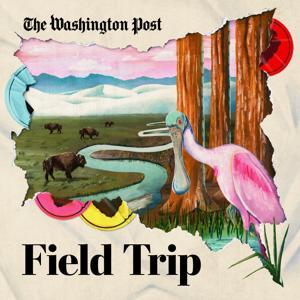
Today on “Post Reports,” we join The Post’s Lillian Cunningham on her journey through the messy past and uncertain future of America’s most awe-inspiring places: the national parks. Next stop? Glacier.
Read more:
All 63 national parks sit on Indigenous ancestral lands. They’re places Native Americans called home for thousands of years. But for more than 100 years, these places have also been public lands, intended to benefit all Americans. Sometimes that puts Native American tribes and the National Park Service into conflict.
That’s particularly true in Glacier National Park, where members of the Blackfeet have fought to preserve their deep connection to the land in the nearly 130 years since the tribe ceded it to the U.S. government.
In this episode of “Field Trip,” Washington Post reporter Lillian Cunningham takes listeners on an immersive journey, as she drives off the park’s Going-to-the-Sun Road and onto the Blackfeet reservation. Because to get inside the heart of Glacier today, you have to go outside it.
We’ll hear the story of how Ed DesRosier challenged park officials for the right to tell his people’s story inside Glacier; meet two women, Rosalyn LaPier and Theda New Breast, who practice their families’ traditions on both sides of the park border; and talk to Ervin Carlson about a plan, years in the making, to return free-roaming buffalo to the park.
We’ll also take a detour to Washington, D.C., where we’ll hear from Charles Sams III, the first Native American to helm the National Park Service, about what the future of collaboration between parks and tribes could look like.
You can see incredible photos of Glacier and find more on the national parks here. Subscribe to Field Trip here or wherever you're listening to this podcast.
Today on “Post Reports,” we join The Post’s Lillian Cunningham on her journey through the messy past and uncertain future of America’s most awe-inspiring places: the national parks. First stop? Yosemite.
Read more:
California’s Sierra Nevada is home to a very special kind of tree, found nowhere else on Earth: the giant sequoia. For thousands of years, these towering trees withstood the trials of the world around them, including wildfire. Low-intensity fires frequently swept through groves of sequoias, leaving their cinnamon-red bark scarred but strengthened, and opening their cones to allow new seeds to take root.
But in the era of catastrophic wildfires fueled by climate change, these ancient trees are in jeopardy. And Yosemite National Park is on the front lines of the fight to protect them.
In the first episode of “Field Trip,” Washington Post reporter Lillian Cunningham takes listeners inside this fabled landscape — from the hush of the Mariposa Grove to the rush of the Merced River — to explore one of America’s oldest and most-visited national parks.
We’ll hear from Yosemite forest ecologist Garrett Dickman on the extreme measures he’s taken to protect iconic trees; from members of the Southern Sierra Miwuk working to restore Native American fire practices to the park; and from Yosemite Superintendent Cicely Muldoon about the tough choices it takes to manage a place like this.
We’ll also examine the complicated legacies that conservationist John Muir, President Abraham Lincoln and President Theodore Roosevelt left on this land.
The giant trees of Yosemite kick-started the whole idea of public land preservation in America. Join us as we visit the place where the idea of the national parks began — and ask what the next chapter might look like.
You can see incredible photos of Yosemite and find more on the national parks here. Subscribe to Field Trip here or wherever you're listening to this podcast.
Subscribe to The Washington Post with a special deal for podcast listeners. Your first four weeks are free when you sign up here.
On Thursday, the Supreme Court restricted race-based affirmative action policies, changing the landscape of higher education in the United States. Today, we look at what this decision means for college admissions and beyond.
Read more:
A decision this summer on the future of affirmative action was one of the most anticipated cases on the Supreme Court’s docket. In a 6-3 decision Thursday, the court overturned decades of precedent by restricting affirmative action policies. They declared that considering race in college admissions violates the Constitution’s guarantee of equal protection.
The decision has sparked outcry and celebration across the nation. We sit down with higher education reporter Nick Anderson to understand how this decision will affect the future of college admissions in the United States.
“Barbie,” “Oppenheimer,” “Mission Impossible 7” – the list goes on. Today we’re reviewing the movies you shouldn’t miss this summer. Plus, a closer look at Hollywood and the state of the movie industry.
Read more:
Summer movie season is upon us. The Washington Post’s movie critic Ann Hornaday and pop culture reporter Sonia Rao sit down with us to make sense of which movies to watch in theaters this summer. They break down which action movies are poised to be blockbusters, which under-the-radar movies you should go see, and their favorite movies this season.
Plus, we look at the state of moviegoing in a world increasingly dominated by direct-to-streaming movie models, how Hollywood celebrities are trying to save the traditional movie theater experience, and if the writer’s strike will affect movies coming out this fall.
From the publisher's feed
Ranked by our users in the last 21 days

25,954 Listeners

4,073 Listeners
3,650 Listeners

1,382 Listeners

4,454 Listeners

112,256 Listeners

56,576 Listeners
2,483 Listeners

2,383 Listeners
106 Listeners

10,258 Listeners

7,108 Listeners

2,401 Listeners
2,781 Listeners

6,070 Listeners

6,343 Listeners
2,371 Listeners

16,234 Listeners

232 Listeners

295 Listeners
1,241 Listeners
996 Listeners
406 Listeners

343 Listeners
169 Listeners

57 Listeners

32 Listeners

740 Listeners

595 Listeners