
Sign up to save your podcasts
Or



Send us Fan Mail
Here’s the truth: 1 in 3 women will develop an autoimmune condition after giving birth, and hardly anyone in modern medicine is talking about it.
What if the “normal” symptoms of postpartum—fatigue, hair loss, mood swings, brain fog—are actually the earliest signs of autoimmune disease and red flags that your client’s body is waving, begging for help?
Today we’re busting the myths around postpartum recovery and diving into the root causes of autoimmune disorders in new mothers. If you're a provider still telling clients “this is just postpartum,” it’s time for a reality check. We talk about nutrient depletion, leaky gut, inflammation, unresolved trauma, and why functional postpartum care is the only path forward if we want to stop the rise of chronic illness in mothers. If you’re still telling clients “this is just postpartum,” it’s time to listen in—because this conversation will change how you practice.
Click HERE to check out this episode on the blog.
Key Time Stamps:
00:00 – Introduction to the silent postpartum autoimmune crisis
01:00 – Normalized symptoms vs. early signs of disease
04:20 – What’s normal postpartum and what’s not
06:18 – Miranda’s personal experience with ulcerative colitis
09:21 – Root causes of postpartum autoimmune disorders
10:34 – Nutrient depletion and immune dysregulation
11:38 – Trauma, nervous system imbalance, and gut health
13:50 – Environmental toxins and stress
15:39 – Genetic myths and epigenetics
16:30 – Reversing autoimmune disease: What’s possible?
18:12 – Why most providers miss the signs
20:12 – Why this matters for the future of postpartum care
21:03 – Get on the Postpartum Provider Press Newsletter
NEXT STEPS:
Send us Fan Mail
Postpartum care in the U.S. is broken—period.
Women are left struggling with depletion, hormone imbalances, and autoimmune conditions with little to no real support. What if postpartum care wasn’t just about surviving but actually thriving?
Today I'm chatting with Jane Baecher, co-founder and CEO of Anya, a revolutionary postpartum wellness brand changing the game for new moms. Jane shares her journey, why she felt called to disrupt the space, and how Anya is helping moms heal at the root—through nutrition, holistic care, and real, evidence-based solutions. We’re talking why postpartum recovery is more than just the first six weeks, how the U.S. is failing mothers compared to other countries, and what it will take to truly shift the narrative around postpartum health.
Click HERE to check out this episode on the blog.
Key Time Stamps:
04:50 What is Anya and how is it transforming postpartum care?
07:28 Why postpartum recovery is more than just six weeks
10:00 The U.S. vs. global postpartum care: What we’re missing
13:49 How postpartum providers & brands can work together for better care
16:52 Why postpartum needs a whole-body approach—not just OB care
20:58 The challenges of bridging medical and holistic postpartum support
25:50 The dream of a postpartum specialist model
29:38 Why nutrition & functional medicine are the missing pieces in postpartum care
33:46 How we can push for better postpartum support in our communities
Connect with Jane: Jane Baecher, co-founder and CEO of Anya, is a Cornell University graduate who began her career in fashion. Inspired by her own postpartum journey, Jane founded Anya to fill a critical gap in postpartum care. Combining traditional recipes, nutritional science, and food-based healing, Jane began creating products to support mothers through their first year of recovery and beyond. Anya offers a products and educational resources developed with OB/GYNs, pediatricians, nutritionists, herbalists, and doulas, providing holistic support for new moms.
Website | IG
Get 20% off your first order with Anya! Use code POSTPARTUM20
NEXT STEPS:
Send us Fan Mail
Did you know that a mother carries her child's cells inside her body for life? Not just emotionally, but physically.
In this episode, we’re diving deep into microchimerism, the phenomenon where fetal cells remain inside a mother’s body forever. These cells are found in the heart, brain, bones—everywhere. Some research suggests they aid healing, repair tissues, and may even protect against neurodegenerative diseases. But here’s the kicker: in some cases, they might also contribute to autoimmune disorders like Hashimoto’s and lupus.
Motherhood literally rewires a woman’s body at a cellular level. Microchimerism isn’t just a scientific curiosity—it’s a critical piece of the postpartum health puzzle. The difference between these cells becoming a healing force or a health risk depends on how well a mother’s body recovers after birth. And that’s exactly why postpartum nutrition and holistic recovery are non-negotiable.
The six-week checkup isn’t enough. If we don’t start prioritizing nutrient repletion, inflammation reduction, and real postpartum support, we are failing women—period. If you’re a postpartum provider, advocate, or anyone working to change the broken system of postpartum care, this episode is a must-listen.
Click HERE to check out this episode on the blog.
Key Time Stamps:
00:00 – Intro: The revolutionary science of microchimerism.
02:37 – Fetal cells stay in a mother's body for life—what does this mean?
05:45 – The autoimmune connection: Can these cells trigger disease?
07:51 – The healing power of microchimerism—how it might protect moms.
09:48 – Postpartum depletion & inflammation: The real problem.
11:55 – Why nutrition is the foundation of maternal health.
14:30 – How postpartum care MUST evolve to address long-term healing.
NEXT STEPS:
Send us Fan Mail
What happens when the doctors caring for postpartum women experience postpartum depression themselves? The truth is shocking—physician mothers are experiencing postpartum depression and anxiety at twice the rate of the general population.
Dr. Jessica Vernon, OBGYN and perinatal mental health advocate shares about the lack of postpartum education in medical training, the stigma physicians face when they struggle, and why so many provider mothers feel isolated, burned out, and unsupported.
Dr. Vernon gets real about her own postpartum experience—how she didn’t even recognize her anxiety, OCD, and depression for two years, why she had to "prescribe herself" antidepressants, and the systemic failures that push doctors, midwives, and therapists to their breaking point.
Click HERE to check out the episode on the blog
Key Time Stamps:
Connect with Dr. Jessica Vernon, MD. Dr. Jessica Vernon, MD, FACOG, PMH-C is a board certified OB/GYN with a specialty in perinatal mental health. She currently works at Oula, a midwifery based collaborative care practice. She's a physician advocate working to decrease healthcare disparities and bring awareness and better support for women with peripartum mood disorders. Jessica is also a mom, partner, daughter, friend and author of Then Comes Baby. Website | IG
NEXT STEPS:
Send us Fan Mail
Here’s the truth: Postpartum nutrition is the missing link in maternal health.
The postpartum care system is broken, and we cannot afford to keep ignoring postpartum depletion. In this episode, I’m sharing an exclusive behind-the-scenes sneak peek into snippets of our Postpartum Nutrition Certification Masterclass, where we deep dive into the 4 Stages of Postpartum Depletion.
If you’re not talking about nutrition with your clients, you’re already behind. The market is shifting, and postpartum professionals who integrate functional nutrition strategies into their care are the ones who will thrive—and so will their clients.
If you’re supporting postpartum moms, this is your chance to step into the future of care. The Postpartum Nutrition Certification is the ONLY functional nutrition training designed specifically for postpartum professionals.
The Spring 2025 Cohort is now open for enrollment. Click the link below to become the next Certified Postpartum Nutrition Specialist.
https://members.postpartumu.com/Certification
Check out the episode on the blog: https://postpartumu.com/podcast/the-4-stages-of-postpartum-depletion-sneak-peak-ep-206/
Key time stamps:
00:00 – Welcome! Why postpartum care is failing & what needs to change.
04:02 – The postpartum care market shift—why big corporations are profiting while moms suffer.
09:54 – Breaking down the 4 Stages of Postpartum Depletion and how to prevent them.
16:12 – Why salads & smoothies are some of the worst foods for postpartum healing.
21:24 – The undeniable link between nutrition and maternal mental health.
26:06 – Why community care starts with food—how other cultures got it right.
29:58 – The silent epidemic of postpartum depression—why we need to act NOW.
35:48 – How postpartum nutrition is transforming client outcomes and growing provider businesses.
NEXT STEPS:
Send us Fan Mail
Postpartum care is seriously failing moms, and if you’re a provider, you probably see it firsthand. Moms are burned out, running on empty, and dealing with hormone imbalances, mental health struggles, and autoimmune issues that no one is talking about. But here’s the thing—nutrition is the missing piece, and it can completely change the game for both your clients and your business.
Today, I’m chatting with Bryn, a postpartum nutrition specialist who took what she learned from the Postpartum Nutrition Certification and built a thriving pre-natal and postpartum care agency in just two years. We’re getting into how food can be the ultimate postpartum healer and how you, as a provider, can use this knowledge to level up your care, get better results for your clients, and continue to grow a wildly successful business.
Check out the episode on the blog: https://postpartumu.com/podcast/from-solo-doula-to-thriving-agency-how-postpartum-nutrition-changed-everything-bryn-noe-ep-205/
Key time stamps:
Connect with Bryn:
Bryn Noe is a Dual-Certified Postpartum Doula, Newborn Care Specialist, and Certified Postpartum Nutrition Specialist with over nine years of experience supporting families. As the owner of Family Foundations, she provides hands-on postpartum care, nutrition support, and education for new mothers and infants. Passionate about maternal mental health, she also mentors professionals and leads community initiatives, including diaper drives for families in need. Bryn lives in Phoenix, Arizona, with her husband and three children.
Website IG:
NEXT STEPS:
Send us Fan Mail
What if your gut instinct and intuition as a provider is the missing piece in truly supporting postpartum mothers?
We’ve been trained to rely on tests, checklists, and data, but what if the most powerful tool we have isn’t something that can be measured?
In this episode, I share a personal experience that shook me to my core—one that proved how deeply connected emotional wounds are to physical symptoms. We dive into why postpartum care has lost its intuitive roots, how women healers throughout history were dismissed or feared for trusting their inner knowing, and why it’s time to bring that back.
If you’ve ever had a moment where you just knew what a mom needed—without a test or protocol telling you so—this episode will validate what you’ve felt all along. Plus, we discuss how modern biohacking, tracking, and testing have taken us further from the innate wisdom that has guided women’s healing for centuries. If you're a postpartum provider, this episode will reignite your confidence in the deep knowing that makes you extraordinary at what you do.
Check out this episode on the blog: https://postpartumu.com/podcast/mastering-intuition-as-a-provider-when-to-trust-your-gut-vs-protocol-in-postpartum-care-ep-204/
Key Time Stamps:
00:02 – The gut feeling that changed a client’s postpartum recovery
03:41 – How grief and trauma show up in the body
04:52 – The lost art of trusting intuition in women’s healthcare
06:17 – Why postpartum healing isn’t about biohacking—it’s about deep connection
07:44 – The question every provider must ask: “Am I hesitating because it’s wrong or because I wasn’t taught it?”
09:56 – A personal story of misdiagnosis—and how one doctor trusted her instinct to find the truth
12:48 – Why clients need validation beyond lab results
15:25 – The Postpartum Nutrition Certification: Bridging science and intuition for better care
17:26 – Final thoughts: Why intuition is the missing piece in postpartum healing
NEXT STEPS:
Send us Fan Mail
The postpartum body is not designed to “bounce back” without deep, intentional nourishment—and the lack of education around depletion is failing mothers every single day.
BUT… hardly anyone in mainstream medicine is addressing: nutrient depletion and its long-term consequences. If you've ever wondered why so many postpartum women struggle with autoimmune diseases like hashimoto's, thyroid imbalances, depression, and chronic fatigue, this episode is going to blow your mind.
Maranda is interviewed by Holly Stein of Eat Mama Meals to break down exactly what happens to a postpartum body when key nutrients are depleted. They explore how postpartum depletion is more than just “feeling run-down”—it can actually lay the foundation for chronic disease and dysfunction. From why iron, magnesium, vitamin D, and omega-3s are essential for recovery to how depletion fuels inflammation, hormone imbalances, and gut issues, this episode is packed with critical, research-backed information every postpartum provider needs to know.
If you’re working with postpartum moms as a provider, doula or holistic health provider, understanding the long-term impact of depletion is non-negotiable. Learn how to recognize the warning signs, help moms replete their bodies, and prevent the all-too-common cycle of burnout, illness, and frustration.
Check out the episode on the blog: https://postpartumu.com/podcast/how-does-postpartum-nutrient-depletion-affect-organ-function-ep-203/
KEY TIME STAMPS:
00:02 - Why postpartum depletion is overlooked in conventional medicine
04:15 - How a lack of key nutrients weakens the body's ability to function
09:48 - The connection between nutrient depletion and postpartum depression/anxiety
16:32 - Shocking statistics on postpartum autoimmune disease
22:28 - Can the body recover naturally, or is intervention required?
26:23 - How providers can help moms replenish and prevent chronic illness
NEXT STEPS:
Send us Fan Mail
Is the Edinburgh Postnatal Depression Scale (EPDS) Failing Mothers? What Providers Need to Know
Postpartum depression screenings are essential—but are we actually identifying the mothers who need help? The Edinburgh Postnatal Depression Scale (EPDS) is the standard tool used in postpartum mental health screenings worldwide. But here’s the hard truth: it’s not catching every mom who’s struggling.
In this episode, we break down why the EPDS falls short and what providers must do to bridge the gap between a screening tool and real, effective postpartum mental health care. We dive into why mothers feel unseen and unheard in postpartum appointments, the danger of reducing depression screenings to a checklist, and most importantly, how we as providers can do better. Let’s Change the Way We Support Postpartum Mental Health, Moms deserve more than a checklist.
Check out this episode on the blog: https://postpartumu.com/does-the-edinburgh-postnatal-depression-scale-really-work-ep-202
KEY TIME STAMPS:
00:00 – Why postpartum depression screening is missing the mark
02:29 – The truth about the EPDS and why it’s not enough
06:18 – When moms do report depression, but nothing changes
10:45 – The lack of postpartum mental health training for providers
14:25 – The missing tools for real postpartum support
18:07 – The danger of using checklists instead of real conversations
22:33 – Why trauma often goes undiagnosed in postpartum women
24:17 – The big takeaway: How providers can take real action
NEXT STEPS:
Send us Fan Mail
Fascia isn’t just a buzzword—it’s the connective tissue system that supports and communicates with every part of the body. In this episode, Maranda and Anna Rahe, founder of GST Body, uncover why fascia is the missing piece in postpartum healing. We’re not just scratching the surface here. Anna explains why traditional methods like belly binding worked so well when combined with fascia-focused techniques, how fascia is more fluid than solid, and why that matters for healing.
If your postpartum clients are struggling with issues like pelvic floor dysfunction, emotional overwhelm, postpartum depression and even generational trauma, it’s time to explore the vital role fascia and fascia release play in postpartum recovery and care. We’re talking about simple strategies providers like you can integrate this wisdom into your practice.
Check out this episode on the blog: https://postpartumu.com/the-critical-role-of-fascia-in-holistic-postpartum-healing-anna-rahe-ep-201/
KEY TIME STAMPS:
00:02: What fascia is and why it’s critical for postpartum recovery.
06:46: Misconceptions about fascia and how they’re sabotaging postpartum healing.
13:18: How traditional postpartum care used fascia massage and why it’s time to bring it back.
20:55: Fascia as a sensory organ: emotional healing, trauma, and the mind-body connection.
26:11: Why postpartum is a long-term journey, not just a short recovery period.
Connect with Anna Rahe:
For the past 25+ years, Anna Rahe has explored a transformative and empowering relationship with fascia, helping people invest in their health, restore vitality, and heal themselves using proprietary tools she developed. As the founder, CEO, and educator of GST Body, Anna has shared her expertise in holistic body care through fascia on a global scale. She has collaborated with top athletes, surgeons, physicians, and celebrities and has been featured in prominent publications such as Shape, Elle, Net-a-Porter, and The Wall Street Journal.
Website || IG || YouTube ||
NEXT STEPS:
From the publisher's feed
Top-Ranked Podcast for Postpartum Care Providers in Nutrition + Holistic Care
The current postpartum care model is failing—leaving countless mothers facing postpartum depression,…
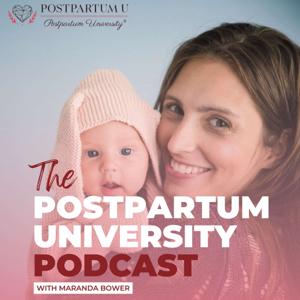
The Postpartum University® Podcast is the trusted resource for professionals committed to elevating postpartum support. Hosted by Maranda Bower—researcher, educator, and author, mom of 4, and the founder of Postpartum University®—each episode delivers powerful insights into functional nutrition, hormonal health, and holistic practices for treating postpartum issues at the root. This podcast bridges the gaps left by Western medical education, empowering providers to support their clients with individualized, science-backed, and traditional-aligned solutions.
Subscribe to our newsletter for exclusive insights, resources, and tools to revolutionize your impact in postpartum wellness and functional nutrition: www.PostpartumU.com/Subscribe.

6,762 Listeners

6,675 Listeners

69,542 Listeners

4,837 Listeners
1,297 Listeners
674 Listeners

677 Listeners

396 Listeners
664 Listeners
207 Listeners
45 Listeners