
Sign up to save your podcasts
Or

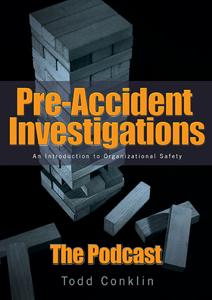


Based on Podcast App listening data
Todd interviews Matthew Sexton about practicing "engaged presence"—an improv-based approach that trains leaders to listen and connect using simple exercises (like a moving ball) to build cognitive, physical, and emotional engagement.
The episode explains how engagement is a learnable skill, shows quick entry-level practices, and highlights why deliberate, repeated practice improves communication and safety at work.
Todd Conklin hosts a candid conversation about mental health, substance abuse, and suicide in construction and mining, featuring peers who lead workplace support programs. They discuss startling statistics, the stigma that prevents help, and real peer-based solutions like the MATES and Brassfield-Gore programs.
The episode highlights practical steps employers can take: empower peers, provide resources, normalize conversations, and treat these issues as a workplace responsibility to save lives and improve safety.
Todd Conklin explores how safety programs, despite good intentions, often degrade over time: leading metrics turn lagging, bureaucracy self-reinforces (the "iron law"), and helpful tools can become weaponized in hindsight. He illustrates with examples like restrictive approval rules for breathing apparatus and reliance on machine safeguards that can encourage risky behaviour.
The episode urges organizations to declutter processes, monitor and adapt systems continuously, and treat safety as an active capacity that must be supported in real time rather than audited for blind obedience.
Dr. Todd Conklin interviews Dr. Sidney Decker about his work on safety, accountability, and just culture. They discuss the Safety Differently approach: viewing people as solutions, addressing work conditions rather than behavior, and shifting from retributive to restorative justice.
Decker also covers cultural differences in safety practices across regions, the rise of compliance, and offers practical advice for safety and human factors professionals on understanding why actions made sense in context.
This is an historic podcast - enjoy the listen.
Host Todd Conklin visits Golden Gate National Recreation Area with safety specialists Rik Hansen and Leo Shea to explore a shift in safety thinking — from focusing on risk to supporting mission performance. They discuss visits to Alcatraz, Ocean Rescue teams, and Trail Crews, highlighting how listening to frontline workers reveals practical, predictive knowledge.
The episode emphasizes building relationships, staying curious and adaptable, and treating expertise and wellness as core parts of a safety program. Real-world stories from lifeguards and park teams show how pre-planning, shared language, and workforce engagement improve reliability and resilience.
In this episode, Todd explores the evolution of safety thinking—from blaming human error to creating systems that support reliable work. He discusses the normalization of deviance versus a deliberate shift toward a normalization of excellence, learning teams, and practical examples of redesigning work to prevent repeats of incidents.
Through conversations about AI-created interviews, Southwest Airlines' practices, and Case studies, Todd emphasizes treating error as normal, asking better questions, and designing systems that make work safer and more effective.
This episode explores the promises and pitfalls of AI in safety work, centered on the book The AI Paradox in Safety by Brent Sutton and Brent Robinson. Todd and Brent discuss how AI can either amplify blame and surveillance or enable learning and improvement, and why organizational culture shapes which path wins.
Topics include surveillance concerns (Flock cameras, wearables), AI amplifying existing culture, neurodiversity, leader assurance questions, and practical advice for using AI to listen to frontline workers rather than punish them.
This episode argues that meaningful improvement rarely happens overnight. Big-bang rollouts and sudden change cause chaos, bugs, and unintended consequences, while slow, incremental implementations let organizations prototype, find hidden flaws, build buy-in, and protect core operations.
The host reflects on a difficult personal week and reminds listeners that steady, small steps — passo y paso — are the reliable path to safer, more resilient organizations. Be kind, be patient, and be safe.
In this episode Todd Conklin talks with David Keeling, Assistant Secretary of Labor for Occupational Safety and Health, about OSHA’s shift toward partnership, refreshing VPP, the new Safety Champions program, and focusing on serious injuries and fatalities (SIF).
They discuss mental health, vehicle safety, leadership’s role, predictive analytics, and incentives to drive abatement and innovation so employers and regulators can work together to prevent catastrophic events.
Todd joins James Newman and Ken Madsen on a special excerpt from the Counter-Errorism podcast to discuss productive safety, leadership change, and how investigations should inform solutions rather than impose them.
They cover practical ideas: shifting leaders' thinking, treating workers as problem-solvers, using judgments of need, and how DOE-style investigations differ from industry practices.
From the publisher's feed
Ranked by our users in the last 21 days

1,448 Listeners
8,920 Listeners

30,710 Listeners

8,366 Listeners

4,006 Listeners

7,941 Listeners

125 Listeners
6,753 Listeners
550 Listeners

2 Listeners

28,901 Listeners
10 Listeners

8 Listeners

17 Listeners

4 Listeners