
Sign up to save your podcasts
Or



Based on Podcast App listening data
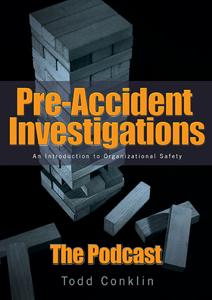
In this part two conversation, Todd Conklin and Bob Edwards explore what the future holds for operational learning and safety. They discuss learning teams, storytelling, the power of curiosity and not-knowing, and how the people closest to the work provide the best solutions.
The episode highlights successes from pediatric patient safety, the Navy, and industry examples, and emphasizes cultural shifts away from quick fixes and metrics toward continuous, practical improvement and clearer stop-work practices.
Todd Conklin and Bob Edwards discuss Solutions for Patient Safety (SPS), a grassroots movement of learning teams that used operational learning to dramatically reduce harm in pediatric care.
The episode covers emotional stories from the SPS meetings, practical methods like soak time and learning teams, the power of continuous improvement, and the real-world impact of saving thousands of young lives.
In this episode, Todd Conklin questions whether risk can ever truly be removed or if it simply moves around. He distinguishes between hazards and risk, discusses how organizations shift risk through contracting and worker practices, and argues that while hazards can be managed, risk remains dynamic and persistent. Todd also highlights the role of controls, barriers, and margin in starting work safely, and teases upcoming conversations on psychological safety, AI and safety, and leadership.
Todd Conklin interviews Martha Acosta, a pioneer in human performance and instructional design, about using organizational "pain points" and paradoxes as early indicators of system failures. They discuss why near misses and workplace frustrations are valuable signals and how leaders can turn those tensions into opportunities for learning and improvement.
The episode offers practical advice for managers: be present, look for pressure points across roles, and treat minor pains as diagnostic cues to prevent larger incidents. Martha translates high-level ideas into actionable steps leaders can use tomorrow.
Todd Conklin reviews Erik Hollnagel’s new book "Incremental Safety Practices" and explains the core idea that safety efforts fall into two approaches: reductive (removing hazards) and inductive (building resilient systems). He urges listeners to view safety as an ongoing capacity managed in everyday work rather than a static goal achieved after eliminating risks.
The episode invites organizations to reflect on whether their programs focus on hazard removal, resilience building, or both, and emphasizes paying attention to incremental improvements (or erosions) in safety culture and practice.
Host Todd Conklin talks with Daniel Hummerdahl about his new book, An Invitation to Safety Conversation, exploring how everyday safety talks can move beyond scripted checklists to become learning moments that bridge leaders and workers.
The episode shares practical stories and techniques for asking better questions, listening more, and scaling conversational practices across organizations to improve safety, trust, and performance.
Coming into this episode, Todd Conklin welcomes Al Thomson to discuss safety in the primary sector, focusing on migrant Pacific workers and a human-centered approach. Al shares how Monarch Platform blends pastoral care, cultural understanding, and contemporary safety (HOP) to support a diverse workforce across New Zealand’s agriculture and horticulture industries.
The conversation covers cultural differences in risk perception, village success planning, measuring workforce capacity with role-specific “bingo” competencies, and the importance of humility, vulnerability, and leadership in creating meaningful safety outcomes.
Host Todd chats with Mousa Yassin about shifting safety culture from blaming individuals to designing systems that tolerate failure and recover quickly. They cover life-saving rules, the concept of recoverability, lessons from software engineering like chaos testing, and the importance of learning over punishment.
The episode emphasizes practical ways to build resilient systems, nurture learning teams, and make safety training engaging and effective.
Todd Conklin tells the origin story of "learning teams," sparked by a self-reported near-miss at Los Alamos involving a postdoc and an arcing wrench. Rather than pursuing a punitive investigation, a group of workers gathered to identify what needed to be learned, uncovering broader gaps in postdoc training and safety planning.
The episode explains how learning teams prioritize asking better questions, collecting the right data, and designing system-focused solutions. Conklin describes how this approach spread across the lab and why it remains a fast, effective tool for operational improvement.
Todd Conklin talks with Corey Pitzer about fatality prevention, Human and Organizational Performance (HOP), and how safety thinking has shifted globally.
They explore controversial views—treating workers as problem-solvers, tensions between engineering/energy-based approaches and systemic/new-view thinking—and use real examples to show why designing systems that absorb variation matters more than trying to eliminate risk.
From the publisher's feed
Ranked by our users in the last 21 days

1,460 Listeners
8,913 Listeners

30,701 Listeners

8,307 Listeners

4,064 Listeners

7,926 Listeners

124 Listeners
6,756 Listeners
550 Listeners

3 Listeners

29,171 Listeners
10 Listeners

8 Listeners

17 Listeners

4 Listeners