
Sign up to save your podcasts
Or

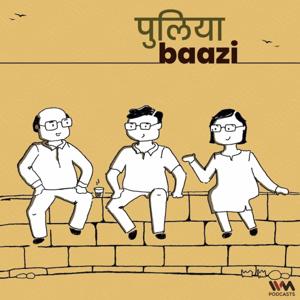


WhatsApp’s change in privacy policy attracted a lot of attention over the last couple of weeks. While some people migrated to Signal, most others ended up with all three -- WhatsApp, Telegram, and Signal -- on their phones. So in this #By2 episode, we discuss the narratives surrounding privacy in India. We also discuss if mandating interoperability of messaging platforms is a way out of the current situation. In the second section, we respond to two listeners’ questions on fiscal deficit and design thinking.
व्हाट्सएप्प की प्राइवेसी नीति ने काफी हल्ला मचाया पिछले दो हफ़्तों में । तो इस #By2 एपिसोड में हम इसी मामले की तह तक जा रहे है । एपिसोड के दूसरे हिस्से में हमने अपने दो श्रोता - कृष्णा और राघव - के सवालों पर चर्चा की ।
For more:
What you need to know about Whatsapp’s new privacy policy, Shruti Dhapola, The Indian Express
Interoperability as a tool for competition regulation, Ian Brown
Budget Deficits and National Debt, LK Jha Memorial Lecture by Martin Feldstein
How Trendsetters Shaped India’s Massive Sanitation Campaign, on Christina Bicchieri’s work on Social Norms and Design Thinking in Indian Public Policy
Puliyabaazi is on these platforms:
Twitter: https://twitter.com/puliyabaazi
Facebook: https://www.facebook.com/puliyabaazi
Instagram: https://www.instagram.com/puliyabaazi/
Subscribe & listen to the podcast on iTunes, Google Podcasts, Castbox, AudioBoom, YouTube, Spotify or any other podcast app.
See omnystudio.com/listener for privacy information.
Contrary to some notions that the Indian Constitution is as an elitist document far removed from the Indian populace, the document in fact profoundly transformed everyday life of ordinary Indians, in mostly desirable and sometimes unintended ways.
In this episode, Pranay and Saurabh speak to Rohit De (@itihaasnaama) — author of A People’s Constitution: The Everyday Life of Law in the Indian Republic on how ordinary Indians deployed constitutional provisions to restrain the government’s interference in their everyday lives.
संविधान का एक आम भारतीय के आम जीवन पर क्या असर हुआ? इसी सवाल पर है यह पुलियाबाज़ी इतिहासकार रोहित दे के साथ। रोहित की किताब A People’s Constitution: The Everyday Life of Law in the Indian Republic चार ऐसे किस्से बयां करती है जहाँ नागरिकों ने अपने नए मूल अधिकारों का प्रयोग कर सरकार की रोज़मर्रा के जीवन में दखलंदाज़ी का विरोध किया।
For more:
Puliyabaazi episode #2: yeh republic kya bala hai
Puliyabaazi special episode on the preamble
Rohit’s book: A People’s Constitution: The Everyday Life of Law in the Indian Republic
Puliyabaazi is on these platforms:
Twitter: https://twitter.com/puliyabaazi
Facebook: https://www.facebook.com/puliyabaazi
Instagram: https://www.instagram.com/puliyabaazi/
Subscribe & listen to the podcast on iTunes, Google Podcasts, Castbox, AudioBoom, YouTube, Spotify or any other podcast app.
See omnystudio.com/listener for privacy information.
In the first Puliyabaazi #By2 episode, Saurabh and Pranay take stock of the state of agriculture in India. Saurabh talks about his encounters with agricultural markets and horticulture farming in Karnataka. In the second section of the podcast, the hosts respond to listener questions.
पुलियाबाज़ी #By2 श्रृंखला के पहले अंक में सौरभ और प्रणय एक बार फिर कृषि क्षेत्र और लगातार चल रहे कृषि आंदोलन पर चर्चा कर रहे है | एपिसोड के अंत में सुनिए श्रोताओं के कुछ दिलचस्प सवालों पर पुलियाबाज़ी।
For more:
Puliyabaazi ep 78 with Gunwant Patil
Karnataka government notifies Ordinance on opening up market for non-irrigated farm land, Economic Times
Why Men Rebel, Book by Ted Gurr
The Logic of Collective Action, Book by Mancur Olson
Radically Networked Societies, The Seen and The Unseen episode 158
Networked Protests & State Responses: The Case of Hong Kong 2019-20, Takshashila Discussion Document, Manoj Kewalramani and Rohan Seth
Puliyabaazi is on these platforms:
Twitter: https://twitter.com/puliyabaazi
Facebook: https://www.facebook.com/puliyabaazi
Instagram: https://www.instagram.com/puliyabaazi/
Subscribe & listen to the podcast on iTunes, Google Podcasts, Castbox, AudioBoom, YouTube, Spotify or any other podcast app.
See omnystudio.com/listener for privacy information.
After years of dilly-dallying, 2020 was the year when many states started working together to take on a common challenge: China. One such formation is the Quadrilateral Security Dialogue (Quad). Though established in 2008, it’s only over the last couple of years that the grouping has started engaging more fruitfully. In this puliyabaazi, Indrani Bagchi, Diplomatic Editor at Times of India, takes an in-depth look at the prospects and challenges for this grouping. We also discuss India’s bilateral relationships with the other three Quad countries.
पिछले साल अंतर्राष्ट्रीय राजनीति में एक बड़ा बदलाव यह आया कि कई देश चीन की मग़रूर हरकतों के ख़िलाफ़ खुलकर बोलने लगे और अपने आपसी मतभेदों को एक तरफ रख, साथ मिलकर काम करने में दिलचस्पी दिखाने लगे। क्वाड - मतलब भारत, अमरीका, जापान, और ऑस्ट्रेलिया की चौकड़ी - ने भी इस साल कई महत्त्वपूर्ण कदम उठाए। तो क्या है ये चौकड़ी और इससे भारत को क्या फायदा होगा? इसी विषय पर पुलियाबाज़ी टाइम्स ऑफ इंडिया की डिप्लोमैटिक एडिटर इन्द्राणी बागची के साथ।
For more:
Corona, and wolf warriors: The world changed significantly this year, creating challenges and opportunities for India, Times of India, Indrani Bagchi
India should take the lead in the Quad, Times of India, Indrani Bagchi
Quad is shaping up as the backbone of India's post-Covid foreign policy, Economic Times, Indrani Bagchi
The Rise of China vs The Logic of Strategy, a book by Edward Luttwak
Indo-Pacific Empire: China, America and the Contest for the World's Pivotal Region, Book by Rory Medcalf
The next step for Quad: A dialogue on high tech, Hindustan Times, Pranay Kotasthane and Rohan Seth
See omnystudio.com/listener for privacy information.
Narratives are all around us. Whether it's policy, politics, or the economy, the stories we tell and listen matter. In this Puliyabaazi, we discuss why narratives have the power to make the unreal real with economic historian and assistant professor at IIM Bangalore, Prateek Raj (@PrateekRaj_).
आजकल “नैरेटिव” का बोलबाला है. हर कोई नए तरीकों से कहानियाँ बुन रहा है - भले ही उसका तथ्य से कोई वास्ता हो या नहीं. इस शब्द का मतलब क्या है और नैरेटिव हमारी अर्थव्यवस्था और राजनीति पर क्या असर करते है, ऐसे ही कुछ सवालों पर पुलियाबाज़ी आर्थिक इतिहासकार प्रतीक राज के साथ.
For more:
Can Narratives Shape Society?, ProMarket, by Prateek Raj
A Brief history of the Marketplace of Ideas, Milken Review, by Prateek Raj
A Culture of Growth: The Origins of the Modern Economy, a book by Joel Mokyr
Bourgeois Trilogy book series by Dierdre McCloskey
Puliyabaazi is on these platforms:
Twitter: https://twitter.com/puliyabaazi
Facebook: https://www.facebook.com/puliyabaazi
Instagram: https://www.instagram.com/puliyabaazi/
Subscribe & listen to the podcast on iTunes, Google Podcasts, Castbox, AudioBoom, YouTube, Spotify or any other podcast app.See omnystudio.com/listener for privacy information.
What do the recent changes in agricultural laws mean for farmers? Will these changes unshackle the agricultural sector or do the problems lie elsewhere? We discuss these questions and more with Gunwant Patil, leader of the Shetkari Sangathana Movement and a farmer himself.
आजकल चल रहे कृषि आंदोलन के क्या कारण है? क्या यह कानून कृषि क्षेत्र में समृद्धि लाने में सक्षम है? इसी विषय पर ये पुलियाबाज़ी शेतकरी संघटना के लीडर गुणवंत पाटिल के साथ |
For more:
Gunwant Patil’s Manthan talk
A profile of the Shetkari Sanghatana movement
Gunwant Patil’s episode on The Seen and the Unseen
Agricultural Economist Ashok Gulati on the farm laws, Indian Express
Puliyabaazi is on these platforms:
Twitter: https://twitter.com/puliyabaazi
Facebook: https://www.facebook.com/puliyabaazi
Instagram: https://www.instagram.com/puliyabaazi/
Subscribe & listen to the podcast on iTunes, Google Podcasts, Castbox, AudioBoom, YouTube, Spotify or any other podcast app.
See omnystudio.com/listener for privacy information.
In this second and final episode on India’s banking system, we pick up some more interesting strands of India’s monetary history. We are joined again by Amol Agrawal (@mostlyeconomics), Assistant Professor at Amrut Mody School of Management, Ahmedabad University.
In episode #75, Amol began with the Hundi system in India and ended at the nationalisation phase of 1969. In this episode, we find out the banking systems in the princely states, government-mandated efforts for financial inclusion, and recent developments on banking reforms.
भारत में बैंकिंग पर दूसरे और अंतिम एपिसोड में एक बार फिर अमोल अग्रवाल (@mostlyeconomics) कई रोचक किस्से सुना रहे है | आज़ादी से पहले की पाँच सौ से ज़्यादा रियासतों में बैंकिंग कैसे होती थी? आज़ादी बाद वित्तीय समावेशन के लिए क्या कदम उठाए गए और किस हद तक ये सफल हो पाए? ऐसे ही कुछ सवालों पर एक और पुलियाबाज़ी|
For more:
Puliyabaazi episode #75 feat. Amol Agrawal
RBI’s Annual Reports from 1936 to 1999
There were 54 Princely State banks in 1950s, Mostly Economics
Priority Sector Loans: A history worth knowing, Mostly Economics
Dwijendra Tripathi’s history of The Bank of Baroda
Amiya Kumar Bagchi’s books on India’s financial history
Puliyabaazi is on these platforms:
Twitter: https://twitter.com/puliyabaazi
Facebook: https://www.facebook.com/puliyabaazi
Instagram: https://www.instagram.com/puliyabaazi/
Subscribe & listen to the podcast on iTunes, Google Podcasts, Castbox, AudioBoom, YouTube, Spotify or any other podcast app.
See omnystudio.com/listener for privacy information.
In this episode, political scientist and economic historian Rohit Chandra (@rohitreads) gives an account of business-state relations in India over the last two decades. In this wide-ranging conversation, we discuss trends of market concentration since 2014, the state of public sector units, small businesses, and the state of banking among other things. Rohit, together with Rahul Verma (@rahul_tverma), has curated the Seminar Magazine Symposium for October 2020 on the topic A delicate balance: a symposium on untangling business-state relations in India.
भारत में सरकार और बिज़नेस के रिश्ते कैसे बदले है पिछले दो दशकों में, यही है विषय इस पुलियाबाज़ी का | क्यों भारत में बिज़नेस केन्द्रीभूत हो रहे है? भारत के छोटे उद्योग छोटे ही क्यों रह जाते है? “सूट-बूट की सरकार” टिप्पणी को क्या इस सरकार ने दिल से लगा लिया? ऐसे ही कुछ सवालों पर चर्चा की हमने आईआईटी दिल्ली की स्कूल ऑफ़ पब्लिक पॉलिसी में असिस्टेंट प्रोफेसर रोहित चंद्र से, जो इस विषय के आर्थिक इतिहास पर काफ़ी वर्षों से अध्ययन कर रहे है |
For more:
Seminar Magazine Symposium for October 2020: A delicate balance: a symposium on untangling business-state relations in India, edited by Rohit Chandra and Rahul Verma
Doing business in a deals World, by Sabyasachi Kar, Lant Pritchett, Spandan Roy, and Kunal Sen
Bad Money by Vivek Kaul,
Overdraft by Urjit Patel,
Bloom in the Desert by D V Kapur,
In Service of the Republic by Ajay Shah and Vijay Kelkar
The Seen and the Unseen ep 186, Pratap Bhanu Mehta and Amit Varma
Puliyabaazi is on these platforms:
Twitter: https://twitter.com/puliyabaazi
Facebook: https://www.facebook.com/puliyabaazi
Instagram: https://www.instagram.com/puliyabaazi/
Subscribe & listen to the podcast on iTunes, Google Podcasts, Castbox, AudioBoom, YouTube, Spotify or any other podcast app.
See omnystudio.com/listener for privacy information.
What’s the history of banking in India? Do bank deposits lead to bank loans or is it the other way around? Why did coastal Karnataka spring up so many private banks?
In this episode, Amol Agrawal (@mostlyeconomics), Assistant Professor at Amrut Mody School of Management, Ahmedabad University, gives us a tour de force of the history of banking in India. Amol also runs Mostly Economics, one of India’s foremost blogs on economics and economic history.
एक बैंक की असली परिभाषा क्या है? भारत में मॉडर्न बैंकिंग कब और कैसे आई? क्या भारत में हमेशा से ही ज़्यादातर बैंक सरकार द्वारा संचालित थे? १९६९ में बैंक सरकारीकरण क्यों हुआ? इस पुलियाबाज़ी में आपको मिलेंगे इन सब सवालों के जवाब अमोल अग्रवाल से जिन्होंने भारत के बैंकिंग इतिहास का बारीकी से अध्ययन किया है |
For more:
Mostly Economics -- Amol’s blog
Money Creation in the Modern Economy by McLeay et al on what comes first, deposits or loans?
RBI’s Annual Reports from 1936 to 1999
Before Thaler there was Pai -- Amol’s article in Mint on Pigmy Deposits of Syndicate Bank
History of Bank Branching in India -- Amol’s blog post
Amol’s episode on The Pragati Podcast on the same topic
Puliyabaazi is on these platforms:
Twitter: https://twitter.com/puliyabaazi
Facebook: https://www.facebook.com/puliyabaazi
Instagram: https://www.instagram.com/puliyabaazi/
Subscribe & listen to the podcast on iTunes, Google Podcasts, Castbox, AudioBoom, YouTube, Spotify or any other podcast app.
See omnystudio.com/listener for privacy information.
Even today, India’s armed forces largely conduct their operations in silos. It is for this reason that the Chief of Defence Staff position was created and specifically mandated to create integrated theatre commands that would allow systematic cooperation of all three forces in large numbers during war. So in this Puliyabaazi, we are joined by Lt Gen (Dr) Prakash Menon to discuss jointness in India’s military.
एयरफोर्स, नेवी, आर्मी - यह तीनों सेनाएँ भारत में आज भी काफी हद तक अपनी अपनी अलग धुन पर चलती हैं | लेकिन आज के युद्धों में इन सेनाओं का ज़्यादा से ज़्यादा तालमेल अनिवार्य हो गया है| इस उद्देश्य के लिए ही हाल ही में भारत सरकार ने चीफ ऑफ़ डिफेन्स स्टाफ (CDS) पद का गठन किया है | तो इस मिलिट्री पुलियाबाज़ी में हमने इसी सैन्य तालमेल पर चर्चा की लेफ्टिनेंट जनरल प्रकाश मेनन से|
Readings:
India’s Theatre Command System: A Proposal, Takshashila Discussion Document, by Lt Gen Prakash Menon
The Four Aspects of Joint, Aaron P Jackson
Puliyabaazi is on these platforms:
Twitter: https://twitter.com/puliyabaazi
Facebook: https://www.facebook.com/puliyabaazi
Instagram: https://www.instagram.com/puliyabaazi/
Subscribe & listen to the podcast on iTunes, Google Podcasts, Castbox, AudioBoom, YouTube, Spotify or any other podcast app.
See omnystudio.com/listener for privacy information.
From the publisher's feed

8,772 Listeners

158 Listeners

5 Listeners

27 Listeners

1 Listeners

4 Listeners
34 Listeners
14 Listeners

7 Listeners

7 Listeners

56 Listeners

88 Listeners

39 Listeners

10,107 Listeners

289 Listeners

552 Listeners

40 Listeners

13 Listeners

2 Listeners

15 Listeners

10 Listeners

94 Listeners

11 Listeners