
Sign up to save your podcasts
Or



Based on Podcast App listening data
Movement is life.
Movement is part of how our body communicates with itself and senses itself in the outside world. Proper and ease filled movement, be it with our emotions, the circulation of our blood, the way our joints through their range movement, and how we can move and be in the relationships, work and interaction with the 10000 things. All of this is tied in with our well-being and capacity to thrive.
In this conversation with Margot Rossi we explore the terrain of movement and sensing and how this fundamental capacity is the foundation of our life, and gives us the ability to live the seasons of our lives.
Listen into this conversation on the wisdom of the body, and how movement with attention is part of the language of wellbeing.
To most, acupuncture is a curious riddle. An ancient medical art whose theories are poetic, and healing outcomes seem lopsided considering the gentle stimulation of a thin needle. And regardless of context or complaint, the goal remains the same as it was millennia ago: restoring balance to the whole being.
While our medicine has gained significant traction poking its way into the mainstream healthcare landscape, the journey has been non-linear and, at times, haphazard. But from our conversation with this episode's guest, perhaps trust and mutual respect are the catalysts to bridge the still-existent gap and facilitate the confluence of ancient medicine with modern culture.
In this conversation with Jenny Nieters, we discuss her clinical work as the team acupuncturist for the San Francisco 49ers, the place of East Asian Medicine in sports medicine, and her personal experience enhancing physical performance for both elite professionals and active patients looking to maintain their strength and mobility. We also touch on the need for soft skills as a practitioner, including simplifying and communicating the 'magic' of acupuncture, being present, inviting mutual respect, and creating space for trust.
Listen into this discussion on acupuncture in sports medicine, the experience, the challenges, and the opportunities it holds.
hinese medicine is a godsend for women's health. There are plenty of resources for us to tap into, and our medicine is great at addressing the challenges women face through their reproductive years and beyond. But what about the other half of the population? Well, not so much.
Men's health is often shrouded in invisible inequality. Some of it is cultural, men seek medical attention less frequently than women. Generally speaking, men aren’t as proactive in seeking to resolve health concerns, we pride ourselves on toughing through problems.
I would have thought that there would be more in our East Asian medicine toolkit for treating men’s reproductive or sexual issues, But if you look, you will not that much. It’s a bare storehouse compared to the treasure house of medicine and methods we have for women’s health.
In this conversation with Lisa Lapwing, we explore men’s health and see what Chinese medicine has to offer. We look at the taboos behind men's health, the emotional underpinnings of the issues, and how to hold comfortable conversations with patients for better outcomes. We also discuss the diagnosis and treatment of common problems, including prostatitis, BPH, and prostate cancer.
Listen into this discussion on common sexual/reproductive issues that trouble men and the need to address the gender gap in health outcomes.
The first episode of Qiological aired at the end of August in 2017. I’d gotten more than a few emails from practitioners telling me how much they liked my previous podcast experiment…. Everyday Acupuncture, and that was surprising to me because I did not make that podcast for acupuncturists, it was aimed at the general public. So Qiological was an inquiry into seeing if acupuncturists and East Asian medicine practitioners might enjoy a podcast that goes more deeply into the medicine we share.
Turns out…. Yes. As we are coming up on 300 conversations now.
Starting today, the podcast is again freely available to all and will carry sponsorship advertising in each episode.
I’ve got more details about the changes to the podcast in this short solo show that commemorates five years of Qiological, along with some thoughts on medicine, practice and this new Gutenberg Press we call podcasting.
Listen with the whole body
Accept that comes
When I think about connecting with others, two of the most powerful ways are with non-verbal touch, and the other with the use of attentive language. It would not be a stretch to suggest that this is the yin and yang connection. One that engages the body and the other the mind. But, of course, as you already know, you can’t touch one part of a person without connecting to all of them. Should you care to take that journey.
In this last conversation of our series on Bodywork in East Asian medicine we talk with Nick Pole who brings both the honed senstivies of a Shiatsu practitioner, and the skilled verbal invitations that are so emblematic of Clean Language.
Listen into this discussion of connection, curiosity, non-doing and presence.
In our work, we often lean on the metaphors of nature.
We speak of landscapes, flows, seasons and cycles. And yet often enough, our treatments are geared to interfere with what we find. We look to ‘re-channel’ the flow. To drain away that which we deem obstructive. To bust up qi, especially if we find the Liver to be involved. From an outsider’s perspective, we seem to have a bad attitude towards the Liver.
I often enough have asked myself the question when seeing patients, “Am I working from the perspective of Husbandry or from that of a Corps of Engineers manager?” Am I working with the environment or in some ways against it?
In this conversation with Karen Elisa we investigate what it means to attend and follow. Do we listen to what our patient needs, or our own ideas of what they should have? And short, do we trust our patient’s body and being, or not?
Listen into this conversation on using our hands and senses to attentively follow the body’s flow and get out of the way so our patients can allow themselves to bring forward a great state of wellbeing.
Patients come to us expecting a change in their situation—whether that is to gain or get rid of something. And as the 'expert' in the room, there's a proclivity to go in with the intention to find what's wrong and remediate it.
Consider that as a practitioner, your role is to inquire by touch and not impose your ideas of what is right for a patient. To touch with curiosity, listen with your hands, allow patients to express themselves in a process of self-discovery and transformation, create space for the expression of their Jing (精), and make available the quiet comfort of no expectations. For this, our guest on this Qiological episode recommends we lend our consciousness or awareness to the landscape. Hone your attention to what is there, to the present moment.
In this conversation with Stephen Schleipfer, we explore the concepts of intention and attention, and how they impact the palpatory experience. We discuss the importance of bringing our attention to the causative space, the practice of self-cultivation, connecting our particulars to the whole, and learning to both connect and let go as vehicles to transform our practice.
Listen into this discussion on the key role of palpation, the use of attention in the clinical encounter, and working in the causative space.
Like quantum physics, our medicine is built on a sense of connection and potential. It inhabits the reality of a unified field where the boundaries of mind and matter, time and space, rest and motion, or sickness and health blur. Humans are part of a universal continuum, a microcosmic reflection of the macrocosm.
The timeless and dynamic experience of East Asian medicine teaches that well-being or healing hinges upon cultivating the uninhibited flow within the human existence—including the structural body and the energy field. And as practitioners, we should be attentive enough to induce a sense of synchrony between our rhythms and the universal pulse of qi in order to create room for healing and mediate the unification of the energy within and around.
In this conversation with Beth Hazzard, we explore sensing and perception in the clinic through the lens of Quantum Shiatsu, which blends physicality, field dynamics and mindset. We discuss our multidimensional reality, tuning into the energetic field, how to grasp and tap into the innate intelligence of qi to promote healing, and interaction with the meridian system.
Listen into this discussion on how sensing influences perception, and how to develop a capacity to gather and move forward with the information gathered in clinic.
Touch is our first sensation. It's a universal language. And it's a capacity we all have that can be used to restore health and nurture life.
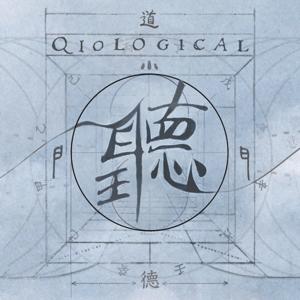
Hands may not be represented in the Ancient Chinese symbol for listen 聽, ting. But as practitioners of East Asian medicine, we need to understand the importance of listening with our hands, of tapping into the power of intentional touch, and contacting our patients with awareness. Listening with the hands is the foundation of Sotai, Tuina, Shiatsu, and other bodywork modalities.
In this conversation with Bob Quinn, we touch on the use of Yin Sotai as a gentle method of bodywork, including its foundational principles and the implementation of the treatment in the clinic. Bob also highlights the influence of mentor Peter Thompson, the connection of Yin Sotai and Jeffrey Dann's Koshi balancing protocol, the legacy of Dr. Hashimoto, and the philosophical genius of Buckminster Fuller.
Listen into this discussion on the influences, principles, and clinical application of Yin Sotai, which is a unique contribution by Bob Quinn on the technique founded by Dr. Keizo Hashimoto.
Qiological is on vacation for the month of July, this discussion is one of a series of ‘summer re-runs’ of some of our favorite conversations from Everyday Acupuncture Podcast, which was the forerunner of Qiological.
We often think of germs, genetic abnormalities, poor lifestyle choices or plain bad luck as being the cause of illness and disease. We go looking for the “smoking gun,” for the one thing that was the source of our troubles, but often the health issues we face arise out of a much more complex stew of causes and conditions.
In this episode Greg Bantick and I discuss the various ways that both illness and health can arise, how at times the symptoms we are troubled by are helpful messengers and how the influence of the mind plays a profound role in our wellbeing.
From the publisher's feed
Ranked by our users in the last 21 days
10,510 Listeners
270 Listeners
11,772 Listeners
1,857 Listeners
10,140 Listeners
12,706 Listeners
599 Listeners
3,297 Listeners
27 Listeners
525 Listeners
1,424 Listeners
1,097 Listeners
23 Listeners
17 Listeners
6 Listeners