
Sign up to save your podcasts
Or

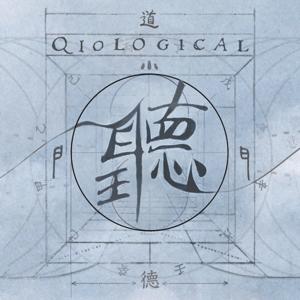


Based on Podcast App listening data
According to the Chinese philosopher Confucius, “By three methods we may learn wisdom: First, by reflection, which is noblest; Second, by imitation, which is easiest; and third by experience, which is the bitterest.” Imitation, observation, and reflection can help fine-tune our competencies, but true wisdom comes from experience.
When you practice acupuncture long enough; when you start to see the world through the lenses of Chinese medicine it begins to change your instinct. Putting your skin and heart in the game, creates the conditions and circumstances that allows the fundamentals of our medicine to teach you. It will change your perception and thinking. Gazing through the tides of Yin & Yang or the interplay of the 5 phases will awaken something that will allow you to see otherwise hidden things. There seems to be a spirit in the work we do.
In this conversation with David Allen, we touch on the curious path that brought him to Chinese medicine and pediatrics. He talks about the influence of a mentor and the idea of a native intelligence that points us in the direction of our hearts’ desire. We also riff a little on the malleability of acupuncture and the importance of reading between the lines in the clinic.
Listen into this discussion on the choices we make throughout our lives, the people who intersect us on our path, and how our hunches sometimes act as a reliable form of navigation.
When traveling do you turn on the GPS and follow the instructions, look at a map to orient yourself, or do you have a sense of the terrain and the capacity to navigate by landmarks, waterways and a sense of where north lies?
In your clinical work, are you orienting to a theory or idea, or toward something in the patient that is telling you in the moment what is needed? Are you working off a map, or attending to signals from the patient’s body and being?
In this conversation with Dan Bensky we investigate some listening tools that have their origin in Osteopathy, but also can be used to help us find acupuncture points and interact with them in a potent way. Furthermore, these methods can guide us in tracking the patient’s response to our interventions in real time.
Listen into this discussion on engaging our patients vitality through the use of palpation, sensing, and attention that will aid you in listening to the subtle messages from the patient’s body and qi.
The image of China’s Barefoot Doctors struck a resonant chord with those in the West who were looking for simple and effective means of helping people with medicine that was not tied to an established medical hierarchy.
In the late 60’s and early 70’s acupuncture had not made its way from the Chinese communities into the dominant culture. And the early adopters of Chinese medicine were just beginning to find their way to the East where they’d learn the language and medicine.
It was in this time that the Black Panthers and Young Lords in their work in building community resources came across acupuncture. And began to explore its use as a people’s medicine. And that connected with the groundbreaking addiction treatment work at Lincoln Hospital in The Bronx. This aspect of the history of acupuncture in the West has received little attention, but it caught the attention of Rachel Pagones, and she’s written a book about it.
Listen into this “community voices” conversation between Rachel and guest interviewer Beth Sommers on acupuncture as revolution and this grassroots effort of community organization, self-care and acupuncture.
Learning is continuous, not episodic. As the Chinese say, 活到老學到老, huo dao lao, xue dao lao, learn throughout your entire life. Resilience and capacity is built through the, at times, curious harvest of our experience. Life’s lessons don't come with a syllabus. Sometimes wisdom comes from misfortune; other times, you just stumble on it. Regardless, what we learn along the way helps us along the way.
"Listen to your elder's advice. Not because they are always right, but because they have more experience of being wrong."
Like the forces of Yin and Yang, learning in our healing enterprise is about striking a balance between confidence and doubt. It's about knowing when to double down, crack a book, or lean into the expertise patients have to offer.
In this conversation with Jessica Baer, we reflect on what she is discovering in the process of learning medicine and how all that might influence her future. We discuss the path that brought her to acupuncture school, how she's navigating the world of Chinese medicine as a student, and her future aspirations.
Listen into this discussion on the curious roads traveled that bring us to this present moment.
This is one of the podcast member episodes, and I wanted to share a few minutes of it, as it captures the spirit and essence of the conversation.
Enjoy this bit of essential qi. And if you’d like to listen to the complete conversation with Mark Parzynski, along with the other 250+ episodes then visit the website and sign up for a monthly or annual membership.
"Using the right tool for the job" may come off as rather clichéd, but it's true nonetheless. Knowing our tools, and that includes our theory, methods and skills is incredibly important. Our tools don't inherently make us better at our craft, but rather facilitate our capacity to help our patients.
Producing our best work as practitioners isn’t about the tools themselves, but rather how we use them and knowing when to use a particular tool. It's about finding what's suitable for a particular conversation – i.e., the relationship between the tool, the practitioner, and the patient.
In this conversation with Mark Parzynski, he shares the concepts and technicalities behind crafting masterful tools for acupuncturists and massage therapists—including the Teishin and Gua Sha tool. We also talk about intention, leaning on the teachings of the Ling Shu, the need to share our knowledge, the importance of simplification, and making room for new ideas in our practice.
Listen into this discussion on tools of the trade, the artistry and technical subtleties behind crafting them, having the right tools for the job, and utilizing them in clinical settings.
Building a successful practice is rewarding, but it's rarely a smooth ride. It's a path that takes us beyond our healing work and into the depths of business practices—from marketing to managing finances. Amid the multitude of details that go into running a small practice, it's easy to feel overwhelmed— which is why clarity of purpose is so helpful.
Navigating the ebb and flow of a small practice demands some self-scrutiny of our most intimate selves. What are your strengths? What are your values? Do we know what we're here for, and do have the courage to grasp it? And do we know what is not for us, and let it go?
In this conversation with Sydney Malawer, we talk about monitoring the pulse of your business, whether that's paying attention to your overhead or being authentically you. We explore some intuitive approaches to running a thriving Chinese medicine practice. Including building a practice that reflects who we genuinely are. What works for you? What are your strengths? What is not working, and when should you pivot?
Listen into this discussion on what it takes to start and build a small successful practice by tapping into the magic of the authentic vision within you.
As practitioners, it’s easy to ignore or fail to take note of the red flags that imply we’re headed for burnout. Not until the billowing smoke of burnout is blocking our view.
When you feel burdened by your responsibilities, it’s important to carve out space and build resilience—not necessarily to bounce back, but to grow through by adapting to the change. Learn to brake before you have a breakdown. A little time and quiet now will help you navigate the challenges and opportunities in your path more easily.
In this conversation with Celia Hildebrand, we discuss how the practice of medicine changes us along the way. We also talk about knowing when things are right for us at a certain time in our careers, identifying the red flags of burnout, finding ourselves at a time of overwhelm, and how experience helps us navigate working outside our comfort zones.
Listen into this discussion on collecting red flags, dealing with burnout, and changing in tandem with our changing practices and our stage in life.
From the publisher's feed
Ranked by our users in the last 21 days

10,510 Listeners
270 Listeners
11,772 Listeners
1,857 Listeners
10,140 Listeners
12,706 Listeners
599 Listeners

3,297 Listeners
27 Listeners

525 Listeners
1,424 Listeners
1,097 Listeners
23 Listeners

17 Listeners

6 Listeners