
Sign up to save your podcasts
Or

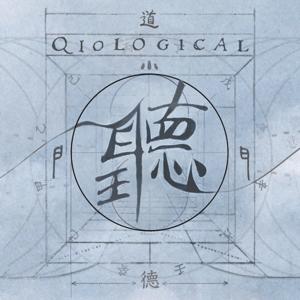


Based on Podcast App listening data
When I was a kid it was easy to smell a snow storm coming, or to be able to feel how the wind shifted and the light in the sky meant that you’d better take cover as a thunderstorm was maybe, if you were lucky, 20 minutes away. Us humans have the ability to sense deeply. And if you don’t’ think that’s true, reflect on the last time you knew there was trouble in your relationship, but when you probed your partner said, “nothing.”
Us humans have extraordinary abilities to sense deeply. Actually, these abilities are not extraordinary, they are just not in this day and time ordinarily used. As conventional medicine relies on the “evidence based” objective tests, and we in the Chinese medicine community have our own questions, theories and processes that prescribe how we use our sensing to determine what is going on for our patients.
In this conversation we go deeply into sensing. Into trusting our first impressions, and how listening attentively with our touch and presence can lead us to places where our patients need attention, even if they are not themselves aware of it. And even if it at first makes no sense to us either.
Listen into this conversation that explores the crossroads of Chinese medicine and old-school osteopathy.
Head on over to the show notes page for more information about this episode and for links to the resources discussed in the interview.
When you come right down to it… the practice of Chinese medicine is a kind of applied natural science.
What makes for an effective natural scientist? Mostly an abiding sense of curiosity. A willingness to have yourself proven wrong. The capacity for a kind of encouraging delight that emerges from following a thread of inquiry. And the fortitude to spend years or decades on following something that may or may not pan out, but journey is worth the effort.
In this conversation we explore and reflect on the path of practice, and the unexpected places to which it will take us.
Head on over to the show notes page for more information about this episode and for links to the resources discussed in the interview.
Fake it till you make it is not a helpful strategy for acquiring confidence. Any halfway competent human being can sniff out inauthenticity. We can only work at, and improve from, our genuine growing edge of ability and skill.
Cultivating confidence requires time and experience, generous amounts of both failure and success, and a kind of dogged persistence. It requires confronting what we don’t yet understand with an inquiring mind and willingness to be teachable. It demands a kind of steadfast trust that we can learn and adapt. And it takes both patience and a sense of urgency that we don’t waste any opportunity that shows up as challenge on a good day, and trouble on a bad one.
Gaining a sense of confidence is not something we can learn in a class, or purchase as a service. It can only arise from being lived. Listen into this conversation as we inquiry into the practices and experiences that help us to gain a sense of confidence and comfort with our clinical work.
Head on over to the show notes page for more information about this episode and for links to the resources discussed in the interview.
Some learning is more transmitted than taught. Observation, touch, the kind of connection that does not rely upon words. We love to make sense, especially to ourselves. But the theories in our heads, the maps of thought that can point the way, but are not the way; these can lull us into a feeling we understand when in fact our understanding is limited and limiting.
Developing a way to sense directly. Learning from pre-modern books that show us another way of perceiving. And being able to be present to our own unfolding experience in an attentive way. These are more than skills; these are ways expanding our sensorium so that we can both get out of our way and at the same time be present with our patients in ways that can help us not to miss the clues and cues that our theory focused mind would certainly overlook.
Listen into this conversation on the benefit of old books and how sensing opens vistas that theory can only point towards
Head on over to the show notes page for more information about this episode and for links to the resources discussed in the interview.
Chinese medicine is fractal nature. We can take the broad principles outlined in the Yi Jing, Five Phases or Six Jing and watch as they help us to tune in the particular level of life in which we are embedded or observing. Be it the resonance from tendon, to Liver, to Spring to the arising energy of the East. Or the way Taiyang cold balances Shaoyin heat. Or how the trigrams of water and fire are mirror images. The ancient Chinese sciences and philosophy can help us to unfold a phase within the ever-shifting tides of change.
Today’s conversation takes one of these fractal perspectives, the heavenly stems and branches, and investigates how it shows up in the practice of acupuncture.
Listen in to this conversation on how the stems and branches are reflected not just in heavenly cycles, but in the arrangement of acupuncture points and how this fractal energy can help enliven the work we do with our hands and needles.
Head on over to the show notes page for more information about this episode and for links to the resources discussed in the interview.
Our lives unfold in space-time. It’s the water in which we swim and so like fish, it is difficult to know the influence of the matrix within which we live our days and experiences our lives.
The Chinese ba zi, the eight characters, is a system based on the heavenly stems and branches that can help us to orient to the influences that shape us and can guide us in making sense of certain seasons of our lives.
While often used as a kind of 算命, suan ming, fortune telling system. The Ba Zi can help us or our patients to better understand the arising and falling away of particular influences that can affect our health and wellbeing.
Listen in to this conversation on how these eight characters of influence can help us to orient to the cycles of heaven and earth.
Head on over to the show notes page for more information about this episode and for links to the resources discussed in the interview.
From the publisher's feed
Ranked by our users in the last 21 days

10,504 Listeners

270 Listeners

11,767 Listeners

1,856 Listeners

10,139 Listeners

12,712 Listeners
598 Listeners
3,298 Listeners
27 Listeners
524 Listeners

1,424 Listeners

1,098 Listeners
23 Listeners
17 Listeners

6 Listeners