
Sign up to save your podcasts
Or

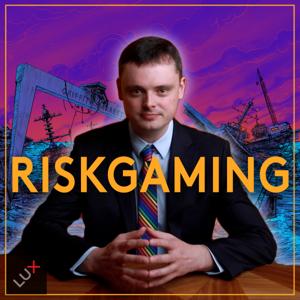


Chaos is the rule of the day, with markets, companies, governments and individuals being rapidly buffeted by events and change. Technology is exacerbating that chaos by offering asymmetric leverage to more people. On the positive side, technologies like AI and drones can drastically improve the productivity of workers and artists to perform their craft, benefiting us all. But there is a dark side as well: extremists are early adopters of new technologies that afford them the ability to maximize their evil objectives. With so much change in the world, how can we grapple with this new era of asymmetry?
Joining host Danny Crichton and Riskgaming director of programming Laurence Pevsner is Colin P. Clarke, the director of research at The Soufan Group and formerly a long-time terrorism analyst at RAND. He has spent years studying terrorist organizations and their thirst for new technologies and new means of financing their activities. His new book on Evgeny Prigozhin and the rise of The Wagner Group will be out later this year. The three talk about how new technologies are changing the threat landscape from terrorism, the changing contours of the so-called crime-terror nexus, why China is increasingly the focus of analysis, and how governments are responding to the increasing leverage of terrorists throughout the world.
Produced by Christopher Gates
Music by George Ko
Despite centuries of experience designing and playing war games, there is still very little rigorous research on how to evaluate what makes a good game. What’s the design goal? How much should (or even can) a game reflect reality? Are tighter or looser rules more likely to lead to productive learning? Is having fun important? That lack of rigorous analysis has historically stymied the wargaming profession, but a new generation of researchers want to push the field forward.
Today, with both Danny Crichton and Laurence Pevsner on vacation, we bring back our independent Riskgaming designer Ian Curtiss to host David Banks. David is senior lecturer in wargaming at the Department of War Studies at King’s College London, where his research focuses on the empirical evaluation of war games and how the craft can evolve in the years ahead. He is also the academic director of the King’s Wargaming Network.
Ian and David discuss the antecedents of wargaming, firming up the foundations of the field, why realism isn’t as useful a metric as engagement, why balancing play and realism is so challenging, how to consider internal validity in games and why its important not just to evaluate a game as a whole, but also its constituent parts.
Produced by Christopher Gates
Music by George Ko
Humans hate uncertainty, which means we are constantly looking for means to narrowly consider the future and its implications. Planning, predicting and debating what’s next may be the mainstay of any organization in the world, but organizations rarely want to confront upcoming existential challenges or radical shifts in strategy. That’s where foresight psychology comes in, with the goal of unearthing our avoidance of tough questions and finding ways to overcome them.
With Danny Crichton and Laurence Pevsner out on holiday, this is a special episode bringing together our independent Riskgaming designer Ian Curtiss and his friend Graham Norris. Norris has a doctorate in organizational psychology and for the past decade, has consulted with all kinds of businesses around the world on his theories of foresight psychology.
Ian and Graham discuss what makes us blind to the future, why psychologists have not been heavily represented in futurism, the difference between individual and organizational approaches to foresight, and why scenario thinking is an important approach to understanding challenges.
Produced by Christopher Gates
Music by George Ko
AI and democracy are in great tension with each other. AI models are built by a priesthood of research specialists, unmoored from the will of the public. Yet, these very models are increasingly running important parts of the economy and increasingly government. How do we take advantage of these new capabilities without losing control of them?
That’s the debate at the center of our conversation today with Gideon Lichfield, the writer behind the Substack “Futurepolis” and the former editor-in-chief of Wired. Through his recent writings, Gideon has explored what a public option might look like with AI, how participatory democracy can be buttressed by new organizational and technical designs, and the tactical changes needed to make it much easier for government to procure software.
Joined by host Danny Crichton and Riskgaming director of programming Laurence Pevsner, we first talk about Gideon’s two recent experiences playing our scenarios on the Chinese electric vehicle market and AI deepfakes. Then we pivot to a broader conversation on the future of governance, discussing everything from participatory budgeting and liquid democracy to balancing between technocracy and democracy while remaining optimistic about the future.
Produced by Christopher Gates
Music by Georg Ko
Amidst the upheaval in Washington, D.C. these days, one of the most notable and controversial decision from the second Trump administration has been the dismantling and closure of the United States Agency for International Development (or U.S.A.I.D.). In addition to funding humanitarian response and global public health initiatives (most notably with HIV/AIDS), the agency has prioritized governance programs all throughput the world. Traditionally, self-interest alone has proven sufficient for helping America’s current and future allies alike.
That’s no longer the case, according to Maany Peyvan, the former senior director of communications and policy at the agency under the Biden administration. He argues that instead of self-interest, we need to recast efforts to help other countries through the lens of charity, emphasizing America’s long-standing leadership as one of the most charitable nations in the world when public and private giving are added together.
We talk about the plight of U.S.A.I.D., what’s happening with the staff, why self-interest no longer has the same purchase over debates on foreign relations as it once did, how technologies like artificial intelligence are transforming aid work, and why grants and finance work side-by-side in helping countries succeed.
Produced by Christopher Gates
Music by George Ko
There are two sides of America. One is the country’s world-leading innovation centers, which offer the highest salaries and potential wealth creation anywhere in the world. The other is the bleak deindustrialized hinterlands where former mines and factories once dotted the landscape. Here, middle class jobs have been casualized or wiped out entirely, leaving behind a depressing and well-trodden tale of economic loss.
Joining host Danny Crichton and Riskgaming director of programming Laurence Pevsner is Michael Beckley, a professor at Tufts University and the author of the recent essay, “The Strange Triumph of a Broken America.” He argues that the decentralized institutions that make America strong are also precisely its most vulnerable feature. Creative destruction is extremely useful in fast-moving fields like software, but is anathema to building an industrial base where capital assets are key. How can America balance between the two without losing both?
We talk about the vagaries of America’s domestic and foreign policies, how to balance decentralization with creating pathways toward greater prosperity, whether America is returning to isolationism and finally, what we can do with left behind regions to return them to prominence and success.
Produced by Christopher Gates
Music by George Ko
Cruel, petty and occasionally magnanimous, fates rule our lives, determining everything from our careers and romances to our financial success. Despite a burgeoning academic literature studying luck and the occasional theoretical probabilist complaining about Bayesian statistics, we haven’t brought the chance of chaotic complex systems into the classroom, and that’s particularly true in political science and international relations. That should change, and play-based learning offer new forms of education for future generations.
Joining host Danny Crichton and Riskgaming director of programming Laurence Pevsner is Nicholas Rush Smith, director of the Master’s Program in International Affairs at The City College of New York and its Graduate Center. His students graduate into plum assignments across international organizations like the United Nations, and he has been increasingly utilizing simulations and experiential learning to transform how future international civil servants learn their craft.
We talk about Nick’s recent experience playing “Powering Up,” our Riskgaming scenario focused on China’s electric vehicle market. Then we talk about the power of play, how dopamine affects the learning cycle, why losing is the best education for winning, David Graeber’s ideas around the balance between rules and play, and finally, how play-based learning can teach principles used in even the most bureaucratic institutions like the United Nations and the U.S. Army.
Produced by Christopher Gates
Music by George Ko
When Russia launched its war on Ukraine in early 2022, it became the first land battle on European soil since World War II. Warfare has changed dramatically since then — from first-person view drones to AI-mediated strategic communications, as well as intelligence gathering and operations — and yet, critical continuities remain between Russia’s present and past strategies and tactics.
To learn more, Riskgaming host Danny Crichton interviewed Daniela Richterova, who is Senior Lecturer in Intelligence Studies at the Department of War Studies, King's College London. She has been researching the history and contemporary practices of Russia’s overseas intelligence missions and recently co-authored a paper on how Russia is using a gig-economy model to hire agent-saboteurs in the field, sometimes for as little as a few hundred dollars. This new operational model has allowed Russia to dramatically scale up its attacks on infrastructure and other high-priority targets at minimal cost despite overseas sanctions.
Daniela discusses the continuities in doctrine between the KGB and today’s Russian FSB, how agent training has evolved over the decades, why the gig economy has been so effective for Russia, what Russia seeks to target and why, and finally, the risk calculus and cultural differences between Russian political and espionage leaders and those of other nations.
Produced by Christopher Gates
Music by George Ko
There’s a growing movement to apply the best practices of technology to the U.S. government. Whether it’s Elon Musk and DOGE (the so-called Department of Government Efficiency) or the myriad of chief technology and data officers across all levels of government, the hope is that technology can enhance productivity and minimize errors, offering a better experience with government for all Americans.
Few people have the wealth of experience on this front than our guest today, Christine Keung. She has a tech industry background from Dropbox and her current role as a partner at J2 Ventures, but also a lengthy tenure across party lines, from working in China with Ambassador Max Baucus, to becoming the Chief Data Officer of San Jose, California, to helping launch the Paycheck Protection Program at the Small Business Administration.
Alongside host Danny Crichton and Riskgaming Director of Programming Laurence Pevsner, we talk about her recent experience playing Powering Up — our Riskgaming scenario on the Chinese electric vehicle market — her experiences in government and the challenges of modernization, and then finally, we turn to DeepSeek and the U.S.-China competition that has splashed across the front pages the past week.
Produced by Chris Gates
Music by George Ko
It’s been a bad few months (and years and decades) for the global commons. Chinese trawlers have repeatedly knocked out internet cables in international waters. Outer space is being militarized by Russia and others, threatening the demilitarized posture adopted by the Outer Space Treaty. Chinese hackers are using cyber weapons to infiltrate the U.S. Treasury through the Salt Typhoon hacks, while Antarctica is being explored by multiple militaries in contravention of the peace proposed in the the Antarctic Treaty. Then there’s the decline of the information commons, where paywalls increasingly move critical news and data out of reach of citizens.
In short, the global commons is losing primacy. Friend of the podcast Scott Bade highlighted this theme for geopolitical strategy firm Eurasia Group’s annual Top Risks report, and we decided to follow up with our own Riskgaming conversation. So Danny Crichton and Laurence Pevsner teamed up to talk through the global commons and what’s endangering it.
We discuss the privatization and securitization of the commons, how post-World War II institutions are buckling under new pressures from rising powers, why technology is both helping and hurting, and finally, what America can do as a nation to stay open under threat.
Produced by Chris Gates
Music by George Ko
From the publisher's feed

3,054 Listeners

588 Listeners
2,179 Listeners

1,978 Listeners
2,697 Listeners

2,448 Listeners

1,092 Listeners

950 Listeners

2,200 Listeners

606 Listeners
1,452 Listeners

289 Listeners

2,141 Listeners

10,183 Listeners
263 Listeners