
Sign up to save your podcasts
Or

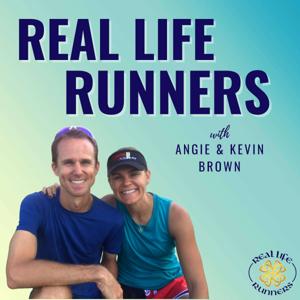
By Dr. Angie Brown
Dr. Angie and Kevin Brown are here to help runners reconnect to themselves to become physically and mentally stronger runners through conversations about training, mindset, nutrition, health and we
... more
5
163163 ratings


The podcast currently has 512 episodes available.
The most played episodes among Podcast App listeners.
If you're a woman in perimenopause or postmenopause, you've probably seen the claim that running is bad for your hormones because it raises cortisol. Maybe you've even wondered if you should be doing less cardio, switching entirely to walking, or giving up running altogether. In this episode, Kevin and I unpack that idea and talk about what cortisol actually does in the body. Yes, exercise temporarily raises cortisol, but that's a normal and useful response. The bigger issue is chronic stress, poor sleep, under-fueling, and inadequate recovery. And while menopause can change how our bodies respond to stress, that doesn't mean we need to stop doing something that's incredibly valuable for our cardiovascular health, fitness, and brain health. I want you to walk away from this conversation feeling less afraid of running and more confident about how to balance running, strength training, fueling, recovery, and the rest of your life. 00:00 – The Menopause Running Myth 02:50 – Where the Claim Comes From 07:08 – Cortisol Isn't the Villain 11:08 – Menopause and Cortisol Regulation 13:41 – What Actually Drives High Cortisol 15:20 – Research Says Aerobic Exercise Helps 18:11 – The Real Risk Is Heart Health 21:35 – Why Walking Isn't Enough 25:09 – VO2 Max and Longevity 29:03 – Measuring VO2 Max 33:01 – Training to Boost VO2 34:16 – Brain Benefits of Cardio 38:44 – Cortisol Fearmongering 40:24 – Strength Plus Running 43:11 – Walking Versus Aerobic Exercise Gain access to my new secret podcast, Unbreakable: The Runner's Guide To Injury-Proofing Your Body After 40. Click here: https://www.realliferunners.com/secret Join the Team! --> https://www.realliferunners.com/team Thanks for Listening!! Be sure to hit FOLLOW on Apple Podcasts, Spotify, or your favorite podcast player Leave a review on Apple Podcasts. Your ratings and reviews really help and we read each one! Come find us on Instagram and say hi! Don't forget: The information on this website is not intended to treat or diagnose any medical condition or to provide medical advice. It is intended for general education in the areas of health and wellness. All information contained in this site is intended to be educational in nature. Nothing should be considered medical advice for your specific situation.

Ever feel tired and wonder what to do about it? With the recent shift from daylight saving time, a lot of runners are feeling the effects of disrupted sleep—and that small change can actually increase fatigue, slow reaction time, and even raise injury risk. That’s why we wanted to walk through how we think about fatigue as coaches and runners ourselves. One of the biggest things we see is that not all fatigue is the same, and learning to recognize the difference can help you make better decisions about your training. We break fatigue into three main categories and address our stoplight framework: Normal training fatigue = Green light. This is the kind that comes with good training. Your legs might feel heavy at the start, but once you warm up and settle into the run, things start to feel better. Accumulated fatigue or stress overload = Yellow light This is when training stress combines with life stress. Poor sleep, irritability, higher resting heart rate, brain fog, and easy paces feeling harder than usual are all signs your body might need an adjustment. Red-flag fatigue = Red light This is when your body is clearly asking you to stop. Sharp pain, illness symptoms, deep exhaustion, lingering soreness, dizziness, or severe brain fog are signs that pushing through could do more harm than good. To help runners decide what to do on days like this, we share a simple three-question filter we use ourselves: • Is this physical fatigue or nervous-system fatigue? • If I start slow, does it start to feel better? • What is the intention of today’s run? From there, the choice usually becomes clear: push through, adjust the workout, or take a full rest day. We also talk about why you almost never need to “make up” a missed workout. Trying to cram it back in usually creates more fatigue than progress. In our experience, chronic overload is far more damaging than the occasional missed run. The goal isn’t perfect training. The goal is consistent training that respects your body, especially as we get older and recovery matters more. If you’ve ever wondered whether you should rest, adjust, or push through a run, this episode will give you a simple framework to help you decide. Gain access to my new secret podcast, Unbreakable: The Runner's Guide To Injury-Proofing Your Body After 40. Click here: https://www.realliferunners.com/secret Join the Team! --> https://www.realliferunners.com/team Thanks for Listening!! Be sure to hit FOLLOW on Apple Podcasts, Spotify, or your favorite podcast player Leave a review on Apple Podcasts. Your ratings and reviews really help and we read each one! Come find us on Instagram and say hi! Don't forget: The information on this website is not intended to treat or diagnose any medical condition or to provide medical advice. It is intended for general education in the areas of health and wellness. All information contained in this site is intended to be educational in nature. Nothing should be considered medical advice for your specific situation.
Training Single-Leg Control for Better Running In this week’s episode, we’re diving into something I talk about with runners every single day: your hips. If you’ve ever wondered why certain niggles keep showing up, why your gait feels “off,” or why your stride doesn’t feel as smooth as it should, this episode is for you. Although many people think of running as a two-legged sport, it is actually a one-legged activity repeated thousands of times. Every step is a single-leg balance, stability, and power moment. So if your hips aren’t pulling their weight, you’ll feel it. For many runners, especially as you move into your 40s and beyond, hip weakness becomes one of the biggest contributors to gait inefficiencies and overuse injuries. In this episode, we break down:Why hip strength and control are foundational for efficient, pain-free runningHow single-leg stability impacts everything from cadence to stride mechanicsThe surprising ways hip weakness shows up in your gait (sometimes in places you wouldn’t expect!)Personal stories from our own “aha” moments—when we finally connected the dots between hip strength and better runningSimple assessments you can do at home to understand your hip controlKey exercises that build strength, stability, coordination, and power—all levels welcomeWhy runners over 40 should prioritize this even more (hint: it’s not just about strength—it’s about longevity)We wrap up the conversation with actionable steps you can start using today to feel more stable, more powerful, and more confident on the run. Because when your hips show up, everything in your running feels better, and your everyday movement does, too. If you’ve been skipping your strength work or unsure where to start, this episode will give you the clarity and motivation to take the next right step. Tune in and let’s get those hips working for you, not against you! 00:51 The Importance of Hip Strength in Running 01:12 Personal Stories and Experiences 01:49 Understanding the Role of Hips in Running Mechanics 07:15 Kevin's Journey and Hip Strengthening Exercises 09:20 Common Running Issues and Hip Weakness 22:59 Understanding Pelvic Drop and Lateral Trunk Lean 23:43 Compensations and Overstriding in Running 24:07 The Importance of Strength Training for Runners 25:20 Common Injuries Linked to Weak Hips 26:16 Achilles Issues and Calf Overcompensation 27:09 The Role of Strength Training in Preventing Injuries 29:43 Single Leg Control and Strengthening Exercises 37:23 Testing and Improving Hip and Single Leg Stability 41:33 Exercises to Enhance Hip Strength and Mobility 45:50 The Importance of Single Leg Strength in Running Gain access to my new secret podcast, Unbreakable: The Runner's Guide To Injury-Proofing Your Body After 40. Click here: https://www.realliferunners.com/secret Join the Team! --> https://www.realliferunners.com/team Thanks for Listening!! Be sure to hit FOLLOW on Apple Podcasts, Spotify, or your favorite podcast player Leave a review on Apple Podcasts. Your ratings and reviews really help and we read each one! Come find us on Instagram and say hi! Don't forget: The information on this website is not intended to treat or diagnose any medical condition or to provide medical advice. It is intended for general education in the areas of health and wellness. All information contained in this site is intended to be educational in nature. Nothing should be considered medical advice for your specific situation.
Gain access to my new secret podcast, Unbreakable: The Runner's Guide To Injury-Proofing Your Body After 40. Click here: https://www.realliferunners.com/secret How to Enjoy Running More: Overcoming Pain, Letting Go of Judgment, and Finding the Fun in Every Run In this week’s episode, Kevin and I dive into something every runner wants more of—joy in running. Because let’s be real, not every run feels amazing. Some days are light and fun, and others feel like a grind. But with the right approach, running can be something you actually look forward to. We share some of our own stories (the good, the tough, and the funny!) and talk through practical ways you can bring more enjoyment into your miles. Here’s a little sneak peek of what we cover: Eliminating pain – Strength training and mobility aren’t just “extras”—they’re the keys to feeling good in your runs.Letting go of judgment – You are not “too slow.” You’re a runner, exactly as you are.Creating a plan that fits you – Adjusting speed work, long runs, and strength sessions so that training feels sustainable and fun.At the end of the day, running doesn’t have to feel like punishment—it should build you up, body and mind. We also share some exciting resources to help you along the way, including our new secret podcast (yep, you heard that right!) and our 30-Day Strong Runner Challenge—a simple way to start combining running and strength so you can enjoy running more, with less pain and more confidence. 👉 Tune in now and let’s make running something you truly love again. 02:25 The Reality of Enjoying Running 05:26 The Inconsistency and Injury Cycle 12:20 The Hamster Wheel of Chasing PRs 20:18 Consistency is Key: Health and Running 27:43 Making Running More Enjoyable 29:45 Understanding Discomfort vs. Pain in Running 30:42 The Importance of Strength Training 32:22 Letting Go of Judgment 37:39 Finding Enjoyment in Running 42:18 Creating a Personalized Running Plan 46:08 The Non-Negotiable Need for Strength Training 50:15 Listening to Your Body's Signals 51:45 Making Running Fun and Enjoyable Gain access to my new secret podcast, Unbreakable: The Runner's Guide To Injury-Proofing Your Body After 40. Click here: https://www.realliferunners.com/secret Join the Team! --> https://www.realliferunners.com/team Thanks for Listening!! Be sure to hit FOLLOW on Apple Podcasts, Spotify, or your favorite podcast player Leave a review on Apple Podcasts. Your ratings and reviews really help and we read each one! Come find us on Instagram and say hi! Don't forget: The information on this website is not intended to treat or diagnose any medical condition or to provide medical advice. It is intended for general education in the areas of health and wellness. All information contained in this site is intended to be educational in nature. Nothing should be considered medical advice for your specific situation.
Decluttering is the word of the moment and although Angie got in on the decluttering movement a few years back after reading the book, we are currently undergoing a massive decluttering of the house. This, of course, got us thinking about how decluttering applies to our lives and naturally, running. In this show, we bring you a little more into our lives with a discussion of the decluttering transformation steadily moving its way through our house one room at a time. Angie points out the amazing benefits of mentally releasing yourself from things that you do not need anymore. We spend some time talking about the Konmari method of only holding onto items that spark joy for you. This has clearly done wonders for every closet and dresser in the house that we have hit so far. While Angie is the lead on all organizational tasks in our house, I do appreciate that I can see all of my clothes and that I do not still own several shirts that I constantly flip past to get to what I want to wear. The conversation turns to the point of the simplifying method. We cannot move forward and improve ourselves if we are being dragged down by things from our past. We take this another step by talking about simplification of your social calendar. You can probably fill every day with plenty of tasks and outings, but simplifying your life means choosing what is important to you and being willing to say no to events that do not matter as much. Again the topic swings back around to setting priorities. When you have clearly defined the things in your life that matter the most and ranked them, it becomes easier to say no to events that are connected to a low priority when the better choice may be time spent connecting to your family, or time spent sleeping to improve your health. With running the idea of simplifying can seem rather complicated. We have had plenty of episodes about different training methods, different types of workouts, and the need for speed and strength to improve. It can start to become overwhelming. Streamlining your training is connected to your purpose for running. Like setting priorities in life, you must understand what you want to get out of running and plan with that in mind First, pick a method and be committed to that method for a while. Do not constantly jump from one system to another in search of greener pastures. You are more likely to get yourself hurt or stagnating because no system is given enough time to payoff. Second, the different types of workouts from long and slow, to short speed, to hills, to strength, to threshold, and on and on are not boxes that must be checked. You do not need to hit each workout in every week. There are some methods of organization that have been done more than others, but that does not mean they are right for you. Choose a variety of workouts, but if you have some favorites that you like repeating then that’s ok too Running is a big experiment of one person in which you get to decide how the variables work. A coach can help guide you, but there is not a magic formula that coaches are keeping locked up and only share at the secret meeting. One the other hand, that shirt at the bottom of your drawer that you have not worn since college, you should throw that out. Resources: Our Favorite Products to Make Healthy Living Easier Our Coaching Programs We have SHIRTS! Show your Real Life Runner Pride! Gain access to my new secret podcast, Unbreakable: The Runner's Guide To Injury-Proofing Your Body After 40. Click here: https://www.realliferunners.com/secret Join the Team! --> https://www.realliferunners.com/team Thanks for Listening!! Be sure to hit FOLLOW on Apple Podcasts, Spotify, or your favorite podcast player Leave a review on Apple Podcasts. Your ratings and reviews really help and we read each one! Come find us on Instagram and say hi! Don't forget: The information on this website is not intended to treat or diagnose any medical condition or to provide medical advice. It is intended for general education in the areas of health and wellness. All information contained in this site is intended to be educational in nature. Nothing should be considered medical advice for your specific situation.
The podcast currently has 512 episodes available.

11,822 Listeners

1,505 Listeners
12,111 Listeners
1,343 Listeners

3,404 Listeners

9,170 Listeners
1,874 Listeners

29,106 Listeners

14 Listeners
1,419 Listeners

2,063 Listeners

19,244 Listeners

1,779 Listeners
365 Listeners

189 Listeners