
Sign up to save your podcasts
Or



Based on Podcast App listening data
Wes from Flower Mound, Texas, has a familiar challenge: how to attract more qualified B2B leads and convert them before they slip away. He’s already tried a variety of channels, including inside sales, social media, and email, but is struggling to ramp up both volume and quality.
Below are the key insights from our conversation, along with practical strategies to multiply your lead count and build a system that secures face-to-face meetings with the right buyers.
There’s rarely a single magic trick that opens the floodgates of perfect leads. In B2B lead gen often requires multiple touch points before prospects even see why they need to talk to you. A blend of outbound prospecting, inbound content marketing, and nurturing activities generally works best. The sum of these efforts can accelerate your pipeline more effectively than leaning on one channel alone.
If you expect busy decision-makers to respond, talk about their pain—not your credentials. It’s easier to draw someone in by asking a question they can’t ignore: “Is high turnover costing you millions in lost productivity?” or “Has rapid growth left your culture in shambles?” The goal is to make them nod in agreement before they realize they’re reading a marketing pitch. That’s when they self-select into your funnel and become receptive to a follow-up call.
Wes wanted advice on better leads, but high-quality leads can still go cold if your response lags. Once someone opts in or fills out a form, you have a limited window to capitalize on that interest. Even a 30-minute delay can drop contact rates dramatically.
Because B2B solutions aren’t often top-of-mind until there’s an obvious buying window, thought leadership and content marketing are critical. Position your business as a problem-solver. Short webinars, white papers, or case studies can showcase real transformations you’ve facilitated.
Wes asked whether to target a handful of organizations deeply or go wide. In B2B, sales randomness is the enemy of effectiveness. Identify the types of companies—size, leadership style, growth trajectory—that consistently need your help. Zero in on those decision-makers who likely hold budget authority, whether that’s a CEO, COO, or line-of-business leader. Aim higher first and multi-thread down later, if needed.
It’s one thing to get leads in the door and another to turn them into appointments. That “last mile” is where your marketing spend either pays off or gets wasted. By the time leads get to you, they’re often aware of a problem. Your job is to connect that problem to a tangible path forward:
Even the most robust strategy will fade if you aren’t iterating. Launch new ad campaigns in short sprints, measure cost per lead, and pivot quickly if the numbers don’t add up. Tweak email subject lines and social copy. Identify high-potential communities (like certain LinkedIn groups or niche events) where your target ICP congregates. Expect to experiment regularly to keep your funnel active.
Generating better B2B leads means speaking directly to your prospects’ pain, providing a fast path to get help, and ensuring your team engages the moment an opportunity appears. Avoid random broad strokes—focus on the segment where you repeatedly succeed. Combine outbound and inbound activities for maximum coverage. Most importantly, never let leads linger. Speed and empathy on the first call often mean the difference between closing a 90% prospect and watching them vanish.
If you have a question for me, head to salesgravy.com/ask and let me know what’s on your mind.
George Foreman gave us a masterclass in resilience, on never giving up. His pivots and comebacks from defeat were legendary. He was a force of nature and one of the greatest boxers, salesmen and personalities the world has ever known. His inspirational story matters to us because one of the most critical mental disciplines for sales professionals is resilience.
The George Foreman most of us remember, the man with the big charismatic smile selling grills on TV, was a far cry from the young man growing up in poverty in Houston’s Fifth Ward, where lunch was often a mayonnaise sandwich.
As a teenager, George was an angry, mean bully who stole from kids at school and was shoplifting and mugging his way through his neighborhood. He was living on the edge, one arrest away from landing in a jail cell and potentially a life behind bars.
One night, he was lying flat on his face in stinking mud, hiding from the police, when it hit him like a left hook that he was going nowhere like this. It was a moment of truth that changed the trajectory of his life.
Lying there covered in filth, he made a promise to himself to change his path. He realized that if he wanted to avoid going nowhere, he had to make a massive mindset shift.
He enrolled in the Job Corps—a federal program that helps disadvantaged youth pick up real life skills—and soon after discovered boxing. And from that moment on, he replaced petty crime with gloves, replaced street fights with disciplined training, replaced despair with a sense of purpose.
This type of mindset shift is exactly what resilience is about. Sometimes you’ve got to face the fact that your old excuses, old habits, or old environment aren’t working for you anymore. And when you decide to do something different—really decide—you set the stage for everything else that follows.
That stinking mud moment is where you get real about your situation. It’s where you decide that you’ve had enough and realize that the change you are looking for can only be found inside yourself because that’s where resilience comes from.
Once George got serious about boxing, he rocketed to stardom. He won gold in the 1968 Olympics, then tore through the heavyweight division.
In one of his most famous fights, he defeated Joe Frazier in just two rounds, creating the iconic moment when Howard Cosell screams, “Down goes Frazier, down goes Frazier, down goes Frazier!” Foreman emerged from that fight as a heavyweight wrecking ball, the unstoppable champion of the world.
Then, he ran into a wall called Muhammad Ali. Millions of people tuned in to watch Foreman and Ali battle it out in what was hyped as the “Rumble in the Jungle.”
Going into the fight, Foreman was the overwhelming favorite. But it was his overconfidence that lulled him into Ali’s famous rope-a-dope strategy. This led to a crushing and embarrassing defeat.
Ali knocked Foreman out in the eighth round, shocking the world and pulling off the upset of the century. Foreman was humiliated on the global stage. In that moment, he went from being the hardest hitting, baddest man on the planet to an also-ran.
Sales and life can be the same way. You might have soared for months, hitting every goal. Then the bottom falls out. The real test isn’t whether you can ride success, but whether you can respond to defeat with resilience. The real question is, will you pick yourself up and make a comeback or fold up like a cheap lawn chair and quit. Will your failure become a tattoo or temporary bruise?
After that loss to Ali, Foreman was devastated. But he continued fighting until at the age of 28, he had a near death experience in Puerto Rico following a loss to Jimmy Young. It was one more lapse into overconfidence in which Foreman failed to prepare for the fight and was taken down by yet another underdog.
Following the fight, Foreman collapsed in the locker room suffering from exhaustion and heatstroke. There, in that pivotal moment, after being revived, he became a born-again Christian, and retired from the sport to lead a life as an ordained minister.
But sometimes that’s what you need—a chance to heal, refocus, and reconnect with what matters. Resilience doesn’t mean plowing ahead blindly. Sometimes it means taking a step away so you can come back stronger. And that’s exactly what George Foreman did.
Twenty years after losing to Muhammed Ali, Foreman faced a new challenge. His church was struggling to pay its bills and needed money to build a youth center.
Broke and needing money, at 38 years old, he announced what would become one of the most stunning comebacks in sports history. He was returning to the ring
At his age, he was ancient by boxing standards. People scoffed. Critics laughed, fans were skeptical, but George believed he had another act in him.
Success didn’t come right away. He fought 30 comeback fights and lost titles to Evander Holyfield and Tommy Morrison.
But in 1994, Michael Moorer accepted a heavyweight championship bout with Foreman, seeing him as a washed up old man he could easily knockout.
Ten rounds into the fight, Foreman—who was wearing the same boxing trunks he had worn when losing to Muhammad Ali 20 years earlier—landed a devastating blow to Moorer knocking him out to reclaim the heavyweight crown.
Then George sank to his knees in the corner and prayed. He was 46 years old.
It was an incredible full-circle moment of triumph and redemption that instantly made him a hero to people everywhere. The “washed-up” old man proved to millions that age is just a number.
With hard work, faith, and unwavering perseverance, almost anything is possible. You’re never “too old” or “too washed up.” You can adapt, learn new tools, and surprise the doubters.
Young George Foreman relied on aggressiveness and raw power but overconfidence was his kryptonite. The older, wiser George Foreman flipped the script on his younger, overconfident opponents and fought smarter, pacing himself, patiently waiting for the right moment to land the knockout punch.
George Foreman’s three-decade boxing career ended with an incredible record of 76 wins, 5 losses and 68 KOs. But what is most remarkable is that’s not where the story ends.
After regaining the heavyweight title at age 46, suddenly, Foreman wasn’t just the champ—he was a beloved celebrity. He then leveraged this newfound love and trust along his trademark smile into something that transcended boxing entirely: the George Foreman grill.
A whole generation—many who never saw him throw a single punch—came to know him only for that grill. He was on TV constantly—becoming one of the world’s most recognizable people. He even had a television sit-com.
Over 100 million George Foreman Grills have sold worldwide, and it still outsells its competitors today. Foreman personally walked away with over $200 million from the endorsement deal (more than Tiger Woods earned from his deal with Nike).
George Foreman was a onetime street kid growing up in poverty who hid in muddy filth to escape the police, a man who suffered humiliating defeats on the world stage, who came back at age 46 to reclaim the heavyweight title, and then became a household icon for healthier cooking and a beloved American hero.
George Foreman’s amazing life is a testament to the unstoppable force of resilience.
If you’re lying in your own stinking mud, this could be your moment of truth. You might be one big pivot away from your own comeback story. But only you can make the choice to stay facedown in the mud or get up, clean up and jump back into the fight.
Always remember that when it’s time to go home, make one more call. That’s how you stay in the fight and that’s how champions are made.
Raise your game, unleash your potential, make the pivot to your next big thing with our FREE Goal Planning Guide
Wherever you are in your sales journey, you need a mentor—now.
If you’re serious about becoming a top performer or want to stay at the top of your game, you need more than just grit and determination. You need a guide. A mentor who’s been through the fire and who can help you avoid costly mistakes.
Sales expert Tony Morris stands behind the power of mentorship and the impact it can have on confidence in The Sales Gravy Podcast. Sales is about 80% confidence—you can’t afford to miss out.
The truth is, the best salespeople aren’t born—they’re built. And behind almost every top closer is a mentor who showed them the ropes.
Let’s imagine you’re new to sales. Or you’ve got some time under your belt. Or maybe you’re a seasoned vet.
What do you all have in common? You all need a mentor.
Most salespeople fail not because they lack talent, but because they try to figure everything out on their own. They treat sales like a solo sport when it’s really a team effort.
Take the case of Paul—fresh out of college and hungry to make a name for himself in sales. He had the energy and the drive, but he was missing something critical: guidance.
Paul made call after call, sent countless emails, and chased leads relentlessly. But his close rate was abysmal.
He’d get shut down early, lose deals at the negotiation table, and get ghosted by prospects who had initially shown interest.
But sales isn’t just about following a script—it’s about reading the room.
Timing, tone, objection handling, and reading the prospect’s emotional state. That’s where a mentor comes in.
After months of frustration, Paul finally got paired with Mark. Mark was a legend—consistently at the top of the leaderboard, always winning deals that seemed impossible.
Mark had also been in the trenches. He’d faced every objection and lost more deals than Paul had even pitched.
Mark didn’t give Paul a playbook—he gave him a framework. He taught Paul how to listen instead of just hearing. He showed him how to control the flow of a conversation and ask better questions.
Mark didn’t just give Paul advice. He let him shadow his calls, debrief after tough conversations, and sharpen his approach through roleplay.
Within three months, Paul’s close rate skyrocketed. Why? Because Mark showed him what works. Paul didn’t have to figure it out through trial and error—he had a shortcut.
Positive or negative, feedback makes you a better closer. It cuts down your learning curve and sharpens your edge.
There’s constructive criticism: how to fix your call framework, how your because statement falls flat, how your questions didn’t draw out the prospect’s pain. How your buyer wasn’t in the room
Then there’s positive feedback—every salesperson’s favorite. What you’re doing right that you can lean into, continue to hone, and repeat.
Great sales mentors aren’t a dime a dozen. But the guidance they provide is invaluable. Here’s what a mentor gives you:
Here’s the reality: You can figure sales out on your own. You can take your lumps, learn from failures, and eventually get better.
Or you can bypass the struggle by finding a mentor who’s already walked that path.
Having a mentor isn’t just about getting better at sales—it’s about becoming the kind of person who wins consistently. A good mentor won’t just teach you how to close deals; they’ll teach you how to think like a closer.
That’s the difference between an average sales career and an elite one. You don’t have to go it alone. Find a mentor. Learn the process. Master the game.
Need help finding a mentor? We’ll help you develop a personalized mentoring and coaching path that fits you. Set up a free assessment here: https://salesgravy.com/coach/
Gaius, who runs an insurance brokerage in Ohio wants to know how to get his new sales agents cold calling and building pipeline earlier in their training cycle, without making them feel overwhelmed and sabotaging their confidence.
If you’ve ever hired a sales class or tried to ramp up new hires in an industry with complex products or strict guidelines, you’ll relate to Gaius’s dilemma. Below, you’ll find the key takeaways from our conversation on accelerating new rep success, establishing realistic expectations, and blending company marketing with individual agent prospecting efforts.
Gaius plans to hire new property-casualty agents in classes of four, each going through about 3–4 months of training. During that time, they have to learn multiple carriers, underwriting guidelines, and compliance rules so they don’t accidentally write poor-fit policies or lose deals over technicalities.
It’s crucial they build confidence before being “thrown to the wolves.”
But here’s the catch: If new hires only focus on product and system knowledge for months, their pipeline remains empty. By the time they’re “ready” to sell, they’ll be way behind on prospecting —and might even lose that DAy One enthusiasm for building relationships.
The question is, how soon can they start generating leads and setting up sales conversations?
As I shared with Gaius, I’ve seen many companies assume new reps aren’t “ready” to prospect until they’ve absorbed the entire knowledge library. Yet waiting too long to do real sales activities can backfire.
If new hires can set even a few appointments or pass warm leads to experienced agents, it gives them a sense of accomplishment. That momentum helps them stick with the grind of more complex training.
In industries with loads of carriers and underwriting rules, real-life sales scenarios actually teach new reps faster than purely theoretical training. Once they’ve got a potential client on the hook, the rep has motivation to find the answers.
Companies that mix early pipeline-building with supported team selling often see new hires reach quota faster—sometimes shaving weeks or months off the usual ramp-up. And yes, there’s a risk of missteps. But that’s where a collaborative culture (“sell as a team”) ensures mistakes become teachable moments, not deal-killers.
When new agents don’t have full carrier knowledge, they’ll naturally hit roadblocks. How do you keep them from burning deals (and morale)?
If a new rep snags an interested customer, let them wave the flag: “Hey, I have a lead who needs home and auto coverage. Here’s what they’re telling me. What do I do?” Then a veteran agent or manager steps in to guide the quote or finalize the sale, with the rookie learning through an actual client scenario.
Make sure new reps see a direct benefit. If they hand off a deal, they might get a partial commission or spiff for their contribution. Over time, they’ll rely less on help—but they’re still building pipeline from Day One.
Each real conversation is a goldmine for coaching. The rep sees how an experienced teammate answers tricky questions, navigates underwriting guidelines, and pivots between carriers. It’s in-the-field training, not just theoretical.
Gaius is worried that his new agents need a full 3–4 months before picking up the phone. The short answer is no. They can start small while still in training. Here’s how:
Instead of waiting for them to finish product modules, drip leads early. Let them call 5 or 10 leads each morning, focusing on booking appointments (rather than doing in-depth quoting). This keeps them from drowning in complexity, but still gives them “real world” prospects.
Have daily or weekly times when a senior agent or manager is free for quick consults. The new hire can pop in with, “Client says they recently replaced their roof but not the plumbing—what do I do?” That immediate feedback cements knowledge better than PowerPoint slides ever could.
Map out 3 months of onboarding with explicit checkboxes:
The second big question: How do you blend your brokerage’s formal marketing activities (like brand campaigns or leads from your website) with each agent’s personal prospecting?
If you’re running ads or generating inbound leads, new hires can cut their teeth on less-coveted prospects (like “closed/lost” or older leads). Let them gain confidence responding to these, then earn the right to handle prime leads.
In B2C insurance, it’s often about relationships. Encourage new reps to network in their communities, join local groups, and use social media responsibly (respecting all compliance rules). If your agency runs a local radio ad, for instance, your new hires can promote that talking point when they connect with neighbors or friends.
Arm them with digital and print assets they can share on their own channels – e.g., short videos on “Top 3 Mistakes in Home Insurance,” or infographics about “Why You Need More Than Minimum Auto Coverage.” Make it easy for them to align with the company’s brand while showcasing their personal touch.
Set targets. For example, “Attend 2 local networking events each month, post weekly on social media about a relevant insurance tip, schedule 3 coffee meetups with new community contacts, etc.” Pair that with your marketing team’s leads to create a one-two punch.
When you let new agents “wait” for months before prospecting, you risk:
On the flip side, training them to prospect earlier (even if just setting appointments for someone else) provides real sales experience right away. They see how the process works end-to-end, gain incremental confidence, and bring in revenue sooner.
One of the biggest challenges for sales leaders and executives is getting new salespeople ramped up faster. An unproductive sales head is costly, draining the P&L. So, getting them prospecting, filling their pipeline, and making those cold calls quickly is crucial.
At Sales Gravy, we believe in getting new hires on the phone as soon as possible—within their first week. By starting with a few leads and gradually increasing their call volume, we build their confidence and get them productive faster. Remember, a long onboarding process delays success. So pull that band-aid off quickly and start building pipelines from day one.
If you’re serious about accelerating new rep success, don’t quarantine them in a training bubble. Integrate real-world prospecting early. Show them that pipeline building is the lifeblood of the agency—and get them excited about bridging their education with on-the-ground sales.
Likewise, unify your company marketing with each agent’s personal outreach. Give them guidelines, brand assets, and expectations around networking and social media. Encourage them to talk about your brand in everyday life, and to rely on your marketing team for ongoing support.
Because here’s the truth: In property and casualty insurance—or any complex field—a new hire can’t master everything in a few weeks. But if you wait until they’re “100% ready” before making calls, you’ll sabotage the ramp-up process and miss countless early opportunities. Let them start early, help them as a team, and watch as they transform into confident, quota-busting agents.
Need help with your new hire sales onboarding process? Download our FREE guide: The Small Business Owner’s Guide to Sales Training
How many times have you gotten to the meeting but your pitch fell flat?
You went in guns blazing, thinking the hard part was over and you’d land the deal—but instead you face-planted.
It’s not your product or your pricing. It’s your messaging that’s failing you—and blocking you from a sale.
So what’s missing?
A framework that actually speaks to your prospect’s pain, builds urgency, and moves them toward a ‘yes.’
As The Sales Gravy Podcast guest Mike Malloy points out, the PASTOR messaging method can solve that disconnect. You tap into your customer’s pain points and you close.
Created by renowned copywriter Ray Edwards, the word “PASTOR’ is about guiding your prospect through the process with messaging that grabs attention and prompts action. As a salesperson, you lead your potential client toward a solution.
True sales relationships aren’t forced—it’s natural and authentic. You’re not stereotypically pushy or desperate. You have the magic answer to a customer’s problem.
Think of it like leading a prospect down a sales path where they see the problem clearly, understand the solution, and feel confident saying ‘YES’ to a deal.
An eventual ‘Yes’ stems from pain—pain from stalled business, lost revenue, or missed quotas.
Until you unearth the problem, there’s no need for you or your solution. Translation: No sale. Your job is to identify the pain point and get your prospect to acknowledge that, yeah, it’s ruining their business, too.
Don’t gloss over the pain—lean into it. Show you understand. Your understanding will connect with the customer and start building your relationship—a relationship that leads to closing.
Don’t be afraid to twist the knife. This isn’t just a little problem. It’s debilitating—costing the customer time and money. It’s a huge pain point.
What will the prospect’s life be next quarter, next year, if they don’t solve it this minute? How much worse will it get?
Fear of loss is a powerful motivator. Prospects need to feel the urgency to fix the problem now.
This is where you offer the solution—but don’t just drop a pitch. Tell a story.
Give your prospect an example that they can hold on to and that helps them connect.
Tom’s sales team was floundering. They couldn’t make quota. Then they found our [your service].
Jill’s company needed a new distributor. Her current distributor was often late, goods were damaged and it was hurting her bottom line. Then she learned about [your service].
Make it clear that hiring you isn’t just smart—it’s the game-changer they’ve been looking for.
Show them you get it. Lay out a clear, systematic solution that wipes out their pain—once they see you’ve got the answer, the deal’s as good as closed.
And what does it look like when all that pain goes away? Paint the picture.
You highlighted all the real and future pain not hiring you would cause. Now, tell your prospect what life will be like after they embrace your solution.
People don’t buy products—they buy results. They need to see exactly how they’ll save time, make money, and come out ahead. Show them the win, and they’ll say yes.
This is also where you leverage testimonials to build credibility. Personal accounts from past customers who can bolster your position.
When they believe others have succeeded, they’ll trust they can too. They’ll be signing with you before you know it.
Your offer isn’t just about price—it’s about making the value so clear that saying ‘no’ feels like a mistake.
Remove any friction to the deal by emphasizing the ease of transition and fast onboarding.
Your offer needs to entice with solid, actionable steps to cutting out their pain points. There’s no room for waffling here. Outline the ROI clearly and make it simple, easy, and obvious to say ‘yes.’
Don’t let your offer grow cold; get them to buy. Make a crystal clear call to action—stop wasting time, commit to excellence now.
Introduce urgency. Are spots limited? Is there an upside to signing faster?
Keep it simple. No hesitation; no confusion. Just a next step to act now.
At the end of the day, the only answer that counts is ‘Yes.’
If your pitch keeps falling flat, it’s not because you’re bad at sales—it’s because your messaging isn’t cutting through.
PASTOR gives you the blueprint to close. Stick to it, and you won’t just get meetings—you’ll start closing them.
Start winning more on cold calls with our FREE sales training guide: 25 Ways to Ask for the Appointment on Cold Calls
Cindy is struggling to set appointments and handle the “How Much Does it Cost?” objection. She recently switched from media sales to the home services industry. Suddenly, she finds herself making all her own cold calls—no marketing team, no pre-existing territory full of warm leads. And unlike her old desk-bound clients, these new prospects are likely to be on a roof or at a job site when she calls.
Not surprisingly, Cindy’s facing more objections than she’s used to: “Is this advertising?” “What’s the price?” “I’m busy—call me later.”
Below, you’ll find the strategies we discussed to help Cindy navigate these challenges, book more appointments, and build a solid pipeline in a brand-new industry.
When Cindy began calling busy contractors who often pick up the phone on a roof, she caught herself feeling anxious or apologetic in her delivery. The lesson? Emotions are contagious. If you sound insecure or rushed, your prospects sense it.
You might worry about “bothering” them, but for the business owner, a ringing phone can mean new opportunities. Give them a chance to decide what’s important.
If you’re convinced your call matters—because it can grow their bottom line—they’re more likely to listen, even if they’re currently juggling tasks on a job site.
Cindy’s used to calling people who sit behind desks from 9 to 5. But in the home-improvement industry, a prospect is often up at 6 a.m., on a ladder by 7, and swamped all day long.
In many home services sectors, the sweet spot is early morning—about 7 a.m.—because the owner is up, thinking about the day ahead, and hasn’t started the physical labor yet. Even 6:30 a.m. might work. Evening can be another window, but they’re tired. For best results, aim for early. Keep a simple log of call times vs. responses and double down on what works.
Cindy mentioned getting quick-fire objections—like “Is this advertising?” or “How much does it cost?”—which often derail her. To handle them, remember:
When someone uses the, “How much does it cost?” objection, respond with something like, “That’s exactly why I’m calling—you’ll want to see what we can offer first so we can tailor a solution. Let’s schedule a short meeting, so I can learn more about your business.”
Do not jump straight into an explanation of how your pricing “depends.” Instead, show them why a tailored approach matters.
If they ask, “Is this advertising?” answer “Yes, but not the kind you’re used to. We’re helping home improvement companies increase their profit margin by 25% on retail jobs.”
Immediately pivot to: “I’d love 15 minutes to show you exactly how we do that. How about we meet at your job site Thursday at 2? I’ll bring lunch.”
Home services pros might not have the bandwidth for a formal sit-down. Offer to meet them where they are. Show you respect their time by fitting into their schedule rather than demanding they fit into yours.
If a contractor says, “I’m swamped!” or “Call me later,” don’t take it as a hard “No.” Instead, realize that busy = normal. Of course they’re busy—that’s part of the gig. Let them know you anticipated they’d be slammed.
“I figured you’d be buried this morning—no problem. That’s exactly why I called. Let’s find a time that’s actually convenient for you. How about Friday at 7 a.m.? I’ll bring coffee.”
In desk-bound industries, you can say, “Let’s meet at your office.” But in construction, a prospect’s “office” might be the bed of a work truck or the roof of a house. Get creative:
If a contractor’s day starts at dawn, a quick coffee at 7 a.m. might be the perfect in-person “meeting.” Show up with an understanding of their job—maybe in boots and jeans if you’re heading to a muddy job site.
If they can’t peel away from the job, suggest walking the site with them for 10 minutes. Ask them to show you their current challenges. This not only helps build rapport but also lets you tailor your value proposition on the spot.
Cindy’s situation reveals a common scenario: you’ve switched industries, and now your prospects behave differently. They’re not behind desks—they’re on ladders or in crawl spaces. The principles, however, remain the same:
And always remember: When it’s late in the day, you’ve been dodging objections left and right, and you’re ready to give up, always make one more call. That extra call could be the conversation that cements your next big success in a brand-new industry.
Are you struggling to set appointments when prospecting? Download our FREE guide: 25 Ways to Set an Appointment on a Cold Call
No matter if you’ve had a great month, closed a big deal, or made it to the winner’s circle at President’s club, winning makes you more vulnerable to losing.
Last week, I delivered a keynote at a large company’s President’s club event. It was fun! Great hotel. Tropical destination. People were upbeat and happy because they were celebrating success. And frankly, I love hanging out with ultra-high performers. It’s so energizing to be with winners.
The challenge though was figuring out exactly what I was going to say to them.
Think about it. These sales professionals are the best of the best. Cream of the crop. The Bee’s Knees in the words of their VP of Sales. They’ve proven that they know what to do. They already are motivated. The last thing I wanted to do was bore them to tears or cause them to feel that I was talking down to them.
So I spent several weeks nervously working on my keynote speech for this group of winners. I went around and around in circles unable to nail down the perfect message until it hit me that these sales professionals were in a very vulnerable position for the very fact that they were winners.
The sales graveyard is full of former President’s Club winners who:
Too often when we win, we see it as an opportunity to take our foot off of the accelerator and coast for a while. It happens to President’s club winners and everyday sales reps.
Have a good month, take a break from prospecting. Close a big deal. Start taking shortcuts. Win the big trip, celebrate a little too long.
Some winners spend a little too much time reading their own press clippings. After working hard and doing all of the right things, they no longer believe that the rules of physics apply to them.
Rather than going back home and honoring the basics and fundamentals of selling that brought them to the dance in the first place, they become undisciplined—delusional that they possess some sales superpower that guarantees their success.
Maintain your edge by taking courses on Sales Gravy University—the world’s most powerful sales training engine featuring more than 1500 hours of classes from over 40 of the world’s top sales experts and authors. plus live workshops each week and mastermind group coaching sessions. There is nothing else like it in the sales world.
We’ve all been there in big and little ways. It happened to me just yesterday.
While playing golf I hit a screaming drive—one of my longest ever—right down the middle of the fairway to within 50 yards of the hole. On that drive, I’d done everything right. I slowed down, followed my routine, focused myself on the fundamentals, and executed. It was an incredible feeling. I celebrated with a big fist pump and high fives all around.
Confident, I walked right up to my second shot—a short pitch into the green—tasting a birdie and then…I chunked it. For those of you who play golf you know exactly how this feels. It’s awful.
But what was the difference between the first shot—the winner —and the second shot—the loser?
It was me!
Instead of running through my routine and being disciplined and intentional with my approach to that crucial shot, I became lazy. Rather focusing my mind on the basics and fundamentals, I believed that after that beautiful drive, the basics no longer applied to me.
Trust me on this, gravity is a bitch. I walked away with a sad double-bogey proving once again that you cannot be delusional and successful at the same time.
You become what you think. When you tell yourself that you have a magic success wand, you’ll start to believe it and act like it. You become delusional.
Studies indicate that we talk to ourselves at the rate of up to 300 words a minute. That little voice inside your head jabbers away 24/7. Self-talk, what you say to yourself internally, manifests itself in your outward attitude and actions.
Pay attention to what you are saying to yourself. When your self-talk turns lazy, when it tells you that it’s ok to rest, take your eye off of the ball, take a short cut, or skip the fundamentals—stop and change it.
Replace lazy, undisciplined self-talk with the words of a disciplined winner, because if you want to keep winning, you cannot afford the luxury of a lazy thought.
Warren Buffett said that, “only when the tide goes out do we get to see who has been swimming naked.” This is his way of saying that people who drift away from or believe that the basics and fundamentals no longer apply to them will eventually be exposed.
It’s fascinating how often humans quit doing the very things that are working for them—especially President’s club winners. You were disciplined for a while but as soon as you saw some success, you abandoned what got you there.
It’s natural to go looking for easy buttons because the basics are boring. But do not get drawn in by this siren song. Put your swimming suit on because, in sales, boring works.
There is a saying that when you are in second place you are competing with the person in front of you. But when you are in first place, you are competing with yourself.
What you must never forget is that success in sales is rented, and the rent is due every day, every month, every quarter.
You don’t have the luxury of resting on your laurels after a big win, because that person in second place is going to blow right past you while you are sitting on the side of the road basking in your own glory.
How you respond to winning is just as important as how you respond to losing. When you view winning as an opportunity to take your foot off of the accelerator, you will go back to losing.
But when you shift your mindset to view winning as a reason to get even better you will become more disciplined and determined. You’ll see winning as validation that you need to double down on the activities, disciplines, and behaviors that got you there in the first place. You will stay in front of the pack and produce even bigger results.
In any endeavor, especially in sales, when the right actions are repeated consistently, winning becomes predictable. The key words here are consistent and repeated. This is the real secret to getting back on the podium next year, closing your next big deal, or sinking that elusive birdie putt.
Never forget, when it’s time to go home, when you are tired, worn out, and your mind starts telling you that it’s ok to quit, change your self-talk and will yourself to make one more call, because that is what winners do.
Start winning more on cold calls with our FREE sales training guide: 25 Ways to Ask for the Appointment on Cold Calls
You’re stalled. You’re stuck. You’ve plateaued.
No matter how you put it, you’re seeing your sales hit a rut. And let’s face it, you’re in a rut, too.
So, how do you pull yourself out of it? The answer: invest in yourself.
In sales, it’s easy to get caught up in the grind—calls to make and deals to close. But if you don’t make time to invest in yourself, sooner or later, you’ll hit a wall and fall into a rut.
As Sales Gravy Podcast guest Robert Herbst points out, one of the key reasons that sales people stagnate is a lack of personal development.
The reason top performers prioritize learning new skills and pushing their boundaries is because it makes them better and helps them sell more. When you choose to prioritize yourself and your professional development you are choosing a better and happier you.
Personal development isn’t a ‘nice-to-have’—it’s the backbone of sustained success.
A growth mindset is essential for embracing personal development.
This is the process of cultivating the belief that your abilities and talents can be improved through effort, learning, and perseverance.
Developing a growth mindset leads to higher achievement, resilience, adaptability, and a more positive approach to self-improvement. It helps you grow from setbacks and adversity, rather than being defined by them—driving you to reach further and achieve goals others might think are impossible.
Everything you want to know about anything can be found in a book.
Reading isn’t just a habit—it’s a weapon that keeps you ahead of your competition.
Seriously, if you want to grow and develop, start by reading books. An author spends a lifetime accumulating knowledge that they put into a book you can buy for only $20. That’s a massive value for the investment.
A best practice of top performers is to carve out 15-30 minutes each morning specifically for professional reading.
If you have a hard time reading or finding time, listen to an audiobook, a podcast, or an audio course.
Many top performers listen to learn while they workout, walk the dog, or do chores around the house. It’s also a great way to turn your commute or drivetime in the field on sales calls into Automobile University.
The point is: audio resources are so convenient you never have to stop learning.
One of the key traits of top performers is that they invest in online training from sources like Sales Gravy University and their own company learning management systems.
E-learning offers the opportunity to gain and sustain winning sales skills anywhere, anytime and on any device, making it easy for on-the-go sales professionals to invest in themselves.
These days, it’s easy to gain access to the top trainers and thought leaders in sales through affordable, on-demand training modules.
From virtual training to in-person workshops, there’s no greater investment than in yourself and your sales game. It’s even worth traveling to get to transformational conferences that lift you to new heights.
Seek out every opportunity to attend in-person training. Start by reaching out to your sales leader for information on in-house training offered by your company. Then look for external training events and industry conferences that fit your professional development plan.
Beyond the training and skill development gained from these events, you’ll spend time with peers, build your network and share best practices that will often boost your income.
Level up or lose out.
Personal development doesn’t work if you don’t make time for it. This means setting time aside that’s blocked specifically for learning every single day—whether it’s an audiobook, reading, online learning or a training event.
The cumulative impact of working on yourself every day is massive because in sales when you out learn, you out earn.
Start today. Download the 25 Ways to Ask for An Appointment On A Cold Call or sign up for a course at Sales Gravy University.
From the publisher's feed
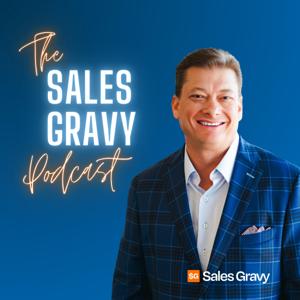
From the author of Fanatical Prospecting and the company that rewrote the rules of modern selling, the Sales Gravy Podcast helps you sell more, win more, and earn more.
Ranked by our users in the last 21 days

3,898 Listeners
1,116 Listeners
346 Listeners
16,852 Listeners

1,934 Listeners
322 Listeners

13,957 Listeners

578 Listeners

4,458 Listeners

1,201 Listeners
70 Listeners

395 Listeners

145 Listeners
257 Listeners

162 Listeners