
Sign up to save your podcasts
Or

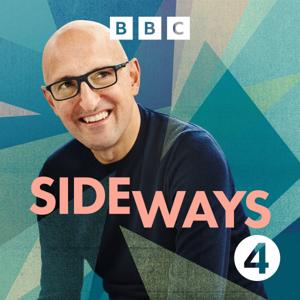


Based on Podcast App listening data
Nicosia, Cyprus, 2018. Kiri Sofocleous sits down to write a Facebook message to a man she has never met. It has been 40 years since Kiri saw her childhood best friend but she has never forgotten her. Could this be the key to reuniting?
Matthew Syed tells the story of one woman’s determination to find a beloved friend, lost for four decades due to a move abroad, a political divide and a mislaid address.
It prompts him to explore why we make friends and how they influence the rest of our lives, even after losing touch.
Professor Catherine Bagwell of Oxford College - Emory University, reveals how playground squabbles equip us with life skills and how making friends can be good for our mental health.
Through Professor William Rawlins, Matthew learns how the friends of our young adulthood help us become ourselves, but ultimately write themselves out of our life story by encouraging us to follow our dreams.
Contributors include firm friends Kiri Sofocleous and Sonya Foxsmith, Professor Catherine Bagwell of Oxford College - Emory University, Professor William Rawlins of Ohio University and Robin Dunbar, Emeritus Professor of Evolutionary Psychology at Oxford University.
Presenter: Matthew Syed
A Novel production for BBC Radio 4
Matthew Syed follows the story of Bernice Bennett, a woman driven to uncover the truth behind a treasured family portrait.
When Bernice was growing up, she was always told how much she looked like her grandmother, Mattie Kemp Alexander. Looking at her grandmother’s portrait, she saw her own eyes looking back. This woman’s face was familiar, and yet Bernice knew so little about her. Feeling the call to know more, Bernice set out on a journey to uncover the stories of her family tree.
Through the course of her investigations, Bernice uncovers the traumas etched into her family’s past and is drawn into America's legacy of slavery. Her discoveries are painful, but they also lead to some surprisingly joyous new relationships and renewed understanding of her own identity.
So why do we search for the secrets of the past, when we know how much the truth may hurt?
Genetic Counsellor Brianne Kirkpatrick talks about how people might prepare themselves for what they could find in their family histories, and genealogist Nicka Sewell-Smith explores how the traumas experienced by our ancestors can ripple through to the present day.
Contributors:
Presenter: Matthew Syed
A Novel production for BBC Radio 4
In 1980, underdog English table tennis player John Hilton stunned audiences with his style of play, effortlessly confounding talented European opponents.
In this episode of Sideways, Matthew puts his tactics under the microscope to discover how Hilton used deception to fool his opponents, and use their strengths against them.
Deception in sport, Matthew argues, is not underhand, so long as it’s within the rules - and it’s everywhere. With the help of sports psychologist Dr Robin Jackson and goalkeeper Chloe Morgan, Matthew examines the high velocities and ultra-fast reaction times of elite sport which make deception so prevalent, and effective.
And he charts the rise of data analysis in British sport, from its strange origins on the football terraces to today’s high tech data collection and teams of analysts. Swathes of data mean today’s athletes can set out more informed than ever about their opponents. But as Matthew discovers, this doesn’t necessarily make them immune to deception. In fact, it could make them more vulnerable.
With former European table tennis champion John Hilton; Dr Robin Jackson, reader in Sport Psychology at Loughborough University; Crystal Palace Women’s Goalkeeper Chloe Morgan; Statistician Richard Pollard; and Maria Konnikova, journalist and author of The Confidence Game.
Presenter: Matthew Syed
A pigeon sparks a spy hunt. The clock is ticking and the bunker is calling.
In this final episode of our four part nuclear series, Matthew Syed examines the current nuclear landscape. In this complex, multiplayer context how do we create a safer world?
We begin in Kashmir, the disputed territory between India and Pakistan, where mutual suspicion has led to nuclear expansion and a delicate balance of power. With our sights understandably on the Ukraine crisis, Matthew argues that while our current nuclear ecosystem persists, there could be other flashpoints that we’re not paying enough attention to.
Matthew enters the worrying world of nuclear modelling and hears about research that suggests the threshold for catastrophic nuclear damage is lower than we might think. And we’re taken down into the bunker to understand why some people believe safety really lies in their own hands.
But is bunkering down the solution? And is planning for the worst actually a hopeful act - you are planning for there to be a world to re-join in the end?
As our series ends, Matthew asks whether we can reconcile different ideas about how to contain nuclear weapons, wake up and regain agency, to chart a path to a safer future.
Guest list:
Presenter: Matthew Syed
Angie Zelter is on her way to Loch Goil in Scotland. It’s a beautiful summer’s day, and her friends have packed a picnic. But that’s not the real reason they’re there. Angie has an urgent message to deliver to the world about nuclear weapons. And she’s going to deliver it through an act of destruction.
In this episode, Matthew Syed looks at the danger that nuclear weapons pose, even if nations never use them in a deliberate act of war. He hears about the moments we came within a hair’s breadth of disaster through misunderstanding, negligence, accident and even a blackbrown bear.
It’s simple - the more weapons there are in the world, the more risk increases. But how to deal with this problem throws up complex solutions and viewpoints.
Some would like the total eradication of nuclear weapons, arguing that disarmament across the world is the only way to avoid catastrophic risk. But others worry about disrupting the delicate balance of nuclear deterrence. As Matthew hears, history shows us that scaling back the numbers is possible - even at the height of the Cold War. He asks whether the possibilities for non-proliferation and scaling back through treaties and verification could be a way forward today.
Contributors:
Presenter: Matthew Syed
In 1961, a group of American officials decided to play a game of war. Sitting around a table, they tried imagining a nuclear crisis - and how it could be resolved. The outcome of their thought experiment surprised them all, raising far reaching questions about the strength of America’s nuclear strategy.
Once nuclear weapons were unleashed into our world in the 1940s, it was obvious that a completely new set of rules of war had to be designed to prevent nuclear annihilation. In this episode, Matthew travels back to 1940s Santa Monica Beach to explore the origins of an idea that would become the guiding principle of nuclear strategy - deterrence. The threat posed by these new weapons had to be used to avoid war, not to start it.
Matthew learns about the original think tank - the RAND corporation - where nuclear strategists first gave shape to nuclear deterrence and came up with ways to strengthen the credibility of the US government’s deterrence strategy. The most bombastic thinker amongst them was Herman Kahn - the inspiration for Stanley Kubrick’s Doctor Strangelove. Kahn’s ideas were provocative in the way they urged leaders to consider just how many people they would be willing to kill in a nuclear war in order to make their nuclear threats appear credible.
And as the 1960s progressed, the nuclear stockpile grew and tensions ratcheted up. The strategists gained more ground with successive US administrations, wargaming out scenarios in order to test the validity of deterrence. The ‘godfather of nuclear deterrence’ and Nobel prize winning economist, Thomas Schelling, enters the frame just at the right time. Through Schelling’s innovative work on nuclear deterrence, Matthew reflects on the importance of communication in nuclear crises.
But in the 1980s, the Reagan administration played a new game. With a shocking outcome. Perhaps nuclear deterrence wouldn’t always prevent war.
Guests:
Presenter: Matthew Syed
A Novel production for BBC Radio 4.
It’s a little girl’s eighth birthday. She wakes to a sight that looks like the end of the world. A radioactive mushroom cloud rises 130,000 feet in the air. And the world wakes up to the devastating fallout of nuclear weapons.
In this new mini series from Sideways, writer and Times columnist Matthew Syed is calling for a nuclear awakening. Since the end of the Cold War, when relations between two of the world’s nuclear superpowers - the former USSR and the USA - seemed more rosy, Matthew argues that many of us have slipped into a kind of comfortable amnesia about the presence of these destroyers of worlds.
The wake up call came when President Vladimir Putin launched the invasion of Ukraine in February accompanied by veiled nuclear threats. It was a reminder of the mind bending fact that there are weapons in existence that are capable of eradicating our species.
Over four episodes, Matthew explores the intellectual and strategic frameworks birthed by the bomb and the tensions of the Cold War, which sought to contain the ultimate destructive force. From deterrence to disarmament and non-proliferation, these ideas all aim at one goal - protection from catastrophic nuclear use. Understanding their origins and complexities is urgently needed, Matthew argues.
Ultimately, Matthew will be asking if the actions of Putin in Ukraine call for a new intellectual framework to help make our world safe.
Presenter: Matthew Syed
Contributors:
A Novel production for BBC Radio 4
In this new mini series from Sideways, Matthew Syed is calling for a nuclear awakening. Since the end of the Cold War, when relations between two of the world’s nuclear superpowers - the former USSR and the USA - seemed more rosy, Matthew argues that many of us have slipped into a kind of comfortable amnesia about the presence of these weapons, these destroyers of worlds.
The wake up call came when President Vladimir Putin launched the invasion of Ukraine in February accompanied by veiled nuclear threats that were widely reported. It was a reminder of the mind bending fact that there are weapons in existence that are capable of eradicating our species.
Over four episodes, Matthew explores the intellectual and strategic frameworks birthed by the bomb and the tensions of the Cold War, which sought to contain the ultimate destructive force. From deterrence, to disarmament and non-proliferation these ideas all aim at one goal - protection from catastrophic nuclear use. Understanding their origins and complexities is urgently needed, Matthew argues. Ultimately, Matthew will be asking if the actions of Putin in Ukraine call for a new intellectual framework to help make our world safe.
James Campbell's family were unusual. They were the 'singing family'. Everyone on their street knew it - and heard it. They would sing at the drop of a hat and James' father had a barbershop quartet.
Every Monday evening James would listen attentively to the sumptuous close harmonies and his father taught him and his siblings to harmonise too. James took this into his adult years. It gave him a lifelong enjoyment and confidence to harmonise with other people, just for fun. One day, when his father is taken very ill, James realises the power of harmony at the hardest of times as he and his family join around his father's hospital bed to sing.
In this episode, Matthew Syed explores the importance of harmony and asks whether bringing in musical ideas could help bring us a little more harmony in our lives. We get a lesson in close harmony singing with folk trio Lady Maisery and consider how the principles of close listening could carry beyond a musical setting.
And Matthew explores Plato's ideas about the soul in harmony with Professor Angie Hobbs, the Professor of the Public Understanding of Philosophy at the University of Sheffield. And with Ian Cross, Emeritus Professor of Music and Science at the University of Cambridge, Matthew unravels the ways we communicate musically in conversation to signal agreement and to bond, showing the vital importance of musical interaction in bonding.
Presenter: Matthew Syed
Flevoland, the Netherlands, 1968. A new patch of land is being carved out of the sea. Destined initially for agriculture or industry, when nature begins to take over, authorities decide to protect the new Earth as a nature reserve - the Oostvaardersplassen.
In this episode of Sideways, Matthew Syed uses the story of this pioneering nature reserve to reveal our conceptions, and misconceptions of the wild.
Rich with reedbeds, the oostvaardersplassen soon becomes a haven for rare birds. But Dutch ecologist Frans Vera wants to take the oostvaardersplassen further. He wants to test the theory that Europe wasn’t covered with forest before humans arrived, but instead had vast grassy plains, much like the savannas of Africa. And so begins the introduction of herds of cattle, horses and deer to the reserve - a pioneering environmental effort which pre-dates the now familiar idea of rewilding.
But when the project stumbles into controversy, it tests our understanding of the wild and how we look after it. And as opposition to the Oostvaardersplassen begins to shape its future, the heady dream of a self-sufficient Dutch serengeti is abandoned. With the urgency of restoring the earth’s natural spaces, Matthew questions whether our scientific failures can still lead to progress.
With journalist and environmental campaigner George Monbiot, cultural geographer Dr Clemens Driessen and environmental philosopher Dr Andrea Gammon along with Frans Vera and campaigner Betty Den Engelsman.
Producer: Pippa Smith
From the publisher's feed
Best-selling author Matthew Syed explores the ideas that shape our lives with stories of seeing the world differently.
Ranked by our users in the last 21 days

7,593 Listeners

371 Listeners

879 Listeners

1,042 Listeners

5,496 Listeners

1,876 Listeners

603 Listeners
726 Listeners

1,829 Listeners

1,038 Listeners

2,096 Listeners

1,961 Listeners

2,011 Listeners

487 Listeners

383 Listeners

63 Listeners

811 Listeners
65 Listeners
687 Listeners

133 Listeners

3,212 Listeners

1,602 Listeners

3,040 Listeners

875 Listeners
31 Listeners