
Sign up to save your podcasts
Or



Based on Podcast App listening data
When Ray and Vi Donovan left court after the sentencing of three boys who murdered their 18-year-old son, Christopher, they said they had justice for Chris, but not the truth. They still didn’t know why Christopher was murdered on a May evening in 2001. That was a question the trial didn’t answer and only Christopher’s killers could.
Years later, they would meet the three boys, by now men, to ask that question - why?
Ray and Vi spent months preparing for each meeting, thinking about what they needed to know and what they wanted to happen afterwards. Until they met and talked with each of these three men.
With Ray and Vi Donovan, MBEs For Services to Restorative Justice, Dr Kerry Clamp, Associate Professor of Criminology, University of Nottingham, Professor Joanna Shapland, Edward Bramley Professor of Criminal Justice at the University of Sheffield and Sam Fallows from the Probation Service.
Boston, Massachusetts. 1970. A group of mothers and young children assembles outside the offices of the local TV station. It’s the first phase of a fight to improve kids’ TV that would go all the way to the United States Senate.
Matthew Syed looks at how kids' TV got smart, and what we can learn about the developing mind from the programme makers who led the way.
In the late 1960s, children’s television in the US was dominated by cheap cartoons and adverts for sugary snacks. Peggy Charren had something to say about it. She formed a grassroots activism group in her living room with other concerned mothers - Action for Children’s Television. It would become one of the most influential broadcast lobbying groups in history.
Peggy was part of a wave of people who were starting to take kids’ TV seriously. From the creators of Sesame Street, to psychological researchers like Professor Daniel Anderson who brought science into children’s programme making, Matthew draws out what we can learn from these innovators who know how to create a hit show.
With Debbie Charren, Peggy’s daughter, and former schoolteacher and reading specialist; Robert Krock, Action for Children’s Television’s former development director; Daniel Anderson, Professor Emeritus at the department of Psychological and Brain Sciences, University of Massachusetts Amherst; Dr Michael Muthukrishna, Associate Professor of Economic Psychology at the London School of Economics; and Andrew Davenport, creator, writer and composer of In the Night Garden, Moon and Me, and Teletubbies.
Presenter: Matthew Syed
When a major earthquake hits California, it has to rebuild - but at what cost?
A sunny afternoon in October, 1989. In San Francisco's Candlestick Park stadium, a pair of local sporting rivals are about to go head to head - the Oakland Athletics against the San Francisco Giants.
But before the first ball is pitched, the game is interrupted - by a major earthquake. A section of the San Francisco-Oakland Bay Bridge - the major transport connection for the two northern Californian cities - crumbles, killing one person. And across the Bay in West Oakland, a double decker freeway collapses. 42 lives are lost.
By examining the Iron Law of Megaprojects - which reveals how major infrastructure problems, far from being a silver bullet, become money-draining, ego-flattering albatrosses that overrun and under deliver - Matthew asks whether a simpler, more streamlined way to create the spectacular is possible. And in the end, is the pursuit of creating something sublimely beautiful even worth it?
With Darrell Ford, member of the West Oakland Citizens Advisory Board; Steve Heminger, former executive director of the San Francisco Bay Area's Metropolitan Transportation Commission; Bent Flyvbjerg, Professor and Chair of Major Programme Management at Saïd Business School, University of Oxford; Yael Grushka-Cockayne, Professor of Business Administration at the Darden School of Business, University of Virginia; Dr Karen Trapenberg Frick, Associate Professor in the Department of City and Regional Planning at UC Berkeley. With thanks to Ms Margaret Gordon, co-founder and co-director of the West Oakland Environmental Indicators Project.
Presenter: Matthew Syed
It's 1990 and Birmingham metal band Judas Priest are on trial in court in Reno, Nevada. The band are accused of influencing the suicide and suicide attempt of two of their young fans by placing subliminal messages in their track Better By You, Better Than Me.
BBC Action Line
Bonfire night, November 5th 2015, 9.30pm. An agent fires off an email. An author is accused of plagiarism. His new book lies ready to be pulped.
In the first of a new series of Sideways, Matthew Syed asks why we’re doomed to be unoriginal and why it hurts so much to be, well, not that special.
In 1998, Hollywood directors Matthew Bay and Mimi Leder went head to head with suspiciously similar disaster movies - Armageddon and Deep Impact. Allegations of late-night spying flew around. But could there have just been something in the air? Matthew reveals that, four years earlier, fragments of the Shoemaker-Levy 9 Comet smashed into Jupiter and right into the American consciousness.
This is the thing... As Matthew discovers, our brains are wired for unoriginality, we evolve as a collective brain, absorbing our shared cultural cues and looking for what has worked in the past. But if that’s the norm, why do we feel so disappointed when our ideas seem unoriginal, when someone else beats us to it? And is there a way out of this - to rekindle our originality?
With author Ian Leslie, Kristen Lopez, TV editor for Indiewire and pop culture critic, Dr Michael Muthukrishna, Associate Professor of Economic Psychology at the London School of Economics and Nick Groom, Professor of Literature in English, University of Macau.
Presenter: Matthew Syed
Matthew Syed returns with the new series of Sideways, all about the ideas that shape our lives, with stories of seeing the world differently.
American science journalist Joshua Foer was a perfectly normal guy with a perfectly normal memory.
Then he entered the USA National Memory Championships - and ended up giving the country’s brain power prodigies a run for their money.
How did he do it?
Matthew Syed takes a deep dive into the heady world of brain training - where ordinary people challenge themselves to reach new peaks of mental athleticism.
Journeying from the methods of the Ancient Greeks, to the showbiz hacks of the 1960s, to the Manhattan competition hall where Joshua competed for the title of memory champion in 2006, Matthew learns that the desire to push the limits of our cognitive capacity has been around for thousands of years.
But do these techniques work?
In his effort to understand what’s possible when it comes to improving our minds and memories, Matthew examines the impact of nature and nurture on our brains - asking whether environmental inequality, or genetics, is the deciding factor in determining whether anyone could become a mental athlete.
Producer: Eleanor Biggs.
A Novel production for BBC Radio 4, first broadcast in March 2021.
You might not have heard of Max Martin, but you've definitely heard the songs he's written.
You probably know the words whether you like the songs or not. Martin has written many of the world's biggest pop hits.
He has 23 number ones, second only to Paul McCartney and John Lennon.
Matthew Syed explores the extraordinary career of the enigmatic pop powerhouse who's one of Sweden's most significant musical exports. Matthew contrasts Martin's songwriting process with the practice of scientific research which has become overwhelmingly collaborative in recent years.
Matthew discovers that Martin's unique approach to collaboration, drawing upon the experience and skill of a vast and diverse range of musicians, has enabled him to stay ahead of the pack when it comes to crafting world-beating pop songs.
Produced by Thomas Curry and Russell Finch
A Novel production for BBC Radio 4, first broadcast in March 2021.
A young entrepreneur builds the ‘happiest company in the world’, an online shoe retailer so profitable that Amazon snaps it up for over a billion dollars.
But what if the company’s profits and happiness could be boosted by a radical reimagining of the workplace?
No more bosses, no more job titles, just creativity, equality and pure joy.
Matthew Syed tells the extraordinary story of Tony Hsieh, a visionary entrepreneur who abandoned social hierarchy in his Las Vegas-based shoe company.
Could it be that the secret to happiness lies in making everybody equal?
Producer: Robbie MacInnes
A Novel production for BBC Radio 4, first broadcast in March 2021.
On the spacecraft Voyager, hurtling through deep space sits a golden record, filled with the music of planet earth.
It is a cultural gift for unknown extraterrestrial life forms. If an alien species discovers this unique double LP, they'll be greeted by the singing of the Mbuti people of the Congo recorded by the anthropologist Colin Turnbull.
Matthew Syed examines Turnbull's seemingly utopian experiences in the forest with the Mbuti and contrasts them with his utterly bleak account of the Ik people of Uganda. The Ik were, according to Turnbull, a "loveless" people devoid of culture, brutal and totally uncaring. He labelled them "the most selfish people on earth".
Turnbull argued that the Ik offered a stark warning to westerners. This allegedly nightmarish society was, according to Turnbull, the way the west was headed.
Matthew hears from Turnbull's critics who say he misunderstood the Ik and uses Turnbull's work to ask a profound question - is mankind fundamentally rotten and selfish at the core, or do kindness and compassion lie at the beating heart of human society?
Producer: Mike Martinez
A Novel production for BBC Radio 4, first broadcast in March 2021.
From the publisher's feed
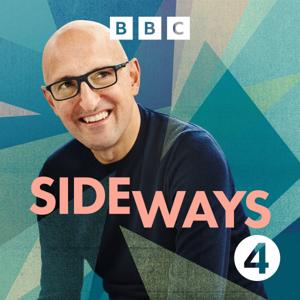
Best-selling author Matthew Syed explores the ideas that shape our lives with stories of seeing the world differently.
Ranked by our users in the last 21 days

7,593 Listeners

371 Listeners

879 Listeners

1,042 Listeners

5,496 Listeners

1,876 Listeners

603 Listeners

726 Listeners

1,829 Listeners

1,038 Listeners

2,096 Listeners

1,961 Listeners

2,011 Listeners

487 Listeners

383 Listeners

63 Listeners

811 Listeners
65 Listeners

687 Listeners

133 Listeners

3,212 Listeners

1,602 Listeners

3,040 Listeners

875 Listeners
31 Listeners