
Sign up to save your podcasts
Or




Based on Podcast App listening data
The Vietnamese American writer Viet Thanh Nguyen was awarded the Pulitzer prize for his debut novel The Sympathiser in 2016. Now he turns his attention to memoir, in A Man of Two Faces. He was four when he was forced to flee Vietnam with his family, but as he looks back at his life he explores the necessity of forgetting and remembering, and how far the promise and dream of America can be trusted.
The journalist and Deputy Editor of Harper’s Bazaar Helena Lee wants to showcase the voices and experiences of writers from the East and Southeast Asian diaspora living in the UK. East Side Voices celebrates the diversity of that experience and explores the impact on identity, community and family.
Jessica J. Lee was born in Canada to a Taiwanese mother and a Welsh father and in her collection of essays, Dispersals, she muses on the question of how plants and people become uprooted and cross borders. Combining memoir, history, and scientific research she explores how entwined our fortunes, movement and language are with the plant world.
Producer: Katy Hickman
Andrey Kurkov is Ukraine’s most celebrated novelist. When Russia invaded Ukraine he turned his writing to journalism and memoir, but his latest book is a work of fiction set amid the chaos of the Russian Revolution. The Silver Bone (translated by Boris Dralyuk) is the first in a trilogy of historical mysteries in which the recently orphaned detective investigates his first case while Bolsheviks, Cossacks, and white Army Guards all vie to take control of Kyiv.
The journalist and writer Peter Pomerantsev retells the daring story of the WWII propogandist Sefton Delmer who managed to infiltrate German airwaves and skilfully question Nazi doctrine. How to Win an Information War reveals the extent of the complexity of spin and indoctrination used in the past, alongside the role of propaganda today in Putin’s Russia.
The information war is heading into a new era with the development of generative AI which makes it simple to produce fake text, audio and videos. The news editor at MIT Technology Review Charlotte Jee says the pace of change is extraordinary, and regulation is lagging behind, as deepfakes are becoming more difficult to distinguish from actual human content.
Producer: Katy Hickman
The Nobel prize winning molecular biologist Venki Ramakrishnan explores how time affects our bodies, brains and emotions in his new book, Why We Die: The New Science of Ageing and the Quest for Immortality. As he explains the recent scientific breakthroughs to extend lifespan by altering our biology, he also considers the ethical questions such efforts raise.
The neuroscientist Charan Ranganath asks a different question in his book, Why We Remember. Using case studies he unveils the principles behind how the brain retains information, and what and why we forget so much. He also looks at what happens to our memories as we age.
In her new book, Nostalgia, the historian Agnes Arnold-Forster blends social history and psychology in a quest to understand this complex emotion. While it was thought of as an illness in the 17th century, it is now used as a widespread marketing tool impacting our choices from politics to food. But if nostalgia prompts us to glorify the past, Arnold-Foster asks how that impacts the present, and future.
Producer: Katy Hickman
The plant Rafflesia has the world’s largest flowers and gives off one of the worst scents; it’s also something of a biological enigma, a leafless parasite that lives off forest vines. For the botanist Chris Thorogood, an expert in parasitic and carnivorous plants at the Oxford Botanic Garden and Arboretum, Rafflesia is also an obsession. In his book, Pathless Forest, he goes in search of this mysterious plant in some of the last wildernesses in South East Asia.
Dr Kelsey Byers is an evolutionary chemical ecologist who specialises in floral scent and its influence on the evolution of flowering plants. In her laboratory at the John Innes Centre in Norwich she studies how flowers use different smells to attract their pollinator of choice. From sweet aromas to the stink of rotting flesh, she explores how plants use con-artistry and sexual deception to thrive.
The ethnobotanist William Milliken from Kew Gardens has spent much of his career working with indigenous people in the Amazon to preserve traditional plant knowledge. Now he’s focused on collecting folklore about the use of plants to treat ailments in animals in Britain. From wild garlic treating mastitis in cows, to cabbage for flatulence in dogs, he hopes to uncover a cornucopia of plant-based veterinary medicines.
Producer: Katy Hickman
Over the past 50 years, worldwide obesity rates have tripled, and now headlines increasingly shout of a public health crisis, even an obesity epidemic. Tom Sutcliffe explores the consequences of using such negative and emotional language to describe weight and the increasing rates of fat phobia in society. He looks at the health issues and the so-called ‘miracle drugs’ that suppress appetite, and where genetics and diet meet.
He’s joined by Naveed Sattar, Professor of Metabolic Medicine at the University of Glasgow and recently appointed as the UK Government’s Obesity Mission Chair, the body-positive activist Stephanie Yeboah who’s the author of Fattily Ever After, and the businessman Henry Dimbleby whose book Ravenous reveals the mechanisms behind our food systems.
Producer: Katy Hickman
The journalist and broadcaster Ellen E. Jones explores the immense potential of film to challenge the status quo in her book, Screen Deep: How Film And TV Can Solve Racism And Save The World. She explores different genres from superheroes and westerns to horror and arthouse. And she argues that such a popular art form - either shared in the cinema, or beamed direct into your home – revels in the diversity of its story-telling.
The Iranian-Australian filmmaker Noora Niasari has chosen to draw from her own personal experience in her debut feature, Shayda (open in cinemas across the UK & Ireland on Friday 8th March 2024). Set in a women’s shelter, the film explores what it means for an Iranian woman to divorce her husband and fight for a new life for herself and her child.
But what about other art forms and the stories they tell? The Royal Academy’s latest exhibition – Entangled Pasts: Art, Colonialism and Change (until 28th April) – places work from the 18th century alongside contemporary work to explore how art, both old and new, is entangled with and reflected by Britain’s colonial past. Hew Locke will be showing his major work, Armada, which consists of a giant flotilla of model boats.
Producer: Katy Hickman
Ancient Greece and Rome loom large in the understanding of the roots of Western Civilisation, but the Professor of Ancient History Josephine Quinn wants to challenge that simple narrative. In How The World Made The West – A 4,000 Year History she shows how western values were developed by long-standing links between a much larger group of cultures, from the Gobi Desert to the Atlantic Ocean and beyond.
The British Museum’s major new exhibition Legion looks at life in the Roman army (on until 23rd June). This elite war machine was employed to protect and control around a quarter of the Earth’s population for over half a millennium. Recruits came from all walks of life, and from across the Empire. The archaeologist Carolina Rangel de Lima reveals the impact this extraordinary diversity of cultures and beliefs had on the imperial Roman army.
The writer Christopher Harding takes a closer look at the many ways in which Asia has influenced Europe and North America. In his book, The Light of Asia, he explores how Japan, China and India have often been sources of genuine fascination and artistic and intellectual inspiration, as well as confusion and misunderstanding.
Producer: Katy Hickman
The trade in opium formed a backdrop to Amitav Ghosh’s best-selling novels, The Ibis Trilogy. In his latest work of non-fiction, Smoke and Ashes, he investigates the impact of that trade on Britain, India and China, and follows the money that was made by some of America’s most powerful and well-respected families. He reveals how the poppy plant enabled the financial survival of Empire and proved catastrophic for Indian farmers and Chinese users.
In the 21st century Afghanistan became the biggest grower of poppies, producing more than 80% of the world's opium. The former soldier, Richard Brittan, set up the company Alcis, to provide an accurate picture of what’s going on on the ground in Afghanistan by using satellite imagery. As well as tracking the workings of the drugs trade, he explains the impact of the Taliban ban on poppy cultivation in 2023.
Professor Fiona Measham, Chair in Criminology at Liverpool University, explains that one of the effects of the disruption to the opium trade has been a large increase in the number of synthetic opiates – fentanyl and nitazenes – filling the vacuum. China has become the centre for the wider development of synthetic drugs that emulate plant-based street drugs, but are much stronger and potentially lethal. The charity The Loop, set up by Measham, is instrumental in checking drugs to better understand what is being sold on the streets.
Producer: Katy Hickman
The history of glass-making dates back to at least 3,600 years ago in Mesopotamia, and both manufactured and naturally-occurring glass have been used in a wide variety of objects across the world. The curator and director of the Stained Glass Museum in Ely, Jasmine Allen, looks back at its long and varied history, highlighting its practical and artistic qualities.
In the last century or so its industrial heartlands in Britain have been in the Black Country and the north east of England. John Parker, Professor of Glass Science at the University of Sheffield and curator of the Turner Museum of Glass, is an expert on the history of glass in this region, and the impact of mechanisation at the end of the 1800s.
A new exhibition, The Glass Heart, at Two Temple Place in London (until 21st April) showcases industrial glass making as well as contemporary artworks. The artist and glassblower Ayako Tani finds inspiration in traditional calligraphy for her glass art, as well as the more recent development of glass ships in bottles from the 1970s.
Glass can be moulded into all shapes and sizes and developed with different strengths, but the materials scientist Professor Claire Corkhill from the University of Bristol says it’s still quite a difficult and mysterious material. Her research is looking into innovative ways to use glass, and exploring whether it could even be the answer to the growing dilemma of managing Britain’s radioactive waste.
Producer: Katy Hickman
The legal framework to prosecute war crimes and prohibit the use of ‘aggressive war’ came out of the international war crimes tribunals after WWII – in Germany and Japan. In Judgement at Tokyo the academic and writer Gary J. Bass retells the dramatic courtroom battles as Japan’s militaristic leaders were held accountable for their crimes. With prosecutors and judges drawn from eleven different Allied countries tensions flared, and justice in the Asia Pacific played out amidst the start of the Cold War, China's descent into civil war, and the end of the European empires.
The political philosopher Hannah Arendt witnessed the end of the trial of the Nazi Adolf Eichmann in Jerusalem in 1963, coining the phrase ‘the banality of evil’ – a term that is often mistakenly believed to mean that evil had become ordinary. In We Are Free To Change The World, the writer Lyndsey Stonebridge explores Arendt’s writings on power and terror, love and justice, and their relevance in today’s uncertain times.
As the world grows increasingly turbulent war crimes justice is needed more than ever, but it appears to be failing. Since the International Criminal Court in the Netherlands opened in 2002 it has jailed just five war criminals. The journalist and war reporter Chris Stephen looks back at its history and examines alternative options in The Future of War Crimes Justice.
Producer: Katy Hickman
From the publisher's feed
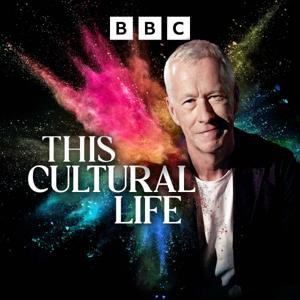
Weekly discussion programme, setting the cultural agenda every Monday
Ranked by our users in the last 21 days

7,606 Listeners
303 Listeners

1,083 Listeners
371 Listeners
877 Listeners

1,044 Listeners
155 Listeners

5,478 Listeners

1,793 Listeners

297 Listeners

1,821 Listeners

1,034 Listeners

1,902 Listeners
489 Listeners

109 Listeners

69 Listeners

134 Listeners
120 Listeners

51 Listeners

62 Listeners

3,217 Listeners
1,004 Listeners
121 Listeners

3,019 Listeners