
Sign up to save your podcasts
Or



Based on Podcast App listening data
The world is now warming faster than at any point in recorded history. Kirsty Wark talks to an historian, scientist and novelist about how to convey the story and impact of climate change.
Floods, droughts, volcanic eruptions, hurricanes and solar activity have all shaped the natural history of our world from its formation. In The Earth Transformed the historian Peter Frankopan looks back at how the climate has constantly changed our world, but also at the impact of extreme climatic events on ancient human civilisations – often violent and epic in scale, from regime change to demographic decline. However, since the Industrial Revolution the balance has shifted and anthropogenic impacts on the climate can be seen more clearly. Peter Frankopan tells Kirsty Wark that learning lessons from the past has never been more important in tackling a precarious future.
Professor Dame Jane Francis is Director of the British Antarctic Survey. As a geologist by training, she studies fossils to understand the change from greenhouse to icehouse climates in the polar regions over the past 100 million years. Her research enables others to map the huge changes now happening in the Antarctic and the range of possible scenarios for the future.
“As I grew up, crisis slid from distant threat to imminent probability, and we tuned it out like static, we adjusted to each emergent normality, and did what we had always done. . . .” One of the narrators of Jessie Greengrass’s novel The High House realises too late the disastrous impact of climate change. In what has become known as the literary genre clifi – climate fiction – Greengrass reveals the physical and emotional challenges the survivors face.
Producer: Katy Hickman
Image: An iceberg in Antarctica
The writer Sarah Bakewell explores the long tradition of humanist thought in her latest book, Humanly Possible. She celebrates the writers, thinkers, artists and scientists over the last 700 years who have placed humanity at the centre, while defying the forces of religion, fanatics, mystics and tyrants.
But placing humans at the centre isn’t without problems – critics point to its anthropocentric nature and excessive rationalism and individualism, as well its Euro-centric history. The philosopher Julian Baggini guides the listener in unpicking the tenets of humanism. His latest books is How to Think Like a Philosopher: Essential Principles for Clearer Thinking.
Humanism may have relegated the divine to the side lines, but for the characters in Leila Aboulela’s novels faith and devotion are integral to their sense of themselves. In her latest book, River Spirit, set in Sudan in the 1880s, her young protagonists struggle to survive and find love amidst the bloody struggle for Sudan itself.
Producer: Katy Hickman
George Eliot was a leading novelist who scandalised Victorian society by eloping to Germany with a married man and living in unlawful conjugal bliss. She dedicated her books to ‘her husband’ and wrote of 'this double life, which helps me to feel and think with double strength'. The philosopher and writer Clare Carlisle has written a new biography of George Eliot which places The Marriage Question at the centre of her art and life.
The playwright David Eldridge is writing a trilogy of plays about relationships. Beginning, which premiered in 2017, and Middle, from last year, take place overnight in one uninterrupted scene as the couples share their thoughts and feelings on love and loneliness. The final play will be called End.
The prize winning poet Claudia Rankine talks about her collection Plot, published in full for the first time in the UK. In a series of conversations, reflections and dreams Rankine reveals the hopes and fears of Liv and Erland – a couple navigating the birth of their new baby.
Producer: Katy Hickman
It’s twenty years since the US and UK invaded Iraq to overthrow Saddam Hussein. Kirsty Wark discusses the lead up to the war, the impact on the lives of Iraqis and the legacy.
Ghaith Abdul-Ahad left his job in Baghdad and became a journalist during the Iraq War in 2003. He witnessed first-hand the liberation of his country from a megalomaniac leader and then its descent into factionalism and violence. In A Stranger In Your Own City he movingly recounts the very real human cost of the invasion, as well as the civil wars and rise of ISIS that followed.
Emma Sky volunteered to help rebuild Iraq post-invasion and went on to serve as the representative of the Coalition Provisional Authority in Kirkuk and then as a political advisor to the US army in the following decade. Now an academic at Yale University, she looks back at why the Iraq invasion failed and its implications across the region. She's the author of The Unravelling and In a Time of Monsters: Travelling in a Middle East in Revolt.
The BBC’s Security correspondent Gordon Corera was a young reporter during the frenetic build up to the war, talking to spies, defectors and politicians. In a 10-part series – Shock and War: Iraq 20 Years On (from 13th March at 1.45 and on BBC Sounds) – he talks to those at the centre of that decision to go to war, and looks at the far-reaching consequences, from trust in politics, security and liberal intervention.
Producer: Katy Hickman
It’s Ok To Be Angry About Capitalism is the title of the new book by the US politician Bernie Sanders. In it he castigates a system that he argues is fuelled by uncontrolled greed and rigged against ordinary people. He tells Tom Sutcliffe it’s time to reject an economic order and a political system that continues to benefit the super-rich, and fight for a democracy that recognises that economic rights are human rights.
The Chief Economics Commentator at the Financial Times Martin Wolf looks more closely at how and why the relationship between capitalism and democracy appears to be unravelling. But despite the failings – slowing growth, growing inequality and widespread popular disillusion – he argues in The Crisis of Democratic Capitalism that the relationship remains the best system for human flourishing.
But the economist Kate Raworth believes that mainstream economics has had its day. Its failure to predict and prevent financial crises, while allowing extreme poverty, inequality and environment degradation to persist, means its contributing to, not solving, societal unrest. She argues that her theory – Doughnut Economics – offers a new model for a green, fair and thriving global economy.
Producer: Katy Hickman
The theoretical physicist Carlo Rovelli celebrates the life of an ancient Greek philosopher, in Anaximander And The Nature Of Science (translated by Marion Lignana Rosenberg). He tells Adam Rutherford that this little known figure spearheaded the first great scientific revolution and understood that progress is made by the endless search for knowledge. Anaximander challenged conventions by proposing that the Earth floats in space, animals evolve and storms are natural, not supernatural.
The travel writer Kapka Kassabova has gone searching for ancient knowledge about the natural world in her latest book, Elixir: In the Valley at the End of Time. The Mesta River, in her native Bulgaria, is one of the oldest inhabited rivers in Europe, and a mecca for wild plant gatherers, healers and mystics.
In Dvořák’s lyric opera the eponymous hero Rusalka is a water spirit who sacrifices her voice and leaves her home for the love of a Prince. In a new contemporary staging at the Royal Opera House (21 February–7 March 2023) the co-directors Ann Yee and Natalie Abrahami foreground the uneasy relationship between nature and humanity, and the latter's destruction of what it fails to heed.
Producer: Katy Hickman
Image credit: Asmik Grigorian in Natalie Abrahami and Ann Yee’s Rusalka, The Royal Opera ©2023 Laura Stevens
The psychologist Kimberley Wilson lays bear the truism ‘we are what we eat’. In Unprocessed: How the Food We Eat is Fuelling our Mental Health Crisis she bring into sharp focus the known links between diet, brain, behaviour and mental health. She tells Tom Sutcliffe how the government’s failure to address poor nutrition is a catastrophe.
Rebecca O’Connell’s research focuses on the social, cultural and economic reasons that shape what children and families eat, and the part food plays in their everyday lives. With the cost of living crisis and an increase in families suffering food poverty, she looks at the capacity to ‘choose’ to buy healthier food, and what other countries, like Portugal, have achieved in prioritising school meals.
But what about the food itself and how it’s grown? The author of The Ethical Carnivore, Louise Gray, turns her attention to fruit and veg in her latest book, Avocado Anxiety And Other Stories About Where Your Food Comes From. Tracking from farm to table, Gray discovers the impact that growing fruits and vegetables has on the planet.
Producer: Katy Hickman
Shakespeare’s Lady Macbeth is ruthless in her pursuit of power and then driven into madness and despair. But the writer and director Zinnie Harris has re-imagined a new story for Lady Macbeth in her version of this classic play. Macbeth (an undoing) - published by Faber - is on at The Lyceum Theatre in Edinburgh until 25th February.
Marion Gibson is Professor of Renaissance and Magical Literatures at the University of Exeter and is interested in how power and superstition collide in witch-trials through the centuries. In her latest book, The Witches of St Osyth, she tells the story of the sixteen women and one man accused of sorcery in a small rural village in 1582, and of a community devastated by violence and betrayal.
The filmmaker Jo Ingabire Moys draws from her own experience of surviving the Genocide in Rwanda in her short film Bazigaga, shortlisted for a BAFTA. As violence erupts a Tutsi pastor and his young daughter take shelter in the home of the feared shaman Bazigaga. The film was inspired by the true story of Zura Karuhimbi who used her reputation as a witch doctor to save hundreds of lives.
Producer: Katy Hickman
Image: The actor Eliane Umuhire in 'Bazigaga', written and directed by Jo Ingabire Moys
Tom Sutcliffe talks to three historians about the crimes of WWII and the shifting geopolitics, and the lasting reverberations today with the war in Ukraine.
On BBC World Service and BBC Sounds Catherine Merridale uncovers the complex story of loss and silence about the murder of Soviet Jews during the Nazi invasion in 1941, and the extraordinary testimony of what was happening, detailed in The Black Book.
Bernard Wasserstein’s family originally came from Krakowiec and in A Small Town in Ukraine he traces the arc of history across centuries of religious and political conflict through the fortunes of its inhabitants – from the earlier invasions of Cossaks, Turks and Swedes to the horrors of WWII and today’s war with Russia.
Producer: Katy Hickman
Image: Three Jewish women gather their belongings on Haifa dock, Palestine, after leaving the illegal immigrant ship Exodus. (Getty Images)
The architect Sandra Youkhana takes readers on a tour of the structures of modern digital worlds in Videogame Atlas (co-authored with Luke Caspar Pearson). From Minecraft to Assassin’s Creed Unity she examines the real-world architectural theory that underpins these fantasy worlds, and their influence on concrete designs today.
The journalist Louise Blain presents BBC Radio 3’s monthly Sound of Gaming which showcases the latest and best gaming soundtracks. She explores how composers help create not only the atmosphere in a game, immersing players in these invented worlds, but their music is also integral to the game’s structure and design.
Adrian Hon spent a decade co-creating the hit game Zombies, Run but has become increasingly disillusioned with the way real world institutions – corporations, governments and schools – are using gamification to monitor and control behaviour. In You’ve Been Played he shows how the elements of game playing have been co-opted as tools for profit and coercion.
Producer: Katy Hickman
Image Credit: Map of the game 'Katamari Damacy' by Sandra Youkhana and Luke Caspar Pearson from 'Videogame Atlas: Mapping Interactive Worlds'
From the publisher's feed
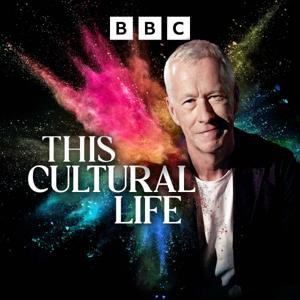
Weekly discussion programme, setting the cultural agenda every Monday
Ranked by our users in the last 21 days

7,604 Listeners

301 Listeners
1,083 Listeners
370 Listeners
879 Listeners
1,044 Listeners
154 Listeners

5,485 Listeners
1,791 Listeners
295 Listeners
1,817 Listeners
1,032 Listeners
1,901 Listeners
489 Listeners

109 Listeners
69 Listeners
134 Listeners
121 Listeners

51 Listeners
63 Listeners
3,216 Listeners
1,004 Listeners
118 Listeners
3,000 Listeners