
Sign up to save your podcasts
Or

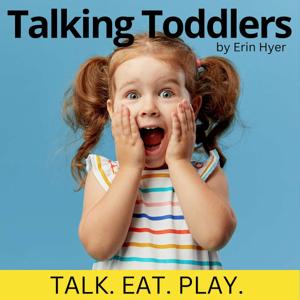


Does your toddler understand what you're saying? And how can you help him become a better listener - even before he's talking in sentences?
Between 12 and 24 months, your toddler is developing important listening and understanding skills. But these skills don't develop simply by memorizing words, colors, or numbers.
Real understanding grows through everyday experiences, meaningful interactions, and opportunities to participate in family life.
In this episode of Talking Toddlers, Erin Hyer, speech-language pathologist with more than 35 years of clinical experience, walks you through key developmental building blocks of receptive language - your child's ability to listen, understand, and make sense of spoken language.
You'll discover:
The best part? You don't need flashcards, fancy toys, or formal lessons.
Your toddler's everyday experiences—getting dressed, helping with chores, sharing books, and playing alongside you—offer wonderful opportunities to strengthen understanding.
Because before your toddler can use language confidently, he needs opportunities to understand what those words mean.
Listen in and learn what to watch for, what to practice, and how to make everyday moments count.
🎁 FREE COMPANION GUIDE
FREE Companion Guide CLICK HERE: Helps you remember these key listening skills so everyone wins.
===================
If you have a specific situation with your toddler that you keep replaying, Erin offers free 20-minute Clarity Calls to help you look more closely at what may be happening underneath the behavior.
🔗 Click here for CLARITY CALL HERE
Helpful links:
▶ Watch Talking Toddlers on YouTube: Click HERE
📘 Download Erin’s free guide: 10 Essential Skills Before Talking
🌿 Visit Hyer Learning:
www.HyerLearning.com
Educational and coaching information only. This episode is not a substitute for an individual speech-language, developmental, behavioral, or medical evaluation.
Should my toddler be talking more?
It’s an understandable question, but word count alone does not tell you how well your child is communicating.
In this episode, I explain the developmental skills sitting underneath talking — including initiation, shared attention, turn-taking, and the different jobs language begins to do in everyday life.
You’ll also learn what to watch for instead of only counting words, why too many questions can sometimes make toddlers quieter, and one simple way to create more opportunities for your child to communicate during routines you are already doing.
And if you are genuinely concerned about your toddler’s speech, hearing, or overall development, I’ll also explain when I believe it is important to seek an evaluation rather than simply wait and see.
The goal is not more pressure or more practice. It is learning to see your child more clearly — and knowing what to do next.
👉🏻 Click here for this week's GUIDE: Should My Toddler Be Talking More?
🌟 Word List Guide - Click Here: Building Vocabulary
===================
If you have a specific situation with your toddler that you keep replaying, Erin offers free 20-minute Clarity Calls to help you look more closely at what may be happening underneath the behavior.
🔗 Click here for CLARITY CALL HERE
Helpful links:
▶ Watch Talking Toddlers on YouTube: Click HERE
📘 Download Erin’s free guide: 10 Essential Skills Before Talking
🌿 Visit Hyer Learning:
www.HyerLearning.com
Educational and coaching information only. This episode is not a substitute for an individual speech-language, developmental, behavioral, or medical evaluation.
Does your toddler seem able to focus deeply on a screen, but struggle to stay with a book, sit through a meal, play independently, or listen when you need him to?
In this episode, Erin looks beyond the surface and explains what attention actually asks of a developing child. A screen may be very effective at holding attention, but real-world attention is built through movement, participation, repetition, curiosity, problem-solving, connection, and everyday life.
You’ll also hear why sleep, nutrition, routines, background noise, movement, and the overall pace of the day matter so much. Toddler development does not happen in separate categories. Language, motor skills, regulation, feeding, attention, and behavior are constantly developing together.
Erin also explores why simple play is often more valuable than it looks, why boredom can create room for imagination and curiosity, and why screens are never developmentally neutral for very young children.
Most importantly, this episode will help you stop asking only, “Why won’t my toddler focus?” and start looking more carefully at the environment and experiences shaping his attention every day.
Because attention is not simply something your toddler either has or doesn’t have.
It develops through experience.
===================
If you have a specific situation with your toddler that you keep replaying, Erin offers free 20-minute Clarity Calls to help you look more closely at what may be happening underneath the behavior.
🔗 Click here for CLARITY CALL HERE
Helpful links:
▶ Watch Talking Toddlers on YouTube: Click HERE
📘 Download Erin’s free guide: 10 Essential Skills Before Talking
🌿 Visit Hyer Learning:
www.HyerLearning.com
Educational and coaching information only. This episode is not a substitute for an individual speech-language, developmental, behavioral, or medical evaluation.
When every little thing starts feeling like a battle, the problem may not be the cup, the shoes, the bath, or leaving the park. The final trigger is often only one part of a much bigger developmental picture.
In this episode, I’m helping you widen the lens.
We’ll talk about why toddler skills are still emerging, why having a skill is not the same as being able to access it under every condition, and why a child who handled something beautifully yesterday may struggle with it today.
We’ll also look at:
• Why the trigger and the whole cause are not necessarily the same thing
• What executive function actually means in a two- or three-year-old
• Why “he knows better” may not tell you the whole story
• How sleep, food, movement, language, transitions, and the environment affect behavior
• Why normal frustration does not always mean “dysregulation”
• How repeated everyday experiences shape the developing brain
• Why two- and three-year-olds can look surprisingly different as memory, language, and persistence grow
• How to begin noticing patterns instead of reacting only to the final behavior
Your toddler’s brain is developing in real time.
And so is your ability to understand what you’re seeing.
My goal is not to give you another parenting script to memorize. It is to help you become more observant, more discerning, and more confident in knowing what your child actually needs from you.
Because the little years are the big years.
— Erin Hyer, M.A., CCC-SLP
Early Childhood Development Specialist & Speech-Language Pathologist
===================
If you have a specific situation with your toddler that you keep replaying, Erin offers free 20-minute Clarity Calls to help you look more closely at what may be happening underneath the behavior.
🔗 Click here for CLARITY CALL HERE
Helpful links:
▶ Watch Talking Toddlers on YouTube: Click HERE
📘 Download Erin’s free guide: 10 Essential Skills Before Talking
🌿 Visit Hyer Learning:
www.HyerLearning.com
Educational and coaching information only. This episode is not a substitute for an individual speech-language, developmental, behavioral, or medical evaluation.
“I know he understands me. So why isn’t he listening?”
If you’ve ever thought that about your toddler, this episode will help you look at the moment a little differently.
Understanding your words and being able to follow through are not the same developmental skill.
Before your toddler can respond, he may need to register your voice, shift his attention away from what he is doing, process what you said, organize what comes next, and tolerate the interruption or transition.
And sometimes, he understands perfectly well and simply does not want to do it.
That matters, too.
In this episode, Erin looks at what may be happening between understanding and doing — and why the answer is not always more words, more reminders, or another parenting script.
You’ll hear how deep play, attention shifting, inhibition, sequencing, routines, and everyday participation all contribute to your toddler’s ability to follow through.
Most importantly, this episode is about helping you become more confident in what you are seeing.
Is your child still developing the skill?
Does he need help getting started?
Or does he simply need you to calmly and confidently lead?
Your toddler is learning how to move from understanding into action.
And you are learning how to recognize what is getting in the way.
If you have a specific situation with your toddler that you keep replaying, Erin offers free 20-minute Clarity Calls to help you look more closely at what may be happening underneath the behavior.
🔗 Click here for CLARITY CALL HERE
------------------------------
Helpful links:
▶ Watch Talking Toddlers on YouTube: Click HERE
📘 Download Erin’s free guide: 10 Essential Skills Before Talking
💬 Learn about parent coaching or schedule a Clarity Call:
CLICK HERE TO CONNECT
🌿 Visit Hyer Learning:
www.HyerLearning.com
Educational and coaching information only. This episode is not a substitute for an individual speech-language, developmental, behavioral, or medical evaluation.
When your toddler is struggling - with a zipper, a shoe, climbing onto something - how do you know if you should step in or wait?
In this episode, early child development specialist and speech-language pathologist Erin Hyer (nearly 40 years working with toddlers and the families raising them) breaks down the difference between productive struggle and genuine overwhelm - and gives you a simple question to ask in the moment: is my child still available for learning?
You'll learn:
This episode also connects back to two ideas from earlier in the series: episode 166's Model, Shape, Practice, Fade framework, and episode 167 on what actually teaches toddlers to talk.
Erin closed her clinical practice a few years ago to do this instead - walk alongside parents before a small struggle becomes a bigger one.
If something in this episode brings a specific moment with your child to mind, bring it to a free Clarity Call - a complementary 20-minute conversation to sort through what's happening and figure out your next step.
🔗 Book a Clarity Call: CLICK HERE
🌐 www.HyerLearning.com
📱 @erin.hyer
DISCLAIMER:
This podcast is for educational purposes only and is not a substitute for medical advice, diagnosis, or treatment. Always consult your pediatrician or a qualified health provider with questions about your child’s development or health. The views shared are based on Erin Hyer’s professional experience and are intended to support informed parenting, not to replace individual consultation or care. Every child and family is unique — please use your discretion and consult trusted professionals when making decisions for your child.
What if the most important part of your child learning to talk happens before he ever says a single word?
Most moms don't start thinking seriously about speech until they're counting words: 18 months, 20 months, two years old.
But talking is not the beginning of language development. Words arrive after months of listening, watching, babbling, gesturing, imitating, taking turns, experimenting with sounds, and learning that communication gets another human being to respond.
In this episode, I share a simple moment from a mothers' group that captures this beautifully. One nine-month-old baby was happily filling the room with a giant “AHHH!” Instead of treating it as noise, I joined her - and expanded what she was already doing. Within minutes, three babies were watching, listening, experimenting, and trying new sounds.
That is how learning happens.
We’ll talk about why language grows through participation, not performance, why questions like “What's this?” and “Can you say ball?” can easily become testing, and how ordinary moments throughout your day give your baby hundreds of opportunities to practice real communication.
I’ll also walk you through my Model → Shape → Practice → Fade framework and show you how it applies from babbling all the way into words and early phrases.
You don't need more speech drills.
You need to recognize what your child is already giving you — and know how to build from there.
FREE RESOURCE: The Top 10 Essential Skills Every Baby Needs Before Talking
Find the free guide in the show notes and learn what to watch for long before you're worried about word counts.
Because long before the words arrive, your child is already learning how to talk.
------------------------------
Helpful links:
▶ Watch Talking Toddlers on YouTube: Click HERE
📘 Download Erin’s free guide: 10 Essential Skills Before Talking
💬 Learn about parent coaching or schedule a Clarity Call:
CLICK HERE TO CONNECT
🌿 Visit Hyer Learning:
www.HyerLearning.com
=========================
DISCLAIMER:
This podcast is for educational purposes only and is not a substitute for medical advice, diagnosis, or treatment. Always consult your pediatrician or a qualified health provider with questions about your child’s development or health. The views shared are based on Erin Hyer’s professional experience and are intended to support informed parenting, not to replace individual consultation or care. Every child and family is unique — please use your discretion and consult trusted professionals when making decisions for your child.
Whining is one of the most common - and frustrating - phases of toddlerhood. But often, it doesn’t become a pattern because a child is “bad” or manipulative. It becomes a pattern because it works.
In this episode, Erin Hyer, speech-language pathologist and early child development specialist, explains why toddlers whine, why “use your words” is often too vague for very young children, and how parents can begin replacing whining with clearer, more effective communication.
This conversation is not about punishment, shame, or demanding more maturity than a toddler actually has. It’s about understanding how young children learn, recognizing what they are developmentally capable of, and knowing how to guide them with calm, simple, intentional support.
Erin walks through the difference between whining as a learned pattern and whining as a child’s best available communication in the moment. She also shares a practical framework parents can begin using right away: model, shape, practice, and fade.
If you’ve started noticing more whining lately — or you want to prevent it from becoming your toddler’s default way of communicating — this episode will help you understand the why behind the behavior and what your role is in shaping something better.
Because the little years really are the big years.
------------------------------
Helpful links:
▶ Watch Talking Toddlers on YouTube: Click HERE
📘 Download Erin’s free guide: 10 Essential Skills Before Talking
💬 Learn about parent coaching or schedule a Clarity Call:
CLICK HERE TO CONNECT
🌿 Visit Hyer Learning:
www.HyerLearning.com
Educational and coaching information only. This episode is not a substitute for an individual speech-language, developmental, behavioral, or medical evaluation.
Do you jump in the second your baby struggles? Wipe her face after every bite? Keep the TV or a podcast running because the house feels too quiet?
These are ordinary, loving habits — but sometimes our instinct to help, clean, entertain, or keep things moving can quietly take away the very experiences our babies and toddlers need to grow.
In this episode, Erin Hyer, speech-language pathologist and early child development specialist, walks through 7 loving habits that can slow your child’s development — and explains what is happening underneath each one.
You’ll learn why it matters to:
This is not about guilt or doing everything perfectly.
It’s about noticing the small patterns that fill your child’s day — and knowing when to step in, when to wait, and when a few extra seconds of space may be exactly what development needs.
Sometimes slowing down is exactly what gives your child enough room to do the growing.
🔗 GRAB YOUR COMPANION GUIDE HERE
Episode 162 SHARED ATTENTION: CLICK HERE
Helpful links:
▶ Watch Talking Toddlers on YouTube: Click HERE
📘 Download Erin’s free guide: 10 Essential Skills Before Talking
💬 Learn about parent coaching or schedule a Clarity Call:
CLICK HERE TO CONNECT
🌿 Visit Hyer Learning:
www.HyerLearning.com
Educational and coaching information only. This episode is not a substitute for an individual speech-language, developmental, behavioral, or medical evaluation.
Because the little years are the big years.
What is stealing your toddler’s attention?
If your child seems constantly distracted, overly active, emotionally reactive, or unable to stay with one activity for very long, the answer may be more complicated than simply “they need to learn to focus.”
In this episode of Talking Toddlers, Erin looks at four powerful influences shaping a young child’s developing attention: predictable daily rhythms, restorative sleep, screens and overstimulation, and meaningful play and participation.
You’ll learn why attention is not something we can demand from a toddler, why being still in front of a screen is not the same as developing healthy attention, and how sleep, family rhythms, real-life responsibilities, and open-ended play all influence a child’s ability to regulate, learn, communicate, and stay engaged.
Erin also shares why she believes we need to look much more carefully at the environment surrounding a child before quickly labeling problems with attention or behavior. A developing brain has a history—and patterns of sleep, stimulation, movement, connection, and participation begin long before a child reaches school age.
Most importantly, this is not about blaming parents or creating another list of things to worry about. It is about helping you recognize how much influence you already have through the ordinary rhythms of home life.
Because attention is not built by repeatedly telling a toddler to “pay attention.”
It grows through thousands of everyday experiences where a child is rested enough, regulated enough, interested enough, and involved enough to remain present.
And when attention grows, so do learning, connection, participation, and language.
Helpful links:
▶ Watch Talking Toddlers on YouTube: Click HERE
📘 Download Erin’s free guide: 10 Essential Skills Before Talking
📞 Book a Clarity Call with Erin — Click here and let's talk.
🌿 Visit Hyer Learning:
www.HyerLearning.com
Educational and coaching information only. This episode is not a substitute for an individual speech-language, developmental, behavioral, or medical evaluation.
From the publisher's feed
Calm, developmentally grounded guidance for moms of babies and toddlers.
As a mom of a baby or toddler, it can feel like everyone has an opinion - and very few answers that…
Talking Toddlers is a podcast for moms who want calm, trustworthy, developmentally grounded guidance - without fear, guilt, or unrealistic expectations.
I’m Erin Hyer, a licensed speech-language pathologist with nearly 35 years of experience supporting young children and their families. I’ve spent my career on the floor with toddlers, partnering with parents, consulting with early educators, and training graduate students to understand how children truly grow, learn, and communicate - through relationships, everyday routines, and meaningful language experiences.
This podcast breaks down how the young brain learns, why certain behaviors or challenges show up, and how parents can gently support development before small concerns become bigger ones. I believe parents are in a powerful position — not to do more, but to understand more.
Each episode offers:
My goal is simple: to help moms feel empowered and toddlers feel supported - so learning, communication, and connection can grow naturally at home.
New episodes of Talking Toddlers are released weekly.
This is a space for clarity, connection, and courage - where moms come to slow down, trust themselves, and support their child’s development with confidence.

14,890 Listeners

1,425 Listeners

164,468 Listeners

2,214 Listeners

1,901 Listeners
1,487 Listeners

14,741 Listeners

2,503 Listeners

8,025 Listeners
4,507 Listeners

159 Listeners

19,148 Listeners

5,531 Listeners
210 Listeners
265 Listeners