
Sign up to save your podcasts
Or

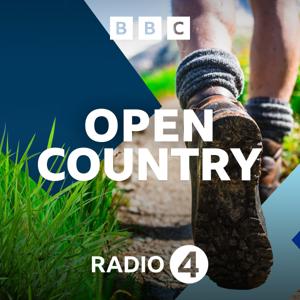

Felicity Evans introduces Open Country from the Teifi Valley in West Wales and finds that the River Teifi once supported the growth of the 19th century woollen industry and sustains traditional coracle making today. In search of the elusive lamprey she discovers a diversity of wildlife found in the river.
At Cenarth Falls she meets Peter Davis, the last coracle maker in the village, and talks about the traditional hand crafting process of this ancient vessel. Peter holds one of only twelve licences on the Teifi River which allows him to fish five days a week from a coracle where his favourite catch is sea trout. She also pops into the National Coracle Centre to talk to owner, Martin Fowler and see his collection of coracles from around the world. Here she discovers that coracles were used at Cenarth to encourage sheep in and out of the river so that their fleeces could be washed before shearing.
In the 19th century there were fifty-two water-powered mills making Welsh flannel, woven blankets and nursing shawls. A visit to the National Wool Museum reveals the value of the Welsh nursing shawl and 'The Mighty Mule' used for spinning threads. She also meets Raymond Jones, the last maker of traditional Welsh flannel left in Wales.
With the resurgence of interest in the use of traditional wool cloth for textile design a bright future is seen for those mills still in operation. However, there is now only one mill left in the valley which is water-powered. Felicity meets Donald Morgan at Rock Woollen Mill in Capel Dewi. Donald's family have woven cloth here for four generations and their mill once supplied electricity to the village. Now Donald makes a variety of woven textiles including woven purses and handbags favoured by the Japanese.
Producer: Sarah Pitt.
 View all episodes
 By BBC Radio 4

4.8
8383 ratings
Felicity Evans introduces Open Country from the Teifi Valley in West Wales and finds that the River Teifi once supported the growth of the 19th century woollen industry and sustains traditional coracle making today. In search of the elusive lamprey she discovers a diversity of wildlife found in the river.
At Cenarth Falls she meets Peter Davis, the last coracle maker in the village, and talks about the traditional hand crafting process of this ancient vessel. Peter holds one of only twelve licences on the Teifi River which allows him to fish five days a week from a coracle where his favourite catch is sea trout. She also pops into the National Coracle Centre to talk to owner, Martin Fowler and see his collection of coracles from around the world. Here she discovers that coracles were used at Cenarth to encourage sheep in and out of the river so that their fleeces could be washed before shearing.
In the 19th century there were fifty-two water-powered mills making Welsh flannel, woven blankets and nursing shawls. A visit to the National Wool Museum reveals the value of the Welsh nursing shawl and 'The Mighty Mule' used for spinning threads. She also meets Raymond Jones, the last maker of traditional Welsh flannel left in Wales.
With the resurgence of interest in the use of traditional wool cloth for textile design a bright future is seen for those mills still in operation. However, there is now only one mill left in the valley which is water-powered. Felicity meets Donald Morgan at Rock Woollen Mill in Capel Dewi. Donald's family have woven cloth here for four generations and their mill once supplied electricity to the village. Now Donald makes a variety of woven textiles including woven purses and handbags favoured by the Japanese.
Producer: Sarah Pitt.

7,639 Listeners

1,046 Listeners

5,520 Listeners

1,799 Listeners

1,763 Listeners

1,049 Listeners

1,920 Listeners
1,979 Listeners

488 Listeners

38 Listeners
64 Listeners

288 Listeners

259 Listeners

250 Listeners
163 Listeners
111 Listeners

267 Listeners
101 Listeners

4,159 Listeners

3,177 Listeners

720 Listeners
238 Listeners

95 Listeners

26 Listeners

650 Listeners