
Sign up to save your podcasts
Or

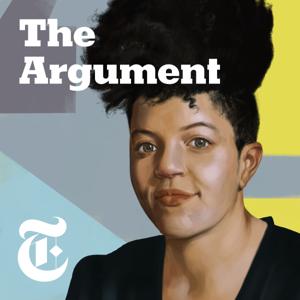


In her two years hosting “The Argument,” Jane Coaston has changed her mind about many things — from court packing to police reform (though not on whether we should contact alien life). But this year, she has changed her political party; once a proud card-carrying member of the Libertarian Party, Jane is now a registered independent. And she isn’t alone: Kyrsten Sinema, former Democrat of Arizona, just became an independent, and we heard from many listeners of “The Argument” with their own experiences of why they switched their political party affiliations. Now wading in new political waters, Jane really wants to know: What happens when your party leaves you behind?
In the final episode of “The Argument,” Jane calls on former congressman Justin Amash of Michigan to help answer that question. While in office, Amash changed his party affiliation from Republican to independent, and then to Libertarian, which made him the first sitting Libertarian Party member in Congress. The two share strong opinions about what the Libertarian Party stands for today and discuss how political parties — whether big or small — should amass power.
Mentioned in this episode:
(A full transcript of the episode will be available midday on the Times website.)
Subscribe today at nytimes.com/podcasts or on Apple Podcasts, Spotify and Amazon Music. You can also subscribe via your favorite podcast app here https://www.nytimes.com/activate-access/audio?source=podcatcher. For more podcasts and narrated articles, download The New York Times app at nytimes.com/app.
Hosted by Simplecast, an AdsWizz company. See pcm.adswizz.com for information about our collection and use of personal data for advertising.
The United States has a long history of military intervention in other countries. Today, Haiti is in crisis. The country is facing gang violence, extreme hunger and intense political turmoil, sparked largely by the assassination of President Jovenel Moïse last year. And with a call from acting Prime Minister Ariel Henry, requesting international military assistance, the United States faces a familiar question: To intervene or not to intervene?
To discuss, Jane Coaston brings together New York Times Opinion columnists Lydia Polgreen and Nick Kristof, who both have firsthand experience in Haiti. Their careers covering crises in other countries have shaped how they view U.S. intervention in the country and elsewhere around the world. “There are more problems in international relations than there are solutions, and I think Haiti, right now, is one example of that,” Kristof says.
Mentioned in this episode:
(A full transcript of the episode will be available midday on the Times website.)
Subscribe today at nytimes.com/podcasts or on Apple Podcasts, Spotify and Amazon Music. You can also subscribe via your favorite podcast app here https://www.nytimes.com/activate-access/audio?source=podcatcher. For more podcasts and narrated articles, download The New York Times app at nytimes.com/app.
Hosted by Simplecast, an AdsWizz company. See pcm.adswizz.com for information about our collection and use of personal data for advertising.
Are the Democrats, finally, in array? They’ve just had the best midterms by a sitting president’s party in about 20 years, and passed significant legislation in 2022. And now House Speaker Nancy Pelosi is stepping down after nearly two decades as leader, without the specter of intraparty battles. So what comes next for Dems, and what should the party’s future strategy be?
Today on “The Argument,” Jane is joined by two writers with close eyes on the Democratic Party. Bhaskar Sunkara is the founding editor of Jacobin and the president of The Nation magazine. Michelle Cottle is a member of the editorial board of The New York Times. They assess the place progressivism has in the Democratic Party, what the incoming generational shift in leadership will bring and how Democrats must win.
(A full transcript of the episode will be available midday on the Times website.)
Unlock full access to New York Times podcasts and explore everything from politics to pop culture. Subscribe today at nytimes.com/podcasts or on Apple Podcasts and Spotify.
This week, we're bringing you an episode from our archives that's more relevant than ever.
After former President Donald Trump’s recent announcement of his 2024 White House bid — and his reinstatement on Twitter — there’s the matter of the media: What role should the press play in preserving democratic institutions?
When we first asked this question back in December 2021, Times Opinion columnist Ross Douthat pushed back on media critics like N.Y.U. associate professor Jay Rosen, who asserted that the press should strive to be “pro-truth, pro-voting, anti-racist, and aggressively pro-democracy.” Ross disagreed, claiming that such a stance could feed more polarization. Together, Jane, Ross and Jay debate how the press should cover politics, and Donald Trump, in a democratic society.
Mentioned in this episode:
(A full transcript of the episode is available on the Times website.)
Unlock full access to New York Times podcasts and explore everything from politics to pop culture. Subscribe today at nytimes.com/podcasts or on Apple Podcasts and Spotify.
Donald Trump is running for president — again. Yet the results of last week’s midterms and the red wave that wasn’t signaled that perhaps Trump’s hold on the Republican Party isn’t so strong after all. But now that he’s back on the presidential stage, what does it mean for the future of the Republican Party? Today on “The Argument,” Jane Coaston convenes two conservative writers to provide an analysis of the party now. Ross Douthat is a columnist for Times Opinion and Kevin D. Williamson is a national correspondent for The Dispatch. Together they discuss the G.O.P.’s post-midterm vibes, how a Trump vs. DeSantis battle could play out and what the conservative movement really stands for.
Note: This episode contains explicit language.
Read more from this episode:
(A full transcript of the episode will be available midday on the Times website.)
Unlock full access to New York Times podcasts and explore everything from politics to pop culture. Subscribe today at nytimes.com/podcasts or on Apple Podcasts and Spotify.
As midterm election results continue to trickle in, one thing is clear: There’s no predicting American voters. After an unexpected showing for Democrats in tight races across the country, Jane Coaston speaks with the Times editorial board member Michelle Cottle and Times Opinion columnist Ross Douthat to recap what happened at the polls. Together they discuss how the Democrats won “the expectations game,” who had the worst night (Donald Trump) and what the clouded results reveal about the bigger story of American democracy. “What we are looking at is an electorate that is feeling unsettled, and neither party made the case that they were going to provide the strength, stability, normalcy to create a wave election,” Cottle says.
(A full transcript of the episode will be available on the Times website.)
Unlock full access to New York Times podcasts and explore everything from politics to pop culture. Subscribe today at nytimes.com/podcasts or on Apple Podcasts and Spotify.
As midterm frenzy reaches its peak, your inbox might be full of imploring fund-raising emails with increasingly desperate headlines: “Just $3 can make all the difference.” “Can you chip in today?” “Ultimately, it’s up to you.” In theory, the small-dollar donation model is a good thing: It enables voters to have a say in who their candidates are and counterbalances the influence of superdonors and industry lobbyists. But as extremist candidates increasingly adopt grass-roots approaches and self-fund-raise their way into Congress, could small-dollar donations be doing more harm to our democracy than good?
Today’s guests come to the debate from different positions. Tim Miller is a former Republican strategist and current writer at large for The Bulwark who believes that there are real dangers to the grass-roots model. “Our online fund-raising system is not only enriching scam artists, clogging our inboxes and inflaming the electorate; it is also empowering our politics’ most nefarious actors,” Miller wrote recently in a guest essay for Times Opinion. On the other side is Micah Sifry, a co-founder of Civic Hall and the writer of The Connector, a newsletter about democracy, organizing and tech. Sifry thinks that, yes, small-dollar donations fund extremists, but they can also enable progressive politicians to hold powerful interests accountable as independently funded candidates. “Some politicians are going to get money for their campaigns who I disagree with, but you’ve got to live with that because the alternative is oligarchy,” Sifry says.
Mentioned in this episode:
(A full transcript of the episode will be available midday on the Times website.)
Unlock full access to New York Times podcasts and explore everything from politics to pop culture. Subscribe today at nytimes.com/podcasts or on Apple Podcasts and Spotify.
Members of Gen Z (Americans under 26 years old) have come of age during the Trump presidency and a pandemic, in an era of protests over police violence, attacks on reproductive rights, rising economic inequality, and frequent school shootings. These young people are calling for major changes, but many aren’t confident that politicians will act with the urgency necessary to carry them out. As Gen Z voters consider the midterms, they are prioritizing the issues, not party allegiance.
But with a history of low turnout, and disenchantment with politics across the spectrum, will young voters be moved enough by the issues to show up at the polls? And if so, will there be enough of them to sway decisive races?
Today on “The Argument,” Jane Coaston convenes three voters in their early 20s to talk about how their families and communities have affected their politics, what matters most to them at the ballot box, and what they wish older Americans and politicians understood about people their age.
(A full transcript of the episode will be available midday on the Times website.)
Unlock full access to New York Times podcasts and explore everything from politics to pop culture. Subscribe today at nytimes.com/podcasts or on Apple Podcasts and Spotify.
Election Day is just three weeks away — and that means it’s peak polling season. For political hobbyists, polling is the new sports betting: gamifying elections to predict outcomes that haven’t always proven accurate. If the 2016 election revealed anything, it’s that polls are sometimes off — very off. So as America faces another high-stakes election, how much faith should we put in them?
On today’s episode, Jane Coaston brings together two experts to diagnose what we’re getting wrong in both how we conduct polls, and how we interpret the data they give us. Margie Omero is a longtime Democratic pollster and focus group moderator. Nate Silver, who prefers to call himself a “forecaster” rather than a pollster, is the founder and editor in chief of FiveThirtyEight. Together, the two tackle how polling both reflects and affects the national political mood, and whether our appetite for election predictions is doing democracy more harm than good.
(A full transcript of the episode will be available midday on the Times website.)
Unlock full access to New York Times podcasts and explore everything from politics to pop culture. Subscribe today at nytimes.com/podcasts or on Apple Podcasts and Spotify.
America is divided and battling many different internal “wars” — over politics, culture, language, religion. Is it possible all this internal division could culminate in a civil war? Today’s episode of “The Argument” brings together Jamelle Bouie and Tim Alberta to assess. Bouie is a Times Opinion columnist and historian of America’s Civil War. Alberta is a staff writer at The Atlantic and made the case that the F.B.I. Mar-a-Lago search is the tipping point for political violence that could put our democracy at stake.
Mentioned in this episode:
(A full transcript of the episode is available on the Times website.)
Unlock full access to New York Times podcasts and explore everything from politics to pop culture. Subscribe today at nytimes.com/podcasts or on Apple Podcasts and Spotify.
From the publisher's feed

8,830 Listeners
6,774 Listeners
3,925 Listeners
9,181 Listeners

1,506 Listeners

2,069 Listeners

144 Listeners

111,820 Listeners
2,397 Listeners

1,520 Listeners
12,626 Listeners

309 Listeners

7,134 Listeners
5,205 Listeners

466 Listeners
51 Listeners

2,347 Listeners

380 Listeners

6,679 Listeners

5,549 Listeners

15,904 Listeners
1,500 Listeners

10,690 Listeners
1,656 Listeners
3,524 Listeners

13 Listeners
611 Listeners

87 Listeners

0 Listeners