
Sign up to save your podcasts
Or

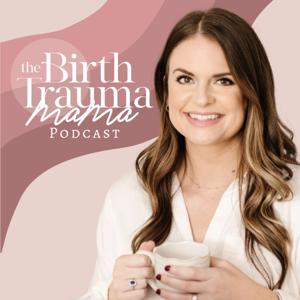
By Kayleigh Summers
Birth trauma is the dark and sometimes scary side of pregnancy & postpartum that no one wants to talk about. But, we're here to change that! I'm Kayleigh, a licensed therapist and birth trauma
... more

4.9
9090 ratings


The podcast currently has 274 episodes available.
The most played episodes among Podcast App listeners.
In this listener series episode of the Birth Trauma Mama Podcast, Kayleigh sits down with Melissa to hear her story of pregnancy, unexpected complications, premature birth, and an almost six-month NICU stay. Melissa shares how her experience at 25–27 weeks pregnant turned her birth plans upside down and how her son’s congenital heart defect and battle with NEC added layers of fear and uncertainty to an already traumatic experience. But Melissa’s story doesn’t end in the NICU. Six years later, she reflects on the many pieces that have supported her healing: therapy, medication, movement, relationships, community, and ultimately finding meaning in what she experienced. Today, Melissa works as a NICU family support specialist, offering support to families walking through some of the same uncertainty she once experienced herself. This conversation is a beautiful reminder that healing doesn’t erase the pain or grief of what happened. Sometimes, it means learning how to hold the pain and the beauty at the same time. In this episode, we talk about:💔 Experiencing pregnancy complications and an unexpected hospital admission at 25 weeks🏥 Spending nearly three weeks on antepartum while trying to keep baby inside as long as possible🫀 Finding out her baby had a congenital heart defect and facing uncertainty around his diagnosis🌊 Grieving the birth experience she had envisioned and learning to pivot when circumstances changed🧠 Letting go of the idea that she had somehow caused or manifested her pregnancy complications👶 Giving birth to her son prematurely at 27 weeks and navigating the immediate NICU experience🚨 Her son’s congenital heart defects, surgery, and diagnosis of necrotizing enterocolitis (NEC)🏥 Spending almost six months in the NICU🤍 The complicated emotions of loving your baby while also being surrounded by medical equipment, alarms, and uncertainty🫂 Finding community through other parents and podcasts when she felt isolated during the pandemic🧠 Seeking professional support through therapy and medication💍 How trauma and parenthood changed her marriage, identity, and life🌱 Learning that healing can be made up of many different pieces rather than one single thing✨ Finding meaning in her experience six years later🏥 Melissa’s full-circle journey of now working as a NICU family support specialist🌈 Finding beauty alongside grief and pain without minimizing what happened💛 A reminder that there is no timeline for when someone should be able to find hope or meaning in their birth traumaMelissa’s story is a powerful reminder that you can grieve what happened while also creating a meaningful life beyond it. Healing doesn’t have to mean forgetting, minimizing, or finding a silver lining. Sometimes it simply means becoming curious about who you are now and finding the support you need along the way. For more birth trauma content and a community full of love and support, head to my Instagram at @thebirthtrauma_mama. Learn more about the support and services I offer through The Birth Trauma Mama Therapy & Support Services. Disclaimer - The views and opinions expressed by guests on The Birth Trauma Mama Podcast are their own and do not necessarily reflect the official stance, views, or positions of The Birth Trauma Mama Podcast. The content shared is for informational purposes only and should not be considered as professional or medical advice and/or endorsement.

In this episode of the Birth Trauma Mama Podcast, Kayleigh sits down with Lo Mansfield, MSN, RNC-OB, CLC, an OB nurse, educator, mom of four, and creator of The Labor Mama. Lo shares her journey into nursing, what she calls the “art of nursing,” and how her experiences both as a nurse and as a mother have shaped the way she thinks about birth. Kayleigh and Lo dive into the importance of nuance, autonomy, and hope in birth education, especially for people planning a hospital birth after a previous traumatic experience. They talk about the ways that interventions can become unnecessarily stigmatized, why informed consent means having choices in both directions, and how education can prepare you for what happens in a hospital without labeling every intervention as inherently good or bad. They also discuss the power of staying curious, asking questions, understanding the physiological process of labor, and remembering that what happened in a previous birth does not necessarily determine what will happen next time. In this episode: 🌿 Lo's journey into nursing — How her mother's experience with cancer opened her eyes to the profound impact healthcare providers can have on patients and families. 🩺 The “art of nursing” — Why the human-to-human connection between a healthcare provider and patient can be just as important as the clinical care itself. 💞 Where magic and trauma can happen — How the way a provider responds to a difficult or imperfect clinical situation can dramatically shape a patient's experience. 👩⚕️ Do you have to be a mom to be a great OB nurse? — Lo and Kayleigh discuss the assumption that healthcare providers need to have experienced something personally in order to understand or care for their patients well. 🏥 Can you have a positive hospital birth? — A nuanced conversation about hospital birth, home birth, birth centers, and the importance of respecting different people's choices about where they feel safest. ⚖️ Autonomy in both directions — Why true autonomy means supporting someone's choice to decline an intervention and someone's choice to have one. 💉 Reframing interventions as tools — Inductions, epidurals, cervical exams, and other interventions don't have to be categorized as inherently “good” or “bad.” Understanding the options allows people to make decisions that fit their circumstances. 📚 The importance of birth education — Lo explains why understanding what typically happens when you arrive at a hospital can help you feel more prepared and less overwhelmed. 🌈 Centering hope after birth trauma — Why a previous traumatic birth doesn't mean your next birth will unfold the same way, and why distinguishing between what is possible and what is probable can be so important. 🤝 The value of a doula — How an additional support person can provide advocacy and continuity, particularly for someone entering birth with a history of trauma. ❓ Stay curious — Ask questions, seek clarification, and understand what is happening rather than allowing your brain to fill in the gaps with fear. 🧠 Trauma-informed preparation — Kayleigh and Lo discuss the role that therapy and trauma-specific support can play when preparing for a subsequent birth. ✨ Look for what's going right, too — In the middle of worrying about what could go wrong, don't lose sight of the signs that labor is progressing and things are going well. Connect with Lo Lo Mansfield is an OB nurse, childbirth educator, lactation counselor, mom of four, and the creator of The Labor Mama, where she shares evidence-informed education about pregnancy, birth, and postpartum. 🔗 The Labor Mama: Connect with Lo and explore her birth education resources through her online platform. For more birth trauma content and a community full of love and support, head to my Instagram at @thebirthtrauma_mama. Learn more about the support and services I offer through The Birth Trauma Mama Therapy & Support Services. Disclaimer - The views and opinions expressed by guests on The Birth Trauma Mama Podcast are their own and do not necessarily reflect the official stance, views, or positions of The Birth Trauma Mama Podcast. The content shared is for informational purposes only and should not be considered as professional or medical advice and/or endorsement.
On today’s listener series episode of the Birth Trauma Mama Podcast, Kayleigh welcomes Shelby to share the story of her traumatic birth experience and the unexpected complications that changed her life forever. What began as a planned C-section due to placenta previa and cholestasis quickly became a life-threatening emergency involving severe hemorrhaging, multiple interventions, blood transfusions, and ultimately an emergency hysterectomy. Shelby later learned that placenta accreta was the underlying cause of her hemorrhage. Shelby opens up about the physical and emotional aftermath of her birth trauma, including the numbness and shock she experienced, the grief of losing her ability to have more children, the pressure she felt around breastfeeding, and the importance of getting support. She also shares how medication, her husband and family, and hearing other birth trauma stories helped her heal. Most importantly, Shelby reminds us that birth trauma doesn't simply disappear because a healthy baby came home—and that partners can experience trauma, too. In this episode, Shelby and Kayleigh talk about: 🩸 A life-threatening postpartum hemorrhage — Shelby describes losing nearly five liters of blood and requiring multiple blood transfusions and emergency interventions. 🏥 The rapid escalation of her birth experience — From a planned C-section to a room full of doctors, a Bakri balloon, Jada, uterine embolization, and ultimately an emergency hysterectomy. 💔 The emotional impact of an emergency hysterectomy — Shelby talks about the complicated grief of knowing she would not be able to have another child and how difficult it was to process that reality while also caring for her newborn. 🧠 The numbness that can follow birth trauma — Shelby shares how she initially struggled to understand the severity of what had happened to her and how the reality of her trauma slowly began to sink in after she returned home. 🍼 Breastfeeding, formula, and postpartum pressure — Shelby opens up about feeling pressure to pump and breastfeed despite her body recovering from massive blood loss and multiple surgeries, and how she ultimately gave herself permission to prioritize her own healing. 💊 Finding support through medication — Shelby shares why antidepressant medication became an important part of her recovery and why she believes there should be less stigma around getting the help you need. 🤍 The importance of community and hearing other stories — Listening to other birth trauma survivors helped Shelby realize she wasn't alone, and eventually inspired her to share her own story. 👨👩👦 Supporting partners after traumatic births — Shelby emphasizes that partners can also experience significant trauma while watching someone they love fight for their life, and encourages people to check in on them, too. 🌱 Healing while carrying grief — Even years later, moments involving other babies and the thought of her son not having a sibling can bring up difficult emotions. Shelby talks about learning to hold both the grief and gratitude at the same time. ✨ Finding light after trauma — Shelby reflects on how her experience has changed her as a mother, making her more present and patient, while acknowledging that healing doesn't mean forgetting or erasing the pain. This episode is a powerful reminder that a healthy baby does not erase a traumatic birth. You can be deeply grateful for your child while still grieving what happened to you—and both things can be true at the same time. For more birth trauma content and a community full of love and support, head to my Instagram at @thebirthtrauma_mama. Learn more about the support and services I offer through The Birth Trauma Mama Therapy & Support Services. Disclaimer - The views and opinions expressed by guests on The Birth Trauma Mama Podcast are their own and do not necessarily reflect the official stance, views, or positions of The Birth Trauma Mama Podcast. The content shared is for informational purposes only and should not be considered as professional or medical advice and/or endorsement.
In this episode of the Birth Trauma Mama Podcast, Kayleigh welcomes Stacy to share her powerful story of experiencing birth trauma through two very different pregnancies. As a labor and delivery nurse, Stacy entered motherhood with an understanding of the medical side of birth, but that knowledge made it even more difficult to process what happened when both of her births took unexpected and traumatic turns. Her first daughter was born via C-section after developing gestational hypertension, followed by a significant postpartum hemorrhage, severe anemia, fluid overload, and a difficult recovery during the COVID-19 pandemic. When Stacy became pregnant again, she discovered she was expecting twins. At 33 weeks and 5 days, she was diagnosed with preeclampsia with severe features and underwent an urgent C-section. What followed was a life-threatening postpartum hemorrhage, magnesium toxicity, multiple emergency procedures, and a massive transfusion of 16 units of blood and blood products. Stacy shares what it was like to wake up in the ICU, feel disconnected from her newborn daughters, and later realize just how close she had come to dying. In this vulnerable conversation, Stacy also opens up about the emotional aftermath of her births — postpartum anxiety, grief, guilt, losing her sense of identity, the loneliness of recovering during COVID, and the pressure she felt to simply be grateful because everyone had survived. Ultimately, her healing began when she gave herself permission to acknowledge that what happened was traumatic, without comparing her experience to anyone else's. ✨ In this episode, Stacy shares: 🩺 What it was like experiencing birth trauma as both a patient and a labor and delivery nurse 💔 The grief of having the birth experience she envisioned taken away from her 🩸 Her first postpartum hemorrhage, severe anemia, and difficult recovery 👶 Discovering she was unexpectedly pregnant with twins — and the complicated emotions that came with that news ⚠️ Developing preeclampsia with severe features during her twin pregnancy 🚨 Experiencing a life-threatening postpartum hemorrhage and emergency surgery 🏥 Waking up in the surgical ICU and later learning how serious her condition had been 🩸 Receiving 16 units of blood and blood products after losing more than half of her blood volume 👯♀️ The surreal experience of meeting her premature twin daughters after nearly dying 🦠 How the COVID-19 pandemic changed her postpartum experience and limited the support surrounding her family 🧠 Struggling with postpartum anxiety, grief, anger, guilt, and feeling like she had lost herself 💭 The complicated reality of loving your children while still grieving the life and experiences you thought you would have 🤍 Learning that asking for help, setting boundaries, and caring for yourself aren't selfish 🌱 Why trauma doesn't disappear simply because the ending was positive 💬 The importance of sharing your story and hearing others say, “That is exactly how I feel” 🫶 A powerful reminder that you don't have to justify your trauma or compare it to someone else's for it to matter Stacy's story is an important reminder that a positive outcome does not erase a traumatic experience. You can be grateful that your family survived and still be heartbroken about what happened. You can deeply love your children and grieve the motherhood experience you thought you would have. And most importantly, if it changed you, it matters — and you deserve healing. You can follow Stacy on instagram: @thatsmestacy For more birth trauma content and a community full of love and support, head to my Instagram at @thebirthtrauma_mama. Learn more about the support and services I offer through The Birth Trauma Mama Therapy & Support Services. Disclaimer - The views and opinions expressed by guests on The Birth Trauma Mama Podcast are their own and do not necessarily reflect the official stance, views, or positions of The Birth Trauma Mama Podcast. The content shared is for informational purposes only and should not be considered as professional or medical advice and/or endorsement.
What happens when we look at perinatal patient safety as more than protocols, checklists, and clinical outcomes? In this episode of the Birth Trauma Mama Podcast, Kayleigh sits down with Cheniqua Morales, a perinatal patient safety nurse, to talk about the human side of making birth safer. Cheniqua shares how her experiences as a doula, labor and delivery nurse, educator, and patient safety leader shaped the way she approaches this work and why relationships, trust, communication, and actively listening to patients have to come before the toolkit. Together, Kayleigh and Cheniqua explore the power dynamics within healthcare, the importance of returning autonomy to patients, the role of simulation in preparing clinical teams for emergencies, and why patient stories can move clinicians in ways that data alone often can't. Cheniqua also shares powerful examples from her work advocating for women of color and explains why there is hope for change happening behind the scenes in hospitals every day. ✨ In this episode, we talk about: 🩺 What a perinatal patient safety nurse actually does and how Cheniqua's career led her to this role 🤝 Why relationships and connection have to come before protocols, toolkits, and checklists 👂 The importance of actively listening to patients and making sure they feel seen and heard 💬 How communication, accountability, and other “soft skills” can directly impact patient safety 📝 Why birth plans can be an opportunity for shared decision-making and collaboration, rather than something clinicians simply accept or reject ⚖️ The power imbalance between patients and providers and why clinicians have a responsibility to help restore patient autonomy 🖤 The history of racism in medicine and how it continues to shape experiences and outcomes for Black women and women of color 🚨 How simulation training prepares interdisciplinary teams to respond to obstetric emergencies 🗣️ Why nurses need to feel empowered to speak up during emergencies and bring their observations and recommendations to the team 🏆 Why healthcare teams need to understand their individual roles and communicate effectively rather than expecting one person to carry the entire cognitive load ❤️ Why stories can move hearts in ways that data doesn't—and why sharing birth trauma stories can help clinicians understand the real human impact of the care they provide 🌱 The hope that comes from knowing there are people working behind the scenes to make perinatal care safer, even within a deeply imperfect system 🎯 Why the goal isn't simply getting clinicians to “buy in,” but helping them take ownership of better, safer patient care For more birth trauma content and a community full of love and support, head to my Instagram at @thebirthtrauma_mama. Learn more about the support and services I offer through The Birth Trauma Mama Therapy & Support Services. Disclaimer - The views and opinions expressed by guests on The Birth Trauma Mama Podcast are their own and do not necessarily reflect the official stance, views, or positions of The Birth Trauma Mama Podcast. The content shared is for informational purposes only and should not be considered as professional or medical advice and/or endorsement.
The podcast currently has 274 episodes available.

2,168 Listeners

1,226 Listeners

1,033 Listeners

8,161 Listeners
452 Listeners

25,863 Listeners

728 Listeners
1,298 Listeners

747 Listeners
556 Listeners
663 Listeners

17,874 Listeners

3,467 Listeners

10,205 Listeners

312 Listeners