
Sign up to save your podcasts
Or

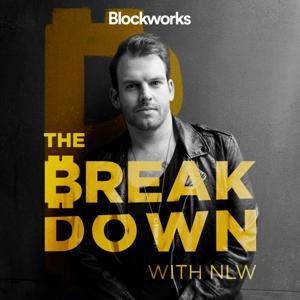


The full week's episodes in one (plus a bonus TL;DR on ZeroHedge's deplatforming.
Yesterday Chainlink released price reference data for 25 of its decentralized oracle networks which, together, power more than $100m in DeFi.
On this special interview episode, @nlw talks with Sergey Nazarov and Kain Warwick, the founders of Chainlink and Synthetix respectively about:
The best way to fund open source projects remains a question, and one that - in the context of crypto protocols - has never had higher stakes. Over the last few weeks, we’ve seen live action experiments in a number of different approaches.
Gitcoin grants used a quadratic funding program to match grants to technology builders and media creators in Ethereum
After months and months of concerted community debate and conversation, Zcash will implement a new Dev Fund of 20% of the block rewards after the Founders Reward runs out in November, splitting it between the Electric Coin Co (7%), Zcash Foundation (5%) and 3rd party developers (8%)
A consortium (cartel?) of the 4 largest BCH mining pools tried to insist upon a 12.5% block reward diversion to a new dev fund, with a threat to orphan blocks that didn’t comply. The plan ran into a barrier when Roger Ver’s bitcoin.com backed away.
Also in this episode, @nlw looks at the latest in CBDCs - including Japan’s continued hedging that they’re preparing for the possibility of needing to move quickly and Cambodia’s announcement that they will be implementing a CBDC this quarter.
Finally, Andrew Yang took a few minutes yesterday to talk about cryptocurrencies and why regulation with the intent to stop them would be doomed to fail.
In a Breakdown exclusive, Binance US CEO announces that the exchange will begin supporting staking, starting with ALGO and ATOMs.
On this episode, Catherine and I discuss:
We’re over $9,000! That means a lot of good things, of course. But any price increase brings with it increased scrutiny and, yes, increased FUD. The question for this time around is whether the FUD is the same old same old or something new.
In this episode, @nlw looks at three emergent (and continued) areas of FUD, including: 1) accusations that the bitcoin community is rooting for calamity as the safe haven narrative takes hold; 2) an updated “crypto is for criminals” narrative with more emphasis on state-level enemies; 3) a new, more economically vindictive green/energy waste narrative.
Importantly, the question isn’t so much whether these new categories of FUD will come to fruition, but what can be done about them.
From the publisher's feed
1,204 Listeners

897 Listeners
769 Listeners
2,190 Listeners

643 Listeners
1,833 Listeners
292 Listeners
279 Listeners

132 Listeners
1,035 Listeners
235 Listeners
177 Listeners
164 Listeners
437 Listeners
131 Listeners

53 Listeners