
Sign up to save your podcasts
Or



Key Takeaways:
Innovating Deal Search: The meeting covered a creative strategy of using New York City energy usage data and public financial filings to identify “phantom vacancies” and financial distress in office buildings—giving investors an edge in finding off-market deals.
Community & Education: Tyler Cauble launched updates about the CRE accelerator mastermind, emphasizing personalized education, affordable resources, and networking opportunities for investors.
Leveraging Technology: The team discussed integrating AI tools such as ChatGPT for streamlining property document review, underwriting, and lease abstractions—vastly increasing efficiency in property analysis.
Personal and Project Updates: Tyler shared his experiences from his honeymoon and the opening of his hotel, along with an upcoming documentary on the lengthy hotel project.
Action and Goal-Setting: Attendees were encouraged to set clear commercial real estate goals for the year and take specific action steps toward those goals.
Regular Office Hours: Weekly live office hours were announced, offering ongoing community Q&A and deal review sessions.
Key Takeaways:
McDonald's treats its business as a real estate venture, owning much of the land under its restaurants and leasing it back to franchisees, enabling stable cash flow and capital for expansion.
Starbucks, in contrast, leases nearly all its store locations, allowing rapid expansion, more flexible market entry, and the ability to invest in operations and marketing instead of property.
McDonald's strategy provides long-term stability and predictable returns, making it ideal for patient, long-term investors who value control.
Starbucks prioritizes speed, flexibility, and asset-light growth, which enables quicker market penetration and has proven effective for brand building and innovation.
For real estate investors, Starbucks is considered a high-quality, secure tenant offering predictable rental income via long-term leases, though it is best suited for those seeking passive income rather than active, hands-on investment.
Both companies’ approaches are successful but optimized for different goals: McDonald's for stability and control; Starbucks for speed and adaptability.
The conversation also included tips and insights for investors interested in buying Starbucks-leased properties.
Key Takeaways:
Waterfront Industrial & Blue Highways: Using waterfronts for industrial logistics is an emerging trend, with efforts in NYC to shift freight from road to boat transport, relieving congestion and creating new opportunities for flex-space developers.
Marijuana Industry & Small Towns: Cannabis companies are revitalizing struggling towns by providing jobs and increasing tax revenue, though they face regulatory and licensing hurdles.
Silicon Valley Real Estate: Real estate development in the region is at its lowest since 2013, with high leasing activity but elevated vacancy rates. Older office assets may provide conversion opportunities.
Medical Office Buildings (MOBs): MOBs are a stable and in-demand investment, with strong occupancy, resilient rents, and increasing demand driven by healthcare trends.
Multifamily Delinquencies: Multifamily property loan defaults have risen, with delinquencies at nearly 7%. Higher interest rates and flat rents present challenges for owners and investors.
Overall Market Opportunities: Watch for flex-space and last-mile logistics opportunities, be open to cannabis sector tenancies, pursue MOB investment and conversions of underutilized office space, and approach multifamily investments cautiously.
Key Takeaways:
There are at least 10 different ways to make money from a single commercial real estate deal, including:
Brokerage fee (buying/selling commission)
Acquisition fee
Property management fees
Asset management fee
Development fee
Leasing fee
Disposition (sale) fee
Additional brokerage fee at sale
Equity (ownership share in the deal)
Debt (financing structure, sometimes with added fees)
Combining these fees and equity can help sustain an investor, even on smaller ($1 million) projects.
Fee percentages and structures are flexible and scalable depending on deal size, property type, and management choices.
The transcript includes real-world advice, such as strategies for growing a property management business, managing tenants with below-market rents, and not relying on credit cards for financing commercial real estate.
Personal and professional growth—such as company expansion, sabbaticals, and relationship-building—are emphasized as integral to real estate success.
Key Takeaways:
Chicago’s 2008 parking meter deal resulted in lost long-term revenue for the city, with investors earning profits and retaining rights for decades.
Monroe Carroll, Sr.’s initiative to monetize underused railroad land in the 1950s evolved into Central Parking, benefiting from legal requirements and the car boom.
The parking lot industry grew due to high operating margins, captive demand, and minimal maintenance, drawing attention from Wall Street and institutional investors.
The business model has expanded into industrial outdoor storage, supported by trends like e-commerce growth and infrastructure investment, resulting in surging demand and rental rates.
Operators have adapted to changes such as ride-sharing and eliminated parking minimums by introducing new uses: EV charging hubs, multi-purpose lots, and last-mile logistics.
The enduring insight: overlooked, low-competition “boring” businesses (like parking lots and storage yards) can offer stable, significant long-term returns for savvy investors.
Key Takeaways:
Practicing daily underwriting significantly improves deal analysis skills, and many viable deals can be found in common online marketplaces.
Tyler advised against purchasing a specific industrial condo deal due to unfavorable returns and risks, stressing the importance of careful deal evaluation.
For small family offices, use a holding company or trust with separate LLCs for each asset to maximize asset protection and management.
Work with a specialized real estate CPA for optimized tax planning and execute 1031 exchanges by preparing ahead of asset sales.
Allocate portfolios with a mix of stabilized assets, value-add properties, and selective higher-risk investments according to the family’s desired involvement and goals.
Key Takeaways:
Data centers, senior housing, self-storage, and student housing are the niche real estate asset classes poised to shape investment trends in 2026, but each comes with unique opportunities and challenges.
Office sector recovery is uneven: top-tier buildings in strong markets are performing well, while lower-quality or less-central offices continue to struggle.
Economic uncertainty remains high for 2026; interest rates, inflation, and capital availability are top concerns for real estate investors, with overall optimism dropping since last year.
Regulatory risk and transparency are major issues—exemplified by the controversial Trump ballroom project, which bypassed normal review processes and raised concerns about public-private project standards.
The 50-year mortgage proposal is widely criticized, offering slightly lower monthly payments at the cost of much greater interest paid over time and slow equity accumulation, making it unattractive for most buyers.
Key Takeaways:
Strong and growing flex space demand:
This trend is driven by e-commerce growth (like Amazon’s logistics), changes in urban development, and insufficient new supply of small bay industrial spaces.
Developer focus on larger projects leads to small space shortages:
Most new construction is for big warehousing, leaving limited availability of flexible, smaller units, especially near urban cores where older small bays are repurposed or demolished.
Versatility attracts diverse tenants and businesses:
Flex spaces serve trades, startups, studios, recreation, and more, allowing owners to backfill vacancies easily and appeal to multiple industries.
Careful tenant vetting is essential:
Owners are advised to request years of tax returns and financial statements and can set stricter requirements due to few regulatory limits (unlike residential leasing).
Phase new builds and use broker expertise to test demand:
Start with smaller construction phases and consult local brokers to gauge real market demand before committing to larger developments, minimizing financial risk.
Key Takeaways:
Building Trust and Relationships is Essential:
Evan Holiday was able to raise $1M in 24 hours not by chance, but by spending years building trust, credibility, and relationships with his audience.
Start Building Your Brand Early:
Successful fundraising starts long before the ask; by consistently sharing your journey, highlighting others, and demonstrating your values publicly.
Lead with Value, Not Just the Ask:
Evan created value for his network by focusing on others and providing insights, rather than only talking about his own business needs.
Communicate Your Mission Clearly:
People invest in individuals whose values and missions they understand and align with. Evan’s focus on impact and community attracted like-minded investors.
Raise Trust Before Raising Capital:
The most effective fundraising happens when you’ve established trust first, so your network is ready to support you when opportunities arise.
Consistency Matters:
Showing up consistently with integrity builds a reputation that encourages people to work with and invest in you.
Key Takeaways:
Market Sentiment & Outlook:
Commercial real estate is facing uncertainty into 2026, primarily due to macroeconomic volatility, interest rates, and capital availability.
While capital was readily available previously, concern about raising funds or qualifying for loans is now considered the top risk by industry leaders.
Most investors still expect to increase real estate holdings to hedge against inflation and diversify portfolios.
Sector Performance & Trends:
Some sectors like digital economy properties (i.e., data centers), logistics, warehousing, and industrial are performing well and attracting attention.
Office investments are regaining traction, contrary to recent trends suggesting office decline.
The hotel sector has struggled, with deal value down significantly year-over-year.
Retail, especially malls, continues to be challenged, with shifting consumer behavior and design shortcomings cited as reasons.
Development Climate:
Rising construction costs, interest rates, and property taxes are obstacles for developers.
Flex space development continues where supply is low.
Affordable, "missing middle" housing and zoning reform are needed to address shortages and promote multi-use developments.
Investment Strategy:
Investors are more cautious, screening deals more carefully and not as aggressive as previous years.
Preference for acquiring properties to hedge against inflation and for portfolio diversification.
U.S. remains a preferred market, but interest in other countries (India, Germany, UK, Singapore) is rising, especially among larger firms.
Audience/Participant Concerns:
Questions targeted real estate taxes, staffing, capital raising, and partnership selection.
Equity/capital raising remains a perennial challenge, given market dynamics and investor situations.
Mixed-Use Development Advocacy:
Strong views were expressed favoring conversion of single-use malls into mixed-use, live-work-play communities to revitalize retail real estate.
From the publisher's feed
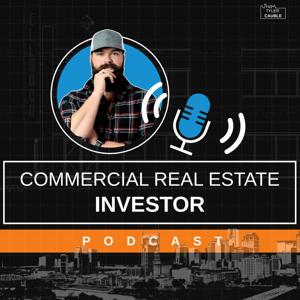
Welcome to The Commercial Real Estate Investor Podcast where your host, Tyler Cauble, covers the ins and outs building wealth and passive income through investing in commercial real estate. Tune in…

16,682 Listeners

703 Listeners

3,841 Listeners

994 Listeners

145 Listeners

1,394 Listeners
407 Listeners
424 Listeners

505 Listeners
617 Listeners

700 Listeners

318 Listeners

31 Listeners

894 Listeners
838 Listeners