
Sign up to save your podcasts
Or

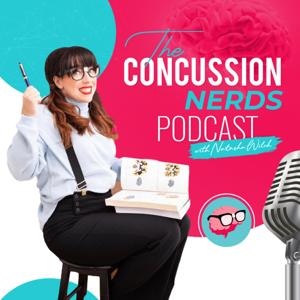
By Natasha Wilch


4.7
99 ratings


The podcast currently has 151 episodes available.
The most played episodes among Podcast App listeners.
Are you struggling to navigate your child's concussion recovery without a clear roadmap from their doctors? Most parents are left feeling overwhelmed by a confusing healthcare system that wasn't built for family advocacy, leaving them unsure of which specialists to see or whether their child is actually receiving the right treatment. Watching your child suffer from months of persistent symptoms—while missing out on school, sports, and their social life—is agonizing. Pushing through the pain or waiting for symptoms to magically disappear only delays healing, but with a targeted multi-system approach, early advocate intervention, and the right care team, you can actively guide your child back to the activities they love. BY THE TIME YOU FINISH LISTENING, YOU'LL DISCOVER: The crucial questions to ask at every stage of care—from the emergency room to your follow-up provider. Why normal MRI and CT scans do not rule out a concussion, and what typical youth recovery timelines actually look like. How to spot the green and red flags of concussion treatment so you know if your child is getting proper, progressive care. Practical strategies to support your child's nervous system and social well-being at home without making recovery harder. Scroll up, hit play, and arm yourself with the map you need to get your child the expert care they deserve! Ready to raise your standard of care and stop hitting clinical ceilings? Join the waitlist for the revamped Concussion Nerds Fellowship 2.0! Doors open this fall for our brand-new cohort, limited to just 25 clinicians. Joining isn't a commitment—it simply gives you first priority to claim your seat before they're gone. 👉 Join the Waitlist Here: https://www.natashawilch.com/concussion-nerds-waitlist Let's connect! Instagram: @natasha.wilch https://www.instagram.com/natasha.wilch/ Email: [email protected] Website: https://www.natasha-wilch.com

Are post-concussion relationship struggles leaving you and your loved ones feeling distant, misunderstood, or completely exhausted? You or someone you love might be falling into the trap of treating post-concussion relationship friction as purely a "social" or "personality" issue—or worse, brushing these hard conversations under the rug in fear of becoming a burden. When invisible symptoms like cognitive fatigue, emotional dysregulation, and word-finding struggles go unnamed, resentment quietly builds, leaving partners isolated and families feeling fragmented. The solution starts with pulling these raw truths out of the closet, putting clear language to the hidden neurological strains, and proactively naming the issues together so you can rebuild connection instead of growing apart. BY THE TIME YOU FINISH LISTENING, YOU'LL DISCOVER: Why post-concussion relationship strain is rooted in real physiological and neurological shifts—not a lack of effort or caring. How unaddressed symptoms like reduced social capacity, word-finding issues, and emotional dysregulation accidentally trigger family role changes and ambiguous loss. The critical difference between letting invisible resentment build and taking the uncomfortable first step of naming your struggles to initiate true relationship repair. How clinicians and support networks can actively bridge the communication gap to help families heal together rather than falling apart. No matter where you are on this healing journey, remember that naming the uncomfortable stuff is where true connection begins—so share this episode with someone who needs it, keep the conversation open, and we'll see you next week! Ready to raise your standard of care and stop hitting clinical ceilings? Join the waitlist for the revamped Concussion Nerds Fellowship 2.0! Doors open this fall for our brand-new cohort, limited to just 25 clinicians. Joining isn't a commitment—it simply gives you first priority to claim your seat before they're gone. 👉 Join the Waitlist Here: https://www.natashawilch.com/concussion-nerds-waitlist Let's connect! Instagram: @natasha.wilch https://www.instagram.com/natasha.wilch/ Email: [email protected] Website: https://www.natasha-wilch.com
Have you ever wondered why some of your concussion clients suddenly hit a total plateau in their recovery, or why bringing up an insurance claim or lawsuit creates an immediate wall of tension in the room? Navigating concussion care is complex enough, but when you add insurance disputes, personal injury claims, and legal battles into the mix, the healing process often grinds to a halt. As clinicians, it is far too easy to fall into the trap of assuming a patient in litigation is "malingering," or to get caught in a chart-note tug-of-war that disrupts your care. On the flip side, clients are left feeling constantly judged, hypervigilant, and stuck in a system that forces them to fight for their limitations instead of celebrating their wins. This unspoken friction keeps the nervous system locked in fight-or-flight, leaving clinicians second-guessing their documentation and patients terrified that showing signs of healing will ruin their legal claim. But you don't have to choose between legal realities and clinical progress. By understanding how legal stress actively amplifies physical symptoms and creates a massive nocebo effect, you can protect the therapeutic alliance, chart with objective confidence, and help your clients heal—even while their case is ongoing. BY THE TIME YOU FINISH LISTENING, YOU'LL DISCOVER: The crucial difference between rare malingering (1–5%) and symptom magnification—and why baseline stress, not deception, is usually what drives amplified pain and dizziness. How the legal system's demand to "prove your disability" creates a nocebo effect that directly counteracts a brain-healing mindset. Practical documentation strategies for clinicians to stay accurate, keep your professional boundaries clear, and avoid getting caught in the legal crosshairs. How to guide clients through the profound nervous system reset and identity shift that happens once the heavy weight of a legal claim is finally lifted. Hit play to discover how to navigate the complex overlap of legal battles and concussion recovery so you can confidently guide your clients toward deep, lasting healing. Let's connect! Instagram: @natasha.wilch https://www.instagram.com/natasha.wilch/ Email: [email protected] Website: https://www.natasha-wilch.com Join the Clinician's Edge to have Your Weekly Taste of Neuro Wisdom here: https://www.natashawilch.com/clinicians-edge Join the Concussion Mini School and Membership! Get the support and resources you need for concussion recovery: https://www.natashawilch.com/concussionminischool
Have you ever pulled into your driveway and suddenly realized you don't even remember the actual drive home? We've all gone on autopilot during a routine commute, but behind the wheel, your brain is actually running a high-stakes, multi-system marathon. When you or your clients are recovering from a concussion, driving isn't just a daily task—it's an incredibly heavy, cognitively exhausting hurdle. Yet, despite how critical driving is for an individual's independence, it remains one of the biggest blind spots in clinical practice, leaving patients to dangerously figure out their readiness entirely on their own. Navigating an intersection, tracking a pedestrian on the sidewalk, and managing headlight glare require peak performance from the visual, vestibular, and cognitive systems—the exact areas most vulnerable after a head injury. Returning to the road too soon risks a subsequent accident, while avoiding it entirely out of fear leads to long-term anxiety and isolation. The solution isn't to guess or wait until someone "feels fine" in their living room; it's about breaking down the complex neurological demands of the road and utilizing a structured, progressive framework to rebuild that independence safely. BY THE TIME YOU FINISH LISTENING, YOU'LL DISCOVER: The Hidden Cognitive Marathon of Driving: Why a routine trip to the grocery store demands an intense combination of divided attention, rapid visual processing, and executive function. The Clinical Blind Spot: Why standard clinic visits often fail to accurately assess driving readiness, and how occupational therapy driver rehab services can bridge the gap. A 5-Stage Progressive Return-to-Driving Framework: A step-by-step roadmap to transition safely from a passenger to a confident driver without overloading the nervous system. The Co-Pilot Strategy and Safety Boundaries: Crucial rules for practicing on the road, including how to handle "bad brain days" and when to safely pass the keys back to a partner. Whether you are a clinician looking to step up your care and confidently guide your complex clients, or a survivor trying to navigate your own healing journey, this episode is going to change the way you look at the road. Let's connect! Instagram: @natasha.wilch https://www.instagram.com/natasha.wilch/ Email: [email protected] Website: https://www.natasha-wilch.com Join the Clinician's Edge to have Your Weekly Taste of Neuro Wisdom here: https://www.natashawilch.com/clinicians-edge Join the Concussion Mini School and Membership! Get the support and resources you need for concussion recovery: https://www.natashawilch.com/concussionminischool
Did you know that a child's brain doesn't fully mature until they are 25 years old—and that this completely changes how they recover from a concussion? As parents and clinicians, we often treat a youth concussion as if it's just a smaller version of an adult injury, expecting the same symptoms and the same rapid recovery timelines. But relying on an adult framework means you might completely miss crucial, subtle behavioral red flags in a toddler, overlook why an adolescent is suddenly struggling in school, or accidentally prolong their healing process simply through your own anxiety. Fearing the unknown can cause us to overprotect and isolate our kids, which research shows actually stalls their recovery. The good news is that concussions are fully treatable, but navigating the road to healing requires understanding the unique, developing brain it lands in. In this episode, we break down exactly how concussions present from toddlers to teens, how to spot the critical ER red flags, and how to become the calm, supportive safe space your child needs to fully recover. BY THE TIME YOU FINISH LISTENING, YOU'LL DISCOVER: Why a child's metabolic recovery timeline naturally takes longer than an adult's, and why a four-week recovery window is completely normal. How to spot concussion symptoms in children under eight using keen behavioral observations—like rigid posture or "unicorn sunglasses"—when they lack the words to tell you what hurts. The surprising hormonal differences in puberty that cause adolescent females to experience a higher symptom burden and longer recovery times. The powerful, research-backed link between parental anxiety and prolonged youth recovery, and how managing your own fears actively helps your child heal faster. Click play to learn how to confidently navigate pediatric concussion care and give your child the exact support they need to safely get back to school, sport, and life. This episode is brought to you by Headquarters Health. Headquarters Health is on a mission to make world-class concussion care accessible to everyone. Through its virtual concussion clinic, patients can connect with concussion specialists and receive evidence-based, personalized care without the long wait. For healthcare providers, Headquarters Health also offers an AI-powered platform that streamlines multidisciplinary concussion management and supports better patient outcomes. Learn more at https://headquarters.health/nerds Let's connect! Instagram: @natasha.wilch https://www.instagram.com/natasha.wilch/ Email: [email protected] Website: https://www.natasha-wilch.com Join the Clinician's Edge to have Your Weekly Taste of Neuro Wisdom here: https://www.natashawilch.com/clinicians-edge Join the Concussion Mini School and Membership! Get the support and resources you need for concussion recovery: https://www.natashawilch.com/concussionminischool
The podcast currently has 151 episodes available.

32,085 Listeners
87,305 Listeners

111,847 Listeners

8,486 Listeners
97 Listeners

27,861 Listeners

47,175 Listeners
55 Listeners

29,081 Listeners

19,137 Listeners
21 Listeners
12,426 Listeners
9 Listeners

455 Listeners
369 Listeners