
Sign up to save your podcasts
Or

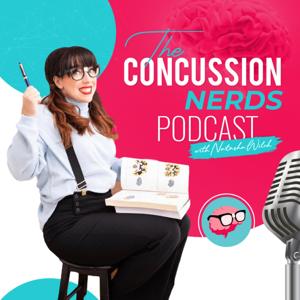


How can medication support concussion recovery, and how do you know when it might be time to reconsider your options?
When dealing with persistent concussion symptoms, medication can feel like either the only solution or something to avoid completely. But both approaches can leave you struggling to find the right path forward.
Medication can help manage symptoms like headaches, sleep disturbances, mood changes, and brain fog, but understanding its purpose, potential side effects, and role alongside rehabilitation is essential. This episode explores common medication categories used after concussion and why informed, individualized decisions matter.
In this episode:
Understand why medications target specific concussion symptoms rather than treating the concussion itself.
Explore common medication categories used for post-concussion headaches, sleep disturbances, mood changes, and cognitive symptoms.
Understand the risks of multiple medications, medication overuse headaches, and potential side effects.
Discover how medication and rehabilitation can work together, and why discussing medication decisions with your physician is essential.
Tune in to better understand the role of medication in concussion recovery and how to make informed decisions with your healthcare team.
Let's connect! Instagram: @natasha.wilch https://www.instagram.com/natasha.wilch/ Email: [email protected] Website: https://www.natasha-wilch.com Want to deepen your concussion assessment and treatment skills? Learn more about the Concussion Nerds Fellowship here: https://www.concussionnerds.com/concussion-nerds-fellowshipAre you treating all the right systems in your concussion patients, but still struggling to see meaningful progress?
Even with a thorough multisystems assessment, treatment may not be working as expected. You may have identified vestibular, autonomic, and cervical dysfunction, yet your patient continues to feel stuck despite addressing each issue.
The missing piece could be treatment sequencing. In concussion rehabilitation, the order in which you address each system matters. Understanding which systems are driving symptoms, establishing the right foundations, and building a treatment plan around your patient's capacity can help you achieve more stable, meaningful progress.
BY THE TIME YOU FINISH LISTENING, YOU'LL DISCOVER:
Why treating multiple systems at once may not always lead to lasting improvements.
How autonomic function, sensory-motor integration, cognition, and functional rehabilitation fit into treatment sequencing.
Why conditions like post-traumatic BPPV need to be identified and addressed before progressing with other interventions.
How to identify treatment priorities, establish capacity gates, and create a structured treatment plan with clear reasoning behind each step.
Learn how to approach concussion rehabilitation with a more intentional, integrated treatment sequence that supports better patient outcomes.
Let's connect! Instagram: @natasha.wilch https://www.instagram.com/natasha.wilch/ Email: [email protected] Website: https://www.natasha-wilch.com Want to deepen your concussion assessment and treatment skills? Learn more about the Concussion Nerds Fellowship here: https://www.concussionnerds.com/concussion-nerds-fellowshipIn this episode, we're taking a closer look at the otolith system, including the utricle and saccule, and how understanding their role can lead to more specific assessment and treatment. You'll learn what to look for when traditional vestibular testing doesn't fully explain a patient's symptoms and how to incorporate otolith screening into a more complete concussion assessment.
BY THE TIME YOU FINISH LISTENING, YOU'LL LEARN:
How the otolith system supports balance, spatial orientation, eye stabilization, and postural control
Why otolith dysfunction can contribute to dizziness and symptoms with linear movement
The difference between utricle and saccule function and why it matters for rehabilitation
How to screen for otolith dysfunction using tools such as ocular counter-roll, skew deviation, subjective visual vertical, orthostatic vitals, and VEMP testing
A more complete vestibular assessment can help uncover the pieces of concussion recovery that are easy to miss.
Let's connect!
Instagram:
@natasha.wilch https://www.instagram.com/natasha.wilch/
Email: [email protected] Website: https://www.natasha-wilch.com
Want to deepen your concussion assessment and treatment skills? Learn more about the Concussion Nerds Fellowship here: https://www.concussionnerds.com/concussion-nerds-fellowship
Could medication actually help support concussion recovery, or could it sometimes make things more complicated?
When you're dealing with persistent concussion symptoms, it can be easy to rely on medication without fully understanding what each medication is targeting or whether it's still needed. With multiple medications potentially being prescribed for different symptoms, keeping track of how they interact and affect recovery becomes especially important.
In this episode, we break down the role medications can play in concussion recovery, why they should be viewed as a tool alongside rehabilitation, and why understanding the purpose and effects of each medication matters.
BY THE TIME YOU FINISH LISTENING, YOU'LL LEARN:
Medication can have a place in concussion recovery, but understanding what it is treating and working with your physician is key to making informed decisions.
Ready to raise your standard of care and stop hitting clinical ceilings?
Join the waitlist for the revamped Concussion Nerds Fellowship 2.0! Doors open this fall for our brand-new cohort, limited to just 25 clinicians. Joining isn't a commitment—it simply gives you first priority to claim your seat before they're gone.
👉 Join the Waitlist Here: https://www.natashawilch.com/concussion-nerds-waitlist
Let's connect!
Instagram:
@natasha.wilch https://www.instagram.com/natasha.wilch/
Email: [email protected] Website: https://www.natasha-wilch.com
Have you ever looked in the mirror after an injury and wondered where the "real you" went?
When a concussion strikes, we tend to pour all our energy into tracking physical symptoms and managing clinical protocols. But in doing so, we often ignore the quiet, devastating rupture happening beneath the surface: the sudden loss of your identity. Whether you were the early-bird athlete, the high-achieving professional, the dependable parent, or the life of the party, a brain injury can strip away those roles in a single day, leaving you feeling like a stranger to yourself.
Trying to force your way back into your old life—or rushing to find a "silver lining" before you've even processed the loss—only leaves you feeling isolated, stuck in limbo, and drowning in invisible guilt. True healing requires more than just symptom management; it requires the space to mourn who you were so you can discover who you're becoming. In this episode, host Natasha breaks down the messy, unspoken emotional side of concussion recovery and shares a practical framework to help you rebuild a meaningful identity on your own terms.
BY THE TIME YOU FINISH LISTENING, YOU'LL DISCOVER:
Why identity loss after a concussion is a direct physical and emotional consequence of brain injury, not just a psychological reaction.
The 5 identity archetypes most impacted by concussion—and why pushing through symptoms actually traps the "resilient" personality type.
The 4 stages of identity reconstruction and how to navigate "Suspension," the awkward in-between phase where most recovery journeys stall out.
Practical strategies to anchor your recovery in core values, adjust your sense of contribution, and properly grieve your old self.
Hit play to step out of the recovery limbo and start reclaiming your narrative today!
Ready to raise your standard of care and stop hitting clinical ceilings?
Join the waitlist for the revamped Concussion Nerds Fellowship 2.0! Doors open this fall for our brand-new cohort, limited to just 25 clinicians. Joining isn't a commitment—it simply gives you first priority to claim your seat before they're gone.
👉 Join the Waitlist Here: https://www.natashawilch.com/concussion-nerds-waitlist
Let's connect!
Instagram:
@natasha.wilch https://www.instagram.com/natasha.wilch/
Email: [email protected] Website: https://www.natasha-wilch.com
Are you struggling to navigate your child's concussion recovery without a clear roadmap from their doctors?
Most parents are left feeling overwhelmed by a confusing healthcare system that wasn't built for family advocacy, leaving them unsure of which specialists to see or whether their child is actually receiving the right treatment.
Watching your child suffer from months of persistent symptoms—while missing out on school, sports, and their social life—is agonizing. Pushing through the pain or waiting for symptoms to magically disappear only delays healing, but with a targeted multi-system approach, early advocate intervention, and the right care team, you can actively guide your child back to the activities they love.
BY THE TIME YOU FINISH LISTENING, YOU'LL DISCOVER:
The crucial questions to ask at every stage of care—from the emergency room to your follow-up provider.
Why normal MRI and CT scans do not rule out a concussion, and what typical youth recovery timelines actually look like.
How to spot the green and red flags of concussion treatment so you know if your child is getting proper, progressive care.
Practical strategies to support your child's nervous system and social well-being at home without making recovery harder.
Scroll up, hit play, and arm yourself with the map you need to get your child the expert care they deserve!
Ready to raise your standard of care and stop hitting clinical ceilings?
Join the waitlist for the revamped Concussion Nerds Fellowship 2.0! Doors open this fall for our brand-new cohort, limited to just 25 clinicians. Joining isn't a commitment—it simply gives you first priority to claim your seat before they're gone.
👉 Join the Waitlist Here: https://www.natashawilch.com/concussion-nerds-waitlist
Let's connect!
Instagram:
@natasha.wilch https://www.instagram.com/natasha.wilch/
Email: [email protected] Website: https://www.natasha-wilch.com
Are you relying on subjective symptom reports to clear your post-concussion patients, only to have them relapse or struggle with lingering issues?
Many clinicians fall into the trap of using basic screening tools like the VOMS or standard cardinal-plane tests as a complete diagnostic assessment—missing critical deficits in joint position sense, proprioception, and off-axis movement.
This surface-level approach leaves severe, persistent gaps in your patient's recovery, but integrating objective visual feedback tools and multi-planar, sensory-motor testing can reveal hidden deficits and transform your clinical outcomes.
BY THE TIME YOU FINISH LISTENING, YOU'LL DISCOVER:
Why standard concussion screening tools like the VOMS aren't enough to build a comprehensive, multi-system treatment plan.
How real-time laser visual feedback accelerates motor learning, restores proprioception, and exposes hidden head-movement biases.
The critical role of joint position sense and out-of-neutral torsional testing in treating persistent post-concussion symptoms.
Why persistent concussion statistics are shifting as we evaluate the general population beyond elite athletic settings.
ABOUT OUR GUEST:
Dr. Eric Dinkins, PT, DPT, MSPT, OCS, MCTA, is a physical therapist, international educator, and co-owner of Motion Guidance. A Board-Certified Orthopedic Clinical Specialist and Certified Mulligan Practitioner, Dr. Dinkins has treated athletes ranging from youth competitors to Olympic and professional levels. Since co-founding Motion Guidance in 2014, he has pioneered the integration of laser-based visual feedback, gamification, and sensorimotor rehabilitation across orthopedic, sports medicine, vestibular, concussion, and neurological settings.
Tune in to discover how Dr. Erik Dinkins and Motion Guidance are revolutionizing visual feedback and sensory-motor rehabilitation to fix the hidden gaps in post-concussion care!
Connect with Dr. Eric:
Website: motionguidance.com
Email: [email protected]
Ready to raise your standard of care and stop hitting clinical ceilings?
Join the waitlist for the revamped Concussion Nerds Fellowship 2.0! Doors open this fall for our brand-new cohort, limited to just 25 clinicians. Joining isn't a commitment—it simply gives you first priority to claim your seat before they're gone.
👉 Join the Waitlist Here: https://www.natashawilch.com/concussion-nerds-waitlist
Let's connect!
Instagram:
@natasha.wilch https://www.instagram.com/natasha.wilch/
Email: [email protected] Website: https://www.natasha-wilch.com
Are post-concussion relationship struggles leaving you and your loved ones feeling distant, misunderstood, or completely exhausted?
You or someone you love might be falling into the trap of treating post-concussion relationship friction as purely a "social" or "personality" issue—or worse, brushing these hard conversations under the rug in fear of becoming a burden.
When invisible symptoms like cognitive fatigue, emotional dysregulation, and word-finding struggles go unnamed, resentment quietly builds, leaving partners isolated and families feeling fragmented. The solution starts with pulling these raw truths out of the closet, putting clear language to the hidden neurological strains, and proactively naming the issues together so you can rebuild connection instead of growing apart.
BY THE TIME YOU FINISH LISTENING, YOU'LL DISCOVER:
Why post-concussion relationship strain is rooted in real physiological and neurological shifts—not a lack of effort or caring.
How unaddressed symptoms like reduced social capacity, word-finding issues, and emotional dysregulation accidentally trigger family role changes and ambiguous loss.
The critical difference between letting invisible resentment build and taking the uncomfortable first step of naming your struggles to initiate true relationship repair.
How clinicians and support networks can actively bridge the communication gap to help families heal together rather than falling apart.
No matter where you are on this healing journey, remember that naming the uncomfortable stuff is where true connection begins—so share this episode with someone who needs it, keep the conversation open, and we'll see you next week!
Ready to raise your standard of care and stop hitting clinical ceilings?
Join the waitlist for the revamped Concussion Nerds Fellowship 2.0! Doors open this fall for our brand-new cohort, limited to just 25 clinicians. Joining isn't a commitment—it simply gives you first priority to claim your seat before they're gone.
👉 Join the Waitlist Here: https://www.natashawilch.com/concussion-nerds-waitlist
Let's connect!
Instagram:
@natasha.wilch https://www.instagram.com/natasha.wilch/
Email: [email protected] Website: https://www.natasha-wilch.com
From the publisher's feed
Ranked by our users in the last 21 days

31,944 Listeners

87,881 Listeners

112,173 Listeners

8,325 Listeners
97 Listeners

27,659 Listeners

46,672 Listeners
56 Listeners

28,936 Listeners

18,814 Listeners
20 Listeners

12,496 Listeners
9 Listeners
451 Listeners
369 Listeners