
Sign up to save your podcasts
Or



A big stress test for the West's rules-based order, or will French judges take it all in their stride? It's the opening day of Marine Le Pen's appeal against a corruption conviction that for now bars the far-right frontrunner from the 2027 presidential race. With the verdict expected in July, that's getting awfully close to Election Day next spring. The National Rally politician and her supporters have branded the case lawfare – a political vendetta.
Recently, Marine Le Pen voiced her support for another convicted politician – Nicolas Sarkozy, who became the first former French president to serve jail time since the end of World War II. In a new book, he too cries that the fix is in, a message broadly amplified by right-wing media echo chambers.
What are the facts of the case, where 24 others have been convicted for funnelling EU parliament staff funds back home to the mother ship? Do said facts matter? Is France like the United States, which denies plans to pressure the judges in the Le Pen case?
And what about her party's plan B? Could voters simply turn the page on the scion of a far-right family and happily elect her second-in-command Jordan Bardella as France's first far-right president since Nazi occupation?
Produced by François Picard, Rebecca Gnignati, Daniel Whittington, Ilayda Habip, Charles Wente
It's no longer just about the cost of living. Protests in Iran are entering their third week despite evidence of a ferocious crackdown and the shutting of the internet.
Each time, the context differs but the under-sanctions Islamic Republic of Iran has always outlasted previous movements. Why should this one be any different?
Among the variables, there's maximum pressure from the US that culminated in support for Israel's 12-day bombing campaign last summer and extends to fresh threats of retribution. In the past, like during the 2009 Green Movement, the West has been hesitant to further squeeze a nation where it's ordinary citizens who bear the brunt of sanctions. We ask if Europe wants to also up the pressure.
But there's always the "nothing to lose" factor. One of the clear signs that revolution was afoot in 1979 was that elites no longer supported the shah. Is it a sign that this time the protests started with Tehran Grand Bazaar merchants fed up with inflation? Back then, the revolution had a face: Ayatollah Khomeini. In 2026, how far could a leaderless movement go?
Produced by François Picard, Rebecca Gnignati, Daniel Whittington, Ilayda Habip, Charles Wente
Iran's biggest protests since the "Woman, Life, Freedom" movement of 2022 are extending everywhere from Tehran's Grand Bazaar to remote villages throughout the country's 31 provinces. As usual, the regime is offering dialogue while employing deadly force, issuing menacing warnings and slowing or even shutting down the internet.
Every time social movements arise in the under-sanctions, inflation-hit Islamic Republic, the regime outlasts its opponents. Why should this time be different? What are the variables?
We ask about a global stage where Iran's influence is in stark retreat – in Syria, Lebanon and further away in fellow OPEC+ member Venezuela.
After last summer's US and Israeli bombing campaign, how resilient do the clerics and the Revolutionary Guards remain?
Produced by François Picard, Rebecca Gnignati, Daniel Whittington, Ilayda Habip, Charles Wente.
It’s a tweet pinned to the top of the official account of the US State Department: "This is OUR Hemisphere, and President Trump will not allow our security to be threatened." US diplomacy is making the capture of Venezuela’s president and the threats against Greenland about security. But it was first about drugs and immigration, and now oil and precious minerals.
Read moreTaking over Greenland, a long-standing US obsession
So what does drive this present-day version of the 19th-century Monroe Doctrine and its claim that the United States holds imperial sway over its entire hemisphere? We ask about motives and targets.
The same Trump administration that wanted to cut a quick deal with the Kremlin on Ukraine is first pressuring an ally of Moscow in South America and now defying Vladimir Putin with the boarding in the North Atlantic of a Russian-flagged ghost tanker originally bound for Caracas. What reaction can we expect from China, the main importer of Venezuelan crude?
Read moreUS military seizes Russian-flagged oil tanker in North Atlantic
And what do NATO allies make of a US that expresses support for a plan that would effectively halt Russia's advance in Ukraine, while threatening to seize Greenland from Denmark?
Produced by François Picard, Rebecca Gnignati, Daniel Whittington, Ilayda Habip, Charles Wente.
As Venezuela's deposed president faces his first US court date on drug trafficking charges, back in Caracas, Nicolas Maduro's regime remains intact. We ask how a US president who promised no more forever wars will deal with an entrenched system whose local militias have their fingers in drug trafficking, gold and also oil.
Donald Trump has talked up oil, while the word democracy has yet to pass his lips since Saturday's raid. Why sideline Nobel Peace Prize winner Maria Corina Machado and the civilian opposition, whose election win was stolen? Will he ultimately try to install a US-style occupation authority? Or simply do business with those currently running Venezuela?
The country is broken after years of sanctions and mismanagement, but its institutions and cohesion differ vastly from Iraq, Afghanistan and other failed US regime change playgrounds. How will Washington's new age of imperialism mesh with a Venezuela that's about to enter a whole new era?
Produced by François Picard, Théophile Vareille, Juliette Laffont, Ilayda Habip, Charles Wente.
It's one of those New Year's resolutions often blurted out after a big family meal. "I'm going to run a marathon!" But like the cautionary saying "puppies aren't for Christmas, they're for life", one wonders how many realise the error of their ways when they're gasping for air during that first January training run. Or not.
Not everyone will run a 41-kilometre race in 2026, but more and more will take up what's arguably the world's oldest sport. Why the trend? Is it a mere post-pandemic fad, or the sign of something deeper?
We think of running as a solitary pursuit, but it's increasingly a social activity. Running clubs are particularly in vogue among the young, who seek a release from a life that's increasingly happening in front of a screen.
Technology is also seeping into the experience, be it with equipment, monitors or apps, to the point that some bemoan the gamification of running.
So what's running about: a pursuit or an escape? Goals to achieve or the experience of the journey?
Produced by François Picard, Rebecca Gnignati, Juliette Laffont, Ilayda Habip, Charles Wente.
There's nothing more innately human than humming a tune. Especially when it's made by humans. But don't bother trying to see The Velvet Sundown in concert: the band doesn't exist. The sounds are produced with artificial intelligence.
Watch moreThe Velvet Sundown: This band blowing up on Spotify is 100% AI-generated
Worse, most listeners can't tell the difference from the real thing. With computers borrowing from real musicians for their inspiration, we weigh the implications. If humans are going to continue to rule artistic creation, then our panel needs to answer one simple question: what makes a hit song?
Sometimes it's a gorgeous melody and a brilliant arrangement; sometimes it's an annoyingly easy-to-remember "brain worm" that will stay in your head long after you wish it had departed.
Either way, what makes a song special?
Produced by François Picard, Aline Bottin, Daniel Whittington, Ilayda Habip and Charles Wente.
It's the word of the year in Japan with a literal take on the Rihanna song "Work". Japan's first female prime minister Takaichi Sanae announced she would "abandon the idea of a work-life balance" when she was elected as the head of Liberal Democratic Party back in October. The 64-year old Takaichi may espouse "work, work, work, work and work", but how about those entering the labour market?
Watch more'Work, work, work!' Japan's new PM under fire for asking staff to come in at 3am
In the age of the gig economy, 34-year-old Zohran Mamdani was elected mayor of New York thanks to young people, who ask: what's the point of slaving away at a low-paying, high-pressure service sector job when AI is coming for their livelihood and saving up for a home or pension seems like a pipe dream?
One survey has 43 percent of Gen Zers stating they quit a job because it didn't fit their personal lives, compared with 28 percent of baby boomers.
So what makes a good work-life balance? Is it normal for humans to no longer define themselves by the way they earn their keep? In this age of rapid change and growing inequality, what to expect when it comes to our livelihoods and our lives?
Produced by François Picard, Aline Bottin, Daniel Whittington, Ilayda Habip, Charles Wente.
Some brand it "the most crucial EU summit" since the financial crisis of 2008; a last chance to stave off bankruptcy for a Ukrainian government that might run out of money by the end of spring. But where will the money come from?
With Vladimir Putin insisting that it's not "European pigs" that will stop Russia from liberating its "historic lands", and with the US actively supporting pro-Moscow parties that continue to surge in polling across the continent, leaders of the 27-member bloc must now make a choice: seize €210 billion in frozen Russian assets for Ukraine and run the risk of legal liability for those billions down the road; borrow on the bond markets, which Germany and other fiscally frugal northern European states reject out of hand; or cave, as a small but vocal minority of leaders would prefer.
Produced by François Picard, Rebecca Gnignati, Charles Wente, Ilayda Habip & Jean-Vincent Russo
As 2025 draws to a close, all year long one question has dogged the most plugged-in of football fanatics: what's up with Gianni Infantino? Why all the cameos by the head of an international sports body at the US president's inauguration, a Middle East peace signing and another for DR Congo and Rwanda?
Read moreUS President Donald Trump named first winner of FIFA Peace Prize
Why create a peace prize for the said leader of the host nation of next summer's World Cup final? Is it the initiative of one man who runs in the same circles as Trump's Gulf monarchy counterparts, or is FIFA collectively panicked about keeping the United States onside as it weighs tighter visa restrictions on foreigners?
Read moreTravel bans, border tensions, ICE raids: Trump’s impact on World Cup plans
If World Cup organisers fear foreign fans might stay away, they're certainly hiding it. Just look at their ticket pricing. Do they know this is soccer, not polo? Will fans from Haiti or Curaçao pay thousands of dollars per match?
Whatever happens, the show will go on despite the expansion to 48 teams and commercial break-friendly water stoppages. That begs the broader question: is the sky the limit, or is there a point at which greed kills football's golden goose?
From the publisher's feed
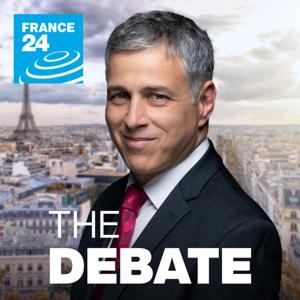
A live debate on the topic of the day, with four guests. From Monday to Thursday at 7:10pm Paris time.

7,580 Listeners

10,709 Listeners

3,369 Listeners

762 Listeners

1,046 Listeners
1,024 Listeners

1,802 Listeners

348 Listeners

4 Listeners

0 Listeners

0 Listeners

2 Listeners

1 Listeners

21 Listeners

181 Listeners

5 Listeners

0 Listeners
4 Listeners

6 Listeners

5 Listeners

39 Listeners

815 Listeners

3 Listeners
4 Listeners

5 Listeners

1 Listeners

16,143 Listeners

0 Listeners

0 Listeners

361 Listeners

0 Listeners

476 Listeners

378 Listeners