
Sign up to save your podcasts
Or



The peace plan that read like it had been written by the Kremlin and that called for Ukraine to surrender land, cut back its military and give up any notion of NATO membership was already raising worried eyebrows. Now, in light of a recorded phone call between US envoy Steve Witkoff and Russian presidential advisor Yuri Ushakov, the concern about the closeness of the Trump administration to Vladimir Putin and the Kremlin has hit a new point of alarm. Is this the art of the deal, or a sellout?
Produced by Mark Owen, Rebecca Gnignati, Charles Wente, Ilayda Habip & Jean-Vincent Russo
Every 10 minutes last year, a woman somewhere in the world was killed by a person close to her, while some 50,000 women and girls were killed by intimate partners or family members in 2024. These figures have been released by the UN as we mark the International Day for the Elimination of Violence against Women and Girls. But how do we get the message across that violence against women and girls is a men's issue; particularly as the rise of AI has intensified digital abuse directed at women?
Produced by Rebecca Gnignati, Lila Paulou, Ilayda Habip, Annette Young and Charles Wente.
This Monday, the US and Ukraine pressed on with talks in Switzerland to come up with a mutually acceptable peace plan. This after agreeing to modify a US proposal that Kyiv and its European allies saw as a Kremlin wish list. The 28-point draft plan includes several long-standing Russian demands, crossing Kyiv’s established red lines and overlooking key European security concerns. Is this plan the basis for a genuine peace deal or destined for failure?
Produced by Rebecca Gnignati, Lila Paulou, Ilayda Habip, Annette Young and Charles Wente.
Ukraine is facing yet another major challenge in its fight to preserve its borders, its land and its people. The military battle continues as it has since 2014, intensifying sharply in 2022. The latest challenge is the emergence of a new US-Russia framework to end the war – a proposal that has left observers perplexed and many Ukrainians stunned. The plan appears to pressure Ukraine into giving up territory, surrendering arms and downsize its armed forces to placate Vladimir Putin's Russia. It would also reportedly impose cultural concessions, including the suppression of the Ukrainian language in favour of Russian. Steve Witkoff, Donald Trump’s close adviser on global affairs, met with Putin aide Kiril Dmitriev in Miami last month to discuss the plan.
Produced by Rebecca Gnignati, Elisa Amiri, Ilayda Habip.
Ever since he first ran for president in 2015, Donald Trump has claimed that to “drain the swamp”, America needs a leader who knows where “the bodies are buried” in the corrupt circles of Wall Street and Washington. So why has the MAGA base turned against him over the Epstein files? Why is it so difficult for Trump – who has already survived allegations of inciting an insurrection, undermining the Constitution and facing multiple criminal charges – to make this story go away?
Produced by Rebecca Gnignati, Elisa Amiri, Juliette Brown.
As the Middle East undergoes a once-in-a-generation shift in political fault lines, great power diplomacy could make the difference for millions between peace and stability or turbulence and endless conflict. So what's driving that diplomacy? Between the US and Saudi Arabia, it's a confusing mix of bilateral security ties, regional reach-outs to the likes of Syria and Israel and personal enrichment. We ask about the Trump family's longstanding ties to the kingdom, as well as reports that the US president is about to get a lot richer.
That blurring of lines between affairs of state and private investment is just one of the talking points as the Saudi crown prince is welcomed with honours to the White House for the first time since the 2018 murder of dissident journalist Jamal Khashoggi. The same Mohammed bin Salman who back then threw his weight around domestically and on the world stage has mended fences with Iran, wound down his country's involvement in Yemen’s brutal civil war and more recently brokered a breaking of the ice with Syria’s new masters.
How all-in is Saudi Arabia, a nation whose role is key in guaranteeing that US efforts to end the fighting in Gaza ensure a better future for Palestinians, as agreed in Monday's UN vote which endorsed the Trump plan?
For a US president who campaigned against forever wars, will this visit by MBS help him keep that pledge – or keep the United States militarily committed to the region for a long, long time?
Produced by François Picard, Rebecca Gnignati, Juliette Laffont, Juliette Brown, Charles Wente.
It's much-needed backing from a key ally of Ukraine, along with welcome photo op for a president who's under pressure at home. After a gas deal with Greece, Volodymyr Zelensky is signing a 10-year military pact with France, far from Kyiv where a corruption scandal has brought down two ministers and has the main backer of his 2019 campaign on the run.
It's a welcome respite from the political storm back home and a timely morale boost for Ukraine, a nation that needs all the support it can get at a time when the US is scaling back its commitment to the continent, while Russia's advances in the east come with the nightly poundings targeting electricity supply and other critical infrastructure.
What does the deal with France bring? Beyond fighter jet sales, can EU allies band together on defense? And what does a 10-year deal mean when there’s a presidential election here in 18 months, one where the pro-Kremlin far right currently leads in the polls?
Produced by François Picard, Rebecca Gnignati, Daniel Whittington, Ilayda Habip & Jean-Vincent Russo
A string of coups and the pushing out of former colonial power France in favour of Russian support haven't stopped insurgents from going from strength throughout the so-called coup belt from Burkina Faso to Niger. We ask about the blockade on Bamako that's made it perilous for fuel delivery trucks to reach the capital of landlocked Mali, and what it would take to repel the JNIM.
Mali has seen this movie before. The French intervened back in 2013, when insurgents tried to take the capital a first time. But that hero's welcome in Timbuktu for then-president François Hollande is now a distant memory. How do Malians take back their own country?
What's the alternative to what the jihadists are offering? And what's the spillover effect of potential failed states at the heart of the Sahel for the region, and for Europe?
Produced by François Picard, Rebecca Gnignati, Juliette Laffont, Ilayda Habip, Charles Wente.
Could the artificial intelligence boom already be running out of road? We examine the warning signs. To think that three short years ago, the commercial launch of ChatGPT took the world by storm. AI has since sparked a global race for cash, energy resources and data – all to feed the seemingly insatiable appetite of large language model computing systems.
With a few US companies dominating the AI race – and a US president who's all-in with billionaires – market watchers worry about investors tempted by the easy money of rising tech stocks at the expense of the entire rest of the economy. Is it a bubble? Is it about to burst?
And with what consequences? How should Europe and the rest of the world prepare? More broadly, is AI changing humanity and our world for better – or for worse?
Produced by François Picard, Rebecca Gnignati, Charles Wente, Ilayda Habip & Jean-Vincent Russo
From radical insurgent with a $10 million bounty on his head to a red carpet welcome at the White House, the rebranding of Syria's Ahmed al-Sharaa is now complete.
The former jihadist has become the first-ever Syrian president invited inside the Oval Office. We ask about the terms and conditions of a visit that surely seals a regional realignment on a scale unseen since the 1979 fall of the Shah of Iran. How much did backers Turkey and Saudi Arabia press for this moment?
Where does it leave Israel, who on the same day is getting a visit from the US president's son-in-law Jared Kushner to remind his hosts to play nice with the Turks during phase two of the Gaza peace initiative? Does this all mean that the same Donald Trump who campaigned against foreign interventions will wind up involving the United States more – not less – in the Middle East?
And where does it leave Syria, where the US still backs the Kurds in the fight against the Islamic State group and where Christian and Druze minorities have plenty of reason to doubt Sharaa's promise of guaranteeing their safety?
More broadly, how soon can the new masters of Damascus deliver a peace dividend to citizens still reeling from decades of dictatorship, corruption and civil war?
Produced by François Picard, Rebecca Gnignati, Ilayda Habip, Charles Wente & Jean-Vincent Russo
From the publisher's feed
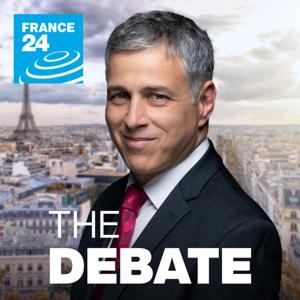
A live debate on the topic of the day, with four guests. From Monday to Thursday at 7:10pm Paris time.

7,580 Listeners

10,709 Listeners

3,369 Listeners

762 Listeners

1,046 Listeners
1,024 Listeners

1,802 Listeners
348 Listeners

4 Listeners
0 Listeners
0 Listeners
2 Listeners
1 Listeners

21 Listeners

181 Listeners

5 Listeners

0 Listeners

4 Listeners
6 Listeners

5 Listeners
39 Listeners

815 Listeners
3 Listeners
4 Listeners

5 Listeners
1 Listeners

16,143 Listeners

0 Listeners
0 Listeners

361 Listeners

0 Listeners

476 Listeners

378 Listeners