
Sign up to save your podcasts
Or



Sometimes former presidents do go to jail. Nicolas Sarkozy has begun his five-year sentence over the illicit financing of his 2007 presidential campaign by Muammar Gaddafi’s Libya. Is this proof that justice is truly blind? Or, as his supporters contend, are we seeing revenge by magistrates who were often maligned by the 70-year-old conservative when he was in power? France is split on that debate.
Meanwhile, Emmanuel Macron welcomed Sarkozy to the presidential palace last week ahead of his incarceration and his justice minister says he'll go visit the former leader at Paris's La Santé prison. So does jailing a former head of state really erode faith in institutions, which are already put to the test with the current showdown between a lame-duck president and a splintered parliament?
Or should it be about the facts of the case, the dealings with Gaddafi and his head of intelligence Abdullah Senussi, seen as the mastermind of the 1988 Lockerbie bombing and the 1989 downing of a French passenger plane over Niger? That all depends on which echo chamber you live in.
Produced by François Picard, Rebecca Gnignati, Ilayda Habip and Jean-Vincent Russo
Why is the United States suddenly in the business of blowing boats out of the water in the Caribbean? And why without summation? More than 30 people have been killed in seven strikes that started in early September, all under the orders of the same Donald Trump who wants a Nobel Peace Prize and who questions 80 years of US military presence in Europe, Korea and Japan. He's now gone beyond a war on drug trafficking in the Caribbean with not-so veiled threats to overthrow Venezuela’s regime. We ask about the operation and the resignation of the head of the US Southern Command that's in charge.
This regional policy harks back to Trump's Inauguration Day nostalgia for William McKinley, his predecessor who started the 1898 war that wiped out Spain’s foothold in the Americas. Is all this really to please anti-leftist Latino voters in his secretary of state’s native Florida?
We also ask what’s next for Venezuela, a nation whose leader by all accounts stole the last presidential poll. How much support can Nicolas Maduro garner in this showdown, both at home and abroad?
Produced by Delphine Liou, Rebecca Gnignatti, Ilayda Habip and Jean-Vincent Russo
Whenever Donald Trump boasts of solving eight wars in eight months, the US president always adds a sigh of regret and repeats that he thought Ukraine and Russia would be the easiest one to solve. He did it again at Monday's signing in Egypt of the plan to end the war in Gaza. So if rolling out the red carpet in Alaska and bringing Vladimir Putin in from the cold didn't work, what will?
More pressure on Russia, it seems, with NATO allies like Germany pledging to purchase military hardware for Ukraine that's made in the USA. We ask about those Tomahawk long-range missiles that will figure top of Volodymyr Zelensky's wish list when he travels to the White House on Friday.
The Oval Office dumpster fire that was their first encounter back in February is now a fading memory. And since Trump divides the world into winners and losers, could his calculus be shifting, what with Ukraine resisting Russia's summer onslaught and hurting Moscow's pocketbook with successful long-range drone strikes against oil installations deep inside enemy territory?
We ask about momentum and prospects for what's already a very, very long war.
Produced by François Picard, Rebecca Gnignati, Daniel Whittington, Juliette Laffont, Ilayda Habip, Charles Wente.
Can we really draw a link between Nepal and Madagascar? Bangladesh and Peru? Indonesia and Morocco? Why are waves of defiance sweeping nations that are oceans apart? That defiance now bears a name: Gen Z protests. The generation born after 1997 has had its fill of corrupt elders clinging to power – and their offspring flaunting excess on social media. There too, new hashtags have taken root: nepo babies and nepo kids. The contempt of the ruling classes is as old as French queens quipping, “let them eat cake”. So what is it about the digital age that seems to rub it particularly hard in young people’s faces – or rather, on their screens?
Back in 2011, when the Arab Spring erupted, leaderless movements in Tunisia, Egypt and elsewhere were often branded “Facebook revolutions”. What’s changed now that young people have migrated to Instagram, TikTok and Discord? And what happens to leaderless movements today?
Just ask the citizens of Madagascar, whose Gen Z movement led to Tuesday’s toppling of a president – and to a military coup. More broadly, how do we meet the aspirations of a generation that has moved to the cities, paid its dues in underfunded schools, endured blackouts and inadequate hospitals – and has finally had enough?
Produced by François Picard, Rebecca Gnignati, Daniel Whittington, Juliette Laffont, Ilayda Habip, Charles Wente.
Was it enough for France’s minority government to clear the first hurdle of a trigger-happy, hostile parliament that can call a vote of no confidence at any time? Reappointed Prime Minister Sébastien Lecornu is offering a suspension of Emmanuel Macron's flagship reform – the raising of the retirement age. We’ll review the general policy speech of a Lecornu who, this time at least, made it to the National Assembly. Last week, his initial coalition government imploded spectacularly after just 14 hours.
Lecornu may be willing to bend – but what about his boss? Throughout one and a half terms in power, Emmanuel Macron has rarely been one for compromise … until now. The French president knows that a snap election would only further shrink his support in parliament.
Markets may be unsettled by France’s spiralling public spending – but not as much as by the prospect of prolonged political paralysis or a populist surge. On that front, Macron is not alone in refusing to compromise. Just look at a splintered political landscape that stretches from the far right to the hard left. What does that say about the times we live in?
Can Macron compromise? What should we make of his cabinet and Lecornu’s speech?
We’ll need two pie charts of the National Assembly: one showing the blocs in simple terms, and another highlighting the Socialists. A suspension may be a concession – with Sébastien Lecornu offering to freeze the retirement age reform that Emmanuel Macron forced through parliament in 2023 over the objections of trade unions and public opinion.
In May 2024, Macron’s decision to dissolve parliament backfired. His centrist bloc lost seats, the far right made historic gains, and the left united in an electoral alliance. That alliance has since unravelled, but the current makeup of parliament means that the Socialists, with their 69 seats, and the conservatives, Les Républicains, with 50, now find themselves as potential kingmakers.
This time, under the leadership of Bruno Retailleau – a conservative with presidential ambitions – Lecornu has assembled a cabinet with fewer political heavyweights.
Will the Socialists implode if they choose to compromise? What will the French accept in the name of reducing the deficit? What counts as politically acceptable?
As for the far right’s Marine Le Pen – the National Rally leader staged a theatrical walkout during the parliamentary speech that followed the Prime Minister’s, this time during remarks by conservative Laurent Wauquiez. Le Pen’s party remains firm in its stance from last week, when she was not invited to the consultations at the Élysée Palace.
Produced by François Picard, Rebecca Gnignati, Jean-Vincent Russo, Lila Paulou, Ilayda Habip and Charles Wente.
There are tears of grief, tears of anguish ... and on Monday, there are also tears of joy. For the first time in two years, Israelis and Palestinians are allowing themselves to exhale. We’ll discuss the return of the last hostages with our correspondent in Tel Aviv, the release of 2,000 prisoners from Israeli jails, the ramping up of aid into Gaza, and the silencing of guns. In a region accustomed to dashed hopes, could something positive emerge from what Donald Trump calls a peace deal?
There was the hero's welcome for Donald Trump in Israel, hailed by both supporters and detractors of the Israeli prime minister. In his speech, Trump turned to the Israeli president and asked Isaah Herzog to pardon Benjamin Netanyahu in his corruption trial. In the Egyptian resort of Sharm el-Sheik, the love in continued with everyone from the leaders of France, Germany and the UK to those of Iraq and Indonesia present for the signing of the 20-point plan.
Produced by François Picard, Rebecca Gnignati, Lila Paulou, Ilayda Habip, and Charles Wente.
Forty-eight hours after France’s new government collapsed after just 14 hours, caretaker Prime Minister Sébastien Lecornu is still trying to pull off the impossible and a strike a deal that can get a budget over the line before the end of the year and avoid a further spiralling of public borrowing costs. But for that, you need a compromise.
To Lecornu's left, the Socialists want to go back on the 2023 pension reform; to the right, the conservative Les Republicains say "no way". We review the stumbling points and possible ways President Emmanuel Macron can avoid another snap election that's sure to further shrink his support in France's lower house of parliament, 18 months out from the election to pick his successor.
The front-runner for 2027 is staying far from Paris on the PM's self-imposed deadline day for a compromise. The far-right's Marine Le Pen is instead claiming that all this haggling in the high halls of power smacks of a cabal. And while the left and the moderate right tear themselves apart, her National Rally party's been quietly canvassing constituents, anticipating their next trip to the ballot box.
Produced by François Picard, Théophile Vareille, Juliette Laffont, Ilayda Habip, Charles Wente.
On the second anniversary of Israel's worst day of bloodshed in its history, Hamas still holds hostages and Israel is still demolishing Gaza. Often during the past 731 days, panellists on this show have insisted it's impossible for the two sides to hear each other until the guns go silent. That's yet to happen.
We ask about the faint hopes stirred by the US plan on offer, and about the impact of the longest war in Israel's history on its citizens, who are torn between those who support a defiant prime minister who wants a 'super-Sparta' state to take on all comers and those who reject a forever war and a messianic land grab in the West Bank.
Watch moreTwo years after October 7 attacks on Israel, war in Gaza drags on
Here in France, home to both Europe's largest Jewish and Muslim populations, a commemoration has taken place to mark the October 7 terror attacks and the 51 French nationals killed on that day. Two years of killing innocent civilians in Gaza have eroded sympathy for Israel in French public opinion, particularly among young people.
Produced by Théophile Vareille, Elisa Amiri, Ilayda Habip.
Emmanuel Macron has lost his third prime minister in the 16 months since he dissolved parliament and lost ensuing snap elections. Sébastien Lecornu has broken a Fifth Republic record by lasting just 27 days as head of government.
We ask why Bruno Retailleau, the head of the Conservative Les Républicains party, first accepted to stay on as interior minister and then – faced with uproar in his own ranks – slammed the door 90 minutes later on Sunday night.
As for the president, he's got three choices: try again to find a PM who can work with an opposition-led parliament, call snap elections as demanded by far-right figurehead Marine Le Pen, or, as the far left would have it, resign now.
Macron has made it crystal clear that he's not leaving before 2027. So what can he decide to federate alliances, reassure markets and salvage the legacy of a disrupter who eight years ago broke the mould of French politics but now has to contend with uncompromising, fragmented formations?
When Macron broke parties, did he also break the system?
Produced by Théophile Vareille, Elisa Amiri, Ilayda Habip.
A long list of European states are contributing personnel and equipment to secure a pair of EU summits this week in Denmark. A spate of mystery drones in the buildup has exposed NATO's vulnerability to harassment and hybrid warfare.
We ask about unexplained flyovers, ghost ships and Russian denials. We also about spiking tensions across the Baltic Sea, where the stakes have never been higher since Moscow’s invasion of Ukraine.
From calls for "drone walls" to the return of conscription, how do Europeans beef up their own defence? And how much do they turn to NATO's historic guarantor, when the US seems to critics more interested in coveting Danish protectorate Greenland than defending against Russian expansion?
Produced by François Picard, Aline Bottin, Juliette Laffont, Ilayda Habip, Charles Wente.
From the publisher's feed
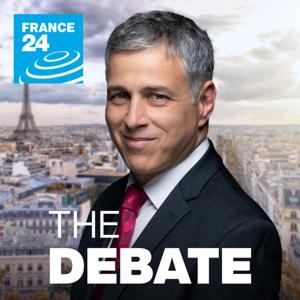
A live debate on the topic of the day, with four guests. From Monday to Thursday at 7:10pm Paris time.

7,580 Listeners

10,709 Listeners

3,369 Listeners

762 Listeners

1,046 Listeners
1,024 Listeners

1,802 Listeners

348 Listeners

4 Listeners
0 Listeners

0 Listeners

2 Listeners
1 Listeners

21 Listeners

181 Listeners

5 Listeners

0 Listeners

4 Listeners

6 Listeners

5 Listeners

39 Listeners

815 Listeners

3 Listeners
4 Listeners

5 Listeners

1 Listeners

16,143 Listeners

0 Listeners

0 Listeners

361 Listeners

0 Listeners

476 Listeners

378 Listeners